Jovina cooks Italian: Lobster Salad

Cooking the Italian Provinces – Cagliari | jovinacooksitalian

Cagliari Style Lobster Salad

mb1d23_5143_s4x3-jpg-rend-sniipadlarge

Lobster, which is called aragosta in Cagliari, is smaller, clawless and sweeter than New England lobster.

2-3 servings

Ingredients

  • 1/2 pound cooked lobster tail meat
  • 10 cherry tomatoes, stemmed, washed and cut in half
  • 1 tablespoon finely minced Italian parsley
  • Grated zest of 1 large lemon
  • 3 tablespoons Extra-Virgin Olive Oil
  • 1 1/2 tablespoons freshly squeezed lemon juice
  • 1/4 teaspoon fine sea salt, or more to taste
  • 1/4 teaspoon ground white pepper
  • Whole arugula leaves, washed and dried, optional

Directions

Cut the lobster meat up into bite-size pieces and place in a bowl. Gently mix in the tomatoes, parsley and lemon zest.

In a small bowl whisk together the olive oil, lemon juice, salt and pepper.

Pour the dressing over the lobster mixture and toss gently with two spoons.

Cover the bowl and refrigerate for at least 2 hours.

When ready to serve, allow enough time for the lobster mixture to come to room temperature.

Line serving plates with arugula leaves, if using. Divide the lobster mixture evenly and spoon into the center of each plate.

Weight plateaus are a normal, but frustrating, feature of your weight loss journey

frustration

 Here are some words of wisdom and encouragement from a health care professional who knows how discouraging weight loss plateaus can be. Don’t let weight stabilisation lead you to jack in your efforts.
When Losing Weight, Warn ‘em!

Diabetes in Control November 8th 2016

I work in obesity medicine. As many of us know, losing weight isn’t the problem for most, but weight regain is.

As the saying goes for many, you can’t be rich enough or thin enough. Many of our patients come in with unrealistic goals regarding their weight loss, and don’t give themselves enough credit for the weight they have lost. Many, for many reasons, regain.
Woman, 58 years of age, class II obesity, prediabetes (A1C 6.0%), HO depression, on antidepressants, weight of 188, BMI 38. Started on metformin and lower carb meal plan.
Warned her early on it’s not just about losing weight, but what’s important is keeping it off. We need plans for both.
Her treatment plan does not end when she loses weight.  Over 6 months she lost 22 pounds. This is a 12% weight loss. BMI 33.5 now.  No further weight loss since the 6-month period, but no weight gain.
Patient frustrated. She has upped her exercise. No longer wants to continue metformin. Encouraged her to continue her meal plan, metformin and bump up her exercise plan. Praised her for her weight loss and not regaining.  And, reminded her this is what we discussed from the start. She remembered and said she’ll stay with the plan.
Lessons Learned:
  • Keeping weight off is a different stage of the weight loss journey.
  • Reminder that losing 3-5% total body weight can improve health outcomes.
  • 5-7% weight loss was shown in the DPP to prevent or delay type 2 diabetes.
  • From the beginning, let patients know there are stages to losing weight. First is to lose, then it’s to keep off the weight lost. Make a plan for both.
  • Regarding weight loss, put more emphasis on the food side.
  • Regarding weight maintenance, put more emphasis on exercise.
  • Remind patient of discussion and encourage patient to embrace the weight loss they have been able to achieve and keep off.

Anonymous

Anna explains food labels: they can hide as much as they reveal!

Enticing Food Labels, part 1.

I have taken a small break from blogging due to some unforeseen events that I had to take care of first.  Now I am back and decided to write about a subject that I’ve been thinking about for what seems to be the longest time.  Food labels.

It appears that food manufacturers tend to make food labels claims that need to be taken with a grain of salt.  In other words, plain misleading.  I will go over a few of these.

1. ‘Healthy’ Food.

What exactly is ‘healthy’?  Raise your hands if you know the answer. Food and Drug Administration is baffled about this and is looking for the public input.

Most of the claims about general categories of foods, such as fruit and vegetables to maintain good health are actually dietary guidance rather than health claims, hence not subject to authorization by FDA.  Therefore, food manufacturers can state whatever they please in order to promote their products and this is largely unregulated.

Sounds confusing?  You are not alone.

FDA is currently in the process of redefining nutritional claims on food labeling, and is working on an updated definition of ‘healthy’.

I’ve always been big on checking Nutrition Facts Panels when buying just about anything.  The first thing I’m looking for is carbs.  The next is fat content, and after that, an expiration date.  Haven’t noticed too many folks do the same, though.  Most of them just grab a gallon of milk and out on their merry way.  I on the other hand, want to make sure that the milk won’t go bad on me in a few days.  It may be just me.

By the way, fat content in milk is to be discussed later.

In fact, you can’t rely on what some if not all food labels claim.   Statements such as ‘healthy’, ‘low fat’ or ‘good source’ of this substance or the other can turn out to be a sales gimmick that is intended to nothing more than to sell a product.  I’ve always had a nagging feeling that all that the food labels are trying to accomplish is to sell me something.  Such as for example, ‘vitamin water’ sounds like a pure sales pitch.  Or ‘smart chicken’ as was recently advertised in a local grocery store flyer, priced at mere $5 for a pound and two ounces.   Or ‘premium’ anything.

Of course, all of these have a price tag attached accordingly.

Does celery ever come in a variety that is not crisp?  Farmer’s Market — come on now, it’s just a name of a company.  Seedless cucumbers — what is the point?  I understand seedless watermelon but cukes, of all things?  Give me a break.

oct-13-seedless-cucumber

oct-13-dietitian-pick-lettuce-copy

.

.

Dietitian Pick — now this is creative.  A real dietitian came along and picked this head of iceberg lettuce.  I know that is right.

.

.


2.  All Natural.

I don’t know who coined this term but FDA doesn’t define it.  This means that food makers can do as they please and won’t get in trouble.  It leaves lots of room for interpretation every which way.  For example, if a food is labeled natural, it can still contain high fructose syrup — high carbs — while the food makers claim that since it comes from corn, it’s ‘healthy’.

oct-13-saltwater-injected-chicken

Natural chicken can be actually injected with sodium or saltwater in a process called plumping.  This is done in order to enhance flavor and, you guessed it, to increase weight of the meat before it’s sold.  If this is done, the label will state “flavored with up to 10% of a solution” or “up to 15% chicken broth.”

In fact, it is very rare that a package of meat or chicken comes with a Nutrition Label printed on it; most of the time there’s none.   I checked a package of chicken thighs that I had bought earlier today; it does have a Nutrition Label on the bottom but you need to flip it over in order to see it.  Once the label is not in the plain view, I take it most folks won’t bother to look for it.  Mine happened to have it and it doesn’t state anything about added solution or broth.  Now that I know, I can’t help but wonder about meat purchased at the deli counter — it doesn’t even come with a nutrition label.  This is something that had never occurred to me up until now.

Consuming too much salt can lead to high blood pressure and other problems, especially for those who were told to cut down on salt intake.   Buy plumped chicken and you’d be looking for trouble, albeit inadvertently.

How I wish that I had my own chicken farm.


Enticing Food Labels, part 2

In part 1, I have discussed the use of ‘healthy’ and ‘all natural’ statements on the food labels.  Now I will talk about the labels that claim low or no fat or sugar.

3.  No Sugar Added.

This sounds rather confusing, because it prompts you to think that the product contains no sugar at all.  If you have diabetes, you might want to buy it for this very reason.  Now wait a minute.

No sugar added” doesn’t mean that the product is carb-free or calorie-free.  It is sometimes being confused with sugar-free;  in fact, there’s a bunch of websites that do just that.  The problem is that some foods have sugar in them naturally, such as for example, milk or fruit, so anything containing these two can’t be sugar-free.  Besides, no sugar added products can still contain additives with high glycemic index such as Maltodextrin.
oct-16-maltodextrinMaltodextrin is made of corn, rice, potato starch, or wheat;  it’s a common food additive used for expanding the volume of processed food and for increasing its shelf life.

It has 4 calories per gram which is the same as table sugar. However, maltodextrin has a high glycemic index, almost twice as much as table sugar does. GI of maltodextrin is 110, compared to 65 of table sugar. This means that it can raise the blood sugar levels very quickly. Per FDA, Maltodextrin has to be listed in the nutrition panel as what it is, a carbohydrate.

4.  Sugar-free

This doesn’t automatically mean fewer calories; in fact, sugar-free products still have some sugar in them.  By FDA definition, sugar-free foods can have less than 0.5 grams of sugar per serving.  They however still have calories and carbs from other sources.  One of such sources are sugar alcohols that taste just as sweet as sugar while having half the calories.

Most sugar alcohols have no effect on blood sugar.   Some of them however are actually carbohydrates that are well absorbed by the body and can cause blood sugar spikes such as Maltitol.   Sugar alcohols can also act as a laxative so keep that in mind when indulging.

Sugar-free products can also have artificial sweeteners that don’t affect blood sugar directly but can affect insulin sensitivity nevertheless.

When I was first diagnosed with diabetes, I started buying sugar-free products thinking that I was doing the right thing.  One of the first such products was sugar-free pancake syrup that tasted as sweet as its sugar-containing counterpart.  For a brief while I was proud of myself for being able to find a product that is sugar-free and just as sweet.  This however was short lived when I had a seemingly unexplained blood sugar spike after eating hot cereal with ‘sugar-free’ syrup.  I then took a close look at the Nutrition Panel and low and behold, it listed a few carbs including Sorbitol, a sugar alcohol; corn syrup and molasses.  All of the above are carbs.

After having contacted my nutritionist, I was advised to stay away from everything that ends with ‘ol’ (sugar alcohols).  From now on, I will never take the statement ‘sugar-free’ for granted but will read the labels first and then decide.  A lesson learned.
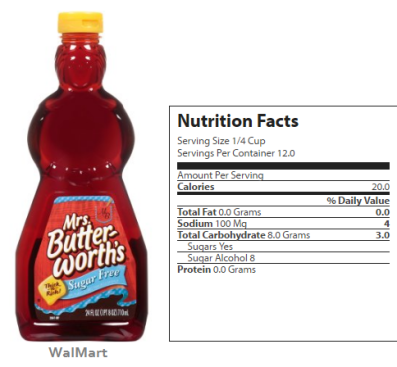
oct-16-sf-pancake-syrup-wm

Here now, a bottle of pancake syrup; didn’t the label say “sugar-free”?  Yes, it did but the Nutrition Facts panel states Sugars – Yes, and the amount of 8 grams.  This is per serving size that mind you, is a quarter of a cup.

Most if not all of us consume a few times over this in one sitting.  No, really.  A quarter of a cup is a little bitty thing.  Most folks will use at least a cupful of it.  Then all the seemingly ‘healthy’ content goes out the window.

Ever seen a commercial with a pile of pancakes buried under a huge mound of syrup?  There goes your serving size.

5.  Low-fat or fat-free

Many of us associate zero trans fat or fat-free claims with healthy, which is exactly the outcome the food manufacturers are trying to achieve.  And the truth is, while some foods are naturally low in fat, such as fruits and vegetables, processed food is another story. Fat-free versions of food replace fat with sugar which is no better and eventually gets stored in your body as fat anyway.  The keywords to look for are corn syrup and fructose.

Fat-free products are loaded with sugar, and sugar-free are loaded with fat.  Here you have it, a no-win situation.

Nutritionpedia website has posted these two labels side-by-side, one is regular, the other, fat-free.

oct-16-nutritionpedia-reg-and-fat-free-nutr-panels

As you can see, the fat-free product contains about three-fold more sugar than the regular version of the same product.  Not only would one serving size of the fat-free food have more calories than the full-fat version but you may be tempted to eat two servings because it comes across as healthy.

By FDA standards, low fat means less than 3 grams of fat per serving size and fat-free, less than 0.5 grams.  How much is the serving size?  This is what the food manufacturers are playing with.  One vs two cookies as a serving size or slices of bread likewise, can make all the difference.  And who is eating only one cookie?  When you or your kids eat more than one, all that low fat content per serving size goes out the window.

THE BOTTOM LINE:  sugar-free products are loaded with fat, and fat-free, with sugar.  To make sure that you are in fact eating healthy food, you need to do your homework.  Check the label of a fat-free or sugar-free product and compare it with the full-fat or full-sugar version.  This of course will take some time.


IMG_0022

Anger and exercise CAN trigger heart attacks

running

Can Anger and Exercise Trigger a Myocardial Infarction?

Diabetes in Control October 29th 2016

An International study explores the role of physical exertion, anger, and emotional upset in triggering acute myocardial infarction.

In the INTERHEART study, researchers explored the triggering association of acute physical activity and anger or emotional upset with a myocardial infarction (AMI) to quantify the importance of these potential triggers in a large, international population.

INTERHEART was a case-control study of first AMI completed in 262 centers across 52 countries. In this analysis, they included only cases of AMI and used a case-crossover approach to estimate odds ratios for AMI occurring within 1 hour of triggers.

Trained study staff performed a standardized physical examination on participants and administered a structured questionnaire. Participants with AMI (cases) were asked the questions, “Were you engaged in heavy physical exertion?” and “Were you angry or emotionally upset?” in the 1 hour before the onset of symptoms and during the same hour on the previous day.

Control participants were asked, “During the last 24 hours, were you engaged in heavy physical exertion?” and “During the last 24 hours, were you angry or emotionally upset?”

Data were also collected on age, ethnicity, diet, physical activity, tobacco use, education, employment, psychosocial factors, and cardiovascular risk factors. Anthropometric measurements (height, weight, waist, and hip circumference) were measured in a standardized manner.

Medical history (diabetes mellitus, hypertension, angina, stroke, other vascular disease, and depression) and baseline medications were self-reported. Smoking was categorized as never smoking, former smoking, or current smoking. Obesity was defined as body mass index of ≥30 kg/m2.

Countries were grouped into 10 geographical regions: Western Europe, Central and Eastern Europe, Middle East and Egypt, Africa, South Asia, China and Hong Kong, Southeast Asia and Japan, Australia and New Zealand, South America and Mexico, and North America.

Physical activity was categorized as mainly sedentary, mild exercise, or moderate/strenuous activity. Stress was categorized as none or some periods of stress versus several periods or permanent stress. Education was categorized as none, 1 to 8 years, 9 to 12 years, trade school, or college/university.

Of 12,461 cases of AMI, 13.6% (n=1650) engaged in physical activity and 14.4% (n=1752) were angry or emotionally upset in the case period (1 hour before symptom onset).

Physical activity in the case period was associated with increased odds of AMI (odds ratio, 2.31; 99% confidence interval [CI], 1.96–2.72) with a population-attributable risk of 7.7%.

Anger or emotional upset in the case period was associated with increased odds of AMI (odds ratio, 2.44; 99% CI, 2.06–2.89) with a population-attributable risk of 8.5% (99% CI, 7.0–9.6).

There was no effect on modification by geographical region, prior cardiovascular disease, cardiovascular risk factor burden, cardiovascular prevention medications, or time of day or day of onset of AMI. Both physical activity and anger or emotional upset in the case period were associated with a further increase in the odds of AMI.

From the results, it was reported that physical exertion and anger or emotional upset are common in the 1 hour before the onset of symptoms of AMI and that either exposure may act as an external trigger for AMI in all age groups. We report no differences by geographical region, previous cardiovascular disease, cardiovascular prevention medications, cardiovascular risk factors, and INTERHEART risk score.


Circulation. http://circ.ahajournals.org/lookup/suppl/doi:10.1161/CIRCULATIONAHA.116.023142/-/DC1 and http://dx.doi.org/10.1161/CIRCULATIONAHA.116.023142. 2016;134:1059-1067   

Jovina Cooks Italian: Marsala mushroom sauce


mushrooms


Once again Jovina shows us how little additions of garlic, herbs and wine can bring a little touch of Italy into your life, wherever that is. 

Garlicky Marsala Mushroom Sauce

This sauce can be  folded into an omelet or served with pan-fried chicken breasts or over pork chops.

Ingredients

  • 5 tablespoons extra-virgin olive oil, divided
  • 1 pound white mushrooms, caps quartered
  • 1 pound shiitake mushrooms, stems discarded, caps quartered
  • Salt and freshly ground pepper
  • 4 large garlic cloves, 2 thinly sliced and 2 minced
  • 1 medium shallot, thinly sliced
  • 1 1/2 teaspoons minced rosemary
  • 1/2 cup dry Marsala wine
  • 3 tablespoons balsamic vinegar
  • 6 Kalamata olives, pitted and coarsely chopped
  • 2 tablespoons minced chives

Directions

In a very large skillet, heat 2 tablespoons of the olive oil. Add the white and shiitake mushrooms, season with salt and pepper, cover and cook over moderately high heat for 5 minutes, stirring once. Uncover and cook over high heat, stirring once, until the mushrooms are browned all over, about 3 minutes.

Add the sliced garlic, the shallot and rosemary and cook, stirring, until fragrant, about 2 minutes. Add the Marsala and cook until evaporated, about 30 seconds. Add the vinegar and cook, stirring, for 30 seconds. Stir in the minced garlic, chives, olives and the remaining 3 tablespoons of olive oil and season with salt and pepper. Cover and keep warm.

From Cooking The Italian Provinces – Trapani | jovinacooksitalian

Can supplements help diabetes related visual problems?

slit_lamp_examination
Are supplements a waste of money? This article from Diabetes in Control describes and experiment to find out…..
 Do Supplements Help Diabetes Vision?

June 26th, 2015


This was a 6-month randomized, controlled clinical trial of patients with type 1 and type 2 diabetes with no retinopathy or mild to moderate non-proliferative retinopathy assigned to twice-daily consumption of placebo or a novel, multi-component formula containing xanthophyll pigments, antioxidants and selected botanical extracts.

Measurement of contrast sensitivity, macular pigment optical density, color discrimination, 5-2 macular threshold perimetry, Diabetic Peripheral Neuropathy Symptoms, foveal and retinal nerve fiber layer thickness, glycohemoglobin (HbA1c), serum lipids, 25-OH-vitamin D, tumor necrosis factor α (TNF-α) and high-sensitivity C reactive protein (hsCRP) were taken at baseline and 6 months. Outcomes were assessed by differences between and within groups at baseline and at study conclusion using mean ± SDs and t tests (p<0.05) for continuous variables.


The results showed that there were no significant intergroup differences at baseline. At 6 months, subjects on active supplement compared with placebo had significantly better visual function on all measures (p values ranging from 0.008 to <0.0001), significant improvements in most serum lipids (p values ranging from 0.01 to 0.0004), hsCRP (p=0.01) and diabetic peripheral neuropathy (Fisher’s exact test, p=0.0024). No significant changes in retinal thickness, HbA1c, total cholesterol or TNF-α were found between the groups.
The researchers concluded that this study provides strong evidence of clinically meaningful improvements in visual function, hsCRP and peripheral neuropathy in patients with diabetes, both with and without retinopathy, and without affecting glycemic control.

A. Paul Chous. The Diabetes Visual Function Supplement Study (DiVFuSS). Br J Ophthalmol doi:10.1136/bjophthalmol-2014-306534.

Leoni at Low Carb Store: Blueberry and Lemon Loaf

lemon-181650_960_720This recipe is from Low Carb Store and was invented by Leoni, their resident dietician.


 

Ingredients

  • 125g almond flour
  • 3 eggs
  • 75g inulin
  • 100g blueberries
  • Zest of 1 lemon
  • 45g butter
  • 2 tsp vanilla extract
  • 1 tsp baking powder

Nutrition Per Slice

Recipe makes 10 slices


Net (Total) Carbs 2.3g
Fat 8.5g
Protein 4.9g
Fibre 7g
Calories 122kcal


Create It


Pre-heat your oven to 180°c then grease and line your loaf tin (we used a 12cm x 28cm). In a mixing bowl combine the almond flour, eggs, baking powder, vanilla and butter. Next gently fold in the berries, lemon zest and inulin using a spoon. Pour into your prepared tin and bake for about 25 minutes, until your kitchen fills with a delicious aroma and the loaf is golden brown. Devour hot and buttered!


Options – keep a few berries back and add to the top of the loaf before popping in the oven. You could also try adding some dark chocolate chunks if your carbs allow or some cinnamon for a hit of autumnal spice! Get creative and make it your own.

Margaret Coles: Invite this Physiotherapist into your home

At  www.movingtherapy.co.uk. you can find Margaret Cole’s free educational resource to help your health and well being.

home-physio

Margaret worked as a community physiotherapist and when she retired she decided to put her knowledge and experience to good use. She produced videos covering a lot of different situations that you can face regarding your physical and mental states and has put them on the site. She also gives advice on how to lose weight.   People from all over the world have visited the site since 2011.

NHSinform Scotland and her local authority also promote the site.


Jovina Cooks Italian: Fruit with Mascarpone and Marsala

strawberries

Strawberries are traditionally used in this Italian dessert from Trapani Italy, but given our seasonal constraints, feel free to use any fruit that appeals. This would make a nice treat for Valentine’s day.

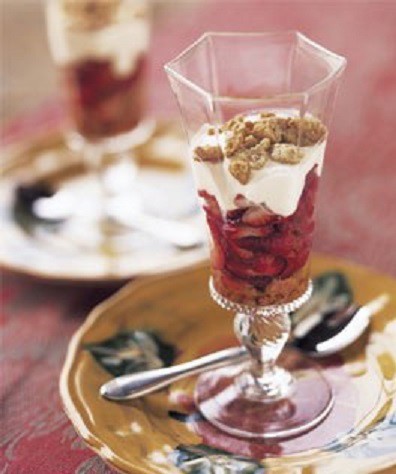
Strawberry, Mascarpone, and Marsala Budini

Budini is Italian for puddings or parfaits.

Makes 6 servings

Ingredients

1 8-ounce container mascarpone cheese

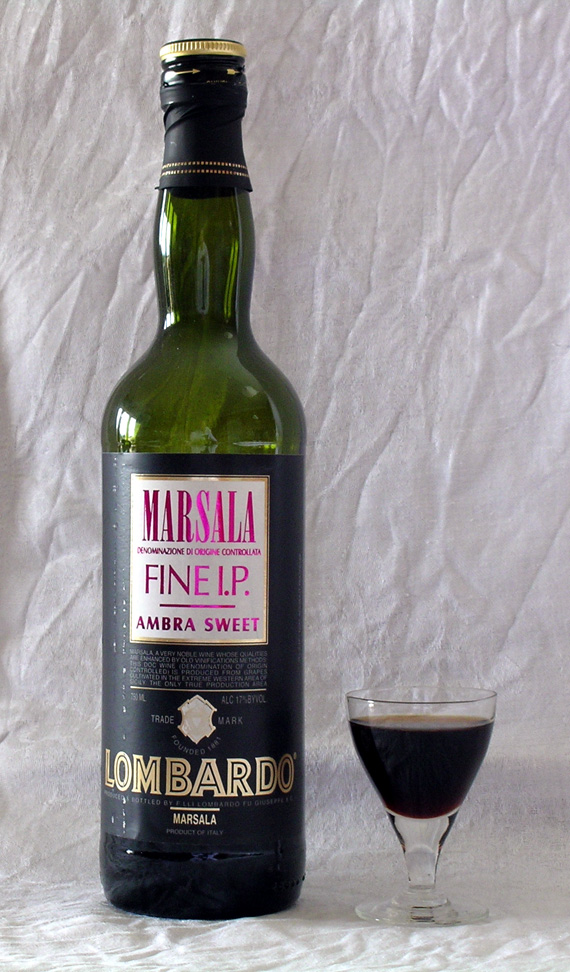
  • 6 tablespoons sweet Marsala (preferably imported)
  • 3 tablespoons whipping cream
  • 3 cups sliced hulled strawberries (about 15 ounces)
  • 2 1/4 cups coarsely crumbled amaretti cookies (Italian macaroons; about 4 1/2 ounces)

Directions

Combine mascarpone, 3 tablespoons Marsala, and cream  in medium bowl. Stir gently until well blended.

Combine strawberries, remaining 3 tablespoons Marsala in another medium bowl; toss to blend. Cover mascarpone and berry mixtures; refrigerate 30 minutes.

Place 2 tablespoons crumbled cookies in each of 6 champagne goblets. Divide strawberry mixture with juices among the goblets.

Top berries with mascarpone mixture, then remaining cookies. Cover and chill at least 30 minutes and up to 2 hours.

Do you take a pair of “old faithfuls” on holiday?

21650330543_cf5198641b_b

 Many of us bring our best and newest footwear on holiday. But is it a good idea? This article from Diabetes in Control discusses the matter.

A Lot to Learn from Your Patients

I teach patients how to care for their feet, how to prevent foot problems, and how to treat them if they should have problems.

I have had so many patients return from vacation with foot wounds due to the particular shoes they were wearing. Some didn’t bring enough shoes or bought and wore brand new shoes, while some wore the type of shoes we don’t recommend and some didn’t wear shoes at all.

As I write this, I am on vacation. Before leaving, I thought about the above. I needed new shoes for the trip, so I bought 2 pair of the same shoes, one normal width and one wide. I didn’t have much time before leaving, but I did practice wearing them before leaving. “Something” told me to also bring a pair of old faithfuls…shoes I have worn a lot and had no problem with.

I’m so glad I heeded my own teaching. The first day, in one of the new pair of shoes, it went pretty well, no pain or redness. After wearing them all daytime, I changed to old faithful that evening. The next morning I noted a little redness and soreness on an area of my foot. I took no chances. I wore the pair with the wide width that day. No problems.

I thought about the wisdom we teach our patients. Glad to have feeling and sight to prevent a problem I’m sure would have occurred…more personal ammunition to teach my patients.

Lessons Learned:

  • When helping your patients prepare for travel, always teach to take more than one pair of shoes. If they are taking new shoes, this is especially important. And…always take a pair of “old faithfuls.”
  • Whether traveling or not, teach your patients to “listen” to any sign of redness, soreness, or pain that is telling them to wear different shoes.
  • Always teach the importance of looking at feet at least daily for changes and treat them early.
  • Remember, what’s good for people who have diabetes is most likely good for everyone.
  • Heed your own knowledge and practice what you teach.

Joy Pape, FNP-C, CDE, CFCN, FAADE
Associate Editor, DiabetesInControl

(My comment: personally I always bring Compeed Plasters on holiday and I put them on at the first sign of skin irritation. If you wait till the end of a walk its too late! I’ve become very fond of Sketcher’s Go Walk 2 shoes as well)