
Eric Barker: Meditation for the distracted

meditation.jpg

Welcome to the Barking Up The Wrong Tree weekly update for September 4th, 2016.

Neuroscience Of Meditation: How To Make Your Mind Awesome

Click here to read the post on the blog or keep scrolling to read in-email.

So is meditation just another fad that pops up from time to time like bell-bottom jeans? Nope. Research shows it really helps you be healthier, happier and even improves your relationships.

From The Mindful Brain:

The MBSR program brought the ancient practice of mindfulness to individuals with a wide range of chronic medical conditions from back pain to psoriasis. Kabat-Zinn and colleagues, including his collaborator Richard Davidson at the University of Wisconsin in Madison, were ultimately able to demonstrate that MBSR training could help reduce subjective states of suffering and improve immune function, accelerate rates of healing, and nurture interpersonal relationships and an overall sense of well-being (Davidson et al., 2003).
And it’s not some magical mumbo-jumbo at odds with the science of psychology. In fact, it is psychology. William James, one of the fathers of modern psych, once said this…

From Thoughts Without A Thinker:

While lecturing at Harvard in the early 1900s, James suddenly stopped when he recognized a visiting Buddhist monk from Sri Lanka in his audience. “Take my chair,” he is reported to have said. “You are better equipped to lecture on psychology than I. This is the psychology everybody will be studying twenty-five years from now.”
Last week I posted about the neuroscience of mindfulness. Long story short (and grossly oversimplified): the right side of your brain sees things literally. The left side interprets the data and makes it into stories.

But Lefty screws up sometimes. His stories aren’t always accurate. As the old saying goes, “the map is not the territory.” When you listen too much to Lefty’s stories and not enough to the raw data from the right brain, you can experience a lot of negative emotions. A big chunk of mindfulness is keeping Lefty under control. (For the full story, click here.)

But where does meditation fit into all this? What does sitting cross-legged and focusing on your breath have to do with Lefty, the brain and eternal happiness?

And how the heck do you meditate properly? Maybe you’ve tried it and only ended up taking an unexpected nap, or getting horribly bored, or feeling like your brain is noisier than the front row of a death metal concert.

Let’s look at the science and cut out the magic and flowery language. We’ll hit the subject with Occam’s Chainsaw and get down to brass tacks about what meditation really is, why it works, and how to do it right.

Time to put your thinking cap on…

What The Heck Is Meditation?

A good quick way to see it from a neuroscience perspective is as “attention training.” (You know, attention. That thing none of us have anymore.)

But what the heck does attention have to do with happiness, stress relief and all the other wonderful things meditation is supposed to bring you?

Paul Dolan teaches at the London School of Economics and was a visiting scholar at Princeton where he worked with Nobel-Prize winner Daniel Kahneman. Dolan says this:

Your happiness is determined by how you allocate your attention. What you attend to drives your behavior and it determines your happiness. Attention is the glue that holds your life together… The scarcity of attentional resources means that you must consider how you can make and facilitate better decisions about what to pay attention to and in what ways.
And Harvard professor Daniel Gilbert, author of Stumbling on Happiness, did research showing that “a wandering mind is not a happy mind.” We want to focus on what the right side of the brain is giving us and get free from Lefty’s endless commentary.

When Lefty gets going with his ruminating, he’s much more likely to end up feeding you negative stories than positive ones. You’re happier when your attention is more focused on the concrete info your right brain is feeding you: the “here and now.” That’s all that “being in the moment” stuff you hear about.

So improving your attention is like dog obedience training for Lefty. When you can keep your attention on the right brain data and learn to disengage from Lefty’s running commentary you stress less, worry less and get less angry.

Is meditation powerful enough to overcome that often critical, cranky voice in your head? Yeah. It was even able to improve attention skills in people with ADD.

From The Mindful Brain:

At the UCLA Mindful Awareness Research Center, we recently conducted an eight-week pilot study that demonstrated that teaching meditation to people, including adults and adolescents with genetically loaded conditions like attention-deficit/hyperactivity disorder, could markedly reduce their level of distraction and impulsivity.
(To learn the four rituals neuroscience says will make you happy, click here.)

Okay, so meditation helps you focus on good things and let go of the bad, which can help you be happier and less stressed. Makes sense. So how do you do it right?

How To Meditate

Focus your attention on your breath going in and out. Your mind will wander. Gently return your attention to your breath. Repeat. Repeat. Repeat…

That’s it. Really. That’s all you have to do. Here’s how fancy neuroscience explains what’s going on…

From The Mindful Brain:

If in mindfulness practice our mind is filled with word-based left-sided chatter at that moment, we could propose that there is a fundamental neural competition between right (body sense) and left (word-thoughts) for the limited resources of attentional focus at that moment. Shifting within mindful awareness to a focus on the body may involve a functional shift away from linguistic conceptual facts toward the nonverbal imagery and somatic sensations of the right hemisphere.
Translation: the more you pay attention to the concrete info your right brain is giving you about your breathing, the less attention you have for Lefty’s interpretations, evaluations and stories.

You’re building yourself a knob that turns down the volume on Lefty’s criticisms and ramblings.

But the process is slow. Lefty will start talking again and you need to keep returning to the breath. Over and over and over. Sound like a waste of time? Nope. Here’s that father of modern psychology again, William James…

From The Principles of Psychology:

The faculty of voluntarily bringing back a wandering attention over and over again is the very root of judgment, character and will… An education which should improve this faculty would be the education par excellence.
(To learn about the neuroscience of mindfulness, click here.)

Simple, right? Actually, I’m hesitant to call meditation “simple.” It is simple, as in “not complex.” Those instructions would fit on an index card with room for your grocery list.

But that doesn’t mean meditation is easy… You know why?

Lefty Fights Back

You try to focus on your breath and banish Lefty but he keeps storming back into the room banging a tympani drum and clashing cymbals together. He won’t shut up.

Even without any input except breathing he still keeps finding things to talk about. And he jumps from one idea to the next. You try to dismiss him but it’s like mental whack-a-mole.

This is where most people give up. Don’t. Your head is not broken and you’re not clinically insane. Buddhists have known about this problem for over a thousand years. They call it “monkey mind.”

From Thoughts Without A Thinker:

Like the undeveloped mind, the metaphorical monkey is always in motion, jumping from one attempt at self-satisfaction to another, from one thought to another. “Monkey mind” is something that people who begin to meditate have an immediate understanding of as they begin to tune into the restless nature of their own psyches, to the incessant and mostly unproductive chatter of their thoughts.
Lefty is like a puppy locked in the house by himself, tearing up the furniture until you come home from work and pay attention to him. But there’s actually a valuable lesson here…

Lefty’s ideas seem so important. But then he’s on to talking about something else. And that seems so important. But then that idea flits away and it’s replaced by another one. And then that idea evaporates and is replaced…

Remember, Lefty isn’t you. He’s merely part of you, doing his job. Your heart beats, and Lefty generates thoughts. But those thoughts — which seem so important in the moment — drift away if you don’t entertain them.

And when it comes to the bad thoughts you have, and the bad feelings those generate, this is crucial and wonderful. You can just let them slide away.

But you’re tempted to take Lefty’s hand and go down the rabbit hole wondering if you should stop meditating because maybe you left the stove on, or if now wouldn’t be a great time to watch TV or finally debate the meaning of life…

Don’t. Turn your attention back to the breath.

And Lefty will say things that worry you or make you sad. And he knows just what will get under your skin. After all, he’s in your head. He’ll play “Lefty’s Greatest Hits” which never fail to get you all worked up. Don’t take the bait.

Your normal reaction is to grab your phone, check Instagram, check email, turn on the TV or do anything to distract yourself.

But that’s how you got into this problem in the first place. You need to sit here where it’s all quiet and build that attention muscle. No Instagram. Return your attention to your breath. Again and again, despite Lefty’s wailing.

Now you can’t shove Lefty away. He’s like the world’s worst internet troll — but with psychic powers. If you engage him, you just make it worse. Thoughts don’t float away if you wrestle with them. It’s like that finger trap puzzle you played with as a kid. The more you struggle to get out of it, the tighter it gets.

Just gently turn your attention back to the breath. Yes: over and over. Build that muscle.

Or maybe Lefty isn’t fighting you at all. Maybe you’re just skull-crushingly bored by this whole meditation thing. But the truth is, you’re not bored…

Lefty is. He’s tricked you again. The voice saying, “God, this sucks. Let’s watch TV.”? That’s not you. That’s him.

What is it when you call something boring? Is it concrete data from the right brain? No. It’s an evaluation. That’s Lefty talking.

Writer and neuroscience PhD Sam Harris explains that boredom is just a lack of attention.

From Waking Up: A Guide to Spirituality Without Religion:

One of the first things one learns in practicing meditation is that nothing is intrinsically boring— indeed, boredom is simply a lack of attention.
When Lefty says he’s bored that means you need more meditation — not less. Train that attention span and shut Lefty up.

(To learn what Harvard research says will make you successful and happy, click here.)

Whether he’s banging pots and pans or trying to trick you into thinking “you” are bored, Lefty won’t shut up. How do you get him to pipe down?

The answer is quite fun. Because we’re going to get Lefty to work against himself…

Don’t Fight. Label.

Ronald Siegel, professor of psychology at Harvard Medical School, writes this about the brain: “What we resist persists.” Arguing with Lefty just keeps him talking. You cannot “force” him to shut up.

So what’s the answer? Acknowledge Lefty. And, for a second, step away from focusing on the concrete and “label” what he is saying:

Lefty: “We keep meditating and we might be late for dinner. Better stop now.”

You:Worrying.” (returns to focusing on the breath)

Lefty: “I wonder if we got any new emails…”

You:Thinking.” (returns to focusing on the breath)

This uses Lefty against Lefty. When you use the left brain to put a label on its own concerns, it’s like writing something down on a to-do list. Now you can dismiss it because it’s been noted for later.

From a neuroscience perspective, it dampens Lefty’s yapping and frees you to return your attention to your breath.

Via The Upward Spiral:

…in one fMRI study, appropriately titled “Putting Feelings into Words” participants viewed pictures of people with emotional facial expressions. Predictably, each participant’s amygdala activated to the emotions in the picture. But when they were asked to name the emotion, the ventrolateral prefrontal cortex activated and reduced the emotional amygdala reactivity. In other words, consciously recognizing the emotions reduced their impact.
In fact, labeling affects the brain so powerfully it works with other people too. Labeling emotions is one of the primary tools used by FBI hostage negotiators to get bad guys to calm down.

(To learn how meditation can make you 10% happier, click here.)

Okay, so you know how to meditate and how to overcome the biggest problem people face when doing it — Lefty’s protests. But how does meditation lead to mindfulness?

Meditation Skills + Life = Mindfulness

Daniel Siegel of UCLA’s School of Medicine says that when you practice meditation consistently it actually becomes a personality trait.

You gradually start to take that attention-focusing and Lefty-labeling and apply it during your day-to-day life.

From The Mindful Brain:

Mindful awareness over time may become a way of being or a trait of the individual, not just a practice initiating a temporary state of mind with certain approaches such as meditation, yoga, or centering prayer. We would see this movement from states to traits in the form of more long-term capabilities of the individual. From the research perspective, such a transition would be seen as a shift from being effortful and in awareness to effortless and at times perhaps not initiated with awareness.
But you can accelerate this process if you actively to try to perform it. If you’re frustrated in traffic, you can focus your attention on the beautiful, sunny day outside.

When Lefty cries, “Why does this always happen to us!” you can label his statement as “frustrated.” That’ll cool down your amygdala and put your prefrontal cortex back in charge.

You can return your attention to the sunny day around you and let his complaints slide away as they always do — if you don’t turn them into a finger trap.

Lefty gets quieter and quieter. You focus more on the good things in the world around you.

And this is how you become mindful.

(To learn more about how to practice mindfulness from the top experts in the field, click here.)

Okay, newbie meditator, we’ve learned a lot. Let’s round it up and see how mindfulness can lead to the most powerful form of happiness…

Sum Up

Here’s how to meditate:

  • Get comfortable. But not so comfortable you’re gonna fall asleep. This ain’t naptime.
  • Focus on your breath. You can think “in” as your breath goes in and “out” as your breath goes out if it helps you focus.
  • Label Lefty. When Lefty brings the circus to town in your head, use a word to label his chatter and dampen it.
  • Return to the breath. Over and over. Consistency is more important than duration. Doing 2 minutes every day beats an hour once a month.

What makes us happier than almost anything else? The research is pretty clear: relationships.

But winning the war with Lefty is so internal, right? It’s all about you. (And him, I guess… But he is you… So it’s still about you.) Does that mean meditation and mindfulness are hopelessly selfish and self-absorbed?

Nope. What’s one of the biggest complaints we hear from those we love — especially in the age of smartphones? “You don’t pay enough attention to me.”

And here’s where that meditation-honed attention muscle pays off. You can give them the focus they deserve. When you don’t have to spend most of the day hearing that chatterbox in your head, you can truly listen to the people you care about.

Daniel Siegel explains that those attention skills can powerfully improve relationships with those you love by an increased ability to empathize.

From The Mindful Brain:

Our relationships with others are also improved perhaps because the ability to perceive the nonverbal emotional signals from others may be enhanced and our ability to sense the internal worlds of others may be augmented… In these ways we come to compassionately experience others’ feelings and empathize with them as we understand another person’s point of view.
Spend a little time focusing on your breath every day and you can replace Lefty’s voice with the voice of those you love.

Remember: every time you hit a share button an angel gets its wings. (Or, um, something like that.) Thank you!


Email Extras

Findings from around the internet…

+ What’s the best way to take truly restful breaks during the day? Click here. (Written by the very smart Christian Jarrett.)

+ How can your choice of office furniture make you smarter? Click here.

+ Which over-the-counter painkiller works the best? Click here.

+ Miss last week’s post? You definitely need to read “Lefty Part 1.” Here you go: Neuroscience Of Mindfulness: How To Make Your Mind Happy.

+ What’s the best way to motivate people at work? Click here. (Written by that great reader of research Melissa Dahl.)

+ You made it to the end of the email. (I appreciate you waiting to meditate until *after* you finished the email.) Okay, Crackerjack time. Ever hear a song or read something that just “gets you.” It says how you feel better than you could say it yourself? Oh yeah. That feeling. Well, I felt like that yesterday when I read a great comic by the enviably talented (and funny) Matthew Inman. Oh, and it’s about happiness, passion, and doing what you love. Click here.


Thanks for reading!
Eric
PS: If a friend forwarded this to you, you can sign up to get the weekly email yourself here.


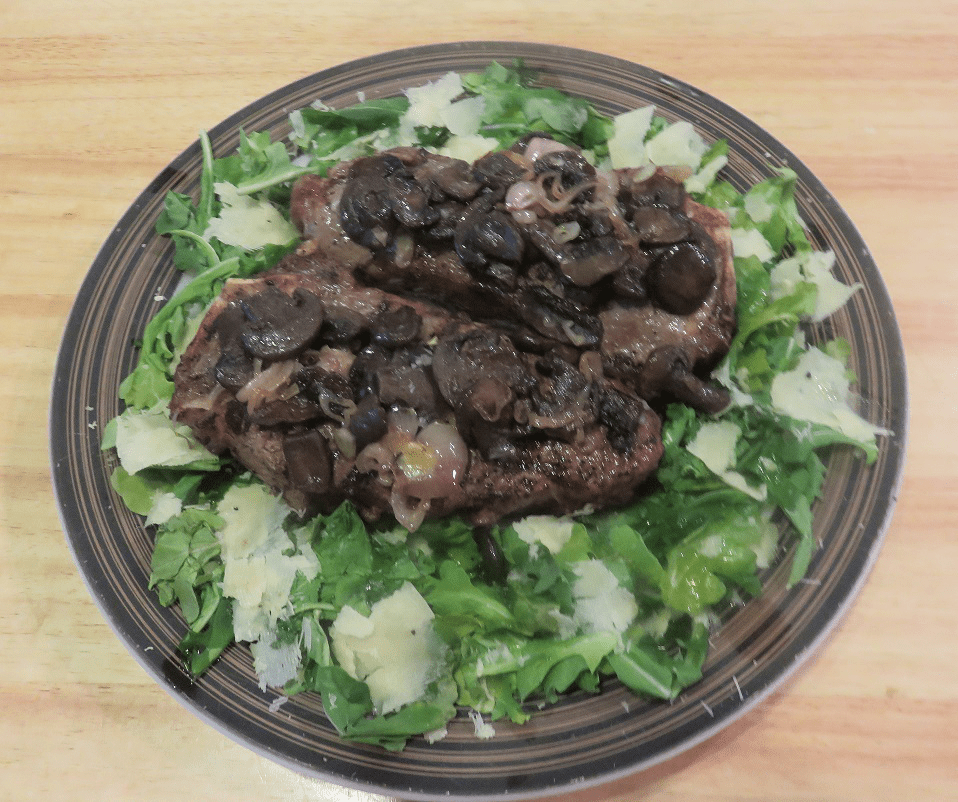
Jovina cooks Italian: Grass fed beef steaks and mushrooms

highland cow.jpeg

Clean Food for Thought: Shrimp with Avocado Salsa


maxresdefault (3)Shrimp  with Avocado Salsa | Food For Thought
https://s0.wp.com/wp-content/themes/pub/blissful-blog/js/html5.js

Shrimp  with Avocado Salsa

Serves 4

Ingredients

For the Avocado Salsa

  • 2 ripe avocado, diced
  • ¼ cup red onion, finely chopped
  • ½ jalapeno, seeded and diced
  • 3 tbsp cilantro, minced
  • 1 tbsp extra virgin olive oil
  • 1 tsp fresh lime juice
  • salt and pepper to taste

For the Shrimp

  • 24 medium shrimp, raw, peeled and deveined
  • 2 tbsp olive oil
  • ½ tsp chili powder
  • ¼ tsp ground cumin
  • ¼ tsp salt
  • 1 tsp fresh lime juice
  • Optional Toppings: red cabbage

Directions

  1. In a medium bowl, mix the shrimp, 1 tbsp olive oil, chili powder, cumin, salt and lime juice. Let sit in the fridge for 5-10 minutes before cooking.
  2. In a large bowl, mix all of the ingredients for the salsa. Set aside.
  3. Heat a small to medium skillet on medium with the rest of the olive oil. Once hot, add in the marinated shrimp. Cook for about 5 minutes, until the shrimp is not opaque.
  4. Put some chopped cabbage on a plate, put6 warm shrimps  on top with the salsa on top of this.

Enjoy!

(originally published on cleanfoodforthought and reproduced by kind permission)


Jovina cooks Italian: Shrimp and tomato salad and Sausage with Peppers

What To Make For An Outdoor Summer Party | jovinacooksitalian

Salad Course: Grilled Shrimp Tomato Salad

IMG_0006

This is a popular dish, so I often divide the salad onto smaller serving dishes, so I can have them available in several areas.

Serves 6

Ingredients

  • Vegetable oil for the grill
  • 1/3 cup extra virgin olive oil, plus 3 tablespoons olive oil
  • 5 tablespoons mixed chopped fresh herbs, such as dill, basil, mint, and/or chives
  • 2 tablespoons white wine vinegar
  • 1 teaspoon lemon zest
  • 2 tablespoons fresh lemon juice
  • 1/4 teaspoon dried crushed red pepper
  • 1 garlic clove, minced
  • 1 teaspoon kosher salt, divided
  • 2 pounds peeled and deveined large raw shrimp
  • 1/2 teaspoon freshly ground black pepper
  • 2 pounds tomatoes,  quartered
  • Parsley sprigs for garnish

Directions

Oil the grill grates and preheat the grill to medium-high heat.

Whisk together the ⅓ cup extra virgin olive oil and next 6 ingredients (through garlic) in a small bowl. Whisk in 1/2 teaspoon kosher salt.

Arrange tomatoes on a large serving platter or in a large bowl, and drizzle with 1/4 cup of the vinaigrette.

Mix the shrimp with the 3 tablespoons of olive oil, the 1/2 teaspoon freshly ground black pepper, and the remaining 1/2 teaspoon kosher salt.

Grill the shrimp, covered with the grill lid, 2 minutes on each side or just until shrimp turn pink.

Mix the grilled shrimp with the remaining vinaigrette and arrange over tomatoes. Garnish with the parsley sprigs. Serve at room temperature.

Main Dish: Italian Sausage and Peppers

IMG_0001

This dish is always a big hit with everyone.

Serves 6

For the sausage:

  • 1 ½ lb. Italian sausage

Directions

Prepare an outdoor grill for cooking over medium-hot charcoal (moderate heat for gas).

Keep a third of the grill indirect heat. On a charcoal grill, this means spreading the coals over two-thirds of the firebox and leaving one-third coal-free.

On a gas grill, leave one burner off. Sausages should be grilled over indirect heat.

Lightly brush or rub the sausage with olive oil. This prevents sticking and makes them extra crisp. Use tongs and don’t break the sausage skin when turning.

Grill the sausages over the indirect part of the grill until crusty and golden brown on the outside and cooked through, about 30 minutes, turning them over after 15 minutes.

The safe internal temperature for ground meats—sausages included—is 160 degrees F.

Cut the sausages into two-inch lengths and set aside.

For the peppers and onions:

  • 1/4 cup olive oil
  • 6 sweet bell peppers or 20 Italian frying peppers, seeded, sliced into 2 1/2 to 3-inch long strips
  • 2 large sweet onions, halved and sliced
  • 4 garlic cloves, grated
  • 2 teaspoons dried oregano or 1 teaspoon of fresh oregano leaves
  • 1/2 teaspoon red pepper flakes (chili)
  • 1 teaspoon kosher salt
  • 1/2 teaspoon freshly ground black pepper

To finish the dish:

  • 2 cups Marinara (tomato) sauce

Directions

Heat the olive oil in a large saute pan over medium heat. Add the onions, the peppers, garlic, oregano, pepper flakes, salt and pepper and cook for about 10 minutes, until crisp tender.

Add the tomato sauce and heat.

Add the grilled sausage links to the skillet with the peppers and onions. Heat until the sausage is warm.

Most people need a minimum of one hour exercise a day

walking

How Much Exercise Compensates for Sitting at a Desk for eight Hours A Day?

Diabetes in Control August 27th 2016

At least an hour of physical activity needed to offset risk for several chronic conditions and mortality

Sedentary behavior has been associated with increased risk of several chronic conditions and mortality. However, it is unclear whether physical activity attenuates or even eliminates the detrimental effects of prolonged sitting. A new study examined the associations of sedentary behavior and physical activity with all-cause mortality.

The meta-analysis of trials involving more than 1 million individuals was reported online July 27 in The Lancet. It is one of a special series of papers on physical activity.

The Lancet notes that its first series on physical activity in 2012 concluded that, “physical inactivity is as important a modifiable risk factor for chronic diseases as obesity and tobacco.” The meta-analysis found that 1 hour of moderate-intensity activity, such as brisk walking or riding a bicycle, can offset the health risks of sitting for 8 hours a day. Twenty-five percent of all individuals in the study reported this level of physical activity. The study also discovered that even shorter periods of 25 minutes a day can be beneficial.

For those of us who work by sitting at a desk, it can be very difficult not to sit while we do our jobs.  But, there are still many ways to get moving, like going for a walk during lunch, or even getting up and walking over to an associate to hand them a note instead of sending an email.  There are many ways to get in your physical activity.

According to the researchers, the data from more than a million people is the first meta-analysis to use a harmonized approach to directly compare mortality between people with different levels of sitting time and physical activity. They included 16 studies, with data on 1,005,791 individuals (aged >45 years) from the United States, Western Europe, and Australia.

Researchers divided the study participants into four groups based on their reported levels of physical activity: <5 min/day; 25-35 min/day; 50-60 min/day; and 60-75 min/day.

Researchers noted that, “Among the most active, there was no significant relation between the amount of sitting and mortality rates, suggesting that high physical activity eliminated the increased risk of prolonged sitting on mortality.” But as the amount of physical activity decreased, the risk for premature death increased.

Researchers found prolonged sitting associated with an increase in all-cause mortality, mainly due to cardiovascular disease and cancer (breast, colon, and colorectal), noting that, “A clear dose-response association was observed, with an almost curvilinear augmented risk for all-cause mortality with increased sitting time in combination with lower levels of activity.”

Compared with the referent group (i.e., those sitting <4 h/day and in the most active quartile [>35·5 MET-h per week]), mortality rates during follow-up were 12–59% higher in the two lowest quartiles of physical activity (from HR=1·12, 95% CI 1·08–1·16, for the second lowest quartile of physical activity [<16 MET-h per week] and sitting <4 h/day; to HR=1·59, 1·52–1·66, for the lowest quartile of physical activity [<2·5 MET-h per week] and sitting >8 h/day). Daily sitting time was not associated with increased all-cause mortality in those in the most active quartile of physical activity. Compared with the referent (<4 h of sitting per day and highest quartile of physical activity [>35·5 MET-h per week]), there was no increased risk of mortality during follow-up in those who sat for more than 8 h/day but who also reported >35·5 MET-h per week of activity (HR=1·04; 95% CI 0·99–1·10). By contrast, those who sat the least (<4 h/day) and were in the lowest activity quartile (<2·5 MET-h per week) had a significantly increased risk of dying during follow-up (HR=1·27, 95% CI 1·22–1·31). Six studies had data on TV-viewing time (N=465 450; 43 740 deaths). Watching TV for 3 h or more per day was associated with increased mortality regardless of physical activity, except in the most active quartile, where mortality was significantly increased only in people who watched TV for 5 h/day or more (HR=1·16, 1·05–1·28).

In conclusion, the researchers emphasized that high levels of moderate intensity physical activity (i.e., about 60–75 min per day) seem to eliminate the increased risk of death associated with high sitting time. However, this high activity level attenuates, but does not eliminate the increased risk associated with high TV-viewing time. These results provide further evidence on the benefits of physical activity, particularly in societies where increasing numbers of people have to sit for long hours for work and may also inform future public health recommendations.

In another study published online by JAMA Ophthalmology in August, they found that sedentary behavior may be associated with diabetic retinopathy.  The analysis included 282 participants with diabetes. The average age was 62 years, 29 percent had mild or worse DR, and participants engaged in an average of 522 min/d of SB. The author found that for a 60-min/d increase in SB, participants had 16 percent increased odds of having mild or worse DR; total PA was not associated with DR.  “The plausibility of this positive association between SB and DR may in part be a result of the increased cardiovascular disease risks associated with SB, which in turn may increase the risk of DR.  In order to prove a cause and effect of SB and worsening DR s larger study would be needed.”

Practice Pearls

  • Inactivity is linked to a decreased production of certain hormones.
  • We need to break up periods of sitting for prolonged periods with short bursts of activity.
  • Walking 5 minutes every hour can offset sitting for the other 55 minutes per hour.

Lancet. Published online July 27, 2016. Abstract Editorial How Much Exercise Compensates for Sitting at a Desk Eight Hours A Day?#848 (1)]–[www_diabetesincontrol_com_how_]-[MTExNjQyNDI1NTE1S0]–

Low carb store: Meatball bombs


meatballs

This recipe makes four bombs and they each have 4g of carbohydrate.  We have meatball recipes separately on this site.


Ingredients

  • 120g grated mozzarella
  • 65g almond flour
  • 2 tbsp full fat cream cheese
  • 1 medium egg
  • 1/2 tsp dried herbs
  • 2 tbsp butter
  • 1 garlic clove
  • 4 cooked meatballs
  • 8 tbsp passata

Pre-heat the oven to 180c and prepare a baking sheet with a layer of greaseproof paper. Put the mozzarella and cream cheese in a bowl and microwave for 30 seconds – stir. Add the egg and almond flour and mix to a dough. Divide into 4 equal parts and flatten out gently with the palm of your hand. Place a meatball in the centre of each circle and top with a good dollop of passata and a sprinkle of mozzarella. Bring the sides up and around the meatball and squeeze together at the top to form a parcel. Crush the garlic clove and melt with the butter. Spoon the butter over each of the bombs and sprinkle with herbs. Cook in the oven for about 20 minutes or until golden brown. Devour immediately.

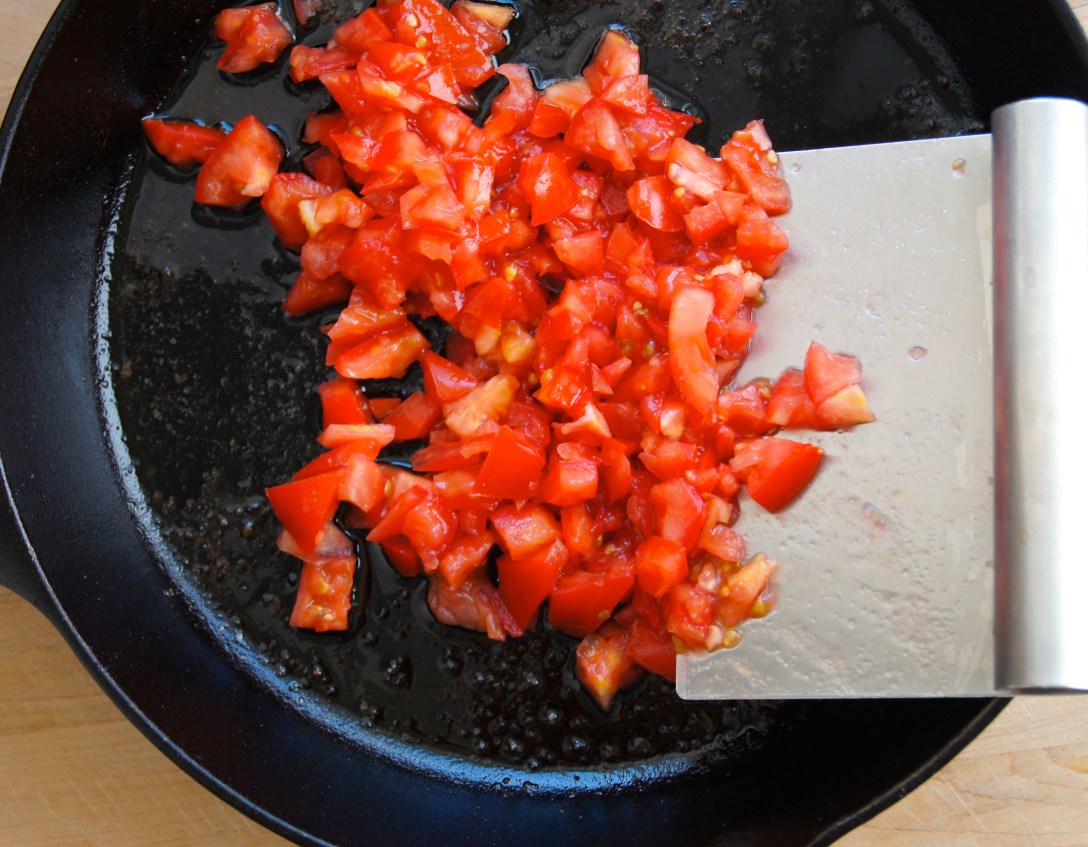
Jovina cooks Italian: Fresh tomato sauce

Summer Tomatoes | jovinacooksitalian

Fresh Tomato SauceIMG_0009

Ingredients

  • 4-5 pounds of fresh Roma tomatoes, quartered and seeded retaining as much pulp as possible
  • 1/4 cup olive oil
  • 1 large sweet onion, finely diced
  • 2 celery stalks, finely diced
  • 1 carrot, finely diced
  • 2 large cloves of fresh garlic, finely minced
  • 1 teaspoon sea salt
  • 1/2 teaspoon red pepper flakes (chili)
  • 1-2 teaspoons honey, if needed

Herbs

Place the following  herbs in a piece of cheesecloth and tie the cheesecloth closed.

  • 1/3 cup fresh basil leaves
  • 1 sprig of fresh thyme
  • 1 sprig of fresh oregano
  • 2 bay leaves
  • 2 sprigs of parsley

Directions

Pour the olive oil into a large stockpot over medium heat.

Add the onions, celery, garlic and carrots.

Saute for 5 minutes or until the vegetables are tender.

Add the tomatoes and sea salt.

IMG_0008

Simmer on low heat, covered, for about an hour until the tomatoes cook down.

Remove the pot from the heat and using an immersion blender, process the mixture until smooth.

Return the pot to the heat and add the herb cheesecloth package.

Taste the sauce to see if the tomatoes were too bitter. Add the honey, if needed.

Bring the sauce to a simmer and cook  until reduced and thick, an hour to an hour and a half more. Remove the cheesecloth package and discard.

IMG_0011

Pour the sauce into a refrigerator container and store the sauce up to 1 week, or freeze in batches.

This sauce can be used with courgette or squash spiralised  “spaghetti” or with chicken and pork.

Orthopaedic surgeon who wants to reduce amputations silenced by regulatory body

fb_BPhotography_Belinda-Fettke_No-Fructose_Gary-Fettke_LAFM_Fairsies-Fat-Busters.jpg

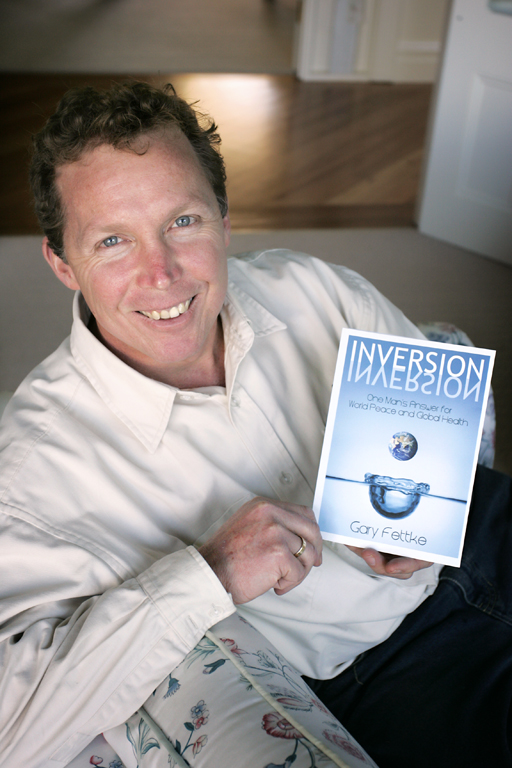
It would be funny if it wasn’t so tragic. Gary Fettke, a Tasmanian orthopaedic surgeon has been banned from talking to patients about the nutritional changes they can make to prevent amputations.

His wife, a nurse, tells his story here:


http://www.nofructose.com/gary-fettke/


Gary’s presentation on you tube is here:


Low carb store: Steak au poivre

sirloin steak


  • 2 beef steaks
  • 1 tbsp black peppercorns
  • 1 tbsp olive oil
  • 2 shallots, finely chopped
  • 50g unsalted butter
  • 60mls Cognac
  • 100ml double cream


Preheat oven to 180°c. Season the steaks with sea salt and allow to come to room temperature.Coarsely crush the peppercorns and press into both sides of the steaks evenly.Heat a heavy griddle pan (preferably cast-iron) over moderately high heat until hot,then carefully add the oil. Add the steaks and cook to your liking turning only once. Transfer the steaks to a warm plate to rest. Pour off the fat from the pan then add the shallots and half of the butter and cook over low-medium heat until the shallots are well-browned.Add the Cognac (it may ignite!) and boil, stirring, until the liquid has reduced to a glaze (a few minutes). Add the cream and any meat juices from the steak plate and boil, stirring occasionally for a further 4-5 minutes. Add the remaining butter and cook over a low heat until the butter is incorporated into the sauce. Serve sauce with steaks and lightly cooked vegetables.

How does mental distress show physically?


8558187594_65216d9621_bAlmost every patient with stress related mental health problems reports at least one somatic symptom and 45 per cent report six symptoms or more, according to a Swedish study of 228 patients suffering from what is termed as exhaustion disorder.

Here is the chart run down of the most common symptoms:

Almost all: Tiredness and low energy

67% Nausea, gas and indigestion

65% Headaches

57% Dizziness

Men and women reported the same number of symptoms.

Chest pain and sexual problems and pain during sex were more reported in men.

Pain in the arms, legs, joints, knees, hips reported more in the over 40s.

The more severe the mental health problem the higher the number of somatic symptoms.

From Human Givens Volume 21 No 1 2014


(BMC Psychiatry, 2014, 14, 118)

Although the causes of fibromyalgia are insufficiently understood at present and there is dubiety over whether the condition is due to stress or physical factors I have reproduced a chart which does show many psychosomatic symptoms in its presentation.


Symptoms_of_fibromyalgia.png