Avocado, pancetta and pine nut salad


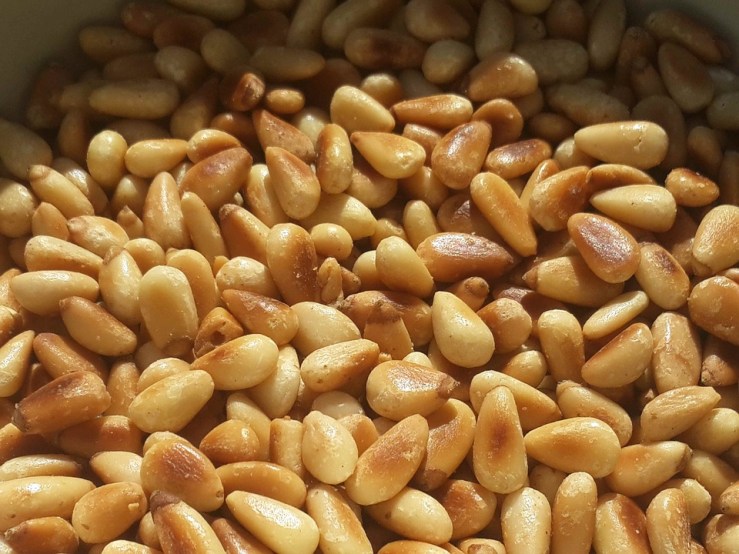
pine-1088680_960_72012 slices pancetta                              50g pine nuts

balsamic vinegar                                olive oil

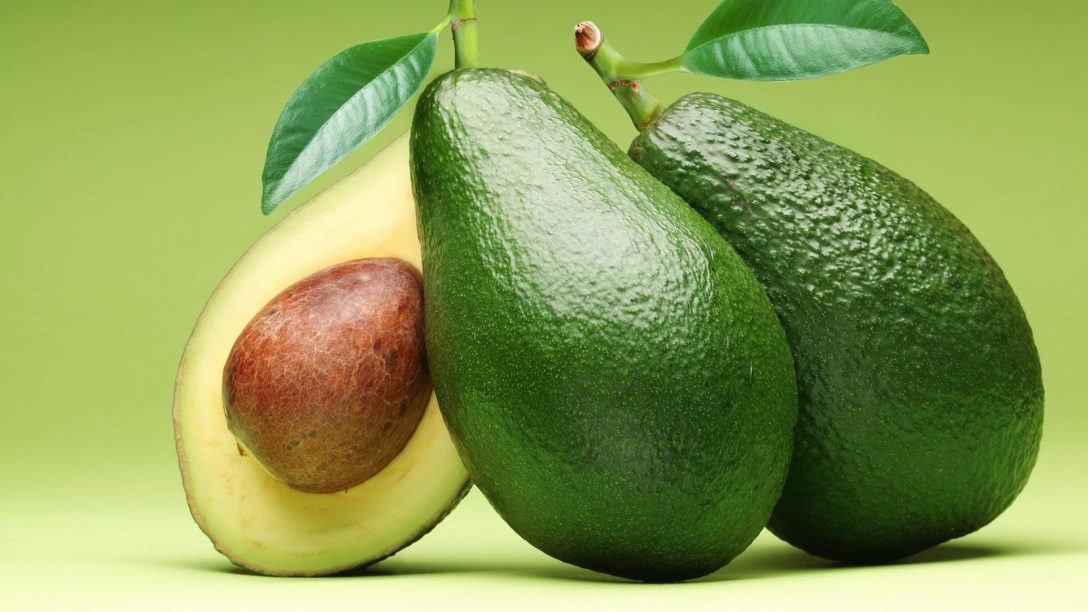
6 ripe avocados                                  4 big handfuls baby spinach

Serves 4


  1. Heat a frying pan and fry the pancetta till crispy. Remove from pan and set aside. In the same pan, lightly toast the pine nuts.
  2. Combine 1 tbsp balsamic vinegar with 2 tbsps olive oil and season with salt and black pepper.
  3. Taste to make sure dressing is balanced.
  4. Lay out avocado on serving plates, sprinkle over spinach leaves, pancetta and toasted pine nuts. Season well and drizzle dressing over.

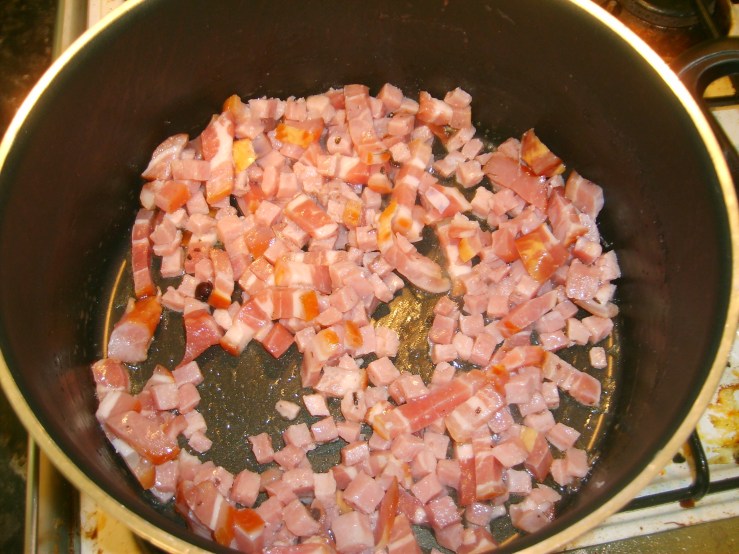
Pancetta_(1126929204).jpg

Can young or thin people get type 2 diabetes?

Anna's avatar

If you think they can’t, think again.

SONY DSC

There is a certain stereotype of a person afflicted with type 2 diabetes as being overweight and inactive, like a couch potato chain-munching on Twinkies, and may be even smoking at the same time.

And the breaking news is, thin people get it, too.

The risk for developing type 2 diabetes is smaller if you’re thin but still, it’s real.   There is no standard definition for thin, says Everyday Health website.   Besides, weight isn’t the only contributing factor; this has to be in your genes.   If your parent or a sibling has T2D, you have at a greater than 3 times higher risk of developing it, too, compared with those that have no family history.

Genetics may explain why (some) thin folks develop type 2 diabetes while (some) of the overweight ones don’t.  And that is the truth.

Then there are lifestyle choices that…

View original post 104 more words

Drugs that change your weight

Researchers conducted a systematic review and meta-analysis  of 257 randomised controlled trials and  summarized the evidence about commonly prescribed drugs and their association with weight change.

They included 257 randomized trials (54 different drugs; 84,696 patients enrolled). Weight gain was associated with the use of: amitriptyline (1.8 kg), mirtazapine (1.5 kg), olanzapine (2.4 kg), quetiapine (1.1 kg), risperidone (0.8 kg), gabapentin ( 2.2 kg), tolbutamide (2.8 kg), pioglitazone (2.6 kg), glimepiride (2.1 kg), gliclazide (1.8 kg), glyburide (2.6 kg), glipizide (2.2 kg), sitagliptin (0.55 kg), and nateglinide (0.3 kg).

Weight loss was associated with the use of: metformin (1.1 kg), acarbose (0.4 kg), miglitol (0.7 kg), bupropion (1.3 kg), and fluoxetine (1.3 kg).

For many other remaining drugs (including antihypertensives and antihistamines), the weight change was either statistically nonsignificant or supported by very low-quality evidence.


JP Domecq. The Journal of Clinical Endocrinology and Metabolism Drugs Commonly Associated With Weight Change: J. Clin. Endocrinol. Metab. 2015 Jan 15;100(2)363–370, From MEDLINE®/PubMed®, a database of the U.S. National Library of Medicine.

Published in Diabetes in Control Feb 1Metformin_500mg_Tablets


Dana Carpender: how can low carbers overcome difficulties?

Chris_Sharma_Climbing_in_Yangshuo,_China (1).jpgIn part two of my interview with Dana Carpender, author of several low carb cookbooks, Dana gives words of experience and wisdom concerning lack of support at home, dealing with emotional blackmailers and gives her favourite online resources to help you.

Q. Dana, what do low carb dieters tend to struggle with the most? What strategies help them to overcome these difficulties?

Low carb dieters often feel like the odd man out. This is especially true if they have no support at home, or even face opposition.

I have heard some real horror stories. One that has stuck with me since my self-published days was a woman who wrote to say that she had been morbidly obese and had diabetes, but had committed to low carb, lost a lot of weight, and greatly improved her health. Her husband, for some unpleasant reason of his own, was threatened by this. He would bring home a box of expensive chocolates, open the box, and set it on the sofa next to her. She had taken to slipping a few into a baggie and tucking them under the seat cushion, so her husband would think he was “winning.”

I told her that while I admired her patience and strategic thinking, I would have marched the whole box of chocolates straight to the bathroom and flushed them down the toilet. Let him spend his money feeding the septic tank and maybe he’d cut it the heck out. But then, I’ve never been known to be a shrinking violet.

Support is vital. If a low carber doesn’t find it at home, s/he needs to seek it out. There are hundreds, if not thousands, of low carb Facebook groups and message boards, each with its own culture. Anyone can find a few where they fit in (and quit the ones that aren’t a good fit). A low-carb Meetup (www.meetup.com), perhaps for Saturday brunch, can be a great source of local support. Consider starting one.

It also helps to develop an attitude. No apologizing, no listening endlessly to all the people who are “concerned” that you’re not eating a “balanced diet,” or who parrot “all things in moderation.” A quick “Thanks for your concern,” perhaps — the first time, not the tenth — and then quite deliberately change the subject. (Eventually you’ll very likely be able to say, truthfully, “My doctor says I’m doing great.” When people tell me that a low carb diet will give me heart disease, ruin my kidneys, yadda-yadda, I make big eyes at them and plaintively ask, “When?”)

It helps, too, to read a few blogs or listen to some podcasts that will keep you filled in on the rapidly accumulating research showing just how beneficial a low carb/high fat diet is. Jimmy Moore does a great job both blogging and podcasting. I love Tom Naughton’s Fathead blog. Andreas Eenfeldt’s Diet Doctor is always good for a quick shot of enthusiam, while for geeks like me, Dr. Michael Eades at Protein Power does a terrific job with more detailed medical analysis. Gary Taubes, Dr. Malcolm Kendrick — there are so many smart and credentialed people writing on the topic, there’s no reason to let yourself be scared by the “But all that fat!” boogeyman. Katharine, you are doing one of the most helpful things possible for the low carb community.

Along with feeding your body the right food, feed your brain the right messages.

Sooner or later you will deal with a food pusher. In particular, female relatives tend to do this — Mom, mother-in-law, grandma, etc. You’ll be at Thanksgiving/Christmas/Fourth of July/whatever, and it will start:

“But you can’t diet on a holiday! You have to treat yourself sometime! Anyway, Aunt Suzy made her sweet potato casserole just for you! It’s tradition! You have to have some!” Etc, etc, etc. We all know the 1001 verses to this song.

Be clear on this: It is always polite to say, “No, thank you.” If you feel like you’re being rude, ask yourself how you would react if you were violently allergic to the item being offered, to the point that you would collapse right there from anaphylaxis. Would you feel you were being rude to say “No, thank you?” Would you feel “loved” by the pressure to eat that food, and your health be damned? You would not. You’d wonder if they’d taken out a sizeable life insurance policy on you.

As for “You have to treat yourself,” ask yourself this: Why does no one say this to sober alcoholics? Or people who have finally managed to kick a two-pack-a-day cigarette habit?  Carb addiction is just as deadly. It takes longer, that’s all.

But you know as well as I that the family food pusher will not take a simple “No, thank you” for an answer. There will be endless push-back.

What you must not do is JADE: Justify, Argue, Defend, or Explain. You do not have to justify your choices to anyone, and any argument or explanation will be seized upon as ammunition to argue you out of your stance. Instead, try this neat bit of social ju-jitsu: Say “No, thank you,” and then immediately change the subject. Do this by asking a question of the group at large, or at least of someone other than the food pusher.

Let’s practice, shall we?

“You always loved my homemade banana bread! I made it just for you! You have to have a slice!”

“No, thank you. Hey, does anyone want to hit the sales first thing tomorrow?”

“You can’t diet on Thanksgiving! You have to have at least one piece of pie!”

“No, thank you. Hey, has anyone seen cousin Jamie’s new baby? Any photos?”

“Just a little bit won’t hurt! I made it from Grandma’s recipe!”

“No, thank you. Hey, Henry – you’re graduating this year, right? Have you started applying to colleges?”

I recommend you come up with a list of questions before you attend this sort of event, anything from “Has anyone seen (insert current movie)?” to “I’m thinking of going to Playa Del Carmen on vacation. Has anyone been?” By doing this, you make the food pusher look a trifle obsessed if she continues – she, rather than you, becomes the oddball.
 

Dr Bernstein’s Diabetes University on You Tube

Diabetes in Control Advisory Board member, Dr. Richard K. Bernstein, has recently created, “Dr. Bernstein’s Diabetes University,” a complete course of video classes geared towards patients, which is now available on Youtube. Dr. Bernstein’s Diabetes University Playlist includes these short videos: “Basic Science of Diabetes,” “Values and Methods of Exercise,” “How Much Protein,” plus much more. Just follow this link for more information: Dr. Bernstein’s Diabetes University Playlist
bernstein

Dsolve.com back in action


122124


Ryan Whitaker, a Colorado IT specialist, set up the dsolve.com site nine years ago. The aim was to have an online site for low carbing diabetics to share news and resources and to host the educational course that we developed from the experience of Dr Richard Bernstein’s Forum members at the time. At the time this was the first comprehensive diabetes educational course to go online. And best of all it was free, and still is.  This course, the How to.. course now features on diabetesdietblog. com.

After an absence of two years we are very pleased to say that dsolve.com is back in action.

Feel free to pay a visit.

Ryan is one of the many type one diabetics who has had excellent blood sugar control as a result of following a low carb diet and using insulin techniques originally developed by Dr Bernstein.  These are explained in the course material and of course in our book Diabetes Diet.

Diabetes duration and control affects intellectual decline


324468854_8f9fd42793_z

People who have diabetes diagnosed in midlife have a higher risk of cognitive decline over the following 20 years compared to people with normal glucose levels. A prospective study done in the USA showed that there was a 19% increased risk of cognitive decline over the 20 years for those who had diabetes. This meant that having diabetes aged cognitive function by about five more years than normal.

The level of decline was associated with the degree of control of the diabetes. Those with HbA1cs over 7% were more at risk than those with a better degree of control.  Increased duration of diabetes also led to a higher risk.

The study reviewed 13,351 year olds who were aged 48-67 at the start of the study for 20 years. Associate professor of epidemiology Elizabeth Selvin of John Hopkins University said of her findings, ” The lesson is that to have a healthy brain when you are 70, you need to eat right and exercise when you are 50. Maintaining cognitive function is a critical aspect of successful ageing. Preventing diabetes and improving glucose control in people with diabetes offers important opportunities for preventing cognitive decline and delaying progression to dementia”.


Dana Carpender: What do you eat on a typical day?

4415406430_7a5ba031bb_o.jpgDana Carpender, author of several low carb cookbooks, generously gave her time to be interviewed for this blog site. Over several posts she will be sharing her wisdom about the low carb lifestyle.


My first question: What do you eat on a typical day Dana?

Honestly? Leftovers. 🙂 What with trying recipes, and only two people in the house, I eat a lot of leftovers. The summer I wrote The Low Carb Barbecue Book I ate chicken or ribs for breakfast every day for weeks.

In the absence of leftovers? Probably an omelet for breakfast, especially if there are ripe avocados in the house; cheese-and-avocado omelet with chipotle hot sauce is a big favorite of mine. Dinner will be a fairly simple protein — chicken, steak, burgers, pork steaks, something like that, with a low carb vegetable or salad with it if we feel like it. I confess we don’t always bother. If I want just a little something, I might well have shirataki with a fatty sauce – or just butter and Parmesan.

This is, of course, when I’m not working on a book. If I am, it’s a wild card! It depends on what sort of book it is, what I have in the house, what idea I’ve had.

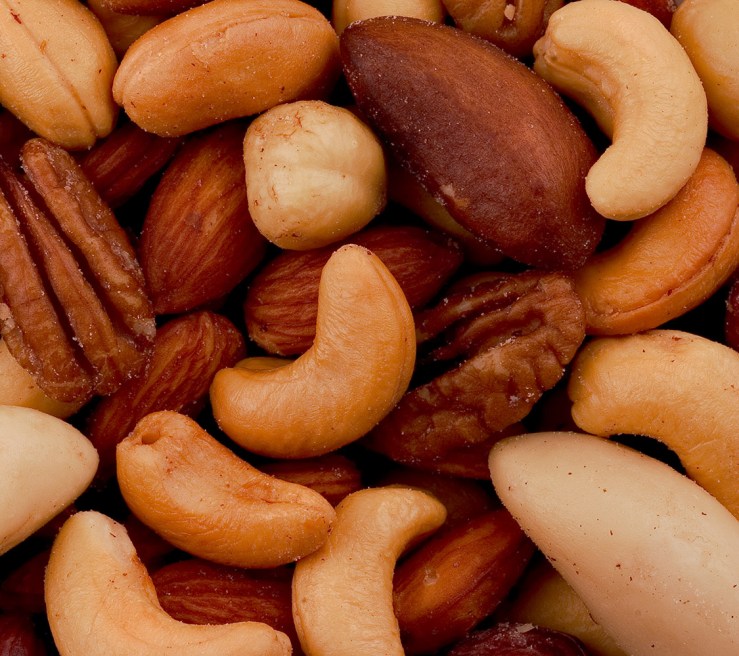
If I snack, it’s usually on nuts. I’ve snacked less and less as the years have gone by, and as I’ve deliberately increased fat as a fraction of my calories.

Perhaps the most notable thing is that I have long since slipped away from the three-meals-a-day format. I rarely eat more than two meals a day anymore; I’m just not hungry enough. I try to do some intermittent fasting, so I often don’t eat until noon or one — a good 16 hours after I ate the previous night — although I drink copious quantities of tea.

Long-time readers will note that this violates a previously stated rule to always eat breakfast. I no longer consider that a hard-and-fast rule, but rather one that depends on circumstance. If someone works away from the house in a place where carby garbage is available, like the donuts in the break room or the candy bars in the vending machine, then I feel breakfast is imperative, even if it’s just a couple of hard boiled eggs or individually wrapped cheese chunks grabbed on the way out of the house. This is especially true for those who are just starting out, and not yet solidly in the mindset of “this is how I eat.”

But if, like me, you have more time freedom, and have achieved a blissful lack of regard for starchy, sugary stuff, postponing breakfast until you’re genuinely hungry is a good way to work in some intermittent fasting.

Too, I’ve lost the idea that some foods are “breakfast foods,” while dinner needs to be a protein and two veg. I’m perfectly happy having leftover chicken and coleslaw for breakfast, or whatever happens to be kicking around the fridge. And I’ve certainly been known to eat eggs for dinner, or just make something snack-y, like Chicken Chips. (Chicken skin spread on the broiler rack and baked until crisp, then salted. Yum. I buy 10-pound bags of chicken skin from my speciality butcher.)

One other oddity: I don’t feel any need to snack during movies or television. It’s common for people to feel that there should be something they can munch on mindlessly for hours while consuming entertainment, but low carb foods don’t lend themselves to that. They’re filling. Eat a bucket of mixed nuts the size of even a small movie theater popcorn and you’ll make yourself sick. People need to get away from the idea of food as entertainment.


No proven benefit to replacing saturated fat with polyunsaturated fat

19349485773_214c8033a3_bAn analysis of the Minnestota Coronary Experiment (1968-73) data has shown that there was no evidence from randomised controlled trials that the serum cholesterol lowering effects of replacing saturated fat with linoleic acid resulted in any reduction from coronary heart disease and total mortality.
The data was re-analysed by Ramsden and Zamora et al and published in the BMJ on 16 April 16.

J Lennert Veerman comments: ” A diet enriched with linolieic acid did not reduce mortality. Indeed participants had a higher mortality than controls. These unexpected results proved difficult to stomach for researchers at the time. The trial ended in 1973 but it took till 1989 for the results to be published. In the past decade old certainties about dietary fats have been questioned and some have been abandoned. Last year US dietary guidelines removed dietary cholesterol and total fat as risk factors worth worrying about.

If blood cholesterol values are not a reliable indicator of cardiovascular risk, then a careful review of the evidence that underpins dietary recommendations is warranted. Ideally recommendations should be based on clinical outcomes, not surrogates such a cholesterol concentration.

From an article in BMJ 16th March 2016

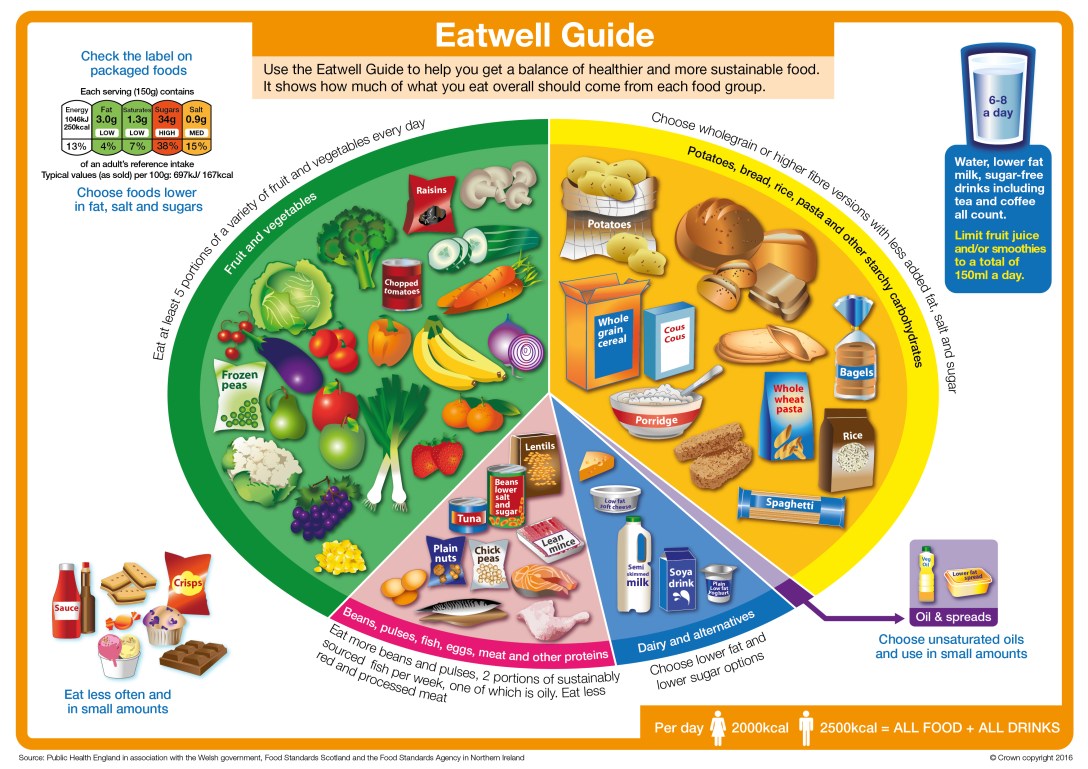
New UK “Eat Well Plate”: same old rubbish!

The UK government has released a new version of the risable “Eat well plate” which gives us at diabetesdietblog.com even more heartburn, if that were possible.

In this they have given due pominence to fruit and vegetables but have also advised even more starch such as bread, potatoes, breakfast cereals, pasta and rice. Low fat dairy is encouraged and protein is under represented again. Vegetable oil and low fat spread is given a little sliver of prominence. They have advised us to eat 30g of fibre a day and limit sugar to 30g a day.  Lordy, some of us don’t even eat this in total carbs a day! carbohydrate.jpgThey have said that 150g of fruit juice or smoothie can count as one of “your five a day”.

Cardiologist Aseem Mahhotra has tweeted, “Is this a joke?” Well, sad to say, probably not.

The government are grimly determined to back a diet that will lead to more obesity, diabetes, acid reflux, cancer and cardiovascular disease. Isn’t the NHS in enough of a mess already? Obviously the government don’t think so.