Making Sundays Special

roast pork on the Diabetes Diet
Roast pork – eat this to make your Sunday special… (recipe Ministry of Food, Jamie Oliver).

New Year’s resolutions? Pah! One, you can makes changes any time you want, and two, most of us see them as miserable—the lose weight, take up punitive exercise regimes kind. In this part of the world, January is a challenging month. The weather’s dreich, the nights are long and the pennies few and far between. Who wants to add starvation and exhaustion to the mix?

One resolution I do intend to stick to is my campaign to Make Sundays Special again. Years ago, my husband and I used to make a point of doing something on Sundays. He works most Saturdays, so the Sundays were the one day a week we could visit castles, go to Edinburgh, take the motorbike out for a spin, bike to Balloch, drink too much and cycle back via the main road while piddled*. Last year, we fell into the habit of doing nothing. He’d be downstairs catching up on Colombo (why, why, why?), and I’d hide away upstairs working or writing. We added doing the supermarket shopping to a Sunday. As I love food, I don’t mind the supermarket shop but does it belong on a precious day off? I think not.

Cut the screen time

In 2019, I’ve vowed to spend less time in front of a screen. I’m there for work and as a hobby, and I dread to think how many hours I spend hunched over my laptop. On the plus side, I use a standing desk so it’s not as sedentary as it could be. On the other hand, it’s still not healthy. Time to reinstate the Sunday activities, such as:

Ben Lomond

I have Ben Lomond in my sights. Hill climbing is one of the best activities you can do in Scotland. The Munro is right on my doorstep, and the shame is I’ve yet to climb it.

Three Lochs Walk

I’d also like to walk from Balloch to Helensburgh with Sandy. I’ve done it a couple of times with my friends, and it’s a fabulous walk because of the views you get of Loch Lomond.

Linlithgow Palace

We’re members of Historic Scotland and we’ve yet to visit Linlithgow Palace so a train trip there and a pub lunch is in order.

Uni tour

The University of Glasgow offers walking tours. As I work there, it will be fascinating to find out more about this iconic Glasgow building. Another tour that has always piqued my interest is the one you can do of Glasgow Central station. If I book now, we might get there in the summer. (It’s terrifically popular.)

Sunday roast

Roast pork, the before version.

Finally, it’s nice to include special meals in your Sunday plans. As a child, I didn’t like the Sunday roast—probably because it meant sitting at the table waiting for adults to finish so we children could be excused, and I have memories of thick slabs of meat and nasty bits of under-cooked fat. These days, I’m a fully paid up member of the Sunday roast forever club. While the meat is nice, the best bits are the accompaniments – home-made gravy with a decent amount of wine thrown in, roasted parsnips and carrots, crackling if you’re making pork (or just make it as a side dish anyway) and one roast potato as a treat.

Bring on the special Sundays!

What’s your idea of a treat on a Sunday? Is cutting back your time online part of your plans for 2019, and if so what do you intend to do instead?

*Don’t do this at home, folks!

BMJ: How to get a better sleep if you work night shifts

From Optimising sleep for night shifts by Helen McKenna and Matt Wilkes 3rd March 2018

Night shift work happens when your body would rather be asleep. Alertness, cognitive function, psychomotor co-ordination and mood all reach their lowest point between 3am and 5am.

After a night shift is over, the worker has to try to sleep when the body would prefer to be awake. This shift away from the circadian phase compounds the fatigue and can lead to chronic  sleep disturbance. There is  more likelihood of occupational accidents, obesity, type 2 diabetes, heart disease and breast, prostate and colorectal cancers. Psychological and physical well being is affected and accidents or near misses when travelling home are much more likely to occur.

Performance on the night shift gets worse as people get older and it takes longer to recover from a night on.

On average most people sleep about 8 hours a night.  Some people cope with sleep deprivation better than others. Performance will be impaired after two hours of sleep deprivation and gets worse as sleep debt accumulates. Therefore before starting a set of night shifts it is wise to sleep in the morning before, avoid caffeine that day,  and if you can take a nap in the afternoon between 2pm and 6pm.  For a nap to be most effective you need 60-90 minutes asleep.

When you start the shift, try to fit in a nap of about 30 minutes if this is the sort of job that allows this, but have a coffee immediately before the nap, and don’t have any more caffeine after the nap.  Sleeping longer than 30 minutes can make you feel groggy as you move into deep sleep and are the roused from it. Caffeine can help performance but you also want to try to sleep the next morning. Avoid it for the 3-6 hours before you plan to go to sleep in the morning. If you are doing critical tasks especially between 3-5am it is wise to build in more checks to your work.

Working in bright light can perk you up on the night shift.

When it comes to eating you are probably best to eat your main meal immediately before the night shift then eat just enough to feel comfortable as the shift goes on.

Jet lag improves at the rate of one day for every hour you are out of phase.  Circadian adaptation is therefore impossible during short term rotating shift work. Therefore you have to do your best to optimise your sleep between the shifts so as to keep the sleep debt minimal.

If you can possibly arrange lifts home or travelling home on public transport after a night shift, do so.

You can try to improve the situation by wearing sunglasses in daylight on the way home, avoiding electronic device screens, using blackout blinds, ear plugs and eye masks or even white noise generators.  A warm bath and then sleeping in a not cold but cool room and wearing woollen nightwear may help. Melatonin taken in the morning after a night shift has been shown to improve sleep duration by up to 24 minutes. Avoid alcohol and caffeine as these won’t help. Drugs such as Zopiclone can improve sleep if taken during the day but it can be addictive and needs a prescription.

After a run of night shift work you may get into the swing of your regular routine by having a 90 or 180 minute sleep, as this is one or two sleep cycles,  or sleeping in to noon and then getting up and getting outside for some exercise in bright light. Do your best to include meals at the usual times and socialise a little.  You will also need to pay attention to paying back your sleep debt by going to bed earlier than usual and sleeping in later than usual for a few days. It is best to avoid day time naps during the recovery from shift phase.

The path to sleep optimisation is an individual thing. Feel free to experiment.

The Quirky Things About Being a Type 1 Diabetic

Because I am hyper-organised (crap), I scheduled time to write a post for World Diabetes Day—spot the deliberate mistake. Said designated day took place on 14 November, unmarked by we at the Diabetes Diet. Hey ho!

Instead, here I am posting about it more than a week later. You could argue that living with diabetes also takes place on the other 363 days (and the extra one every four years) of the year, so why make the 14th special, although awareness-raising exercises are always useful.

Anyway, I thought I’d list some of the quirky things about living with diabetes. We all know the big stuff, but there are some teeny-tiny bits you put up with which aren’t obvious to those who don’t have the condition…

Gnawing anxiety when parted from your bag. I have an industrial-sized handbag so I can carry around everything—blood testing equipment, two pens, spare needles, jelly babies and a full make-up kit*. When I visit people and they try to take my bag from me to put it with coats, I cling to it. I’m never more than a few metres from that bag.

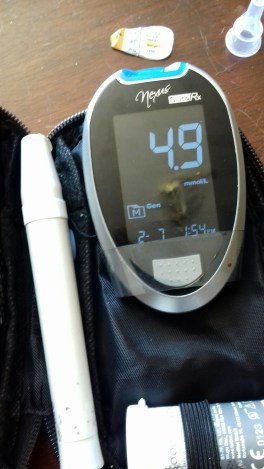
a picture of a blood testing machine on The Diabetes Diet

A trail of litter that follows you everywhere. I do my best to dispose of it at the time, but I wish someone would invent a small bin that magically appears at your side every time you do a blood test or injection so you can throw away your used needles and blood testing sticks there and then. Every few days or so, I have to do a clear out of my bag where old needles, their wrapping and used sticks gather at the bottom. Once, I was in Regent’s Park in London and I spotted a used blood testing stick on the group and it delighted me. I knew it wasn’t mine**, but the thought that there was another type 1 in the vicinity felt comforting.

An aversion to ordering drinks when you are out that are in a glass. How do you know it’s the diet version? I only feel secure when my drink comes in its bottle or can. Otherwise, you might end up drinking the full-sugar one which will hit you like a sledge hammer almost immediately.

Puncture-marked fingers. I’m still on the waiting list for the FreeStyle Libre so in the meantime, my fingers keep that little collection of black dots that marks frequent finger pricking. You are supposed to vary the fingers, but my right hand bears the brunt of tests because I’m left-handed.

Toilets are very important. High blood sugars make you pee a lot and the first thing I work out whenever I go anywhere is—where’s the loo? Also, I’m not fussy. I have friends who won’t use dirty toilets such as the ones you get on trains. I don’t care. It’s a loo and it’s going to take me from bursting discomfort to huge relief in minutes.

It’s a full-time job. Managing diabetes takes up a lot of time and energy. You don’t get holidays and you can’t quit, and you have to do it on top of everything else you do. The boss is often a moody cow too. The skill-sets needed include arithmetic (figuring out insulin doses to match food), organisation (making sure you have everything you need when going out and keeping on top of your prescriptions), an understanding of biology and how your body works, and the ability to forward plan for most aspects of your life.


*Strictly speaking, not needed for diabetes

**On second thoughts, it could have been. Those things get everywhere. I’m always finding them in weird places.

The FreeStyle Libre—a two-week report

a sensor and reader on a post on the Diabetes DietYou find me, un-sensored and sad… Yes, I’ve completed two weeks on the FreeStyle Libre sensor and reader system, and now I’m back to finger pricks, at least temporarily.

At my last diabetes clinic appointment, my consultant* agreed that I’m a candidate for flash glucose monitoring (which is different from blood glucose testing, but more on that later) and sent me off with a 14-day sensor while I wait for bureaucracy to kick in.

So, what’s flash glucose monitoring like? For the uninitiated, the system comprises a sensor you wear on the back of your arm and a reader that can be used any time. Type 1 diabetes tends to encourage obsessive compulsive behaviour, and the FreeStyle Libre system facilitates that, though it’s no bad thing.

Where flash glucose monitoring differs from blood testing is that the sensor reads levels from interstitial fluid, so it lags about four and a half minutes behind blood glucose readings. If you drive, the DVLA requires you to do blood tests, rather than scans beforehand to avoid the risk of hypos while driving.

Parents love them because they can check children with type 1 diabetes while they sleep, able to work out if they are risk of a hypo, and they are also routinely prescribed for pregnant women who have diabetes as frequent testing makes it easier to maintain the tight control you need while growing a baby.

The accompanying app can be downloaded by others, who can gain access to your information if you give them permission. Again, something that is useful for parents although such scrutiny would have horrified the teenage diabetic me.

Here’s what I found:

Frequency of testing

After a day or so of overcoming the hesitation—I can’t do another test, I just did one an hour ago… Oh. Yes, I can—I averaged 11 scans a day, and about two blood tests usually at the same time to check accuracy and a few times because I was hypo.

Ease of testing

Easy-peasy-lemon-squeezy! You can use the reader through clothing, it only takes a few seconds. It’s much easier than pulling out a meter, sticks and finger-pricker—especially when you’re out and about.

Accuracy of readings

I had the odd bit of disparity—usually if my blood sugar was low, as the sensor lags behind blood glucose readings. However, most of the blood tests I did at the same time varied only by 0.1 o 0.2 mmol, and I did get hypo readings that registered at the same time.

Sensor adhesion

No issues there. That thing stuck to me for the two weeks. I didn’t do any swimming in that time, so I can’t attest to how well it works in that setting. Nor did I try it out in the sauna/steam room as threatened—though one suggestion a fellow user came up with was using cling film to bind it onto your arm. The reader lasted on the battery charge for the full two weeks too.

Most useful bits

There are lots of things that sell flash glucose monitoring to me—ease and frequency of testing two of them—but there are other super-useful components. One is the pattern tool. You can see where you have the most glucose variability and when you tend to have hypos. In the two-week period, I had (ahem) 17 low glucose events, most of them between 11am and 5pm and that corresponded with the time of day I have most glucose variability.

I’ve never been good at logging my blood tests. It just feels too much like hard work. I know you can download from your meter, but the checks I made on the flash glucose monitor gave me a clear idea of what happens. And, more importantly, some ideas of how to fix it.

The excess hypos may have been because of the half-marathon, which happened not long after I started my 14-day sensor and because I’ve been eating more carbs. As we say in the Diabetes Diet, more carbs mean more insulin. Bigger amounts of insulin mean bigger mistakes. A salutary reminder, then, that it’s back on the low-carb for me.

Thanks too, to Steven Morrison—my blog and book co-author’s son—who emailed me in detail about his own experiences using the FreeStyle Libre. He’s a convert too, and the cling-film tip came from him.

So when does my prescription come in? I’m now on a list for a short course at the hospital and once I’ve taken part in that, the organisers write to my doctor recommending she add sensors to my list of prescribed diabetes medications and gear. Fingers crossed, it doesn’t take too long.


* #LovetheNHS

My Favourite Health & Fitness Freebies

free sign on the Diabetes DietA continuous glucose monitoring system, the MiniMed 670G self-adjusting insulin pump, a personal trainer AND an unlimited food budget so I can buy organic, ethically sourced food all the time…
And, whoops—you interrupted me there in the middle of a reverie relating to the things I’d have to help me manage my diabetes if money were no object. The top of the range monitoring and pump therapy tech is obvious while the food and exercise one less so—but activity and an excellent low-carb diet can help you manage your blood glucose levels.

Stable blood glucose levels don’t guarantee you riches or the partner of your dreams, but a person who doesn’t ride the blood sugar roller coaster is far more energetic, and free to pursue what they want unhindered by the hell of mood swings.

In the meantime, what can we fiscally challenged diabetics do so we can fix our blood glucose levels to the best of our abilities? Here are suggestions for freebies that can help you manage your condition…

YouTube—otherwise known as the exercise channel in our house. Online, you’ll find tens of thousands of exercise uploads—from yoga to Pilates, barre classes, HIIT workouts and weight-lifting. You could spend several years working your way through them and not do the same workout twice. If you find gyms off-putting or their membership fees too expensive, YouTube’s perfect. Look for workouts that don’t need equipment either.

Start with walking workouts (Lesley Sansome’s Walk at Home channel is great). Fitness Blender’s videos are explained well, and the exercises done at a speed you can keep up with. Jessica Smith TV does a huge variety of workouts that offer different fitness benefits, and Heart and Soul Fitness does the same.

MyFitnessPal—there are studies that claim food tracking helps you maintain your weight. Food logs are useful for we diabetics too as they allow us to work out how much insulin we need for meals we eat regularly. MyFitnessPal has a huge database, but you can also add your own recipes and the site will give you a full nutritional breakdown of each.

MySugr – a free app for logging blood sugar results and additional information such as insulin does, exercise, weight, blood pressure and more. The app is useful, but if you don’t log for a day or so you will struggle to remember all the information you need to input for a complete picture of what is going on.

The internet—thanks to the world-wide web, there’s a wealth of information at our fingertips. As a teenager and twenty-something with diabetes, I only knew one or two others with the condition, and we didn’t meet up regularly to swap notes. Now there are forums, websites, charities, blogs, recipes and more online where we can find out more about the ol’ defunct pancreas problem.

A word to the wise… We all know the internet allows unprecedented freedom of speech, which is mostly for the good. But it’s also a place where information spreads unchecked. Blogs—and I include this one too—offer opinions and personal experience, which do not always equate to fact and recommendations suitable for you. Still, the Diet Doctor, Diabetes.co.uk, radiabetes.com and diabetesdaily.com offer gems. (I  apologise if I missed your great site out—limited room here.)

NHS 70 logo on the Diabetes DietAnd finally…drum roll… the NHS! Here in the UK, we folks with type 1 diabetes get free healthcare and prescriptions. I mump and moan occasionally about wanting the latest tech, but I’ve had diabetes for more than 30 years and in that time, I’ve never paid for medications, appointments or equipment. Our fabulous healthcare system has existed 70 years now. It’s shaky on its feet sometimes, but you can’t argue with the wonderful principles at its core—free healthcare for all, based on clinical need.

What are your favourite diabetes freebies? And what websites or blogs do you like?

Retirees are happier when they are active

An Australian study has shown that getting a good sleep at night and being active during the day was the most effective way to boost mood in retirees.

105 people took part in the Life After Work study. They were followed for six month before retirement to 12 months afterwards. They carefully logged their activities and their mood was measured.

The time spent on chores, physical activity, quiet time, screen time, self care, sleep, transport and work, all changed over this period of time. The most favourable substitution was replacing work time with physical activity and sleep.  Replacing work with screen time and social activity showed less effect on mood enhancement.

After retirement, depression, anxiety and stress all reduced.

Olds T et al One day you will wake up and won’t have to go to work: The impact of changes in time use on mental health following retirement. PLoS ONE.2018;13(6);e0199605.doi:101371/journal.pone.0199605. PMID:29953472

Most of the public are blissfully unaware of serious diabetes complications

A survey by Walnut Unlimited asked 1,000 UK people, what can the effects of having diabetes be?

None of them were aware of the pregnancy related consequences of diabetes.

2% knew about stroke, 4% about kidney damage, and 6% about heart disease.  Similarly low numbers knew that diabetes is related to a shorter life span.  A quarter of those surveyed however did know that amputation and sight loss were complications of diabetes.

Diabetes affects more individuals in the UK than any other serious health condition such as dementia or cancer. 3.7 million people in the UK have diabetes. There are 8,700 diabetes related amputations and 1,600 cases of visual impairment every year.

Diabetic complications can be minimised or avoided by early diagnosis, education and support.

Brexit and Insulin Shortages

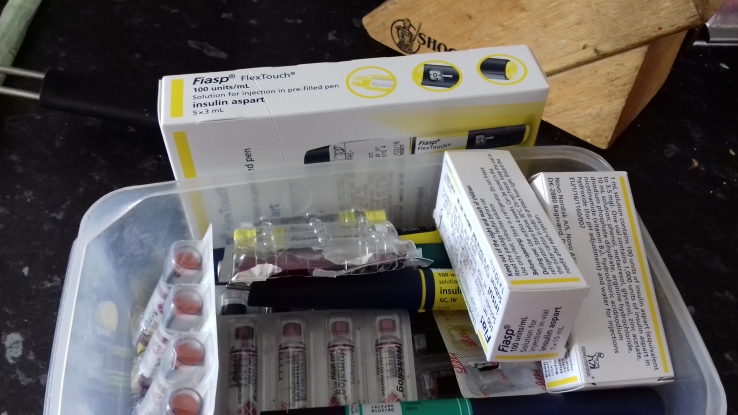
a plstic box c ontaining insulin on The Diabetes DietInsulin shortages and low-carb dishes—no obvious connection, I grant you but bear with me.
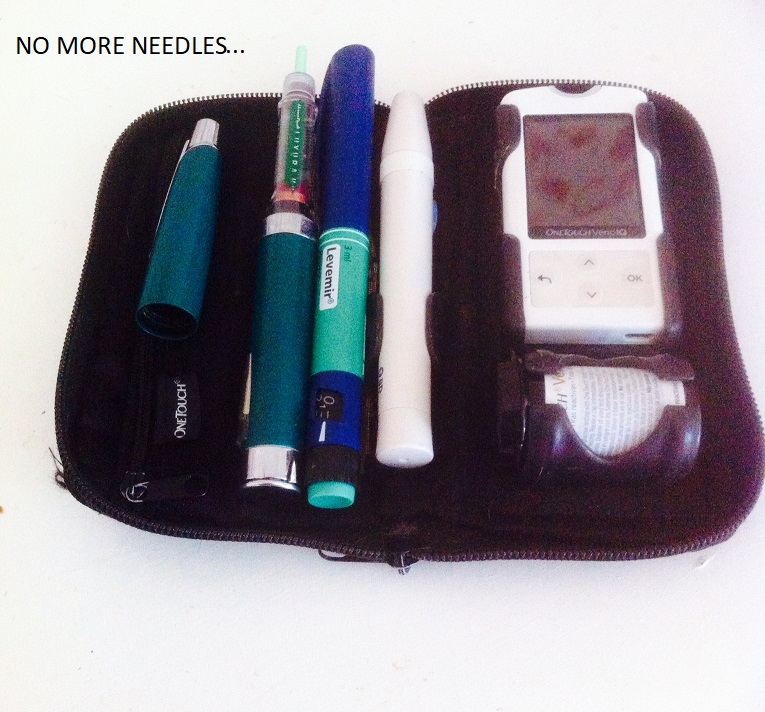
The first relates to a news item on Channel 4 last night, which warned of insulin shortages post-Brexit in the UK as the country produces little to no manufactured insulin (apart from a factory which makes the stuff derived from pigs).

Sir Michael Rawlins, the chair of the Medicines and Healthcare products Regulatory Agency, told the Pharmaceutical Journal last Friday that, “We make no insulin in the UK. We import every drop of it. You can’t transport insulin around ordinarily because it must be temperature-controlled. And there are 3.5 million people [with diabetes, some of whom] rely on insulin, not least the Prime Minister.”

412,000 people on insulin

Strictly speaking, that’s no true as the Channel 4 story pointed out. Wockhardt UK produces the animal insulin, but its products are used by some 1,500 to 2,000 patients every year. And that’s less than 0.5 percent of the estimated 421,000 people in the UK who rely on insulin.

Channel 4 News spoke to the major manufacturers, Sanofi, Novo Nordisk and Lilly. All of them make insulin in Europe.

The Healthcare Distribution Association (HDA) UK which represents medical suppliers in the UK wrote to the UK Government post the referendum in 2016 to warn of serious upsets to the supply chain should Brexit negotiations go wrong.

Buffer stocks

HDA UK said the UK medicines supply chain had “inbuilt resilience” and “flexibility”, and that they were aware of proposals by the government and manufacturers to develop plans for a buffer stock of all medicines.

A spokesperson for the Government said they were confident of reaching a deal, there were contingency plans in place to ensure no disruption to supplies.

Channel 4 News’ fact check conclusion is that as the companies and the Government don’t anticipate shortages, we should be okay.

Back to low-carb recipes and my tenuous attempt to link the two. If you follow a low-carb diet and you use insulin, in general you don’t need to take as much insulin. If shortages come, you’ll have more time to use your insulin while the powers-that-be attempt to sort out this almighty mess.

Cue plug for this blog and The Diabetes Diet! Is that distasteful of me?! Probably.


Thrity-One-Year-Old Claims Cure for Type 1 Diabetes

A PICTURE OF BLOOD TESTING EQUIPMENT AND NEEDLES

A PICTURE OF BLOOD TESTING EQUIPMENT AND NEEDLESGoogle alerts frequently pairs ‘diabetes’ and ‘cure’ together, but most of the time the words don’t capture my attention. Even when ‘type 1 diabetes’ and ‘cure’ make the same sub-heading, I’m not jumping up and down.
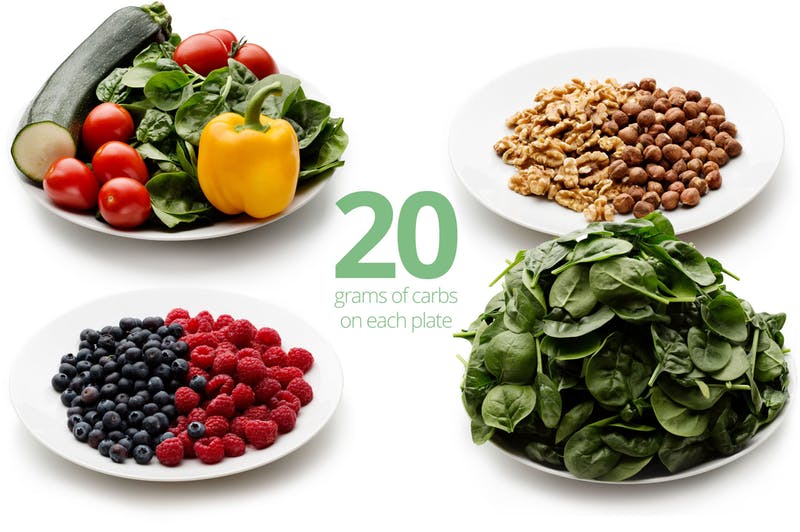
Yeah, yeah, heard it, bought the tee shirt, and no impact on my life so far…

But The Sun newspaper carried a story this week about a 31-year-old who claims to have cured his type 1 diabetes with diet and exercise alone. Again, that approach can achieve results with type 2 diabetes but it’s the first time I’ve seen it accredited to a cure for type 1.

Exercise and diet

Daniel Darkes’ regime isn’t for the faint-hearted. He eats a diet high in zinc (nuts, oily fish and veg) and runs more than sixty miles a week.

But before you dig out your trainers and start stock-piling the Brazil nuts, Daniel’s type 1 diabetes has some qualifications. He has a rare, abnormal gene, which doctors believe might have restarted his pancreas.

The 31-year-old from Daventry in Northants developed diabetes eight years ago and stopped giving himself insulin last January (2017)*. He started cutting down on insulin after experiencing hypos in 2016. He travelled to the US in March 2017 to find out more. Doctors ran further tests to find out what we happening to his body.

Brain sending messages to pancreas

He was put on a fasting diet and exercised at the same time. The medical staff noted his brain had begun sending new signals to his pancreas, and he hasn’t injected himself with insulin ever since.

Daniel told The Sun that doctors believed his abnormal gene combined with exercise is the reason he’s been able to cure himself—it’s as if the gene acts as a back-up immune system and has recharged his pancreas.

He is still being monitored at Northamptonshire General Hospital.

Abnormal genes

I’m fascinated by this story—as I suspect most type 1s will be. I’m no medical expert so my opinions are qualified, but I suspect that Daniel’s abnormal gene plays a huge part in his ‘cure’ (and this won’t be regarded as such until he reaches the two-years-without-insulin mark). It’s also interesting that the description of his diet (scant as it is) sounds like a low-carb diet.

The article said that Daniel’s case “could provide a revolutionary new approach to treating type 1 diabetes”, while Diabetes UK said it couldn’t speculate on whether Daniel had ‘cured’ his diabetes or not, and that there was “no clear cure for type 1 or type 2 diabetes”.


*DISCLAIMER – please, for the love of all things injectable, do not skip your insulin injections if you have type 1 diabetes…


Public Health Collaboration Conference 2018: a great success for Lifestyle Medicine

I was delighted to attend and speak at the third PHC conference in London this year.  We met at the Royal College of General Practitioners in London on the sweltering weekend of the Royal Wedding. Apart from superb international speakers we were treated to low carb, high protein food, such as one would typically eat on a ketogenic diet. Instead of picking at our dinners as we often have to do with mass catering  we could eat the whole lot. Great!

Dr Peter Brukner from Australia started off the weekend with a review of what was happening in the low carb world. There are more and more reports coming out describing the advantages of ketogenic and low carb diets to different groups of people but the establishment are fighting back viciously as can be seen by the attack on Professor Tim Noakes in South Africa.  Indeed if his defence lawyers and expert witnesses had not worked for free he would be bankrupt.  This is a terrible way to wage war on doctors who are acting in the best interests of their patients.

Dr Aseem Malhotra also described bullying tactics that had been used against him when he was a junior doctor and first becoming publicly engaged in the low carb debate. I have been subjected to this as well.  Professor Iain Broom showed that the proof that low carb diets are superior to low fat diets goes back 40 years.

Dr Zoe Harcombe gave us an explanation of how the calories in- calories out idea just doesn’t add up. The well known formulas about how many calories you need to avoid to lose weight don’t work in practice because of the complex compensatory mechanisms we have to avoid death from starvation.  How you put this over to patients and give them useful strategies for weight loss and blood sugar control was explored by Dr Trudi Deakin.

Food addiction is a real issue, at least it is for the majority of the audience in attendance, who answered the sort of questions usually posed by psychiatrists when they are evaluating drug addiction.  Unlike drugs, food can’t entirely be avoided but ketogenic diets are one tool that can be used to break  unhealthy food dependence. This worked for presenter Dr Jen Unwin who at one point had a really big thing for Caramac bars.  I haven’t seen these in years but they did have a unique taste.

Dr David Unwin showed clearly that fatty liver is easily treatable with a low carb diet.

Dr Joanne McCormick describes how her fortnightly patient group meetings are making change accessible for her patients and how many GPs in the audience could broach the subject in a ten minute consultation.

The website Diabetes.co.uk will shortly be starting up a type one educational programme online that all are welcome to join. I discussed the issue of what blood sugar targets are suitable for different people and how they can achieve this with dietary and insulin adjustment.

Dr David Cavan spoke about reversing diabetes in patients in Bermuda. Although Bermuda looks idyllic the reality is that good quality food is about five times as expensive in the UK as it is all shipped in. Many inhabitants work their socks off but barely cover their costs and cheap sugared drinks and buns are their staple diet. Despite these setbacks he managed to persuade a lot of diabetic patients to ditch the carbs and this had favourable results even after the educational programme had stopped.

A cardiologist Dr Scott Murray described the effects of metabolic syndrome on the heart and really why sticking stents in diseased arteries is too little, too late. He is convinced dietary change is needed to reverse and prevent heart disease. This is the first time I have been told that certain types of heart failure and atrial fibrillation are direct effects of metabolic syndrome on the heart.

The importance of exercise for physical and mental well being was not neglected and we had Dr Zoe Williams describing the great benefits that even the minimum recommended exercise can produce.

Dr Simon Tobin and Tom Williams spoke enthusiastically about Parkrun. This is a free event that runs every Saturday morning in parks all over the world. You can choose to walk, jog or run the course.

Claire McDonnell-Liu is the mother of two children who have greatly benefited from a ketogenic diet. The conditions are urticaria and epilepsy.  Although NHS dieticians do help families with childhood epilepsy who want to use a ketogenic diet, they can’t do it unless drugs have failed, as this is NICE guidance. I wonder how many children would benefit in fit reduction without side effects of drugs if this guidance was changed?

This was a fabulous conference with a positive enthusiastic vibrancy. Thanks to Sam Feltham for organising this event especially since he has become a new dad as well.

The Public Health Collaboration are putting all the talks on You Tube.

I was interviewed about diabetes and women’s health issues for Diabetes.co.uk and Diet Doctor and these interviews and many others will be available for you all to see to improve your lives with diabetes.