Inhaled Insulin

A story on a Minneapolis news website caught our eye this week – it was the story of a New Richmond man who is using inhaled insulin at meals instead of boluses through his pump.

The insulin inhaler – Afreeza – is used instead of injected insulin boluses to cover meals.

Software developer Trevor Schug who was diagnosed with type 1 diabetes last year said he had started using the inhaled insulin this year and he had found that it gave him better control of his blood sugar levels.

On the news website, he said that he felt the inhaled insulin was absorbed into the blood stream more quickly and that it didn’t stay in your system as long, whioch was another bonus as far as he was concerned.

Schug explained that when he would take extra insulin through his pump, it sometimes lingered in his system too long after a meal.

Endocrinologist Dr Mark Stesin said dosing was not as precise for inhaled insulin, which might not make it as suitable for everyone.

The inhaled insulin isn’t recommended for people who smoke or who have recently stopped, or anyone who has chronic lung disease or asthma.

How to Help People Who Can’t Afford Insulin

insulin syringeFrom time to time I expect you feel pretty miserable about having diabetes. Especially about these interminable injections…

Diabetes for everyone is a life sentence. But for some poor people in developing countries, parents cannot afford insulin for both a diabetic child and  food for the rest of the family. Hard choices have to be made.

Insulin for Life

The insulin for life organisation aims to help. They will ship your unwanted but in date insulin or other things such as lancets and test strips to those who would die without it.  They also help coordinate insulin supplies to disaster struck areas.

It is an Australian-based organisation whose president is Ron Raab. Ron has been a type one diabetic since he was 12 just like Dr Richard Bernstein. He became one of Dr Bernstein’s patients and reversed many of his longstanding diabetes complications (read his success story here ).

Insulin for Life is the website for the organisation that has affiliates in the US, Europe and the UK.

The InDependent Diabetes Trust

This is the UK organisation who will send your donated insulin to Insulin For Life.

Please send your no longer needed insulin – unused vials or cartridges and in date in a jiffy bag to:

Jenny Hirst
IDDT
PO Box
Northampton
NN1 4XS

The IDDT is a charity whose staff and membership is formed by diabetics and by those caring for diabetics. They aim to listen and support your needs.

They have an excellent website with articles of interest to insulin users about many different aspects of diabetes at: www.iddtinternational.org

Enquiries can be sent by e mail to:  enquiries@iddtinternational.org

The IDDT was formed from original members of Diabetes UK who were not being supported in their needs and preferences for animal insulins. Unlike Diabetes UK they receive no funding from pharmaceutical or food manufacturers.

Thanks to the political lobbying that IDDT have continued for years the UK still manufactures animal insulins. These are obtained  and purified from pigs and cows that have been slaughtered for their meat.

A small variety of long acting, short acting and mixed duration animal insulins are available in pen cartridge formulations and  vials from Wockhardt Pharmaceuticals. These can be shipped overseas.

Prescriptions for the insulins and pens are available from your UK GP in the usual way. A GP however may want a diabetologist to approve.

Quick Quiz:
1. Unopened and in date insulin vials and cartridges that you no longer need can be put to good use by two of these…
a Pharmacies
b Diabetes UK, the ADA or your equivalent national diabetes organisation.
c Insulin for life.
d The IDDT.

Have you got it?
1. C and D are correct. IDDT in the UK will send it to Insulin for Life who will arrange for worldwide distribution.  Please send  insulin with at least three months to go to expiry.  You can read more about this organisation and how you can help on this site.
 

Venison Stew – Slow Cooker

After a sunny, dry and mild September and October, normal Scottish autumn weather has resumed… Rain, winds and dark, dreary days are once more upon us.

The consolation is a stew – warm, delicious and extremely comforting. I love stew so much I’d eat it in the height of summer anyway, but it does seem so fitting for this time of year. I’ve used venison here, but you could substitute this with beef or lamb instead (choose cuts that needs long, slow cooking).

I’ve suggested three to four servings – three is best for greed purposes. Serve this with steamed cauliflower and broccoli. You can also make fake mashed potatoes with steamed cauliflower – recipe here.

Venison Stew

  • Servings: 3-4
  • Difficulty: easy
  • Print

  • venison 2600g venison (choose the meat that needs long, slow cooking)
  • 2 small onions, very finely diced
  • Three medium-sized carrots, peeled and cut into big chunks
  • 4 cloves garlic, crushed
  • 2-3 sticks of celery, chopped
  • 100g streaky bacon
  • 1/2tbsp salt
  • 1tbsp freshly ground black pepper
  • 1tbsp Herbes de Provence
  • 1tbsp fresh rosemary, finely chopped
  • 11/2 tbsp cornflour


  1. Put the venison in a Ziplock or equivalent plastic bag with the salt, pepper, corn flour, and herbs and shake well so that all the meat is coated in the flour.
  2. Put the meat and the rest of the ingredients in a slow cooker and mix well. Cover the ingredients with water (remember, the vegetables will leak out water as they cook too, so you only need the water to just cover the ingredients.
  3. Set the slow cooker to low and leave for seven to eight hours. (Remember that taking the lid off a slow cooker adds another 20 minutes to the cooking time.)

Serve and enjoy.

(If you don’t have a slow cooker, then prepare the meat as in stage 1, then place in a large casserole dish with the rest of the ingredients and add water. You’ll need a little more than if you were using a slow cooker but basically add enough water to cover all the ingredients. Cover the dish with a lid and cook at 150 degrees C (130 fan) for three to four hours – until meltingly tender.)

This recipe has 21g of carbs per serving and 5g of fibre if serving three, and 15g of carbs and 3.75g of fibre for four. If you leave out the cornflour, you’ll reduce the carb count by a further 6-7g per serving – but a thick, juicy sauce is a marvellous thing…


NEW – ‘How To’ Course for Diabetics

The 'how to' course will help you achieve better blood sugar results.
The ‘how to’ course will help you achieve better blood sugar results.

Here at the Diabetes Diet, we’ve added some e-learning options for you. The ‘How to’ course written by GP Dr Katharine Morrison is an extensive learning resource suitable for anyone with diabetes (type 1 or 2, or gestational diabetes) and anyone who cares for those people, and it’s aimed at helping you improve your diabetes.

Although personal coaching at diabetes clinic occurs, there are often gaps in what would make that all-important difference to individuals. By following this course you will have all the advantages of the many tips and clearly set out steps to improvement that have been directly tested by other people with diabetes.

As you work your way through the course you will quickly realize that a reduced-carbohydrate diet is highly recommended. This is key to stabilising and then normalising blood sugars. In turn, this can reduce hunger if your aim is to lose body fat or improve metabolic control if you suffer from any of the glucose metabolism disorders.

The ‘How to’ course is available here, or through navigation from the top menu.


Turkey Burgers – Low Carb

Turkey burgers and a cheeky wee glass of fizz...
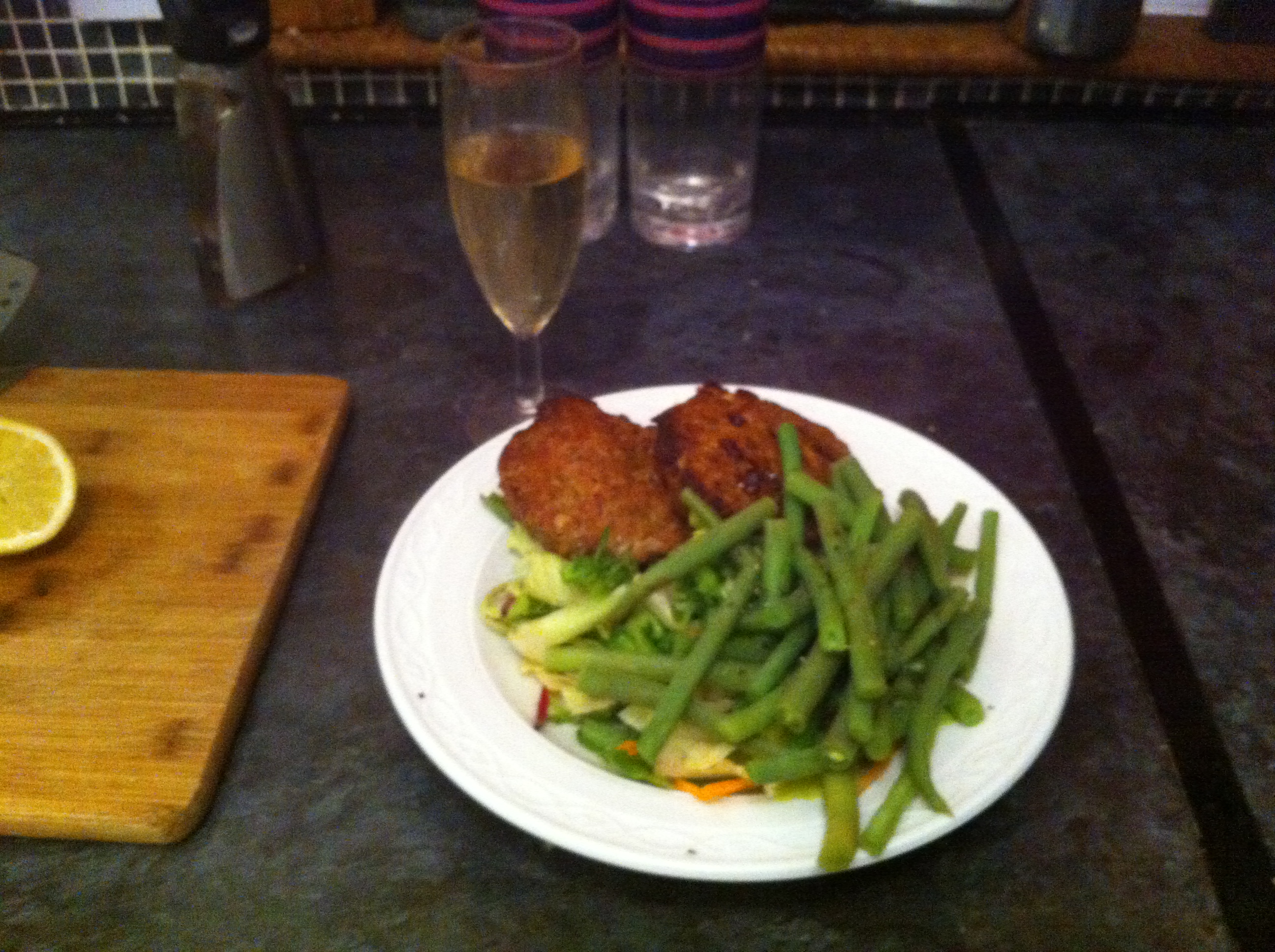
Turkey burgers and a cheeky wee glass of fizz…

Fresh from the triumph of the turkey curry, the Diabetes Diet’s love affair with turkey mince continues… Step forward the turkey burger.

The secret of a good turkey burger (or any burger, come to think of it) is plenty of seasoning and this recipe certainly delivers. For added oomph, you could add in some dried chilli flakes but you will probably find you get a nice little kick from the ground black pepper.


Turkey Burgers

  • Servings: 2-4
  • Difficulty: easy
  • Print

  • 500g turkey mince
  • 1 small onion, very finely chopped
  • 2 cloves garlic, crushed
  • 1tbsp freshly grated ginger
  • 1tbsp Worcestershire Sauce
  • 2tbsp Soy or Tamari sauce
  • 2tbsp finely chopped parsley
  • 1tbsp freshly ground black pepper
  1. Pre-heat the oven to 180 degrees C.
  2. Put all the ingredients in a mixing bowl and mix well. It’s easiest to do this with your hands – cleaned of course. You’ll get a fairly wet mixture.
  3. Shape into four burgers and place on a baking tray. Cook in the oven for 20-25 minutes, turning the burgers over half-way through. You want them to be nicely browned.
  4. Serve with a big salad and some cooked vegetables. Fizz optional…

Each burger has roughly 6g of carbs and 2g of fibre. For a low-carb bun option for your burger, check out cavemanketo.

Red Meat and Cancer Risk

steakConfused about health headlines of late and worried that your low-carb diet might give you cancer?

That might be the case if you’ve been reading the reporting of a certain World Health Organisation (WHO) study looking into diet which said eating processed meat increased the chances of developing colorectal cancer by 18 percent, while red meat was “probably carcinogenic” but that there was less evidence.

It depends on where you read the news of course as certain reporting of the story (and other similar research) has blown it out of all proportion – at least with their sensationalist headlines. Take a bow the Daily Mail.

Zoe Harcombe’s blog dissects the research and the headlines. I’d recommend reading it for a more detailed take on the story.

Personally*, I buy good quality, unsmoked bacon and good quality red meat. I don’t eat ham and other processed meats, mainly because I don’t find them very filling – but I’m happy to eat chorizo occasionally. The headlines don’t bother me in the least.

I’ll keep buying and eating unsmoked bacon and good quality red meat because eating them helps me maintain a low-carb diet, which in turn helps me feel lively and energetic, instead of lethargic, grumpy and depressed.


*A disclaimer here – you must make up your own mind about what you choose to eat of course…

Last Word on Sugar Tax

jaffa cakes 2Pictured on your left are two items – one of which a large percentage of the population needs to buy and use regularly, and the other is a tampon.

Yup, this is the news that UK Prime Minister David Cameron faces a possible Commons defeat over the “tampon tax” as a group of Conservatives prepares to vote with Labour and other opposition parties (such as the SNP) to demand a strategy that will end the VAT on sanitary products.

VAT on sanitary products currently stands at 5 percent, and the attempt to get rid of VAT is led by Labour MP Paula Sheriff, who is tabling an amendment to the finance bill. Cameron has argued that is the EU that sets the rules on VAT and it would be difficult to get them overturned.

An amendment would force the Chancellor George Osborne to set out how he would negotiate the end of VAT on sanitary products.

VAT is a form of consumption tax, or a tax on the purchase price. Jaffa cakes have no VAT because they are classified as cakes, rather than biscuits and cakes are zero-rated. Customs and Excise took this case to tribunal – and lost because the tribunal thought Jaffa cakes “had enough characteristics of cakes to be accepted as such, and they were therefore zero-rated”.

So – Public Health England has called for a sugar tax in a bid to reduce this country’s battle with obesity, as we wrote about on The Diabetes Diet last week.

Jaffa cakes* escape taxes on the purchase price because they are “cakes” (why do cakes get to be zero-rated anyway?), and in the meantime David Cameron drags his heels over working to get rid of the extra money women pay for tampons and sanitary towels on top of having to buy them in the first place.

Crazy old world, hmm?


Ingredients in Jaffa cakes: Glucose-Fructose Syrup, Plain Chocolate (19%) [Sugar, Cocoa Mass, Vegetable Fats (Palm, Sal and/or Shea), Butter Oil (Milk), Cocoa Butter, Emulsifiers (Soya Lecithin, E476), Natural Flavouring], Sugar, Flour (Wheat Flour, Calcium, Iron, Niacin, Thiamin), Whole Egg, Water, Dextrose Monohydrate, Concentrated Orange Juice (8% Orange Juice Equivalent), Glucose Syrup, Vegetable Oils (Sunflower, Palm), Humectant (Glycerin), Acid (Citric Acid), Gelling Agent (Pectin), Emulsifiers (E471, Soya Lecithin), Raising Agents (Ammonium Bicarbonate, Disodium Diphosphate, Sodium Bicarbonate), Dried Whole Egg, Acidity Regulator (Sodium Citrate), Natural Orange Flavouring, Colour (Curcumin).

Yum yum.


Low-Carb and Mediterranean Diets “Better Than Low-Fat”

weight lossA report published in today’s Guardian says that low-carb and Mediterranean* diets are better than low-fat plans for losing weight.

The news article by health editor Sarah Boseley also says the research (published in the Lancet Diabetes and Endocrinology journal) has found that in the long-term no diet worked particularly well.

The study involved more than 68,000 people and looked at 53 long-term studies that had been carried out since 1960 comparing diets. It was funded by the National Institutes of Health and the American Diabetes Association.

Lead author of the Lancet piece, Dr Deirdre Tobias from Brigham and Women’s Hospital and Harvard medical school, Boston, said the research showed there was no good evidence for recommending low-fat diets, as their “robust evidence” showed that simply reducing fat intake would not naturally lead to weight loss. Continue reading “Low-Carb and Mediterranean Diets “Better Than Low-Fat””

Bye-Bye Diet Coke

Get thee behind me Satan...
Get thee behind me Satan…

It’s now… ooh, it’s now 10 days since D-Day, otherwise known as the day I kicked the Diet Coke.

As a type 1 diabetic who follows a low-carb diet most of the time (not all of the time, as I’m not perfect and I find the occasional pull of the chocolate/bread temptation too hard to resist), in theory Diet Coke shouldn’t pose a problem. It’s sugar-free and carb-free after all.

But drinking Diet Coke in the quantities that I did (one-and-a-half litres a day) definitely suggests addiction and who wants to be an addict?

Google “giving up diet coke” and you’ll find lots of forums and discussion threads where people discuss their addictions. Other diet drinks are mentioned, but it’s Diet Coke that seems to form the commonality – suggesting that there is indeed something addictive in Diet Coke, even if that is just its psychological pull.

Continue reading “Bye-Bye Diet Coke”

Sugar Reduction Report Publication Delayed

sugarThis week, a UK news report revealed that the publication of a health report that called for the imposition of a sugar tax had been delayed.

The report, Sugar Reduction: The Evidence for Action, compiled by Public Health England (a government advisory group) had set out a number of policies which it believes can help tackle the obesity crisis in this country.

The policies included a sugar tax, a crackdown on the marketing of sugary and other unhealthy products to children, and continued action to push the message that most people need to lower their daily sugar intake.

The report was finally published on Thursday afternoon, although it has been originally scheduled for publication in July. The delay was attributed to the Department of Health (which PHE is part of) so that its findings could be used to inform the government’s forthcoming strategy to combat childhood obesity. The news report revealed that Prime Minister David Cameron had not read the report, dismissing a sugar tax out of hand.

The obesity crisis in the UK is thought to cost the NHS some £5.1 billion a year. The report says its suggested policies, including the sugar tax, are needed to reduce the consumption of sugary foods and drinks that are contributing to this crisis. Continue reading “Sugar Reduction Report Publication Delayed”