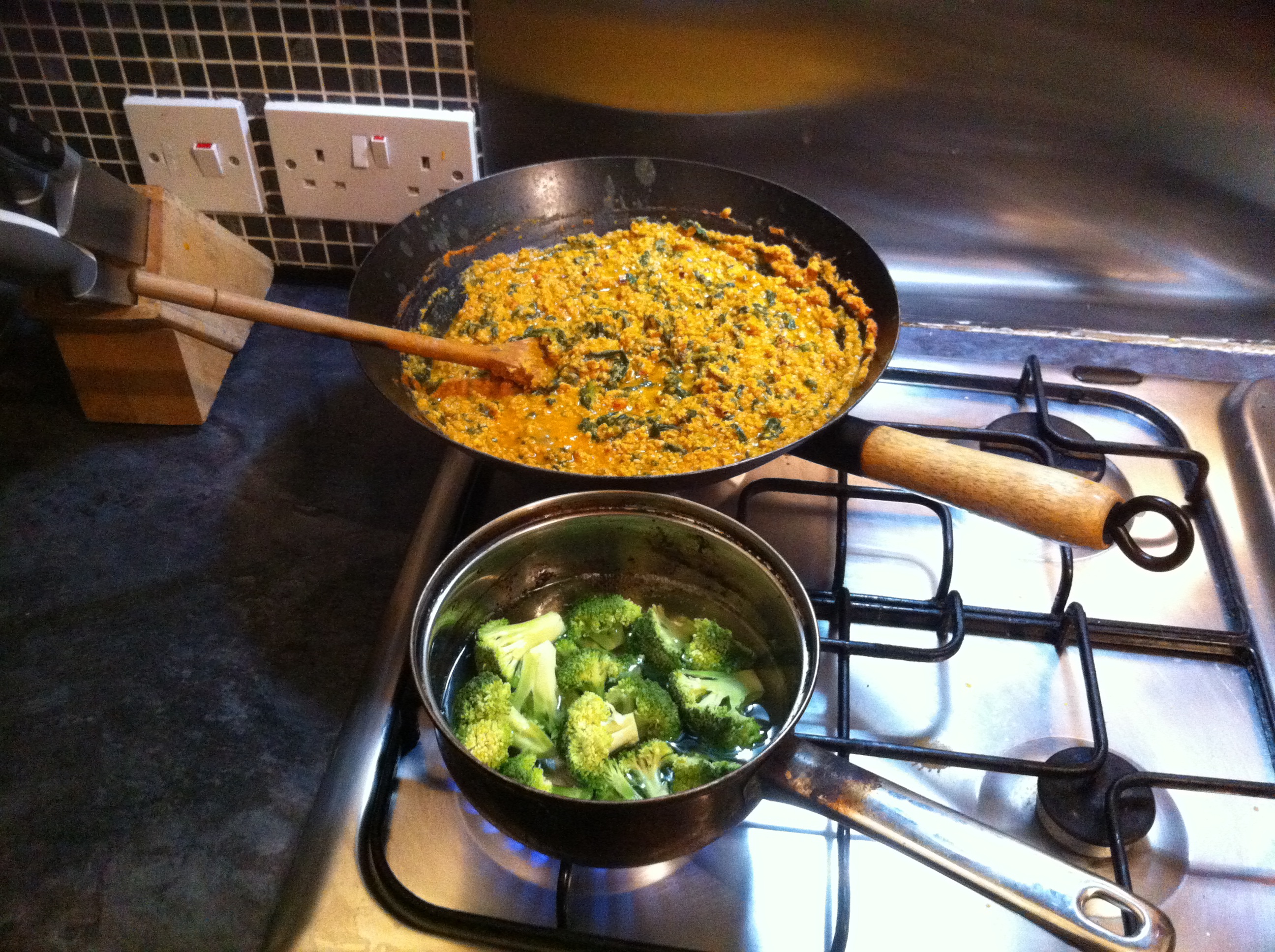
Turkey Curry – Low Carb

turkey curryBridget Jones jokes aside, turkey curry is now a current favourite of mine… It’s really easy to make, and relatively cheap too as turkey mince isn’t highly priced in supermarkets.

I like turkey curry served with broccoli or cauliflower (and if you really want a low-carb curry experience, you can make cauliflower rice, method here).

The quantity makes four servings with about 20g of carbs per portion, 15g not including the fibre.


Low-Carb Turkey Curry

  • Servings: 4
  • Difficulty: easy
  • Print

  • 500g turkey mince
  • 2 tbsp coconut oil
  • 600g tinned tomatoes (1½ tins
  • 100g frozen spinach
  • 40g creamed coconut
  • 2 onions, sliced
  • 2 cloves garlic, crushed
  • 2 tbsp grated fresh ginger
  • 1 tbsp ground coriander
  • 1 tbsp ground cumin
  • 1 tbsp turmeric
  • 1 tsp ground black pepper
  • 1-2 tbsp chilli powder (add more or less depending on your spice tolerance levels)
  1. Heat the coconut oil in a large saucepan or wok until hot. Add the onion and fry gently until translucent (about five minutes).
  2. Add the garlic and ginger, and cook for a minute or so before adding the tinned tomatoes and all of the spices.
  3. Chop the creamed coconut into small pieces and stir in. Mix well, bring to a simmer and leave to cook for 10 minutes, stirring from time to time.
  4. Using a hand blender, puree the sauce. (You can leave it chunky if you prefer and you can use the sauce as the base for any curry.)
  5. Now add the turkey mince and the frozen spinach and stir well to blend it all in. Mix well and bring back to a simmer. Allow to cook for 15 minutes.
  6. Serve with broccoli or cauliflower for added veggie goodness.

[/recipe]

If you have diabetes, you may well have fungal overgrowth problems (fungi loves a sugary atmosphere) and this dish has several anti-fungal ingredients – garlic, ginger and coconut oil.

Seven Free Online Work-Outs for You To Try

From bootcamps to ballet, there's a work-out for everyone on YouTube.
From bootcamps to ballet, there’s a work-out for everyone on YouTube.

When I first got into fitness some 25 years ago, there were nothing like as many options as there are now. I do remember doing one of Cindy Crawford’s original exercise videos (it was awful) and cycling everywhere.

Nowadays though, there are so many choices if you want to get more active but you don’t want to, or can’t afford to, join a gym or attend classes.

Step forward YouTube! If you know where to look, you can access thousands of online exercise DVDs so you never need to pay for anything (apart from your broadband connection of course) or leave the comfort of your own home.

The videos vary greatly in quality of course – from really slick, professionally produced clips to the rather more amateur, and length varies too. Some of the moves and programmes will be demonstrated very well, others will be downright dangerous – but intelligent adults need to work this out by themselves, recognising that free stuff doesn’t come with the same checks and balances you can expect if you pay for gym memberships, classes or personal training.

It’s important to exercise whether you have type 1 or type 2 diabetes because exercise increases your sensitivity to insulin, and it reduces the risk of cardio vascular disease (people with diabetes have an increased risk of CV disease). Continue reading “Seven Free Online Work-Outs for You To Try”

Jeff Volek Calls for Signatories to a Petition Against Current US Dietary Guidelines

petitionThe Diabetes Diet’s attention was drawn to a recent call for signatories to a petition aimed at changing US dietary guidelines.

We’re British, but the official guidelines for nutrition in this country have been very similar to US advice in the past.

The plea for signatories to the petition comes from Dr Jeff Volek, a registered dietician and professor at the University of Connecticut, and regarded as an expert in low-carbohydrate diets. He is calling for people to sign the petition because he considers that the US dietary guidelines have not worked and obesity and diabetes is a public health crisis, with more than half the adult US population having diabetes or being pre-diabetic.


Dr Volek says that he recently attended the US House Agriculture Committee to discuss  the guidelines, where the secretary of the USDA and HHS were asked question about the current scientific report and guidelines that are likely to be published this December (2015).

Dr Volek says: “The chairman and multiple members of the House Ag[riculture] Committee were rightfully concerned about the report and the failure to acknowledge the problem of excess carbohydrate consumption and the body of literature on low-carbohydrate diets.

“I invite you to join me in asking the government to make a change and ensure that quality science generated from a variety of different experimental approaches be the center focus in determining the 2015 Dietary Guidelines. Progress can only occur if we are willing to disrupt the status quo and recognize the insights of newer, better and more credible science.”

The link to the petition is here: https://www.change.org/p/demand-that-quality-science-determines-the-2015-u-s-dietary-guide

You can read more about Dr Volek’s work at his website, artandscienceoflowcarb, and The Diabetes Diet contains lots of examples of meal plans and recipes you can follow if you’d like to eat  a low-carb diet yourself.


Photo thanks to the League of Women Voters.


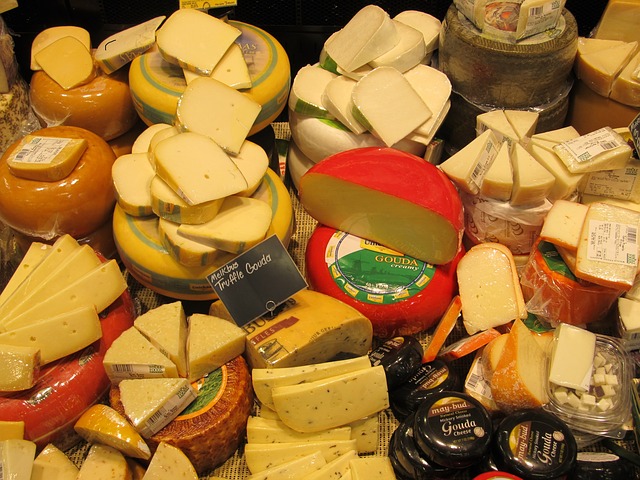
Cheese Please – It’s Good for You!

Dig in - it's good for you.
Dig in – it’s good for you.

This week, our attention was drawn to a study that suggested that cheese is good for you.

The results of the study (which came out earlier this year) had looked at the effect which is often referred to as the “French paradox” – i.e. why do French people tend to lead long and healthy lives while consuming diets high in saturated fats?

As readers of this blog may well know, saturated fat has hit the news a lot recently – with suggestions that its previously terrible reputation in terms of what it does for your health was undeserved. This study carried out by scientists at Aarhus University in Denmark seems to add to the rehabilitation of saturated fat’s reputation.

The Danish research suggested that fermented dairy products could contribute to longevity and health. French people have a lower incidence of coronary heart disease and an average life expectancy of 82 – eating an average of 23.9kgs of cheese a year, while the Brits eat a mere 11.6kgs and suffer from twice the levels of cardiovascular disease and a decreased life expectancy (81).

Continue reading “Cheese Please – It’s Good for You!”

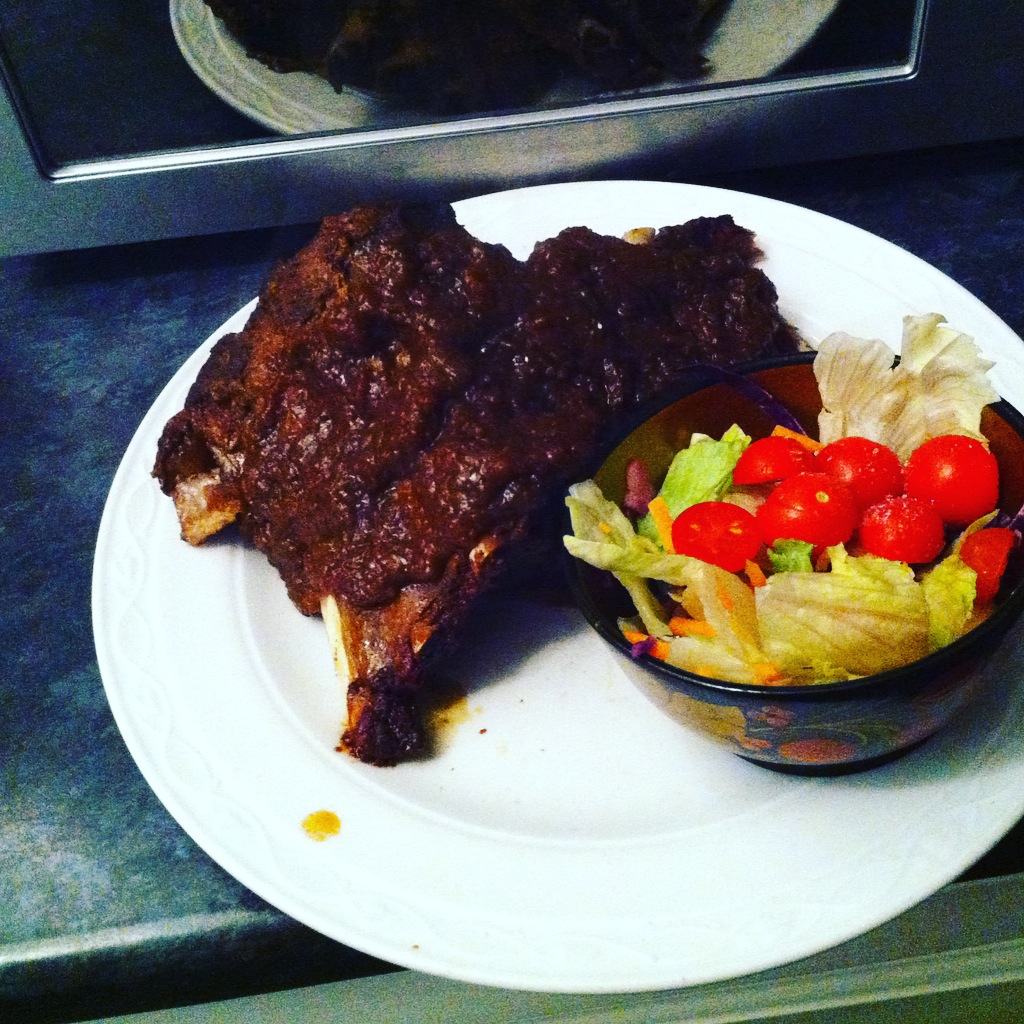
Low-Carb Ribs Recipe

There’s nothing quite so primal as locking your gnashers round ribs… As an added bonus, ribs are dead cheap too – which is always a bonus when you’re following a low-carb diet.

Most ribs usually come accompanied by a really sticky sauce – which means it probably has a lot of added sugar. but then without that sauce they wouldn’t be so nice, hmm? Anyway, here’s an easy-peasy, low-carb version which also uses the slow cooker.

Low-Carb Ribs

  • Servings: 2-3
  • Difficulty: easy
  • Print

Ribs... it's a primal thing.
Ribs… it’s a primal thing.

  • Rack of pork ribs (about 600-800g)
  • 100ml water
  • 2tbsp cider vinegar
  • 2tbsp soy sauce
  • 2tsp Canderel
  • 1 onion
  • 200g passata

Mix together the water, vinegar, passata and soy sauce. Season the ribs with salt and pepper and place in the slow cooker. Pour over the sauce and top with the onions.

Cook on the low setting for seven hours. Remove from the slow cooker. Place the sauce in a saucepan with the onions and bring back to a simmer.

Liquidise to get a smooth-ish sauce and add the Canderel. Pour over the ribs to serve.

Allow about 8-10g carbs per serving.

Research Shows Benefits of Hard Exercise for Type 2 Diabetics

You'll need to pedal harder than this if you want intensity...
You’ll need to pedal harder than this if you want intensity…

New research has shown that short bursts of intense exercise improve heart structure and improve diabetes control in patients with type 2 diabetes.

A study conducted by researchers from Newcastle University has suggested that the right kind of exercise can reverse heart abnormalities in people with type 2 diabetes.

Some studies have indicated that people with diabetes are twice as likely to develop heart disease than people without diabetes, and it is one of the most common complications of diabetes.


For the Newcastle University study, researchers examined what happened when people with type 2 diabetes took part in intense exercise bursts of 90 seconds cycling on a stationary bike.

A total of 23 people took part in the study and scientists found that the intense bursts of exercise improved the cardiac structure and heart function. The exercise also improved blood glucose control to a small extent.

The authors of the report said that the study showed for the first time that exercise could begin to reverse early cardiac changes that are commonly found in people with type 2 diabetes. They said the greatest benefits were to heart health and that message needed to be strongly communicated to people with type 2 diabetes.

Professor Mike Trenell from Newcastle University said: “We’ve shown that short bursts of exercise improve the heart of people with Type 2 diabetes and benefits the control of their diabetes. If patients struggle to do 30 minutes of exercise then shorter, more manageable chunks still help and this includes any activity that gets the heart going such as taking the stairs instead of the lift.”


The original article about this research appeared on diabetes.co.uk

Top 10 Countries – Rates of Diabetes

syringeA recent post on diabetes.co.uk looked at the rates of diabetes in other European countries – and the top rate of diabetes prize goes to… Turkey.

Some 14.71 percent of adults in Turkey have diabetes and it is described as one of the top priorities for the Turkish government. The country spends $895 on each person with diabetes.

At number two for diabetes, Portugal spends a lot more ($2,011 per person) on its 13.09 percent problem. But power is delegated to individual regions so it can depend on where you live.

Number three is on the table is Bosnia and Herzegovina, spending $523 per person and with 12.1 percent of people having diabetes. (Montenegro has 12 percent.)

Serbia comes in at number five, with 11.96 percent of its population suffering from diabetes and spending $666 per person. According to the report, high-risk groups are targeted but it is felt that not enough resources are allocated to the issue.

In sixth place is Germany, with an 11.52 percentage of population figure. Germany spends a massive $4,943 per person – one of the highest figures in Europe. However, it is felt that diabetes isn’t a priority on the political agenda in Germany.

Macedonia’s population is affected by diabetes with 11.44 of Macedonians diagnosed with the condition. Funds are limited though, with only $403 spent per person.

Malta spends $2,113 per person and 10.69 percent of the population have diabetes. Most of their prevention methods focus on lifestyle changes, according to the article, with people are encouraged to eat well, exercise more, and give up smoking.

Spain, with 10.58 percent of its population suffering from diabetes, spends $3,090 per person. However, diabetes associations in the country don’t think there’s enough support or resources to make a difference.

Some 10.2 per cent of Cypriots have diabetes and it is estimated that Cyprus spends $2,295 on each person with diabetes. A large-scale prevention plan to be introduced in 2016.

Where, you might ask, is the UK in terms of numbers of people with diabetes – surprisingly, the report says that 6.6 percent of the UK population have diabetes – 43rd place in Europe. According to the American Diabetes Association, in the US some 9.3 percent of the population has diabetes (2012 figures).

Read the full report here.


For help managing your diabetes, Check out our book, The Diabetes Diet. Pic thanks to Melissa Wiese on Flickr

What happens to the carbs – part II

Interesting piece by Dr Kendrick…

Dr. Malcolm Kendrick's avatarDr. Malcolm Kendrick

My interest in nutrition began many years ago as part of my over-riding interest in cardiovascular disease. This means that, unlike many other people, I backed into this area with no great interest in the effect of food on health. For most doctors nutrition takes up about an hour of the medical degree course. We are pretty much given to understand that it is of little medical significance. Eat a balanced diet…end of. I also paid nutrition about that much heed.

However, because of the power and influence of the diet/heart hypothesis I felt the need to understand more about this whole area, and how the system of digestion and metabolism actually worked. At first my interest was purely to find out if there was any clear and consistent association between diet and cardiovascular disease (which I shall call heart disease from now on, as it is simplest to do…

View original post 1,826 more words

Super Sides for Low-Carb Diets

Steak, chicken and fish – all nice ingredients by themselves, but all the more nicer when accompanied by a delicious side dish!

Side dishes are what will keep you on the straight and narrow on a low-carb diet as they prevent boredom. Sure, a lovely piece of steak accompanied by salad can be nice, but second time round it’s even better with home-made coleslaw. Strips of lamb fried with cumin and served with spiced onions are fantastic and roast chicken paired with cheesy leeks is unbelievably delicious.

Here are three super sides to be going on with.

Home-Made Coleslaw

  • Servings: 4-6
  • Difficulty: easy
  • Print

Leeks, cream and cheese pre-cooking.

  • 200g white cabbage
  • 2 medium-sized carrots, peeled
  • Two spring onions
  • 1 tbsp garlic chives
  • 3-4 tbsp mayonnaise

Finely slice the cabbage, and grate the carrots. Chop the spring onion and mix all the vegetables with the garlic chives. Add in the mayonnaise and allow to sit for 10 minutes to allow the flavours to mix.

Carbs: total about 32g, with about 8g fibre

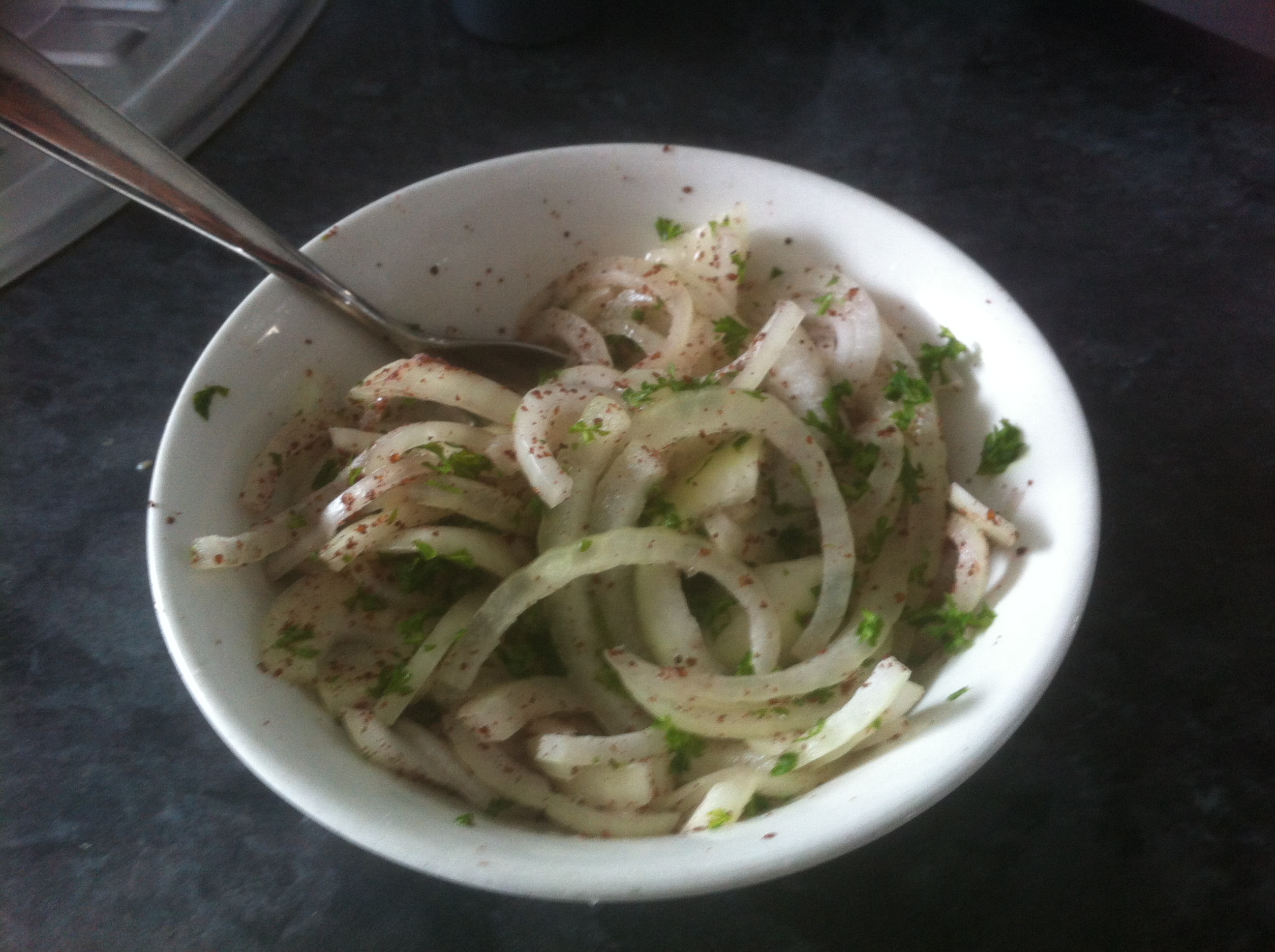
Spiced Onions with Sumac

  • Servings: 4
  • Difficulty: easy
  • Print
spiced onions
1 large white onion

  • 1tbsp sumac
  • 1tbsp white wine vinegar
  • 1tbsp finely chopped parsley
  • 1tsp sea salt

Peel the onion and cut it in half. Finely slice into half-moons. Mix with the salt, sumac, vinegar and parsley with the onions and leave to sit for 20 minutes. (This softens the onions and takes away that strong, bitter taste you get from raw onions.)

Carbs total: about 18g, with about 3g fibre

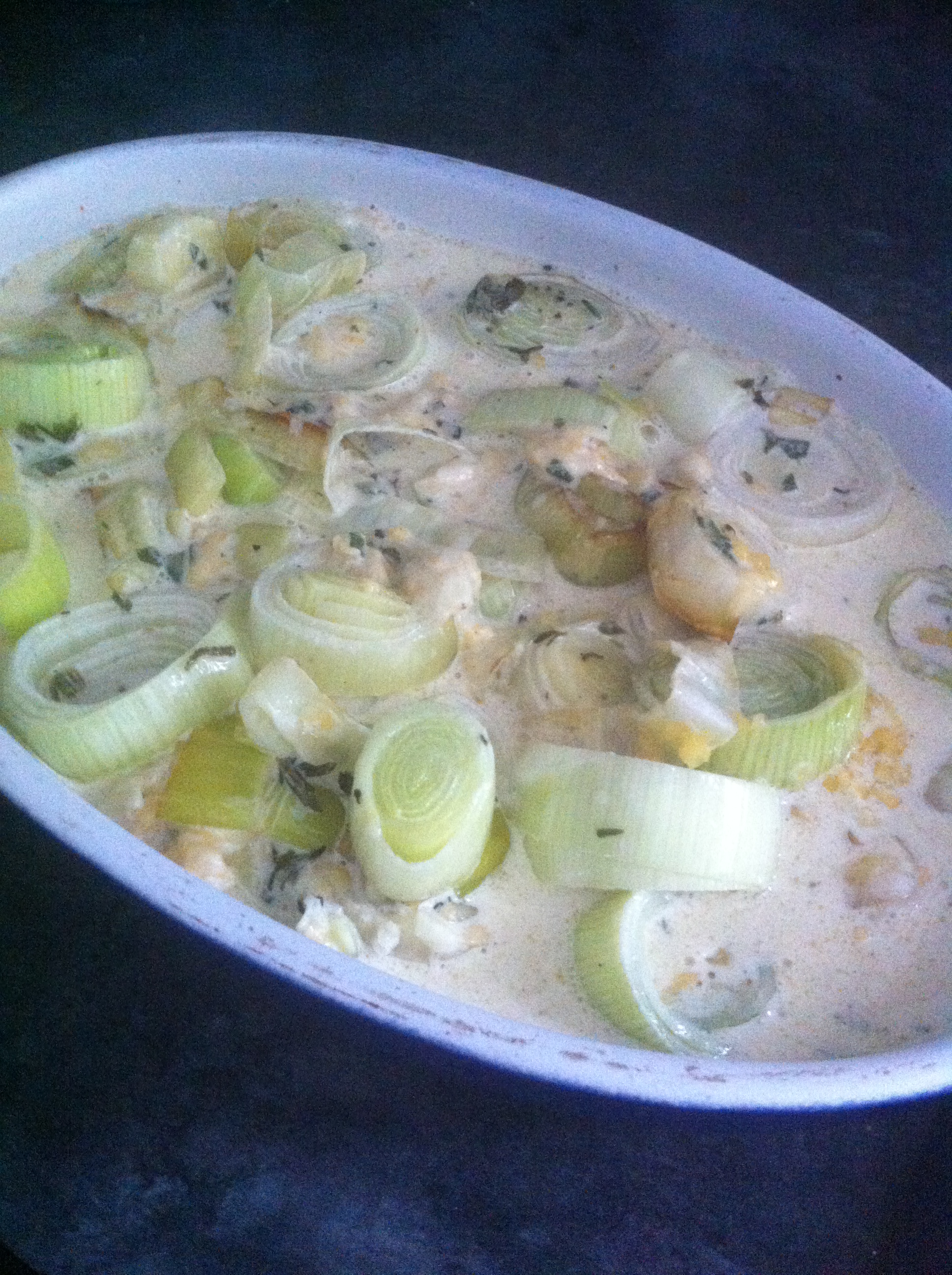
Cheesy Leeks

  • Servings: 6
  • Difficulty: easy
  • Print

Leeks, cream and cheese pre-cooking.

  • 800g leeks
  • 2 slices garlic
  • 25g butter
  • Olive oil
  • 1tbsp fresh thyme
  • 100g cheddar cheese, grated
  • 200ml double cream
  • Salt and freshly-ground pepper
  • Grated nutmeg

Take off the leeks’ outer leaves, split down the middle without cutting all the way through and wash. Dry well and slice into rings.

Melt the butter in a saucepan with the oil. Fry the leeks with the garlic and thyme for five minutes until softened. Season with salt and pepper.


Add three-quarters of the cheese to the double cream and mix well. Add the grated nutmeg.

Place the leeks in a shallow, oven-proof dish and pour over the cream and cheese mix. Top with the rest of the grated cheese and add some more black pepper.

Cook for 20 minutes at 200 degrees C.

Carbs per serving: 18g, with 2.5g fibre

For more delicious low-carb recipes and menu plans, see The Diabetes Diet by Dr Katharine Morrison and Emma Baird