The best diet for optimal blood sugar control & health
Author: Emma
Emma Baird is an award-winning writer, specialising in romcoms and fiction that focuses on relationships, and a type 1 diabetic. She is also the co-author of The Diabetes Diet, co-written with a doctor. Most importantly, she is the guardian of one very spoiled cat…
Today is World Diabetes Day. We send fond greetings to all those with diabetes all over the world.
No doubt, innovations in healthcare continue to offer improvements for we diabetics. When I was diagnosed in the 80s, blood testing wasn’t routine, there were few insulins on the market and logging your results meant writing them down in a little book. [As a teenager, I used to sit in the doctor’s waiting room, filling in the results using different-coloured pens to fool the doctor that I’d been doing tests regularly – did anyone else do this?!]
And now – there’s continuous glucose management, FDA approval of a so-called artificial pancreas and access to tonnes of information about diabetes thanks to the internet. There’s never been a better time to be a diabetic.
On the other hand, levels of type 2 diabetes are soaring. Our healthcare systems will not have the funds to cope with this epidemic. What will happen in the future when there are so many people suffering from diabetes-related complications? What will happen to families, watching people suffer from this condition?
Take time to think about diabetes today. If you have diabetes yourself, we wish you long and continued good health. And if there’s a diabetic in your life, give them an extra hug today.
Go to bed early with a good book and other advantages to diabetes.
How much does diabetes shape your personality? If you’ve ever experienced high blood sugars while at a party or surrounded by other people, you’ll know feeling tired and ill turns you into an introvert. Making conversation, especially with strangers, requires far too much effort.
Perhaps many of we introverted diabetics are extroverts dying to get out? Without the ups and downs of diabetes, we’d be flinging ourselves at strangers, auditioning for the X Factor, dominating meetings at work and organising sing-songs whenever we get together with friends and family?! Everyone would secretly dread us coming into a room. “Oh no, it’s XXXX. Now we’re going to be bullied into singing/dancing/playing some daft game.”
Just a thought…
When you experience on target blood sugars, the resultant energy gives you confidence – the kind of confidence that makes life’s more extroverted activities do-able and possible. I was diagnosed with type 1 diabetes at the age of nine and it’s been with me for all of my adult life.
There are plenty of positives diabetes has given me. One of the blogs we follow – Georgina M Llloyd – listed 30 ways diabetes has helped improve her life. I had a think about some of the ways it has shaped mine.
Here they are:
Organisational skills. You need tip-top organisational skills to stay on top of diabetes – ensuring you have enough medication, ordering and picking up repeat prescriptions, making sure you have carry enough medical gear with you, planning for exercise, keeping glucose tablets or jelly babies on hand, preparing for holidays etc.
An appreciation of the UK health system. A civilised country provides free healthcare to its citizens. As a type 1 diabetic, I’m so glad I live in the UK. All my medication, hospital appointments and eye checks are free. If I want extra help from a diabetic nurse, that won’t cost anything either. I’ve got gum disease (it’s one of the side effects of diabetes, but it’s also common among the general population) and I’m receiving treatment at the dental hospital. That’s free too.
The ability to say no. Georgina mentioned this one too. When you’re a people pleaser as I am, it jars to say no to food people have lovingly prepared and placed in front of you. Practise it enough and it becomes automatic. And then you can use that ability elsewhere; being asked to do too much, for example.
A love of walking. I’ve tried lots of forms of exercise over the years. Walking is the best – it’s gentle, easy and it serves more than one purpose. It’s exercise, but it gets you from A to B. It’s exercise, but it helps lower your blood sugar levels. It’s exercise, but it calms the mind at the same time. It’s exercise and it gives you access to fresh air, beautiful views, chats with dog owners and more.
Health and fitness is my hobby. It might have become one of my interests anyway, but thanks to diabetes I’ve always found diet and activity fascinating. These days, we’re lucky enough to have access to lots of information. we can do our own research and work out the best ways to look after ourselves.
It gives you an excuse to go to bed early. A cosy bed and a good book? Just tell your other half that you want to read, sneak upstairs, put your pyjamas on and dive in. It’s legit because you need more sleep anyway, right?
How has diabetes improved or changed your life? What are you grateful for?
It seems after declaring my commitment to running a half marathon in my post last week, the world knew I would be in need of some inspiration. Devastatingly it came in the form of a press release from Beyond Type 1, a juvenile diabetes charity I recently became involved with. “In 2017 funding for Type 1 diabetes clinics in Uganda and neighboring African nations will stop flowing.” I don’t know why this took me by surprise, cuts have been happening in low developed countries for years now, this is just another government cut. However, I then saw a campaign flyer from The Sonia Nabeta foundation, a charity which works to raise money for these much needed cases.
The post put it simply that $40 would provide a child with access to 3 HbA1c, Creatinine and Lipid profiles a year. This test shows your average blood sugar over a period of time. These numbers…
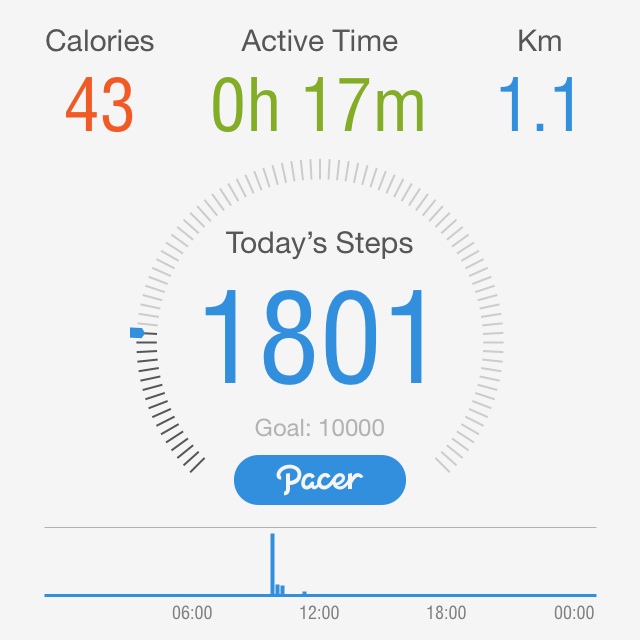
A few steps to go today to hit that 10,000 steps goal.
What apps do you use to help you with your diabetes? There are specialised apps you can use (free and paid for) created for diabetics and other general health apps that are useful.
I’m a bit of an app nerd. Gathering data on yourself is fascinating. And it can be very revealing. Here are the apps I use:
This is primarily a food diary that allows you to track macros, micros and calorie counts. You can also use it to look up carbohydrate values. It is useful because the database of food it has is huge. If you mainly eat unprocessed, home-made food it will require more work, but you can enter recipes and it will give you a calorie/carb count for them. Ignore the silly numbers (1,200 calories!) they suggest and customise your numbers to suit.
Created especially for diabetics (and run by them too), this app allows you to log blood sugar levels, how much insulin you take, exercise, how you feel and more. I use it intermittently as inputting all the information can get tedious. If you forget to log for a day or so, it’s difficult to remember. Some blood testing meters can be connected, which would make logging easier.
Thanks to mysugr, I worked out how to fine tune how much insulin I need to cover food (it varies depending on the time of day) and the best time for me to take my bolus insulin.
Pacer is a pedometer. My main form of exercise is walking and it’s great to know that I can achieve the recommended 10,000 steps relatively easily. It also tells you the distance you walk or run every day and you can use it to see weight loss goals. Be warned: this app drains your battery quickly.
All the above apps are free – though you can upgrade to premium versions. The free versions give enough information for this not to be necessary.
If you are in the slightest OCD, an app will encourage such behaviour so check yourself if you get uptight when you’re in an area where there no coverage or wi-fi… When that absence is too upsetting, step away from the app for a while.
A very small (six people!) study out last week revealed that type 1 diabetics might benefit from exercise.
Often, studies confirm what people have known for years, but additional confirmation can be comforting. The study comes with the usual caveat – further research is needed – but what it basically says is that the six people with type 1 diabetes who were monitored over three months had better blood sugar control, needed less insulin and had fewer hyperglycaemic episodes than the seven who did no exercise”.
The study was carried out by American and Italian researchers. It focused on middle-aged people using insulin pumps. It gathered information on metabolic activity, and inflammatory and autoimmune parameters.
Educational Programme Including Exercise
The researchers concluded that studies on greater numbers of people were needed, but the study’s co-author Dr Livio Luzi said an educational programme for type 1 diabetics that focused on “insulin injection monitoring, diet and exercise” would be highly advantageous.
Do you need any further encouragement? You could wait for the further studies, or you could just decide exercise will benefit you anyway and do it until you hear otherwise.
One further point that the Diabetes Diet likes to make – exercise doesn’t need to be horrible. If you hate huffing and puffing (and I certainly do), don’t do it. If you don’t enjoy something, you are unlikely to keep it up. Walking is effective – see this news article on the benefits of a brisk 10-minute walk after meals for type 2s – as is anything that involves moving about, bending, lifting and stretching such as housework and gardening.
Lifting weights is also beneficial for anyone with diabetes (type 1 or type 2) because it can help build or preserve muscle mass, which makes you more sensitive to insulin.
What does a day of very low-carb eating look like? Bacon and eggs, chicken salad and then steak, blue cheese sauce and green beans?!
Okay, some of the low-carb clichés work well. I don’t mind bacon and eggs in some form for breakfast every day. Otherwise, I might have low-carb bread (and you can see our great recipe for this here) with butter and Marmite, or I have smoked salmon or leftovers from the night before.
Whisper it: I’m not fussed about steak. A great burger, on the other hand… I’m also keen on turkey, particularly turkey mince which is very versatile. Turkey tacos, turkey chilli, turkey burgers and turkey curry are regular features in my house.
Bacon and egg.
Two rashers of back bacon, chopped up and fried in a little egg. Once they have cooked, I add in one large egg and mix it up. The whole thing takes less than 10 minutes to make.
2g carbs
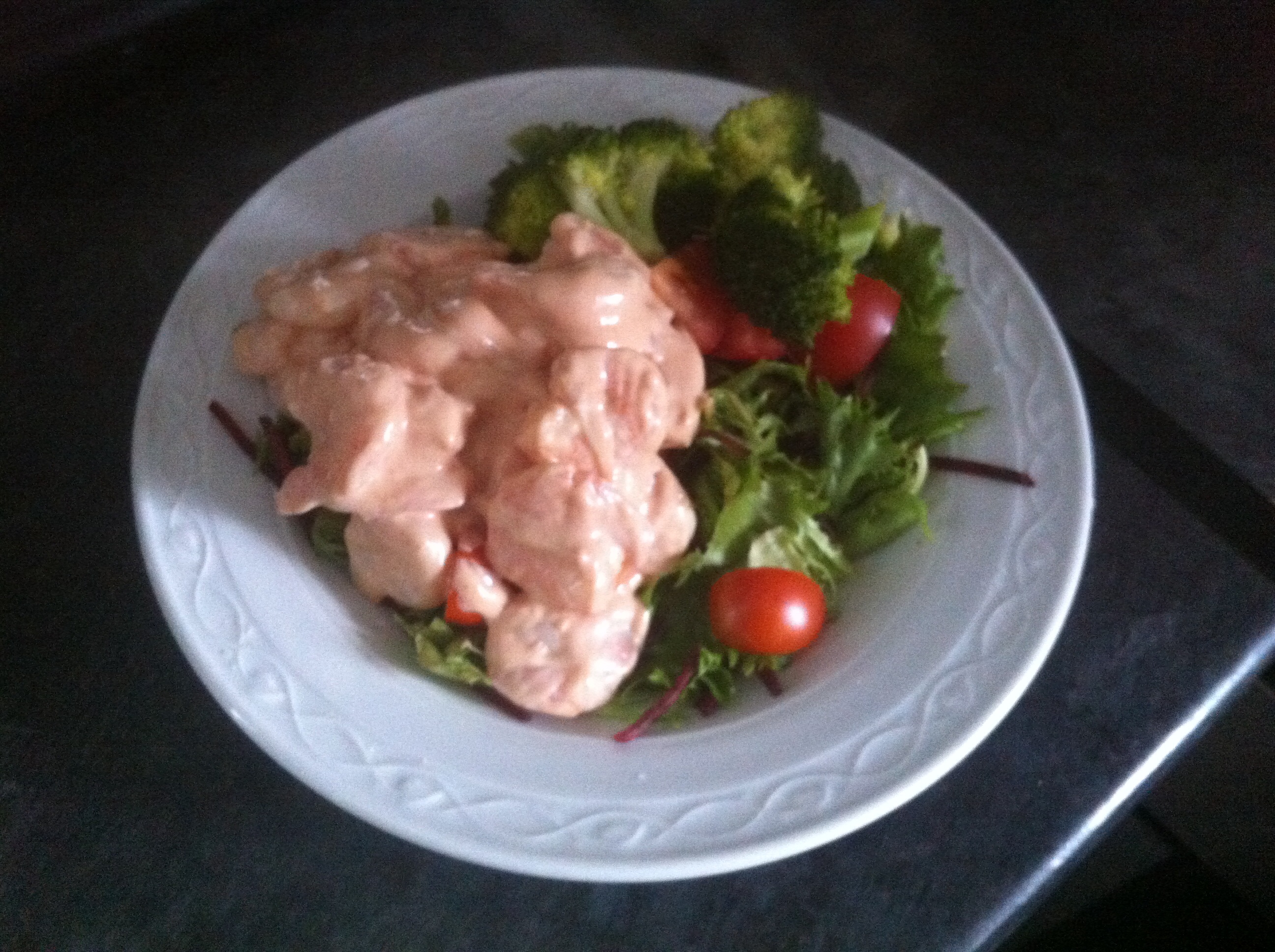
Prawns and vegetables
I made my own Marie Rose sauce (2tbsp mayonnaise, a teaspoon of tomato puree and a dash of Tabasco), and mixed this with 100g king prawns. I served this with salad and steamed broccoli. I also had some dry-roasted peanuts.
10g carbs
Turkey steaks in mushroom sauce
I had one and half turkey steaks, diced with a cream sauce. The sauce was made from mushrooms fried in a little butter. I added a tablespoon of wholegrain mustard, 250ml double cream and some salt. (I used about a quarter of this sauce.) I served it with steamed cauliflower and salad.
8g carbs
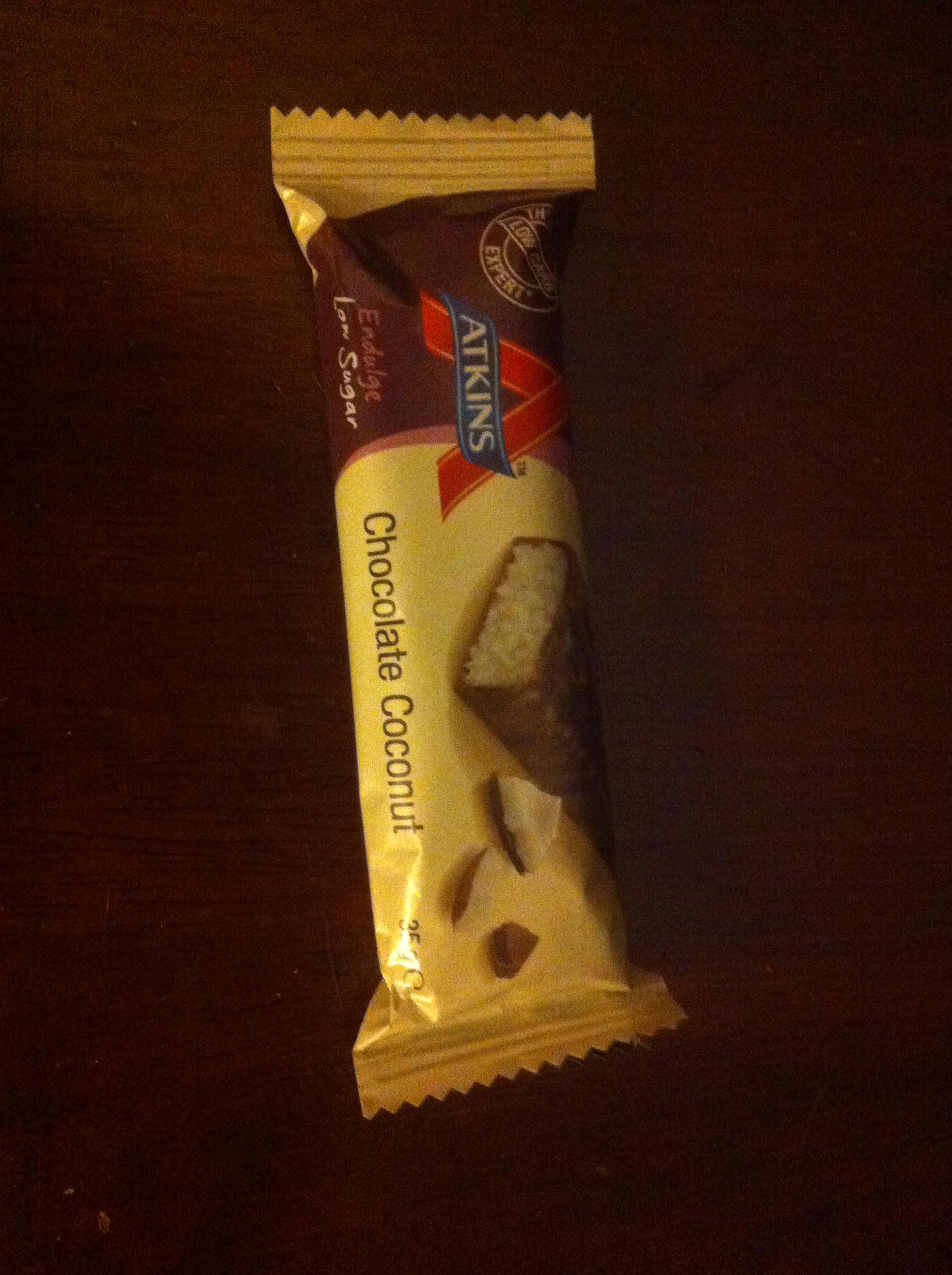
I finished with an Atkins bar – the chocolate coconut one that’s a bit like a Bounty bar. These bars are controversial in low-carb circles. They are heavily processed, after all. However, I really love the coconut chocolate one and I count 8g of carbs per bar, not the 2g of net carbs the label claims*.
8g carbs
*You need to figure this out yourself. The nutritional information for the Atkins bar subtracts polyols (the sugar alcohol used as a sweetener) from the total to give you the net carb content, but some people find polyols do affect their blood sugar levels.
The new Medtronic’s MiniMed 670G hybrid closed loop system is an insulin pump and continuous glucose monitor (CGM). The two devices can communicate.
Medtronic’s previous system already had a feature that would stop the insulin pump if a person’s blood sugar dropped too low. The 670G predicts when a person’s blood sugar level is dropping, preventing the low in the first place. It also corrects high blood sugars.
This is the first time such a level of automation has been available, which is why the pump is being called an artificial pancreas.
However, it still can’t work out what a person is eating. The wearer needs to tell the device they are about to eat and how many carbohydrates they will be ingesting – hence the name hybrid closed loop, instead of fully closed loop.
There is still a possibility of mistakes – the wearer under or overestimating the number of carbs they are about to eat – but the 670G will correct the error if blood sugar levels go too far up or down.
There are thought to be five other partnerships between manufacturers also looking to develop similar pumps.
The pump won’t be available until the spring of next year and Medtronic expects to start rolling the new product out outside of the US from summer 2017.
Peanut butter is one of my favourite foods. Of course it’s incredible on toast, but toast is out of bounds when you are low-carbing. It’s great as a snack though with apple slices or sticks of celery. You can choose the worthy peanut butter – the stuff without sugar or salt – but I suspect most people love the cheap stuff. I find most own-brand peanut butter indistinguishable from the brand leaders.
Anyway, I created a new recipe this week – Peanut Pork. It’s basically a satay sauce type recipe that makes the most of peanut butter and pork, two ingredients I really love. You can double it up easily enough to serve more people.
2 red chillies, finely sliced (keep the seeds if you like your food spicier)
Salt and freshly-ground black pepper
Cut the pork steak into evenly-sized cubes (about two centimetre squared).
Melt the coconut oil in a wok and add the spring onions, pepper and baby sweetcorn. Stir-fry for five minutes.
Chop the creamed coconut up and add this and the peanut butter to the boiled water. Whisk well to combine. Add this to the vegetables and bring to a simmer. Add the pork and allow to simmer for five minutes. Add the mange tout and simmer for another five minutes.
Season to taste with the salt and pepper.
Serve with cauliflower rice or in bowls with a spoon.
Coconut oil – the miracle product you can use for anything, right? You can cook with it, you can take your make-up off with it, you can use it as a moisturiser, an anti-frizz treatment for your hair…
And to give relief from dry eyes*?
If you have diabetes, you are 50 per more likely to suffer from dry eyes. I do. I often wake up at night and my eyes really hurt. If you have diabetes, you are more likely to get dry eyes because you do not produce enough tears.
My dry eyes could also be due to my age and changing hormones, and because my job necessitates spending a lot of time in front of a screen.
Sea Buckthorn Oil
Two months ago, I splashed out on sea buckthorn capsules, having read up on their properties and claims that the oil can help with dry eyes. I haven’t really noticed any difference – and those capsules are expensive, roughly £23 for a month’s supply.
I stumbled on the coconut oil solution by accident. Having run out of my normal cleaner one evening, I removed my make-up with coconut oil. Then I decided I might as well use it instead of my usual night-time moisturiser.
When I woke up in the morning, I noticed that my eyes felt fine. Most nights or early in the morning, I wake up with dry, sore eyes. To test if this was a co-incidence, I replaced my normal moisturiser with coconut oil for a week afterwards, ensuring I always rubbed plenty in my eyes at night.
Cheap Solution
Voila. No sore eyes.
Coconut oil – and especially if you buy it from Aldi where you can get it for £2.99 a tub – is much cheaper than sea buckthorn capsules. And it has plenty of other uses too. Maybe it is a co-incidence, maybe I’ve done something else differently that has affected my eyes, but I’ll be sticking with the coconut oil for now. It can’t do any harm.
*We don’t give medical advice pertinent to individuals on this blog. If you decide to try out the coconut oil solution yourself, you do this at your own risk.
My Free Style Libre trial ended this week. Was it a good/bad/in different experience?
The Free Style Libre is a new way of testing your blood glucose levels. You attach a sensor to your upper arm (right arm if you’re left-handed like me and vice versa), and then you use a reader to scan the sensor and it gives you your results in a second.
You can also see what your blood glucose has been doing for the last eight hours, and you can tell if it’s going up or down, quickly or slowly, or staying stable.
Calculating Insulin Doses
There’s also a feature for calculating insulin doses, and you can use the reader in the traditional way to test blood glucose through a finger prick if you have the strips suitable for the system. I didn’t use either of these features.
It was interesting. As someone who only recently managed to get out of the slightly obsessive compulsive blood testing habit, I scanned a lot. It’ll be hard to go back to limited tests. Seeing what your blood sugar does over eight hours – particularly overnight – is also fascinating.
In general, my blood sugar dips first thing, and then rises through the hours of the morning – something I believe is common in most people.
Checking Levels
I liked it because I could check frequently. Do I think it improved my overall control? Too hard to tell and two weeks doesn’t give you that knowledge. Would I like to keep it? Yes. It’s wonderful being able to check your levels whenever you want. Jokes aside about obsessive compulsive testing – and actually, I didn’t do check half as much as I thought I would – knowing that you can check whenever you want is liberating. I get through five boxes of 50 blood testing strips every two months and sometimes it’s feels as if I’m eking them out, as that works out as less than five strips a day.
As I said in my original post, which you can read here, the biggest drawback of the Free Style Libre is that it is not available on the NHS. The sensors need to be replaced every 14 days and they cost £56 (£48 when you apply the VAT exemption you are entitled to as a type 1 diabetic), which works out at £1,248 a year if you use it all the time.
Occasional use is an option though. It would be nice to have a few sensors in stock for that possibility.
Have you used the Free Style Libre – or is it something that appeals to you? What do you think the benefits to you could be? We’d love to know.
 Today is World Diabetes Day. We send fond greetings to all those with diabetes all over the world.