The Freestyle Libre – New Kit for Type 1 Diabetics

freestyle libreI have a new toy and I LOVE it – the Freestyle Libre, the new glucose monitoring system.

Dr Morrison blogged about the Freestyle Libre earlier this year. I was given one when I attended the diabetic clinic yesterday as an Abbot representative (Abbot make them) was at the clinic and handing out samples.

So what is it? The Freestyle Libre monitors what is called interstitial fluid glucose level via a sensor you attach to your upper arm. The sensor stays in place or 14 days, and you use a reader to scan it and get your glucose levels. It takes a second to do.

What are the pros and cons?

The advantages:

  • No finger pricking
  • No inserting sticks into a machine
  • You can scan through your clothes
  • You can scan as often as you want
  • You get an eight-hour glucose history
  • For parents, you can scan a child while he or she is sleeping to check they are okay
  • There’s a trend arrow that shows you where your glucose levels are heading.

The disadvantages:

  • It can’t replace blood glucose testing. If you are going to drive, you should still test your blood sugar levels beforehand. The same applies if you think you are hypo, and the scan doesn’t show you are.
  • This one’s a biggie… Freestyle Libre isn’t available on the NHS. Sensors need to be replaced every 14 days and they cost £57.95. If you have type 1 diabetes, you can claim relief from VAT which brings the costs down to £48.29. It’s still a huge amount of money, and there’s no way I can afford that.

To keep costs down, you needn’t use the sensor all the time. Perhaps you could use it every few months just to get a clearer idea of how your glucose levels behave over a 14-day period.

I’m told Abbot is working hard to make the sensors available on the NHS. Fingers crossed, hmm? I’m one day into my 14-day trial and I love it.
Beef Stroganoff – Low-Carb Main Courses

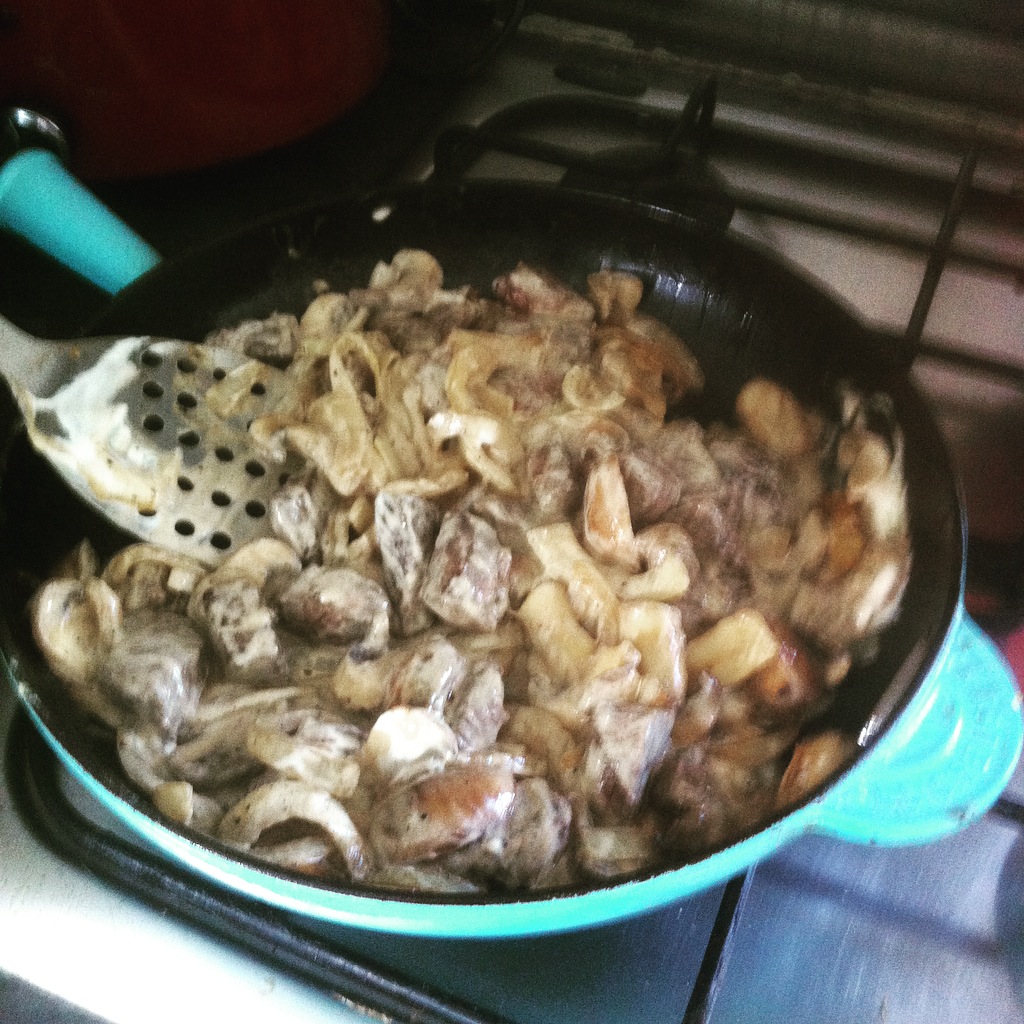
low carb main coursesBeef Stroganoff is a quick and easy dish for two. All in all, it takes about 15 minutes to prepare. The classic accompaniment is rice or noodles. If you are following a low-carb diet, try cauliflower rice instead, broccoli or a huge salad.

Beef Stroganoff

  • Servings: 2
  • Difficulty: easy
  • Print

  • 300g rump steak (Aldi sells rump steaks in this size)
  • 1tbsp butter
  • 100g mushrooms
  • 100g onion, finely sliced
  • Salt and pepper
  • 1tsp Dijon or wholegrain mustard
  • 100ml reduced-fat crème fraiche
  • 2tbsp parsley, finely chopped

Chop the steak into 2cm chunks. Melt the butter in a large frying pan and cook the steak pieces. You might need to do this in batches to prevent over-crowding the pan.

Depending on how you like your steak, cook for 2-4 minutes – the lesser time will mean a rarer finished dish.

Remove the steak from the pan and add the onion and mushrooms. Cook for five minutes until softened and lightly browned. Add the salt and pepper, steak and mustard and cook for one minute. Add the crème fraiche and cook through. Top with chopped parsley and serve immediately.

Allow about 10-12g of carbs per portion.


What To Do With Excess Tomatoes

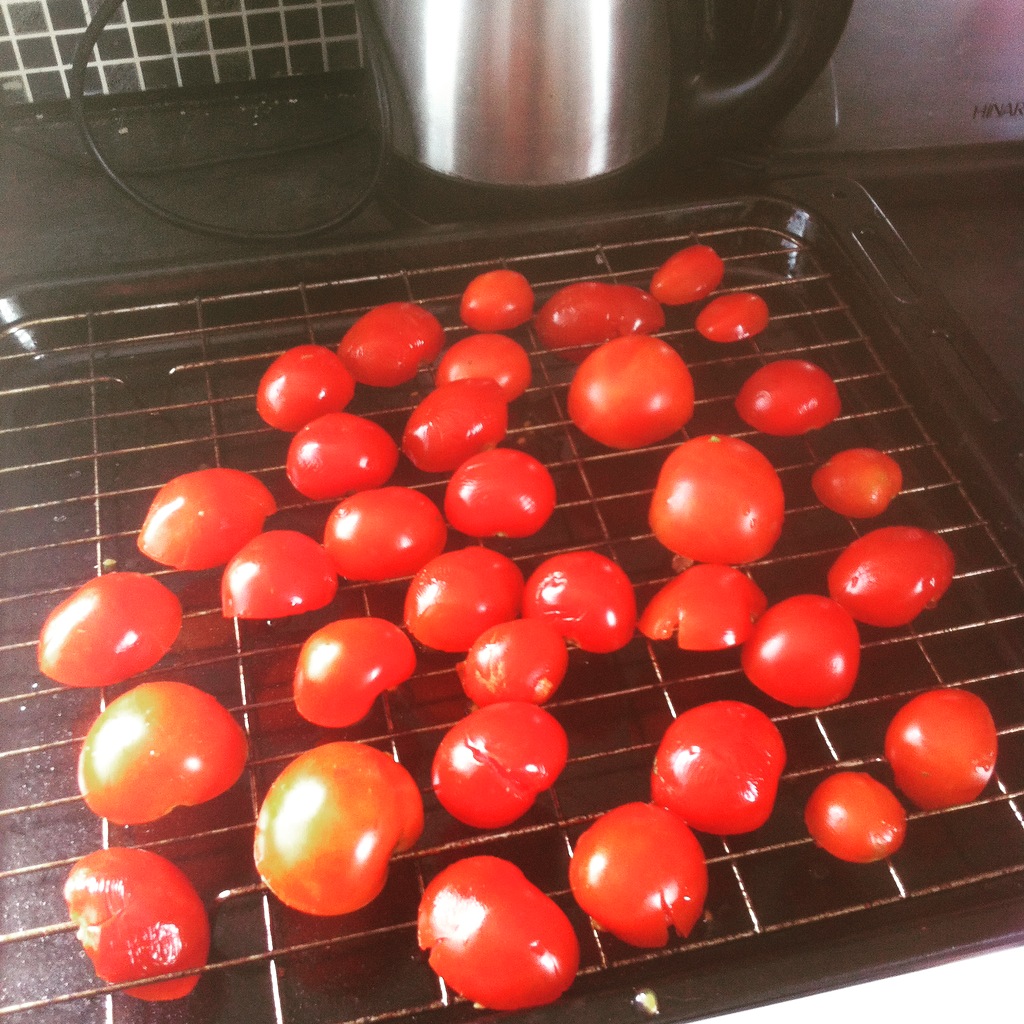
diabetes diet recipesPuree them, roast them, sauce them, turn them into soup – honestly, there’s plenty you can do with a tomato glut. I’ve decided to turn mine into oven-dried tomatoes, with the aid of some homegrown herbs too.

What about the higher carbohydrate content of tomatoes, I hear you ask. A medium-sized tomato – roughly 100g, say – contains 4g of carbohydrates, 1.2g of fibre. If you’re going to use them for sauces, chances are you’ll be using quite a few of them. Eat your tomatoes with protein, as part of a salad with chicken or ham, for instance, or as a sauce in a curry.

It is easy to eat a lot of sun or oven-dried tomatoes. They concentrated flavour makes them very tasty, for one. Because they have lost a lot of water, they are smaller and denser than normal tomatoes and you could end up eating a lot of them – and a lot of carbohydrates as a result. Eat them sparingly, two or three added to salads or with some sliced meat.

I’ve used rapeseed oil here to keep my product as Scottish and local as possible, but you can also use extra virgin olive oil.

Oven-dried tomatoes

  • Servings: 1-2 jam jars
  • Difficulty: easy
  • Print

  • 250g tomatoes
  • Fresh oregano – about 8tbsp chopped
  • Fresh basil – about 3tbsp chopped
  • 6 cloves garlic, crushed
  • 5-6 black peppercorns
  • Salt and pepper
  • Rapeseed oil
  1. Cut the tomatoes in half and scoop out the seeds. It’s easiest if you use your fingers, or you can use a teaspoon.
  2. Place the tomatoes, cut side down on a grill rack over a tray and leave for half an hour to drain.
  3. Preheat the oven to 100 degrees C.
  4. Mix together the crushed garlic, oregano, basil and salt and pepper. Using a teaspoon insert tiny amounts of the mixture into the tomato halves.
  5. Sprinkle a tray with a little of the rapeseed oil and place the tomatoes cut-side up on it. Cook in the low oven, turning the tray a few times, for three hours.
  6. Place in sterilised jars* and top with rapeseed oil.

Sun-dried/oven-dried tomatoes have roughly 23g of carbs (6g fibre) per 100g.

 *To sterilise jars, heat the oven to 140 degrees C. Wash the jars and their lids in hot, soapy water and place in the oven to dry out completely – about 7-10 minutes. Fill and seal.

A Day of Low Carbohydrate Eating

One person’s low-carbohydrate diet will look very different to another’s. When you eat low-carb, meals start to lose the distinction higher carbohydrate meals have.

At some point in the 20th Century, marketers decided that some foods were breakfast foods and some should be defined as lunch. Therefore, breakfasts should be cereal and/or toast, and at mid-day you should eat sandwiches, or bread and soup for example. That means you need ready-made products – boxes of corn flakes, or packets of pre-prepared slices of bread filled with cheese, ham and various other choices.

A low carb diet doesn’t usually include cereals and sandwiches, so anything can be eaten for breakfast or lunch. Leftovers from last night’s dinner, eggs and bacon for lunch – why limit yourself to a time of day food marketers have decided to earmark for certain foods?

To this end, I thought I’d document a day of low-carb eating. See what you think.

Breakfast

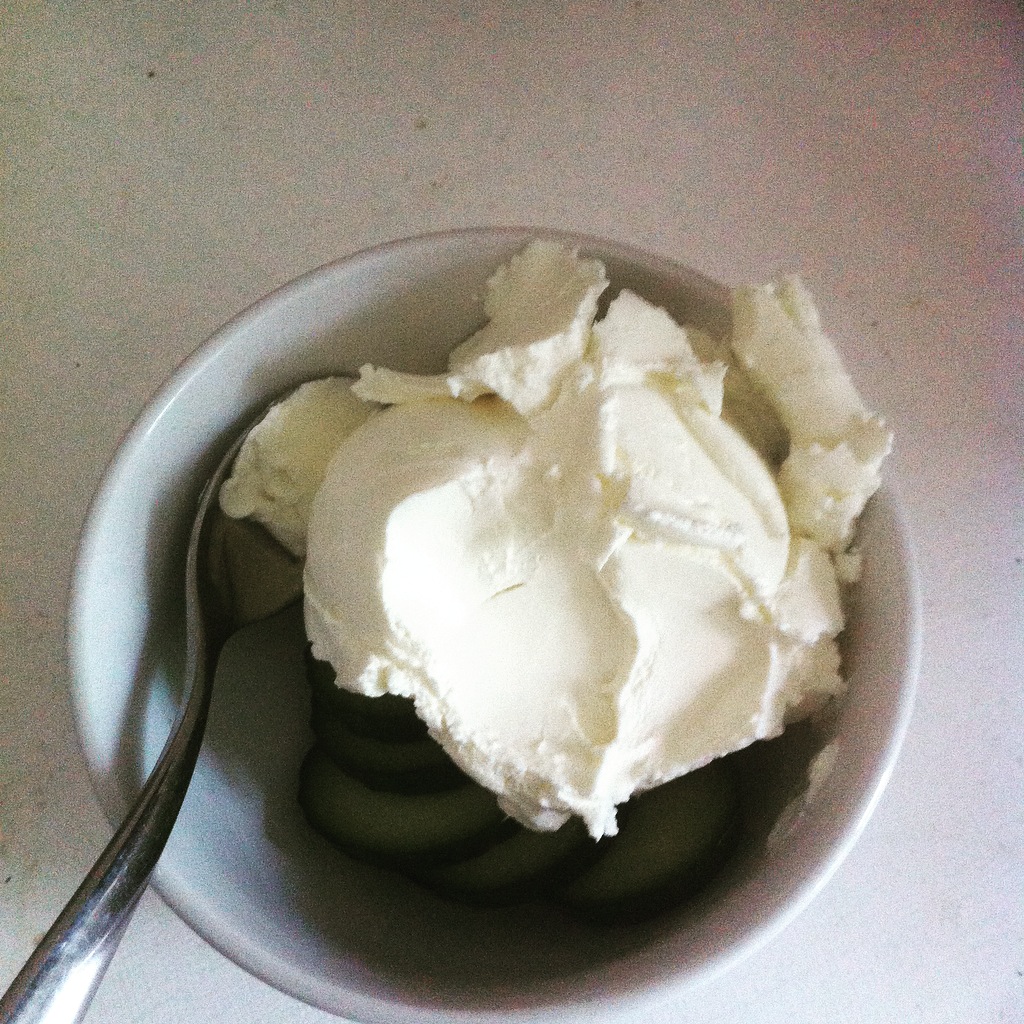
low carb breakfastsCream cheese and cucumber slices. We’ve been growing cucumbers this year – successfully too. I sliced some up and had them with some Asda soft cheese. It looks a bit like ice-cream doesn’t it?

Lunch

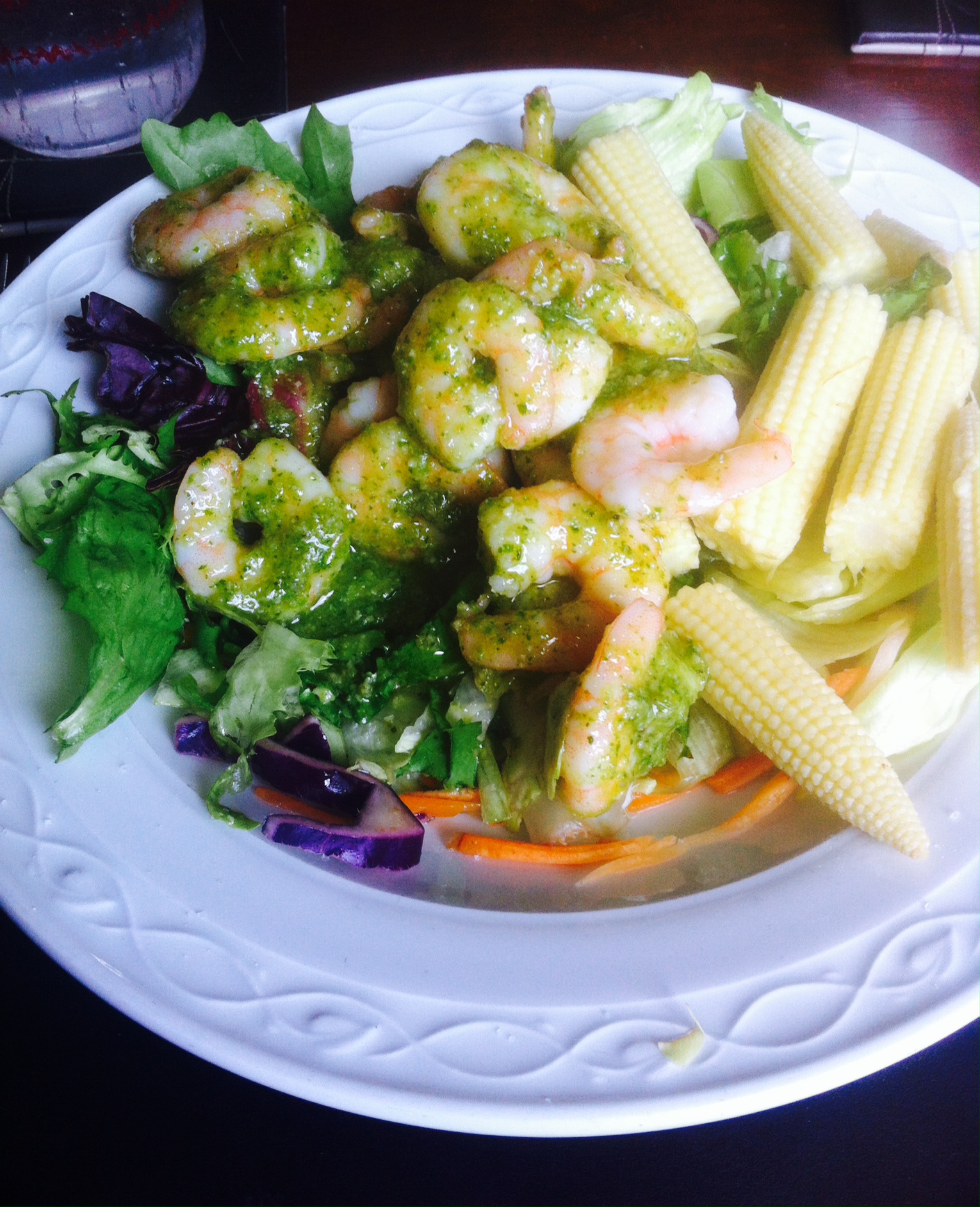
diabetes dietPrawns in home-made pesto, with baby sweet corn. I’ve got a couple of basil plants so I stripped the leaves from most of one, and blended them with 150ml extra virgin olive oil, one clove of garlic, salt, 40g sunflower seeds and 40g grated Parmesan. I use sunflower seeds rather than the traditional pine nuts as sunflower seeds are much cheaper.

This quantity will make you enough pesto to last a week. Store it in the fridge and use as a salad dressing, mixed with roast aubergines, peppers and courgettes, or spread on top of roast chicken.

Dinner

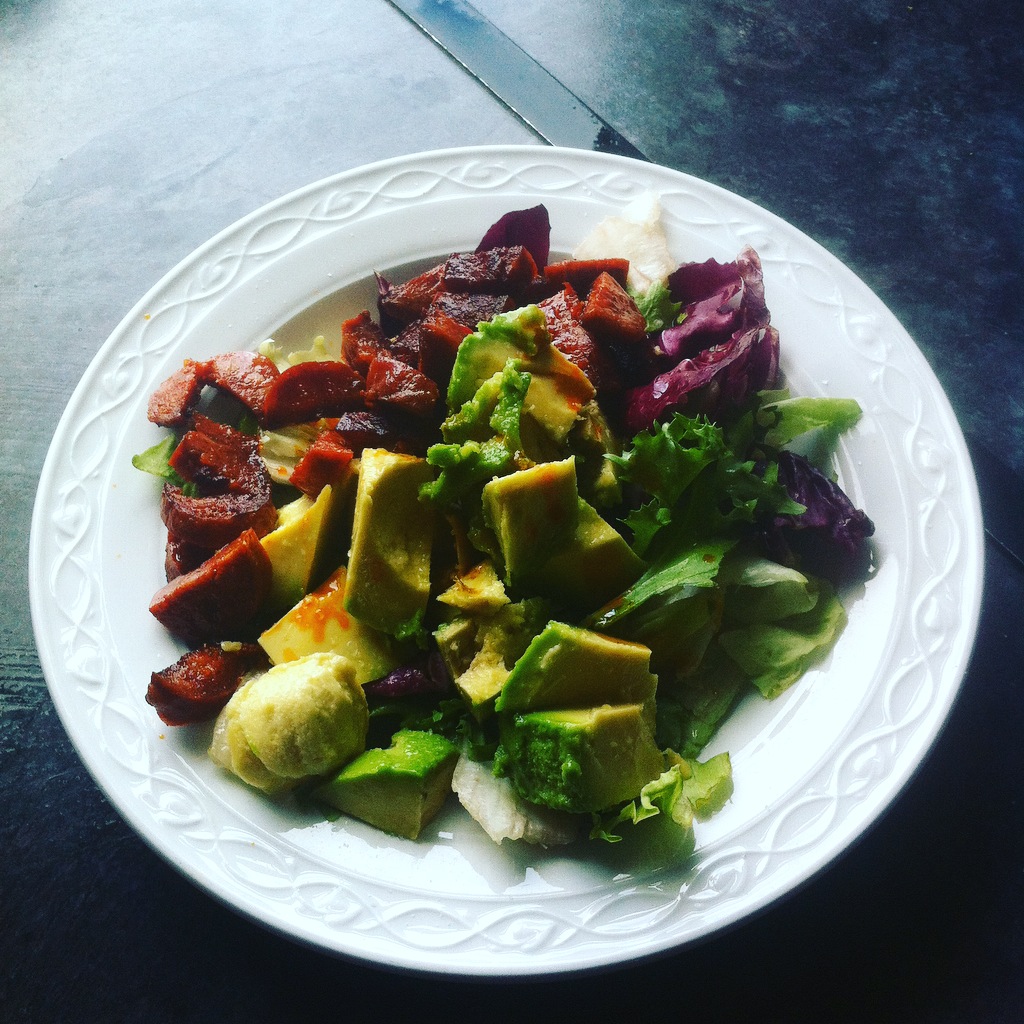
low carb saladsAvocado and chorizo salad. Recipe here.

I also ate an apple and cheese. The carbohydrate count for the whole day was roughly 50g.


What do you eat? What’s your favourite meal of the day – or your best meal? Let us know in the comments.


Disclaimer: my meal choices are not necessarily recommendations – it’s just what I ate one particular day.

The UK Has A New PM – One Who Has Diabetes

theresa mayAs of today, the UK has a new prime minister – Theresa May.

Theresa May has type 1 diabetes. She was diagnosed later in life than is usual with type 1 – and she was misdiagnosed with type 2 initially.

I’ve never harboured political ambitions. I’ve no idea how you would go about devising the best practices and policies for running the country. And Ms May’s biggest job at the moment is negotiating the exit from the EU.

But her appointment did get me thinking. How on earth do you cope with diabetes and the heavy responsibility of country leadership? Fair enough, she’s had a senior political role for some time so the transition probably isn’t that much of a leap, but even so… How do you do it?

What happens if you have a hypo in the middle of Prime Minister’s Question Time? My brain starts to go slightly mushy and I get easily confused when I’m hypo. Mushy brains don’t lend themselves to debate.

How do you cope with the interruption of routine? My diabetes is best controlled when routines stay constant – the same time for meals, the same levels of activity, the same sorts of foods and the same time to bed. Life at any kind of senior level doesn’t lend itself to regular routines.

How do you fit in hospital appointments? At the very least, she should be attending clinics every six months and also having regular retinal screening appointments. If you’re a very senior politician, I imagine hospital appointments often have to be cancelled at very short notice.

Blood pressure. As a diabetic, you are more likely to suffer high blood pressure than most people. Is being prime minister at all good for your blood pressure?

How do you manage with all the eating out? Good blood sugar management means you need to know the carbohydrate values of what you are eating, which is tricky when you are eating out.

Anyway, I don’t agree with her politics, but I don’t – and wouldn’t question – her ability to do the job. It’s interesting to reflect on the impact of a chronic condition on someone working at that kind of level. Diabetes often requires huge efforts of will power – overcoming the tiredness, forcing yourself to be organised enough to remember all your equipment and carry spare food and sweets just in case etc. Sometimes, all you want to do is sleep, the prospect of even a conversation too exhausting to cope with.

When you’re working at Theresa May’s level, you must need vast quantities of that will power and determination. Ms May, I salute you.


Avocado and Chorizo Salad

low carb saladsThis is an embarrassingly easy salad – so simple, it barely justifies a recipe. I thought I’d share it anyway because it’s really delicious.

Do cook the chorizo, even if it’s one that doesn’t have to be cooked. If you cook the meat, then the juices and oil run and it can form the dressing for the salad.

Avocado and Chorizo Salad

  • Servings: 2
  • Difficulty: easy
  • Print

  • 1 large, ripe avocado
  • Packet sweet and crunchy salad leaves
  • 150g chorizo, sliced
  • Salt and pepper
  • White wine vinegar

Fry the chorizo in a pan for five minutes until lightly browned. Turn frequently to stop it burning.

Arrange the salad in two bowls – I use soup bowls – and chop up the avocado. Put the pieces on top of the salad and sprinkle with a little vinegar, and salt and pepper.

Tip the chorizo, oil and all, on top.

Allow about 8g of carbs per portion.


Food photography – Tips for beginners

Some handy tips here for photographing food.

Gabriela Lupu's avatarCooking Without Limits

I often get asked photography questions: what camera I use, how to take good photos without a professional camera, etc. Everything  in this post comes after a few years of taking photos and making lots of mistakes, but learning from most all of them (Sometimes you repeat the same mistake).

  • Lighting – For a good photography you will need good lighting. Start with natural light at your window sill; turn off all artificial light and don’t use your flash. Just see how beautifully the sunlight comes in. If the light is too strong, add a diffuser, such as a white curtain, to soften the light. If taking pictures during the day doesn’t work for your schedule (as it often doesn’t with mine) then I’d suggest investing in some lighting gear. Do not use your built-in flash. Ever!  Don’t feel confined to taking photos in your kitchen. Move around to see…

View original post 736 more words

Low-Carb Pizza

low-carb pizzaLow-carb pizza for dinner? Anyone who follows a low-carb diet for diabetes is probably familiar with the work of Dr Andreas Eenfeldt.

The Swedish practitioner set up the Diet Doctor blog in 2007. The blog is now the most popular health blog in Scandinavia and the website offers all kinds of useful resources for those wanting to take up a low carb high fat diet. There are expert videos, how to courses and lots of recipes.

I decided to try one out this week – for low-carb pizza. This version uses aubergine slices to replace the bread. I adapted it slightly, but you can see the original recipe here.

Don’t forget that our book, The Diabetes Diet contains plenty of low-carb recipes and advice on how to adjust your medication when you embark on a low carb diet, which applies to those with type 1 and type 2 diabetes.

Low Carb Pizza

  • Servings: 2
  • Difficulty: easy
  • Print

  • 1 aubergine, medium to large
  • 200g minced beef (use pork or turkey if you prefer)
  • 200g tinned tomatoes
  • 2 cloves of garlic
  • ½ small onion
  • 150g grated cheese – use a mix of mozzarella and cheddar for the best taste)
  • ½ tbsp. dried oregano
  • ½ tsp salt
  • ½ tsp pepper
  • Olive oil

Preheat the oven to 200°C.

Slice the aubergines length-wise about ⅓–½ inches (1 cm) thick. Coat with olive oil and bake in oven for about 20 minutes or until they turn a little in colour. Turn them half-way through cooking.

Fry the meat, finely chopped onion and garlic in pan until the onions have softened the meat is browned. Add the tomato sauce and seasoning. Let the mixture simmer for 10 minutes or more.

Remove the aubergine slices from the oven and spread the meat mixture on top. Sprinkle with cheese and oregano. Place in the oven for about 10 minutes or until the cheese has melted.

Serve with a green salad.

Allow roughly 10-13g of carbohydrates per portion.


Taco Salad – Low-Carb Dinners

‘Tis the season… for summer salads! Take some veggies, plenty of spice and good quality minced beef and what do you get? A Taco salad. The whole Taco thing is more popular in the US than over here, but if you take the meat and spices bit alone you’ve got a good low-carb dinner recipe.

I adapted this recipe from the book AltShift (an alternate low-carb/higher carb diet).

Taco Salad

  • Servings: 4
  • Difficulty: easy
  • Print

  • 500g minced beef
  • 1pkt crunchy salad leaves mix (roughly 150g)
  • ½ onion, finely chopped
  • 1 fresh chilli, chopped (leave the seeds in if you like it hotter)
  • ½ tsp salt
  • 1tsp freshly ground black pepper
  • 1tsp cumin seeds, ground in a pestle and mortar
  • 1tbsp smoked paprika
  • 75g grated mature cheddar
  • 2 spring onions, chopped
  • ½ courgette, diced

Dressing:

  • 4tbsp sour cream
  • ½ tsp onion granules
  • ½ tsp garlic powder
  • Salt and pepper
  • ½ tsp paprika


Fry the beef and onion in a large saucepan or frying pan, stirring regularly to break up the clumps, until it is evenly browned. Add the cumin, pepper, salt, paprika and chilli and cook for five minutes more. The excess liquid should have evaporated and the mince should be evenly coated with the spices. Leave to cool to room temperature.

In a large bowl, empty out the packet of salad leaves and add the chopped spring onion and diced courgette. Mix together the sour cream, onion granules, garlic powder, salt and pepper and paprika. Mix the dressing and cheese in with the meat and tip the mince into the bowl. Mix well to combine everything and serve.

Serves 4. Allow about 5-8g of carbs per portion. You can use turkey mince, which will make the recipe cheaper too.

More Children Suffering from Type 2 Diabetes

diabetes lettersThe BBC reported this week that there has been a worrying rise in the number of children developing Type 2 diabetes.

Figures for England & Wales show that 533 children and young people have been diagnosed with type 2 diabetes. Last year’s figure was 500. Most children have type 1 diabetes and the type 2 figure represents 2 percent of all cases of diabetes.

While type 2 diabetes is much more common overall, it is still rare in children. Type 2 diabetes is linked to obesity.

The Local Government Association, which represents local councils who have responsibility for public health, believes cases will continue to rise. They believe the Government’s childhood obesity strategy, which is yet to be published, needs to take bold action.

The LGA has called for teaspoon sugar labelling of products and reduced sugar in fizzy drinks, as well as greater provision of tap water in schools. The association also thinks councils should be given the power to ban junk food advertising near schools.

The government has postponed the publication of its childhood obesity plan a number of times. It is expected to be published later this summer.

The Department of Health said it was determined to tackle obesity and that the strategy would look at everything that contributes to a child becoming overweight.


*Pic thanks to Practical Cures on flickr