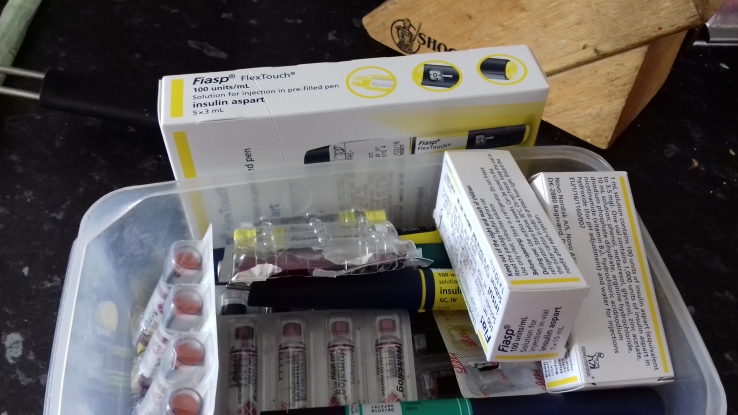
Brexit and Insulin Shortages

a plstic box c ontaining insulin on The Diabetes DietInsulin shortages and low-carb dishes—no obvious connection, I grant you but bear with me.

The first relates to a news item on Channel 4 last night, which warned of insulin shortages post-Brexit in the UK as the country produces little to no manufactured insulin (apart from a factory which makes the stuff derived from pigs).

Sir Michael Rawlins, the chair of the Medicines and Healthcare products Regulatory Agency, told the Pharmaceutical Journal last Friday that, “We make no insulin in the UK. We import every drop of it. You can’t transport insulin around ordinarily because it must be temperature-controlled. And there are 3.5 million people [with diabetes, some of whom] rely on insulin, not least the Prime Minister.”

412,000 people on insulin

Strictly speaking, that’s no true as the Channel 4 story pointed out. Wockhardt UK produces the animal insulin, but its products are used by some 1,500 to 2,000 patients every year. And that’s less than 0.5 percent of the estimated 421,000 people in the UK who rely on insulin.

Channel 4 News spoke to the major manufacturers, Sanofi, Novo Nordisk and Lilly. All of them make insulin in Europe.

The Healthcare Distribution Association (HDA) UK which represents medical suppliers in the UK wrote to the UK Government post the referendum in 2016 to warn of serious upsets to the supply chain should Brexit negotiations go wrong.

Buffer stocks

HDA UK said the UK medicines supply chain had “inbuilt resilience” and “flexibility”, and that they were aware of proposals by the government and manufacturers to develop plans for a buffer stock of all medicines.

A spokesperson for the Government said they were confident of reaching a deal, there were contingency plans in place to ensure no disruption to supplies.

Channel 4 News’ fact check conclusion is that as the companies and the Government don’t anticipate shortages, we should be okay.

Back to low-carb recipes and my tenuous attempt to link the two. If you follow a low-carb diet and you use insulin, in general you don’t need to take as much insulin. If shortages come, you’ll have more time to use your insulin while the powers-that-be attempt to sort out this almighty mess.

Cue plug for this blog and The Diabetes Diet! Is that distasteful of me?! Probably.
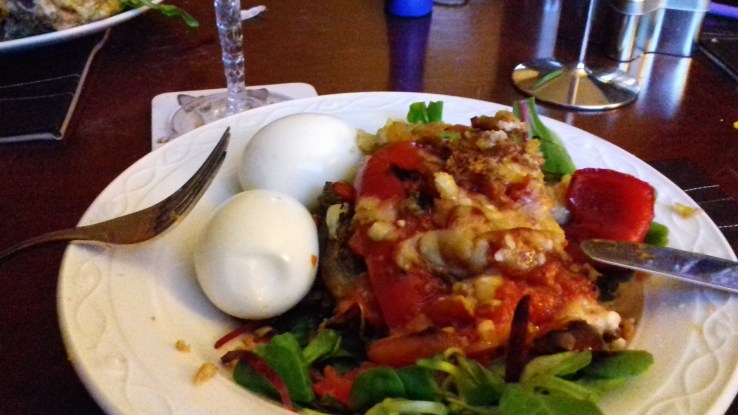


Aubergine and Pepper Parmigiana

The Diabetes Diet picture of an aubergine and cheese dishIf you read your way through my weeping and wailing post about meat-eating and ethics last week (congratulations, by the way), then this recipe will seem a natural follow-up.

To recap, I’m reading The Ethical Carnivore: My Year Killing to Eat by Louise Gray and hoping for easy-to-follow guidelines that assuage my conscience about eating meat, falling short of killing it myself as I’m pretty sure I can’t do that.

In the meantime, there is always low-carb vegetarianism. I know vegans argue that vegetarianism is little better than meat-eating given what goes on in the dairy industry, but it’s a start. Besides, I can’t imagine a life without cheese.

Low-carb veggie

Here’s a low-carb veggie recipe for you—a bastardised version of aubergine parmigiana. Allow roughly 10g of carbs per portion.

Aubergine and Pepper Parmigiana

  • Servings: 3
  • Difficulty: easy
  • Print

  • A large aubergine
  • One red pepper
  • One yellow pepper
  • 400g tin chopped tomatoes
  • 2 cloves garlic, crushed
  • 2tbsp rapeseed oil
  • Grated rind of one lemon
  • Salt and freshly ground black pepper
  • 75g grated parmesan cheese
  • 50g grated cheddar cheese

Pre-heat the oven to 175 degrees C.

Chop the aubergine and pepper into equal-sized pieces and toss in one tbsp of the oil. Cook on a griddle until softened—about ten minutes.

Heat the other tablespoon of oil in a saucepan and add the chopped tomatoes, garlic and lemon rind. Allow to come to a boil and turn down to a simmer, stirring from time to time. Cook for about ten minutes to, allowing the sauce to become thick and concentrated.

Season the sauce with salt and pepper and sprinkle some on the cooked aubergine and peppers.

Layer up the vegetables, sauce and cheese in a gratin or rectangular casserole dish finishing with cheese. Cook for twenty minutes.

For other low-carb vegetable recipes, see:


The Ethics of Eating Meat

Diabetes Diet

Diabetes DietHow do you love animals, hate waste and environmental damage, and yet eat meat, fish, dairy and eggs at the same time?

I ask myself this a lot. I was a vegetarian for years because I called myself an animal lover and meat-consumption didn’t seem to fit. As a long-term lover of vegetables and pulses, I found the food delicious—certainly the stuff I made for myself in the house. I suffered my way through plenty of bad pasta dishes in restaurants staffed by unimaginative chefs.

In 2010, I embraced low-carb living. At first, I only added fish to my diet. You can do a low-carb version of vegetarianism, but it’s limited. Fish added variety and health benefits even if my ethical self shuddered at the thought of being one of ‘those’ vegetarians.

Bacon temptation

I started eating meat in 2013. The stance didn’t feel as big as a jump as going from vegetarian to eating fish, so it wasn’t such a dramatic shake-up of my internal moral compass. And blimey, bacon… it’s a cliché that many a former vegetarian stumbled at the bacon hurdle and it’s well founded.

Diabetes Diet's picture of the cover of Louise Gray's bookThe reason for all this pondering is a book I’ve just bought—The Ethical Carnivore: My Year of Killing to Eat by Louise Gray. The premise is that the Daily Telegraph’s onetime environmental journalist decided she would only eat meat she’d killed herself, and the book begins with her first experience of shooting a rabbit.
I’m 75 percent certain I couldn’t kill an animal deliberately. I’m of the generation that’s become completely detached from the animals we put in our mouths. My father shot rabbits and gutted and skinned them, and he could do the same with birds. I have a razor-sharp memory of him standing at the back door, one back foot of a dead rabbit in each hand, and ripping it apart to allow the cats to dig in

Chickens coming to life

Meat’s almost always appeared in front of me packaged, its origins neatly obscured. Handling chickens makes me flinch as I visualise a head sprouting from that gaping cavity or feathers poking through the skin.

Veganism’s argument for greater health benefits doesn’t convince me. An omnivorous diet of unprocessed foods and plenty of fruit and vegetables will provide the same health gains. But I’m still left with the conundrum—how to eat meat that minimises animal suffering and doesn’t cost the planet dearly?

The ethics thing trips me up all the time. Buy free-range eggs—yes, but they clip the birds’ breaks and kill the male chicks at birth in a horrible way, anyway. Buy Red Tractor meat—not according to this article about what it means for animal welfare standards. Eat meat from the Farmers Market—but it’s so expensive. Eat organic dairy—what about the forced separation of cows from calves and what the industry does to male calves?

I’ve only started the book and I’m hoping it will end with a neat set of guidelines. Follow these and you too can be an ethical carnivore kind of thing. I doubt reading The Ethical Carnivore will turn me into a hunter, but if I emerge with a better understanding of what I can do, I’ll be delighted.

How do you deal with the ethics of eating meat? Any tips or advice gratefully received…

Ethics picture – Madhamathi SV and licenced under a Creative Commons Attribution-Share Alike 4.0 International Licence. 


Thrity-One-Year-Old Claims Cure for Type 1 Diabetes

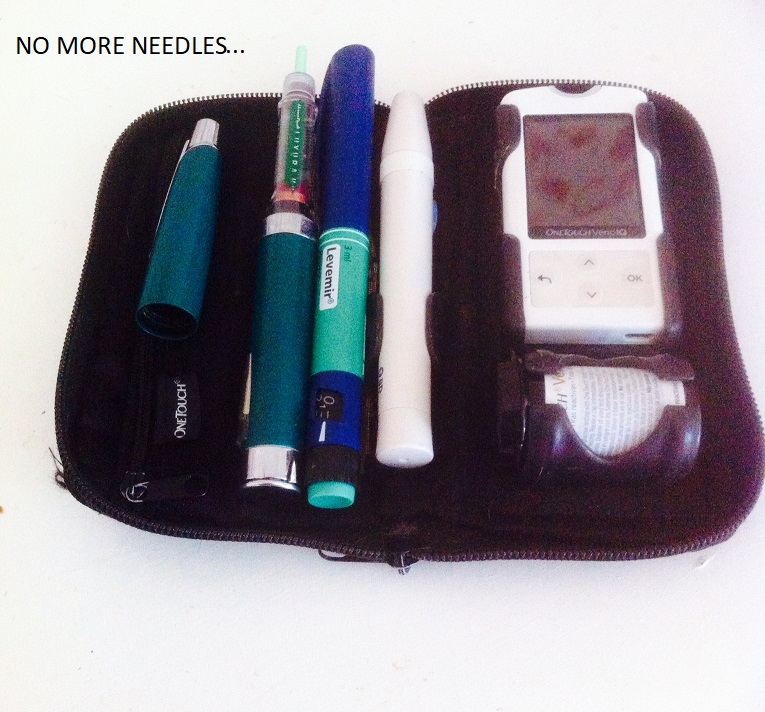
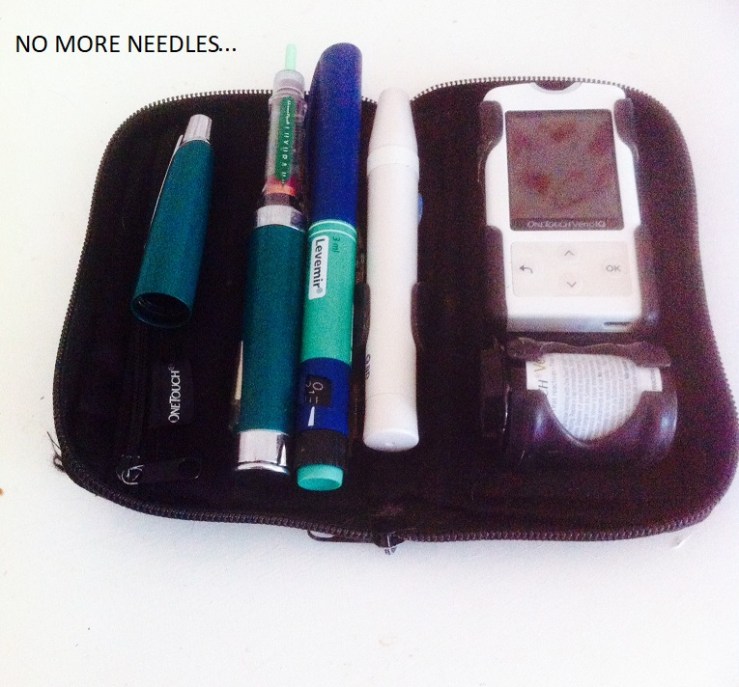
A PICTURE OF BLOOD TESTING EQUIPMENT AND NEEDLES

A PICTURE OF BLOOD TESTING EQUIPMENT AND NEEDLESGoogle alerts frequently pairs ‘diabetes’ and ‘cure’ together, but most of the time the words don’t capture my attention. Even when ‘type 1 diabetes’ and ‘cure’ make the same sub-heading, I’m not jumping up and down.

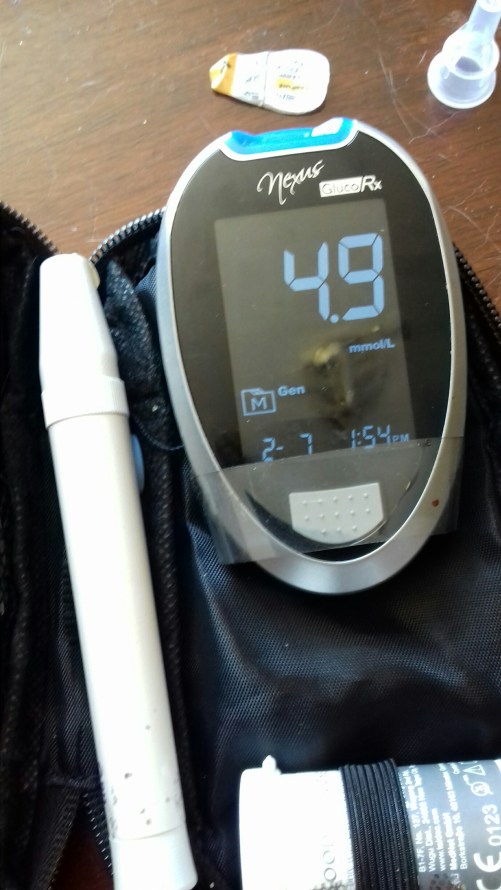
Yeah, yeah, heard it, bought the tee shirt, and no impact on my life so far…

But The Sun newspaper carried a story this week about a 31-year-old who claims to have cured his type 1 diabetes with diet and exercise alone. Again, that approach can achieve results with type 2 diabetes but it’s the first time I’ve seen it accredited to a cure for type 1.

Exercise and diet

Daniel Darkes’ regime isn’t for the faint-hearted. He eats a diet high in zinc (nuts, oily fish and veg) and runs more than sixty miles a week.

But before you dig out your trainers and start stock-piling the Brazil nuts, Daniel’s type 1 diabetes has some qualifications. He has a rare, abnormal gene, which doctors believe might have restarted his pancreas.

The 31-year-old from Daventry in Northants developed diabetes eight years ago and stopped giving himself insulin last January (2017)*. He started cutting down on insulin after experiencing hypos in 2016. He travelled to the US in March 2017 to find out more. Doctors ran further tests to find out what we happening to his body.

Brain sending messages to pancreas

He was put on a fasting diet and exercised at the same time. The medical staff noted his brain had begun sending new signals to his pancreas, and he hasn’t injected himself with insulin ever since.

Daniel told The Sun that doctors believed his abnormal gene combined with exercise is the reason he’s been able to cure himself—it’s as if the gene acts as a back-up immune system and has recharged his pancreas.

He is still being monitored at Northamptonshire General Hospital.

Abnormal genes

I’m fascinated by this story—as I suspect most type 1s will be. I’m no medical expert so my opinions are qualified, but I suspect that Daniel’s abnormal gene plays a huge part in his ‘cure’ (and this won’t be regarded as such until he reaches the two-years-without-insulin mark). It’s also interesting that the description of his diet (scant as it is) sounds like a low-carb diet.

The article said that Daniel’s case “could provide a revolutionary new approach to treating type 1 diabetes”, while Diabetes UK said it couldn’t speculate on whether Daniel had ‘cured’ his diabetes or not, and that there was “no clear cure for type 1 or type 2 diabetes”.


*DISCLAIMER – please, for the love of all things injectable, do not skip your insulin injections if you have type 1 diabetes…


Low carb store: Strawberries and cream cake

This cake serves 8 and has 5.4 g of carb and 176 kcals a slice.

Ingredients

110g ground almonds

40 butter melted

50g inulin powder (or granulated sugar substitute)

2 eggs

1tsp vanilla extract

30mls double cream

100g strawberries


Method

Combine the ground almonds, melted butter, eggs and vanilla in a large bowl. Add the double cream and inulin. Chop the strawberries and add them to the mixture combining gently by hand. Pour into a buttered cake tin and bake in a pre-heated oven at 180 degrees for 18-20 minutes.

Half-Marathon Training – an Update


a picture of a blood testing machine on The Diabetes Diet
Post-run blood sugar today. Ten out of ten for me (for smugness too).

“Stone the crows, Emma! Wouldn’t have thought excessive temperatures would be the weather issue throwing a spanner in the half-marathon training, hmm?”

Good people, the woman who signed up for the Glasgow half-marathon in January uttered various predictions about running in Scotland. Most of them involved rain. As it turns out, my lightweight shower-proof coat has needed minimal use. Instead, I’m reaching for the sun cream and hugging the walls in a bid to stay in the shadows as I pound the pavements.

Smell that sizzling tarmac! Scotland has just reported its hottest June ever. Let’s give a shout-out to the poor polar bears in Aviemore.

Fortunately, I’ve discovered I can run in the heat. Again, not something I’ve had the chance to test out much over the years. When I trained for a half-marathon ten years ago, there were two hot days in May. I ran during them and hated it.

Blood sugar levels

But now? I’m okay. Running’s so bloomin’ difficult for me, the heat isn’t the thing that’s bothersome. It’s still the breathing, the adjusting of blood sugar levels to minimise low or high blood sugars and my reluctance to build up my miles

My half-marathon is three months away. I’ve yet to go farther than six miles. Most training plans are for 12 weeks, so there’s still plenty of time to add them up. I’ve found my ‘pace’, a super-slow snail-like jog. I’m hoping my general fitness will stand me in good stead, so that if the pre-race miles don’t stack up, those walking miles will cover ‘em.

I ought to join a running group too. Nothing like surrounding yourself with like-minded idiots people to spur one on. And they might know some different routes. I run the same roads all the time, favouring the reassurance of knowing at what point I draw on my reserves of energy and where I get excited because the end’s in sight.

Jessica Smith TV

Last week, when it was very hot (32 degrees), I exchanged outdoor for indoor exercise. I found an indoor jogging work-out on YouTube. “T’uh!” smug self said, “This’ll be easier than running out there in that heat.”

Not so! Ten minutes in and I decided I’d have been better off running outside in the blazing sunshine.

The heatwave here is set to continue. I’ll be training in high temperatures for a little while yet. Again, I’m hoping this magically builds up my fitness so that when I do talk myself into running more than six miles, it’ll be easy.


Pills Instead of Injections?

a picture of a syringe and insulin at The Diabetes DietWhat are your thoughts on taking pills instead of injections? We type 1s and our colleagues in insulin-taking at the type 2 camp have believed for years an insulin tablet isn’t a go-er because of what stomach acids would do to it.

Recent research says an insulin pill might now be in the offing. My husband got excited about it, emailing me a link to the published article. I was more “meh”. The injections I take seem to be the least bothersome bit of diabetes. Working out how to get your blood sugars in line, constant blood sugar tests (restrictive, dependent on how many sticks you’re prescribed a month), tiredness when you don’t get the dosage right—they’re the things that make diabetes tricky to deal with.

Daily injections

As a child, pre-diabetes, a boy on a neighbouring farm was diagnosed some months ahead of me. “Ooh,” the young me said, “I wouldn’t like to inject myself all the time.” Nine-year-olds tend to think that way, condensing diabetes down to the one thing that seems horrific—more than daily injections.

The nine-year-old obviously tempted fate in that some months later I too was in hospital practising shots on an orange. (What did that poor orange ever do to me?) If someone had promised me a pill at the time, young Emma would have leapt on it.

Back to the research. Professor Samir Mitragotri, who co-authored the study from Harvard University, says his team they took a new approach by dispersing insulin in a liquid made of two components. They were a nutrient called choline, and a substance called geranic acid that is found naturally in cardamom.

Hormone stays intact

They experimented on rats and found the pill lowered the animals’ blood sugar levels rapidly. The team say further experiments suggested the liquid in which the insulin was dispersed inside the capsule stops the hormone from being broken down by enzymes in the digestive system after the capsule dissolves. This helps the insulin pass through the mucus layer of the intestines and opens the seal between adjacent cells lining the intestines, so insulin can pass into the blood vessels.

The article says it will be several years before clinical trials can begin as so far, the method has only been tried in a few small animal studies. It isn’t clear either whether someone could use the pill for background (basal) insulin.

I’m still meh. There is a lot of trials currently being conducted, researching multiple ways to help we folks with diabetes. While there are people who do have genuine needle phobias and find injections unpleasant and painful, I’m lucky enough not to be one.

Pill or injection? Not bothered. Closed loop pump system or (whisper it), the hallowed cure. Okay then…