Plant-Based – Does it Just Mean Vegan?

diabetes diet by Emma Baird
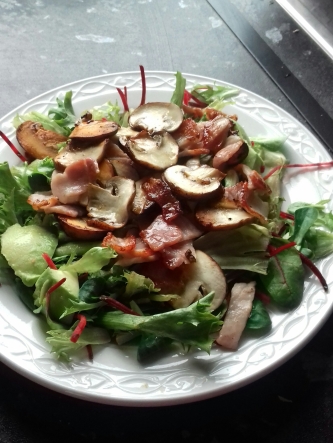
Avocado, mushrooms, bacon and salad – plant-based, hmm?

Happy New Year from all of us at the Diabetes Diet. Here’s wishing you health and happiness in 2018.

Anyone with an interest in health and fitness can’t have missed noticing the current furore around veganism. Proponents tout it as THE ethical and environmental way to eat, and it is very fashionable. Your local supermarket has probably vastly increased its vegan offerings (or the labelling of such foods anyway) and you’ll notice many restaurants and take-away chains have jumped on the bandwagon too.

There are even those who argue a vegan diet is helpful for diabetes, such as Dr Neal Barnard who promotes a vegan, fat-free way of eating as the way to reverse diabetes.

I don’t dispute veganism as an ethical choice. As far as environmental factors go, you could point out that wide-spread veganism would increase the production of mono-crops, a process that depletes the soil and cause issues. The recent over-consumption of coconut oil and avocados in the west has caused enormous problems in their countries of origin.

Health Benefits

When it comes to health, the bonuses of veganism often occur because people shift from a diet of highly processed foods and little fruit and veg to a way of eating that is plant-based. The health benefits may not come from ditching meat, fish and dairy per se, but more from vastly increasing how much fruit and veg they eat and getting rid of processed foods which are hard to find on a vegan diet*.

Let’s argue semantics here. I eat a plant-based diet. The bulk of the food on my plate is plants, nuts, some lentils and pulses and the odd wholegrain.

I just happen to eat meat, fish, eggs and dairy too. Yesterday, I ate scrambled eggs and chopped tomatoes for breakfast, an avocado, mushroom and bacon salad for lunch, and for dinner I had tomato, onion and barley stew with some haddock and steamed broccoli. I ate some peanuts for a snack.

That’s a plant-based diet, isn’t it?

Plant-based Taken to Mean Veganism

For whatever reason, plant-based is now taken to mean veganism. Perhaps someone somewhere thought plant-based sounded nicer than veganism, or they wanted distance from the term, which in the past might have had negative connotations.

Just as Dr Barnard puts forward an argument for veganism as a way of treating diabetes, so do we with low-carb eating. The global diabetes community, diabetes.co.uk, runs an award-winning digital health intervention for people with type 2 diabetes, pre-diabetes and obesity. It was developed using the feedback and opinions of more than 100,000 people who reported good results from low-carb. Like our approach to diabetes, the site’s website promotes lots of vegetables. Plant-based again, right?

If ethical concerns still bother you (as they do me), there are steps you can take.

  • Buy your eggs from the Farmers’ Market where they are likely to be free-range and organic.
  • Buy meat that has an RSPCA stamp on it, or again from the Farmers’ Market where animals are more likely to have been raised and slaughtered in a better way.
  • Eat dairy sparingly, and again choose organic options, preferably from local producers.
  • Investigate where your fish comes from and how it is farmed.
  • Base some of your meals around egg-free Quorn products and tofu.

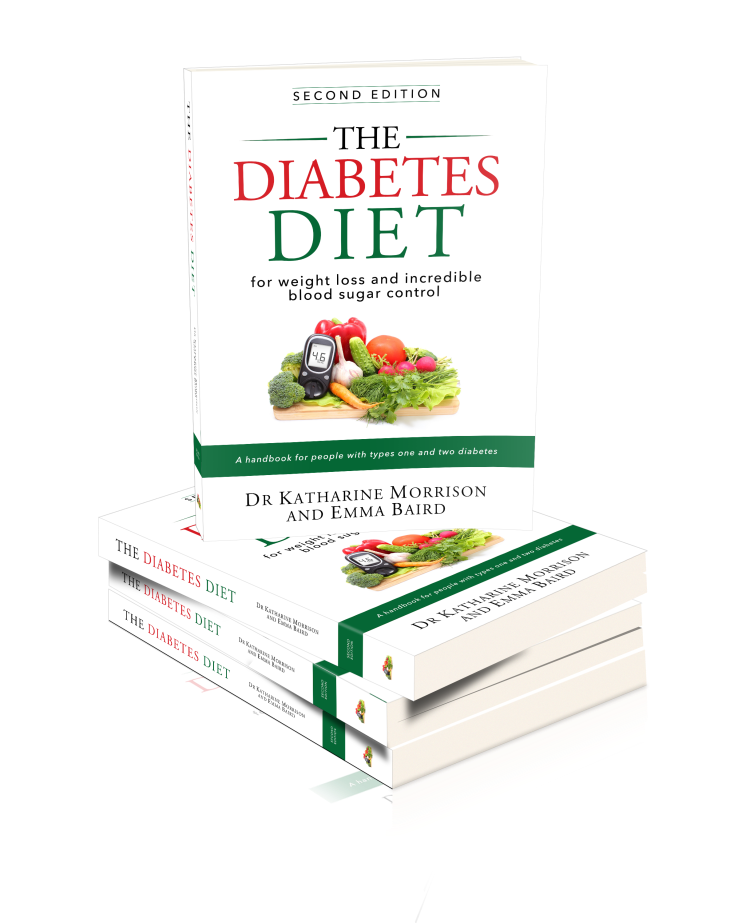
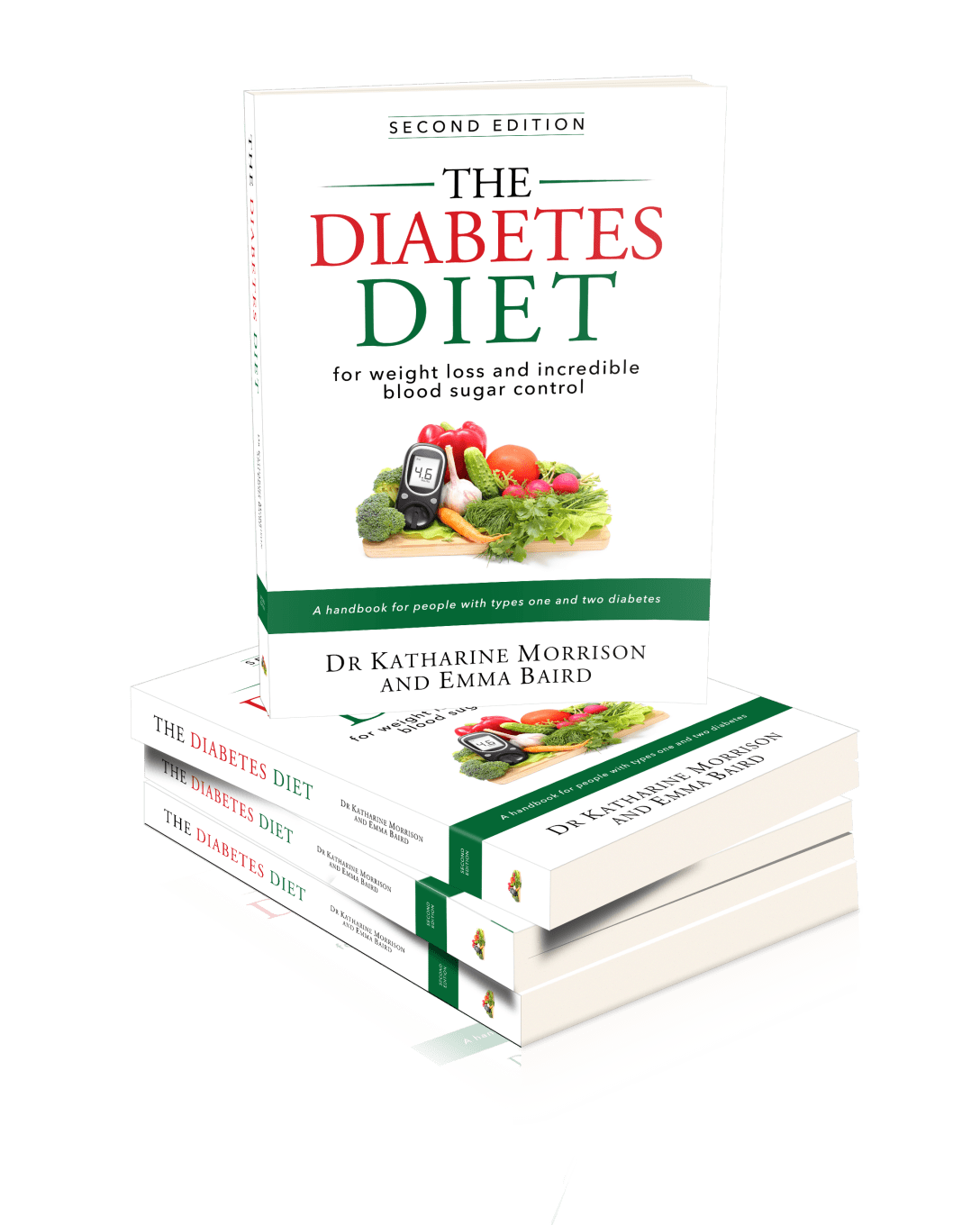
Here’s to a plant-based 2018! And if you’d like to start a low-carb diet, check out our book – available in e-book and paperback on Amazon.

*Though the food industry is now doing its best to up its production of vegan junk food.
The Pulse of Life!

Diabetes and how you cope with it is an ongoing exploration. Recently, I’ve been experimenting with pulses such as lentils, and beans (kidney and butter) and even (shock, horror) whole grains such as barley.

I find their effect on my blood sugar minimal, and I love the variety they add to my diet. I was vegetarian for a long time, and lentils were a favourite food – lentil curries, patties and stews, all delicious.

Keto proponents don’t approve of lentils and beans because such diets promote extremely low carb intakes as sub 50g, but if you aim for a more moderate carbohydrate intake, such as 90-150g a day, you can easily add in pulses and beans. Remember too, that they have a high fibre content and you’ll probably be able to subtract that from the carbohydrate total when you work out how much insulin you need to cover a meal.

Apart from adding variety to my diet, I’ve also gone back to pulses and beans because of their fibre content. A lot of nutritional research these days points towards the importance of fibre, and it’s difficult to get much fibre on an extremely low-carb diet.

My body seems like the pulses and beans, and my blood sugar results confirm this. If your diet opens up and allows you more variety, this is always a good thing.

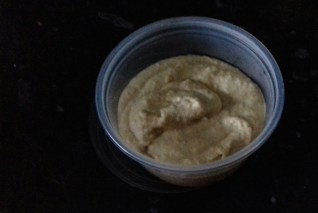
So, to celebrate here’s my recipe for hummus. Hummus is high in fibre and relatively low-carb. Used as a dip or sauce, you’ll only be adding minimal carbs to your diet.

Now, one thing I tried with this is the peeling the skins off thing. I’d read about this online, that if you want velvety-smooth hummus, you need to peel the chickpeas. U-huh. I wouldn’t do this every time as it’s possibly the most tedious job in the world, but for a special occasion, absolutely. You get beautifully smooth hummus.

Velvety-Smooth Hummus

  • Servings: 4-6
  • Difficulty: easy
  • Print

·         1 x 400g tin chickpeas (save two tablespoons of the water)

·         Juice of one lemon

·         1-2 cloves garlic, crushed

·         2 heaped tablespoons tahini

·         Salt to taste

Drain the chickpeas, reserving two tablespoons of the water. Peel the skins off. The easiest way to do this is to pinch each chickpea between your thumb and finger, and it should pop out of its skin. Do this above a bowl and be prepared for a few to ping across the room.

Pop into a food processor, along with the garlic and reserved water and whizz for a minute or so. You can also use a stick blender, but this is the less messy method.

Add the lemon juice and tahini and whizz again, for a couple of minutes, so you get a smooth, creamy texture.

Add salt to taste – about ½ to one teaspoon.

Use as a dip, spread on your favourite low-carb bread. It’s also lovely spread on lamb steaks.

Total carbs – 24g, minus 11g for the fibre.


Diabetes Diet Book – Updated & Given a Make-over

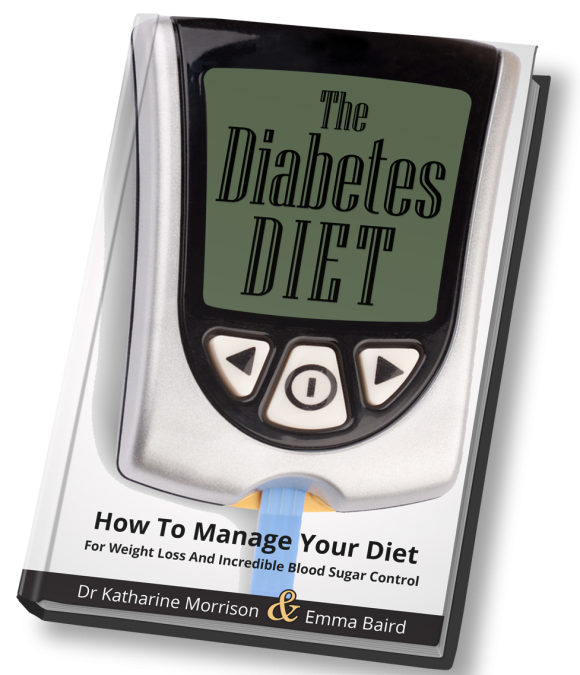
We’ve been doing a little work in the background here at the Diabetes Diet. We decided to go for a print version via CreateSpace, and we’ve updated our book and uploaded it onto Kindle.

This is the new cover. What do you think?

diabetes diet
The Diabetes Diet is now on Amazon.

The Diabetes Diet explores what people affected with type one diabetes and type two diabetes, pre-diabetes and obesity need to do to get mastery over their blood sugars, metabolism and weight.

The scientific reasoning behind the low carbohydrate dietary approach is fully referenced and made easy by menu plans and low-carb recipes. You will be introduced to information and case studies that help you decide what level of blood sugar control, carbohydrate restriction and monitoring is most appropriate for your individual needs.

This book can help those with type 1 diabetes AND type 2 diabetes. It won’t cure diabetes, but it will make living with the condition so much easier.

The print version is going though some final checks, but should be ready in a few weeks’ time and we’ll update you.

You can buy the Diabetes Diet on Amazon.com here, and Amazon.co.uk here.

Hypo or Not?

diabetes diet
A “serious and important” hypo.

When do you feel the symptoms of a hypo?

The November/December issue of Balance, Diabetes UK’s magazine, reported that researchers have proposed that we need to take a fresh look at defining low blood glucose levels.

At present, a ‘hypo’ (low blood glucose level) is 3.9mmol and below (70.2mg/dL in the US), which the researchers feel isn’t all that low.

A severe hypo is one where someone needs help from another person to recover, something that rarely happens in clinical trials. Rightly so, as letting someone go so low without help wouldn’t be ethical.

Researchers suggest that there should be three levels of hypo – low, lower and oh f*****g shit. I’m kidding, obviously, but they are looking for the level that, below this point, a person’s health is seriously affected, i.e. where their brain, blood and cardiovascular systems are compromised, the risk of death begins to rise, and the level that has an impact on mental health.

Current research suggests these begin to take effect at about 3.0mmol (54mg/dL in the US). The team’s three definitions are:

  • Level 1: 3.9mmol or less –a hypo alert
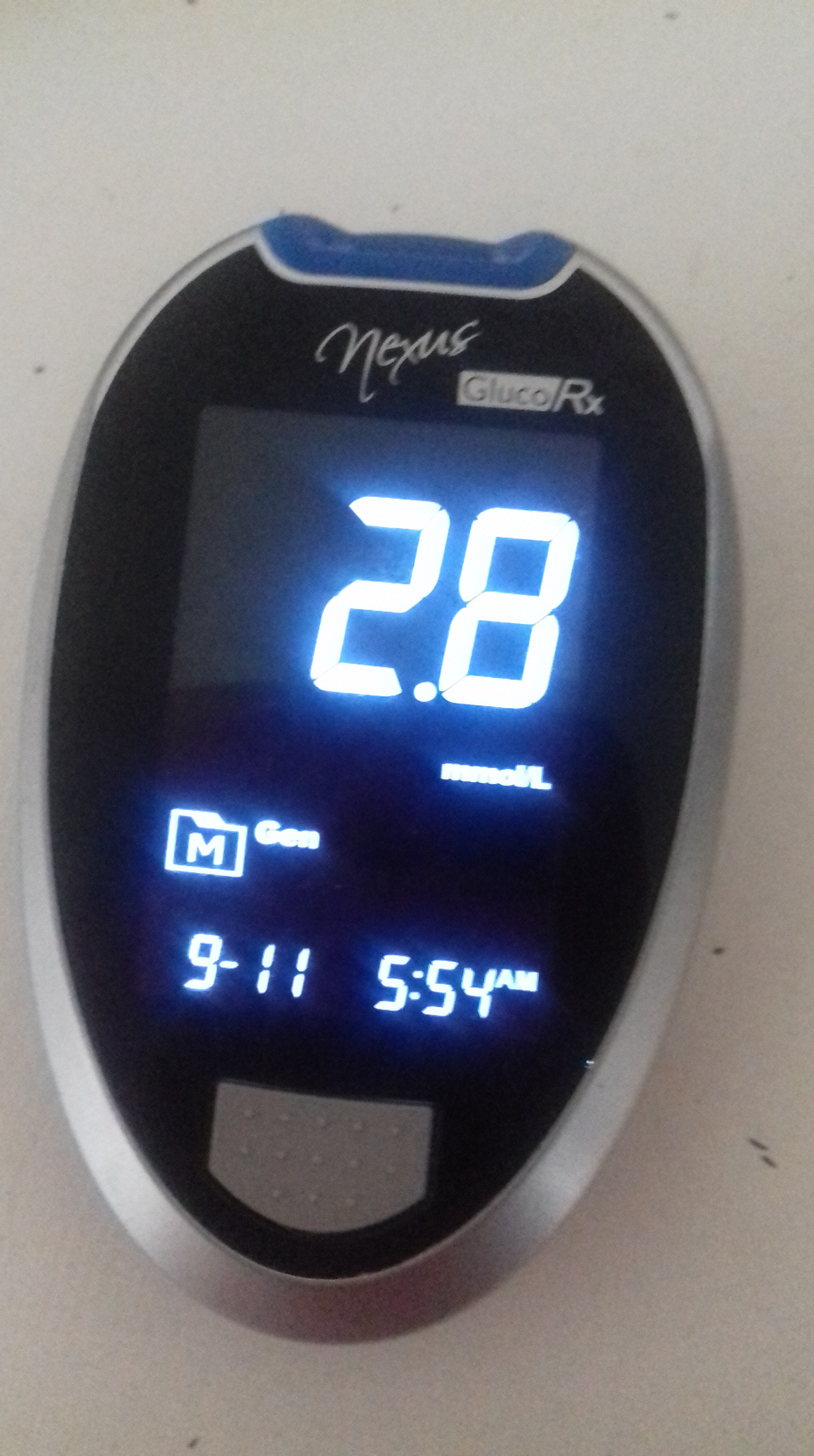
  • Level 2: less than 3.0mmol – serious and important hypo
  • Level 3: serious hypo, requiring external assistance, even if none is available.

Like all of us, hypos are individual. One person’s “I’m fine at 3.9” is another’s “oh shit”. I sometimes feel the symptoms of a hypo coming on at 4.6, say. Other times, I’ll prick my fingers, get a 3.9 and wonder where it’s come from.

As you can see from the picture, I had a “serious and important hypo” this morning, thanks to undereating and walking too enthusiastically yesterday. Oof. It happens.

Keeping your blood sugar levels stable without going too low is a huge challenge. One of the reasons we promote low-carb eating for type 1s in particular is that the risk of hypos can be reduced because you don’t need to take as much insulin.

If the researchers could include advice about how to avoid hypos, while also achieving good HbA1c results in the long-term, we will cheer them on…


*Some good news! The NHS has approved flash glucose monitoring technology – i.e. systems such as the FreeStyle Libre. I’m off to investigate the possibilities of getting one. Also, big love to the NHS, a wondrous, wondrous institution.


This Week I’m…

It’s all about me, folks!

Is anyone’s week of that much interest to anyone else? Blogging demands a certain conceit – that yes, your activities and opinions are either interesting or useful to others*. I’m HUGELY entertaining, but only really to myself. Sometimes, my mum and husband laugh along too, if they are feeling kind.

Nevertheless, I experimented with this blog form elsewhere and decided to run with it on the Diabetes Diet. So, this week I’m…

Trying out new recipes. Like most folk, I’ve been stuck in the same ol’ recipe rut for a while. Prawn cocktail Monday, seabass with avocado Tuesday, sausages at some point. (Well, they are so flippin’ good.) I decided to try out lots of new recipes recently, and I’ve enjoyed the process.

Some of them worked wonderfully – steaming seabass and dressing it with ginger, soy sauce, sliced chillies and sesame oil gave me something new to do with fish. And the crust-less pizza was fun too. I tried Good Food magazine’s budget-friendly pot roast recipe, using silverside of beef, carrots, celery and stock, which would have been good if I hadn’t overcooked it.

It was as tough as old boots. My jaw still aches remembering the workout it got. Still, the gravy and the veg that came with it was MARVELLOUS!

Re-discovering running. I started running 13 years ago, did it regularly, entered a lot of 10k runs and even a half-marathon, and then lost the love. It was hard, it needed a massive amount of willpower to make myself get out there and do it, and it was dull, dull, dull. Seriously, there are good reasons why runners look so miserable. Then, four weeks ago, I decided to go for a run anyway.

Just to see if I still could.

And I could! Two days later, I thought I’d try again. I still could! And here I am, four weeks later going for a run every two days, and LOOKING FORWARD TO IT.

What’s different this time? I run so slowly, your granny could probably overtake me. If you take it super-slow, you don’t get that nasty struggling with the breathing thing. Or the lead-like calves. And I listen to a podcast while I do it. Anything comedic is a good bet, though you try listening to Radio 4’s News Quiz as they tear into our politicians and Donald Trump, and run at the same time. Laughing like a loon and heavy breathing is HARD.

Adjusting to the dark nights. For those of you outside of Scotland, by the start of November, it’s dark by 5pm (and it’s only going to get worse). You can do worthy things, such as making sure you do get some daylight at lunchtime if possible. On the other hand, it’s a great excuse to park your a**e on the sofa and binge-watch your way through Stranger Things 2.Image result for stranger things 2


*The stats for any blog serve as a great reality check, should you ever find yourself under the illusion that your opinions/activities ARE fascinating to anyone else…

What to Eat in October

We’re still working our way through home-grown courgettes (!!), tomatoes and carrots, but what else is seasonal at this time of year?

At the Diabetes Diet, we try our best to eat seasonally (it’s not always easy in Scotland), as seasonal food locally grown and produced tastes the BEST. It also helps you do your bit for the environment, by cutting down on food miles (the distance food travels to reach your plate) and it benefits your local economy. Wouldn’t you prefer to put money directly in a farmer’s pocket, than add to the vastly-inflated profits of a supermarket?

Anyway, October brings many of the benefits September does. While many fruits and vegetables are now gone for the year, there are plenty of delicious other options.

MEAT

  • Pheasant
  • Lamb
  • Partridge

FISH

  • Mussels
  • Mackerel
  • Oysters

VEGETABLES

  • Wild mushrooms (if you’re going to pick these, please make sure you know what you’re doing!)
  • Root vegetables, such as celeriac and carrots
  • Kale
  • Beetroot
  • Cabbage
  • Fennel

FRUIT

  • Apples
  • Damsons

Looking for some ideas for what to do with your seasonal ingredients? Puzzled about how you can make them low-carb so they fit with the way you eat? We have some suggestions for you…

Make gluten-free gravy using carrots and onions, and serve with pork and chicken.

Our carrot and almond soup recipe is an established family favourite. If you want to make it a main course, add some boiled eggs or poached chicken for added protein (and satiety). Or make yourself a delicious salad with the recipe for a Carrot and Dill version.

Love lamb? Our low-carb, gluten-free moussaka makes the most of lamb mince (making it more affordable too). Try this African stew, also.

Jovina Cooks Italian has inspired us hugely, and this Brindisi Fish Soup uses mussels and is packed with flavour. It also uses aubergines, which are seasonal in October too.

Hate cabbage? Add bacon, cheese and sour cream, and you can make anything palatable to even avowed cabbage loathers. Try this Cabbage Casserole recipe and convince the brassica haters it’s true.

Celeriac has a very distinctive taste. Make the most of it in this braised celeriac recipe. You can use it as a replacement for potatoes to accompany your roast dinner. We also have a yummy recipe for soup.

The Diabetes Diet – A Request

We are updating The Diabetes Diet! Our book has been on Amazon for a while now, and we’ve decided to give it a makeover (as well as get it ready for print).

We will be expanding the recipe section, and we wondered if any of our followers would like to contribute to this? Or, if you would like to provide a testimonial about how low-carb eating and matching insulin to your meals works for you, we would welcome that too.

We can’t offer you any money, but we will publicise your own blog or anything else. If you want to tell us about your success following low carb but would prefer to do it anonymously, that’s fine too.

You can find the book here.

To send us recipes or testimonials, please email: lowcarbdiabetesdiet@gmail.com

Thanks in advance!

Low-Carb Bread

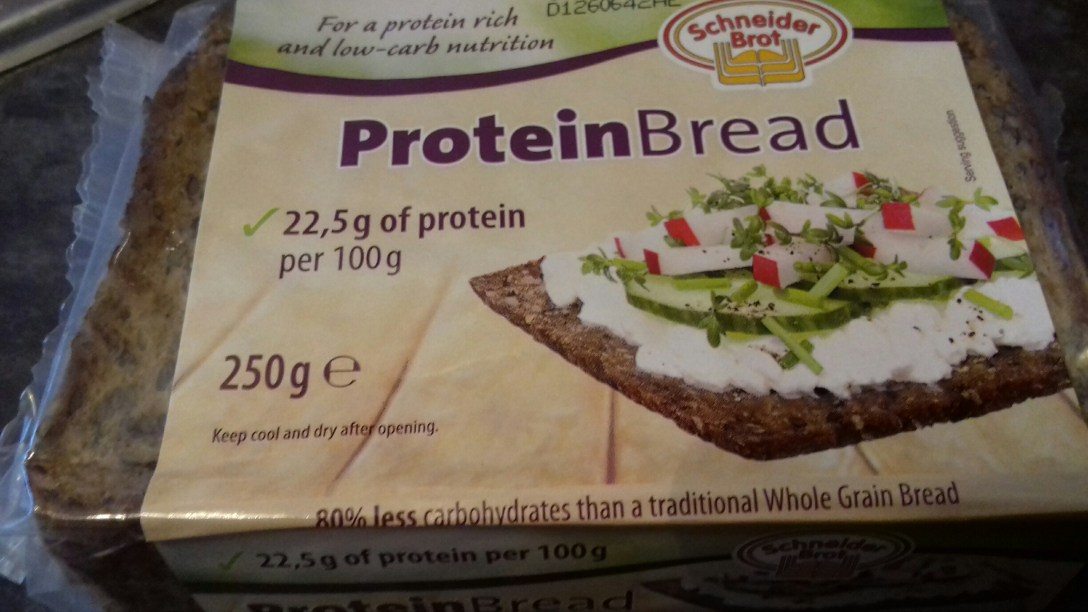
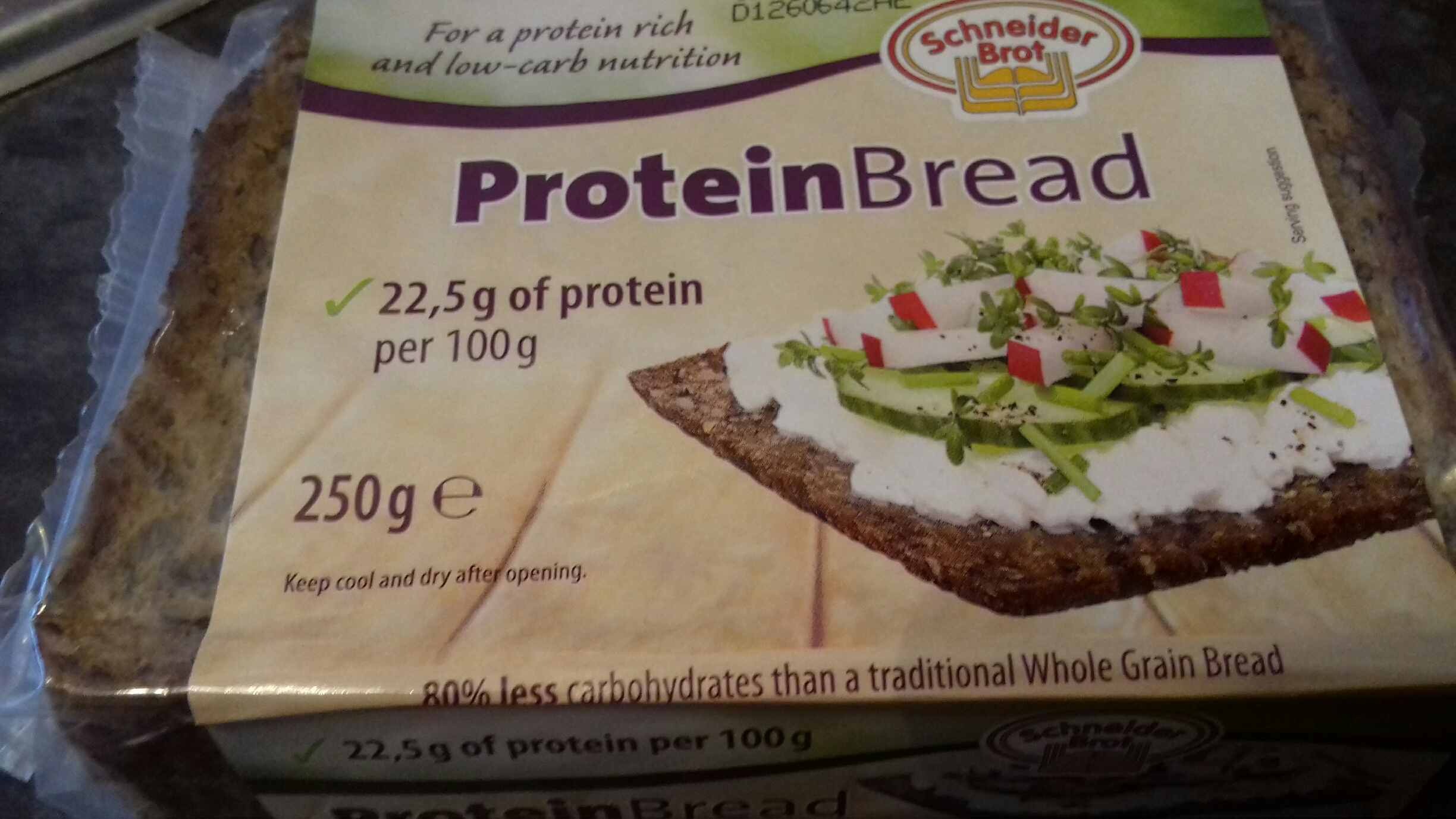
Joy of joys! I’ve found low-carb bread in Asda of all places…

Unlike the gluten-free and vegan markets, low carb high-fat diets don’t lend themselves easily to convenience foods. Hey, that’s probably a good thing. And it’s not as if you don’t have plenty of choices when you factor in cream, cheese, eggs, nuts, meat and fish and all the other yummy things that do fit perfectly with this way of eating.

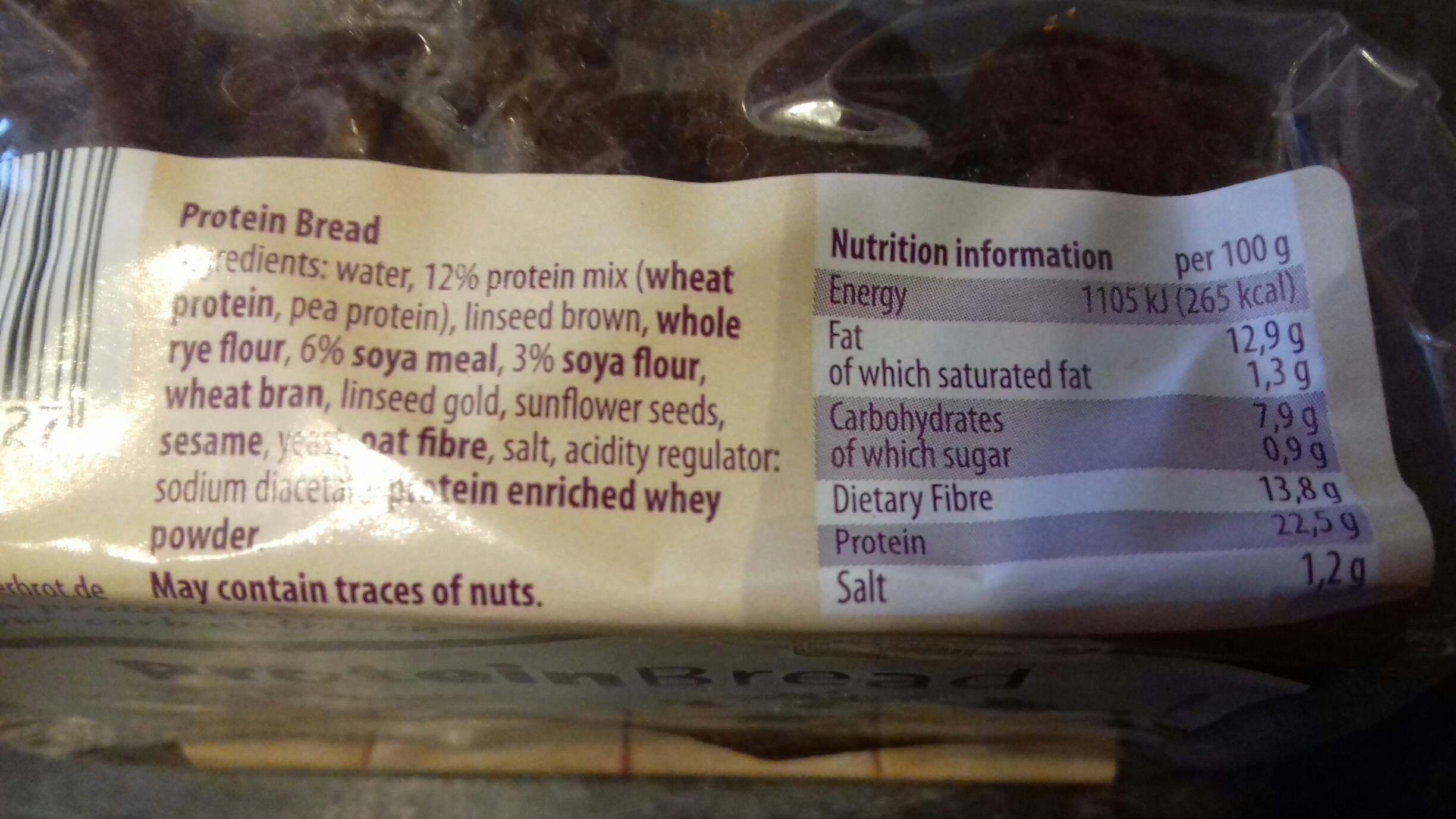
But bread. Bread! Ask many people on the LCHF way of life what they miss most, and we are willing to bet it’s bread. Yes, you can make low-carb bread (and we offer a recipe here), but it is expensive to make. This protein bread I found in Asda is made by Scheidner Brot, and it has about 4g of carbs per slice, 7g of fibre and 11g protein. Best of all, it does actually resemble bread – albeit it’s more similar to that heavy rye bread, sometimes called black bread. This packet cost me £1.50. Okay, it does have a lot of ingredients (our low-carb bread recipe, for example, has six things in it) and it’s not suitable for coeliacs, but still…

Ah, the possibilities that open up in front of me are endless! Toast with butter and Marmite! Toast with peanut butter and sliced cucumber… You need the cucumber because peanut butter is claggy, and the cucumber cuts through it. Or what about a healthy dollop of egg mayonnaise? Some chicken liver pate would be nice too, and there is always cheese on toast with a little dash of Worcestershire sauce. You can freeze it in slices for convenience.

I’m in bread heaven!

Spanish-Style Stuffed Marrow

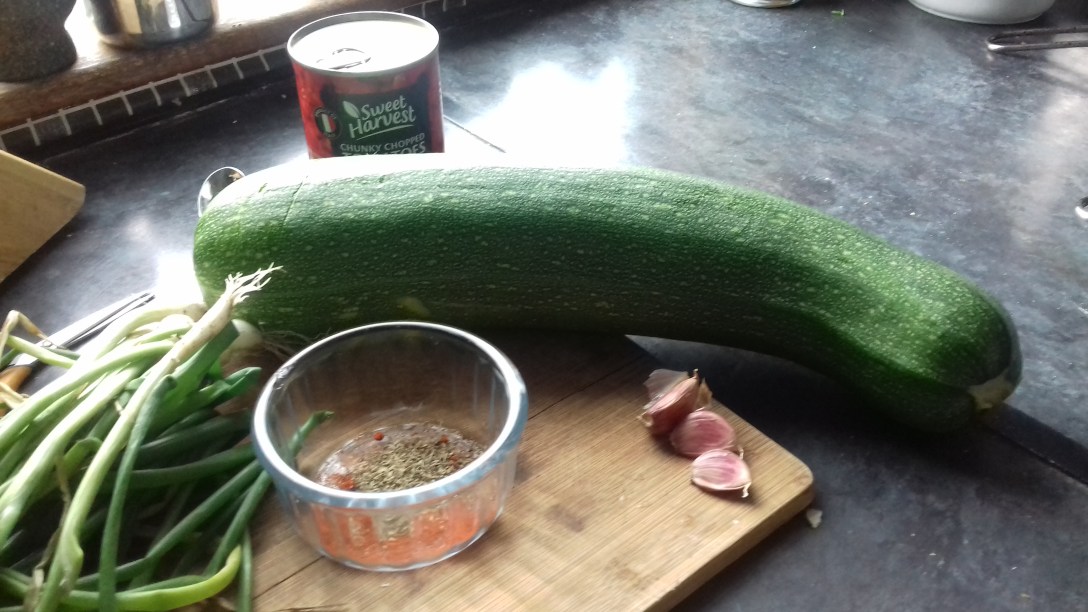
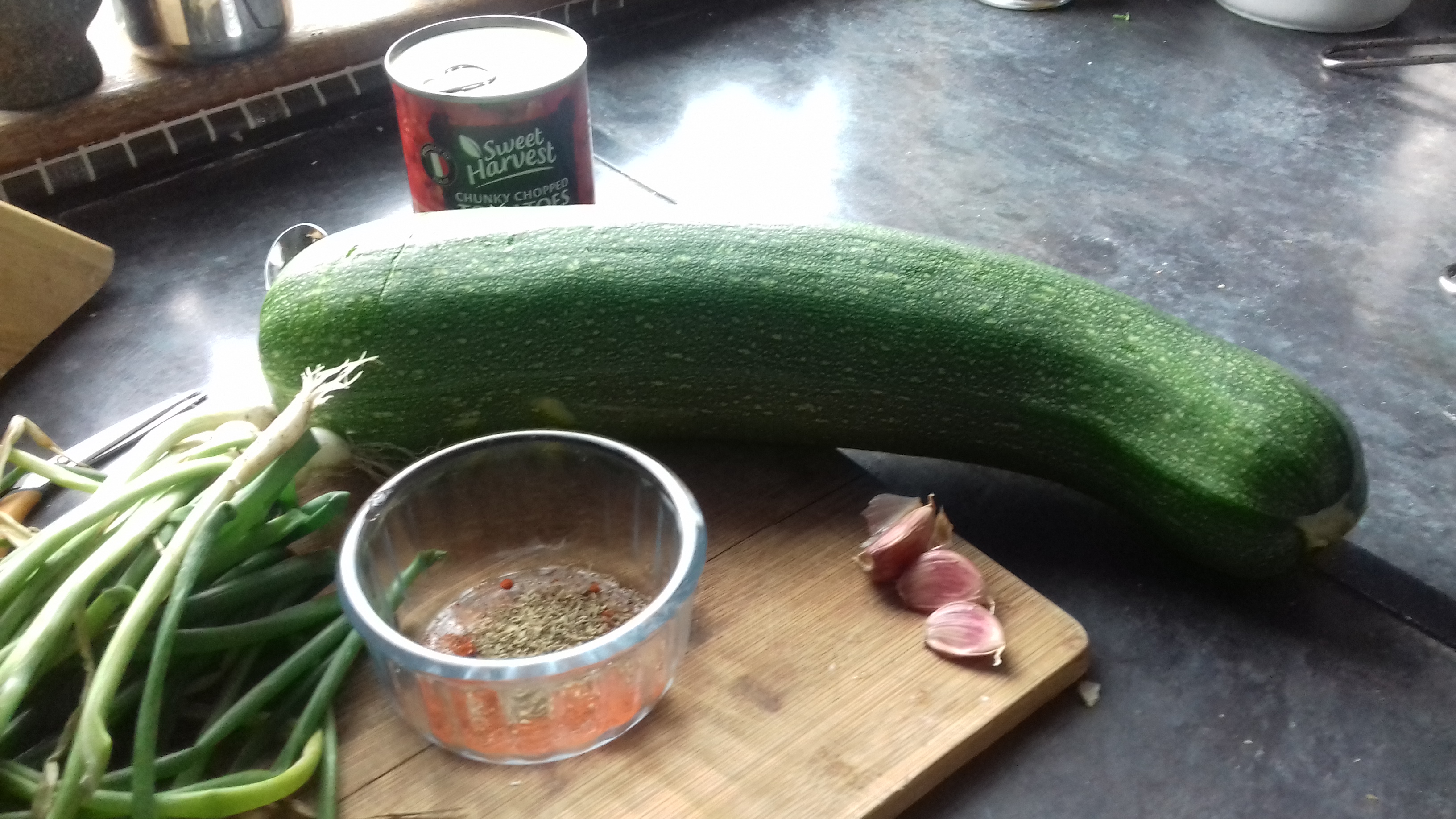
We’ve had a glut of courgettes – we got so many of the blimmin’ things they turned into marrows as we couldn’t eat them fast enough.

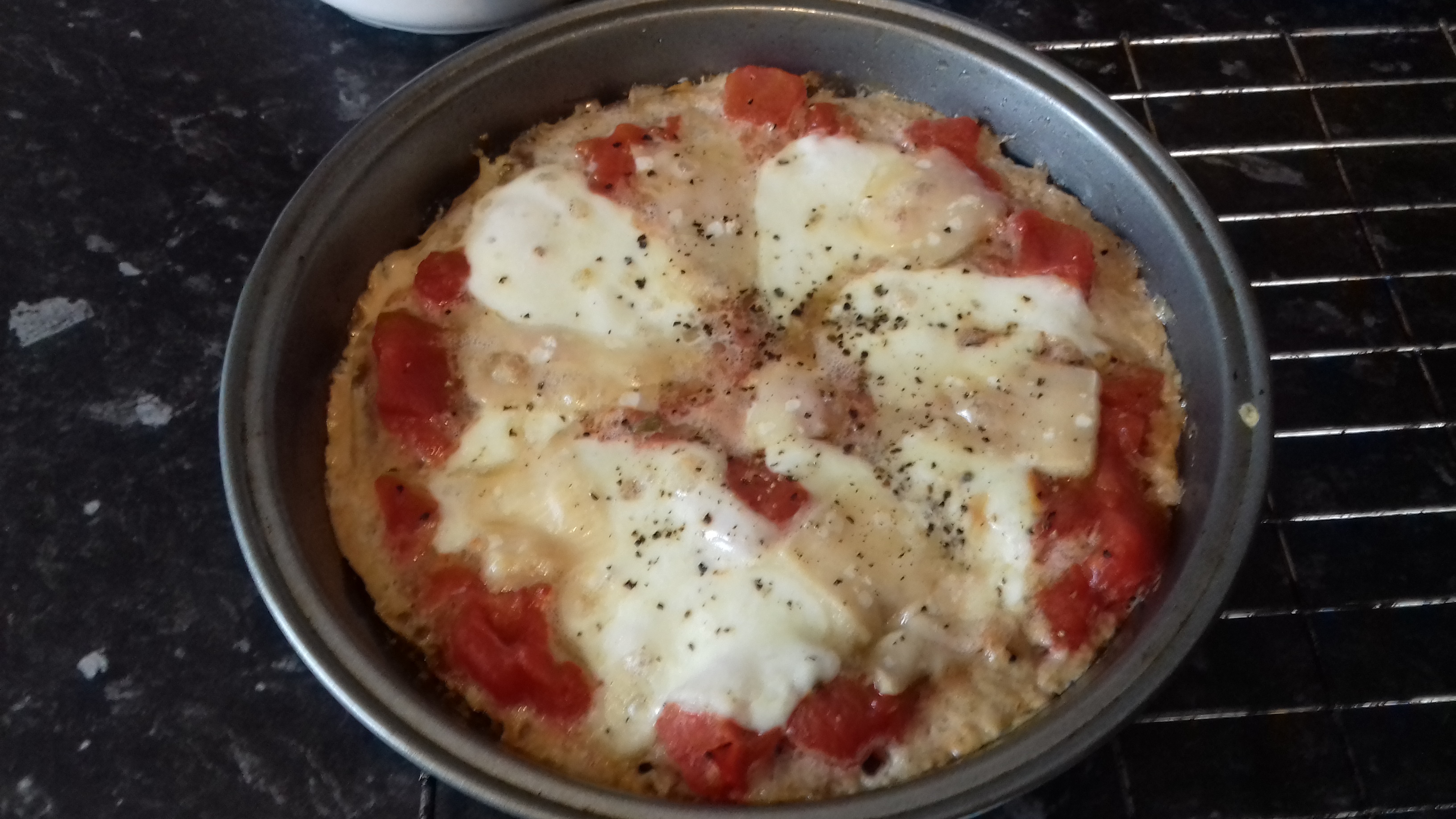
So, what to do with them? This massive whopper pictured above I turned into a Spanish-style stuffed marrow dish, adapting it slightly from a recipe I found online to make it low-carb. Another trick is to salt the marrows for an hour or so before cooking. This will make the finished product less watery. Slice the marrow in half length ways and then width ways, scoop out the insides and sprinkle with salt. Place them on a rack, flesh side down and then wipe thoroughly with kitchen paper before using.

Spanish Style Stuffed Marrows

  • Servings: 4
  • Difficulty: easy
  • Print

1 large marrow

  • 2 tins chopped tomatoes
  • 1 bunch spring onions, chopped
  • 3 cloves garlic, crushed
  • 1tbsp olive oil
  • 150g cooking chorizo, chopped
  • 1tbsp smoked paprika
  • 1tbsp Cayenne pepper
  • 1tbsp dried oregano
  • Salt and pepper
  • 100g Manchego cheese, grated (or use Parmesan)

Pre-heat the oven to 180 degrees C.

Heat the olive oil in a pan and add the onions. Cook over a gentle heat until soft and lightly browned – this won’t take as long as cooking normal onions.

Add the chorizo and cook until the fat begins to run – about a minute. Add the tomatoes, garlic, paprika, oregano and Cayenne pepper. Bring to a simmer and cook for ten minutes. You want a nice, thick sauce. Season to taste – you won’t need much salt because of the chorizo, cheese and the marrow already has some salt in it, thanks to the pre-salting.

Place the marrows in a large oven-proof dish, cut side up. Fill them with the tomato/chorizo mixture and top with the cheese and a good grounding of black pepper. Cover the dish with foil and cook in the oven for 30 minutes. Take the foil off and cook for another ten minutes to brown the top.

About 12g net carbs per serving.


Love Yourself – Follow a Low-Carb Diet!

loveWe’re following tradition here at the Diabetes Diet. What do you do when it’s Valentine’s Day? Try to squeeze in a reference to love in any online activity. And hearts of course. I’m going to try to do both.

If you have diabetes, type 1 or type 2, your body doesn’t respond well to carbohydrates. You can eat a diet high in carbohydrates – it’s just that you won’t feel very well, short-term. In the long-term, a diet high in carbohydrates can lead to high blood glucose levels. This in turn will damage your body and shorten your life.

So, if you love yourself, follow a low-carb diet to minimise the risks of diabetes!

Here’s how to do it.

Read up on all the advice out there. We have a book, The Diabetes Diet that sets out the benefits of low-carb eating. It also includes recipes, daily menu plans and advice about how to manage your medication on a low carb diet. Check out lowcarbdiabetic, a great website for people looking for information and help with their condition.

Follow blogs. Blogs like ours regularly feature low-carb recipes and information and advice for people with diabetes. There are lots of great low-carb blogs out there. See fittoserve, Authority Nutrition, and the Diet Doctor.

Buy some recipe books. A great all-rounder is 500 Low Carb Recipes by Dana Carpender, although bear in mind it is an American book so the measures and some of the ingredients will be unfamiliar. The celebrity chef Tom Kerridge has a new book out now – The Dopamine Diet*, featuring the low-carb recipes that helped him lose 11 stones.

Get yourself a carb guide. Online dieting apps are the most useful source for carb guides. Remember that might need to minus the fibre content from the total carbohydrate content. Myfitnesspal offers the most extensive database.

Enjoy it! Low-carb eating is one of the most satisfying and delicious diets you will eat. Cheese, cream, juicy pork chops, grilled sirloin steaks, salmon topped with mayonnaise… what’s not to love? Try out some of our recent recipes:

Think of the benefits. More energy, lower blood glucose levels (leading to less risk of heart disease, see I told you I was going to shoehorn hearts into this piece somewhere), better skin, fat loss if it’s needed – all these are bonuses of low-carbing.


*Review to come!