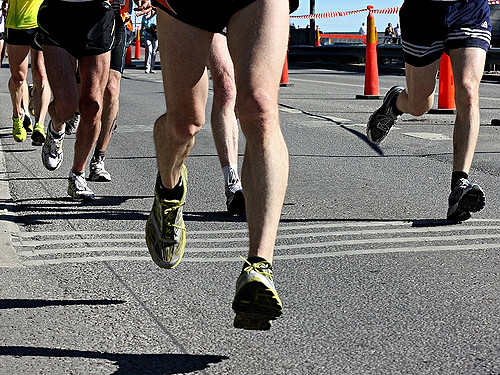
Exercise and a Low-Carb Diet

Some people claim that as a type 1 diabetic, you can’t follow a low-carb diet and exercise. Is this the case*?

For most type 2 diabetics, the advice doesn’t apply. If you don’t take insulin or any blood-glucose level lowering medication, you’re not going to suffer from hypos, where blood sugars dip too low. A low blood sugar is usually defined as below 4mmol (or 70mg/dl in the States). There are no problems following a low-carb diet and exercising.

What happens to you as a type 1 diabetic when you exercise?

Lower AND Raise

Exercise or activity can lower your blood sugar levels. It can also raise them too, just to make life extra complicated. Many people find that intense exercise, such as high-intensity interval training, will temporarily increase blood sugar levels. But the same thing can happen with any activity that makes you huff and puff—a perceived exertion level of hard (15-17 out of 20 on the Borg Scale).

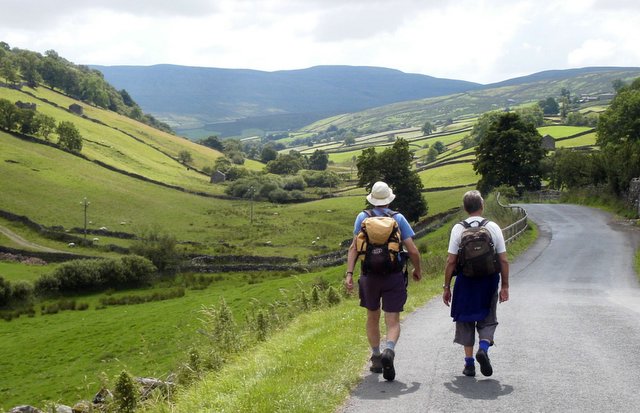
What happens to blood glucose levels also depends on how long you exercise for. Shorter periods of exercise and activity (less than 45 minutes) will not have as much effect as an activity that lasts longer than an hour. Timing is also crucial. When I want to go on a long walk (90 minutes), I usually schedule it for the morning or just after lunch. If I do this, I’m less likely to experience low blood sugars. In the morning, my body is fighting the cortisol spike that raises blood sugar levels. If I go for a walk right after lunch, I don’t take any insulin with my low-carb meal. A long walk will have the same effect as insulin. This might not work if I ate a high-carb meal.

I’m more likely to experience low blood sugars if I exercise in the early evening when my insulin sensitivity is greater anyway.

Basal Rate Reductions

If you know you are going to exercise or be more active than usual, you can lower your basal rate to compensate. With a pump, you can also put on a temporary basal rate reduction an hour or so before you start, keep that on during exercise and for an hour or so afterwards. Or you can switch to a different basal programme for the day.

You will also need to keep an eye on blood sugar levels over the next 24 hours. High-intensity interval training, for example, can lead to a temporary increase, but then a drop in blood sugar levels the next day.

One final point is adaptability. When we first try out a new exercise or activity, it often feels really hard. If you keep it up for a few weeks, what felt difficult soon becomes okay as your body become more efficient. So, a 30-minute spin class, for example, that might have given you a dramatic blood sugar level drop the first time you did it, has minimal effects five weeks later.

There are so many variables to type 1 diabetes, blanket statements such as “you can’t exercise and eat low-carb” do not apply to everyone. It’s challenging, yes, but if you know your body, you’ll know what exercise and activity you can do, when you can do it and how much to do if you want to avoid hypos. Like everything else, personal experience and logging what happens to you during exercise will help.


*The usual disclaimer applies. My opinions don’t constitute advice for other people. If you want to exercise and follow a low-carb diet, you will need to experiment to find out what works for you. If you go to classes or use a gym, make sure the instructors are aware that you have type 1 diabetes and always carry your testing equipment and fast-acting carbs, such as jelly babies, with you.

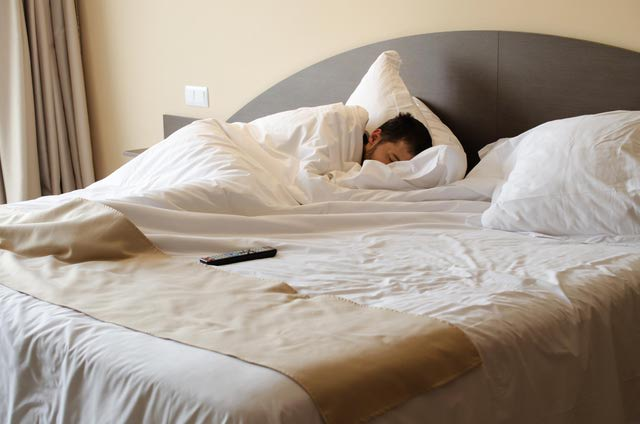
Heri’s Health Points: Why a good sleep should be your priority

When improving wellness, better sleep should a priority vs nutrition, fitness programs or prescription

166119492

Too often, the focus is on being more active, look into new diets or exotic holidays.

These would bring energy, improve strength or cure depression.

The cornerstone of a sustainable and healthy body is quality sleep.

Many brush off sleep. Society or human groups do not value or celebrate when you take a good night sleep. Nobody gets alarmed when you miss a night sleep. Even, all-nighters marathons are celebrated as a proof of motivation and dedication.

Yet, lack of sleep or sleep deprivation deregulates main body functions : impaired brain activity, cognitive dysfunction, weakened immune response, hormonal system dysfunction, poor muscle repair, risk of Type 2 diabetes, higher blood pressure, weight gain, heart disease and so on.

This means quality sleep must be a priority, above nutrition, leisure, physical activity and even work.

Here’s my sleeping plan, let me know if it is good for you:

  • If I do not feel well, I try to see first if I had quality sleep recently, before thinking of stress, nutrition or anything else.
  • I close negative emotions.
  • If I have not been sleeping well recently, I make sure not to overstrain. That means in order : not taking any caffeine (coffee or tea) 5 hours before sleep, no strenuous exercise, no blue light 3 hours before sleep, lower home temperature 2 hours before sleep, massage 1 hour before sleep, camomille tisane 1 hour before sleep.
  • Moderate exercise such as 30mn walking at a good pace at 5pm can improve sleep.
  • Move or change sleeping conditions if not optimal. That can include moving out or thinking about the sound environment.
  • Activity trackers and sleep apps can help measure good sleep and give insights. However, trackers do not improve sleep quality and impact is limited.

References:

  • D. J. Bartlett, N. S. Marshall, A. Williams, R. R. Grunstein. June 2007. Sleep health New South Wales: chronic sleep restriction and daytime sleepiness. Internal Medecine Journal
  • June J. Pilcher PhD & Elizabeth S. Ott BS. March 2010. Relationships Between Sleep and Measures of Health and Weil-Being in College Students: A Repeated Measures Approach. Journal of Behavioral Medecine.
  • Hideki Tanaka, Shuichiro Shirakawa. May 2004. Sleep health, lifestyle and mental health in the Japanese elderly. Journal of Psychomatic Research
  • Making sleep a priority – Daily Health Points

Limited time to exercise? Weekend warriors still benefit

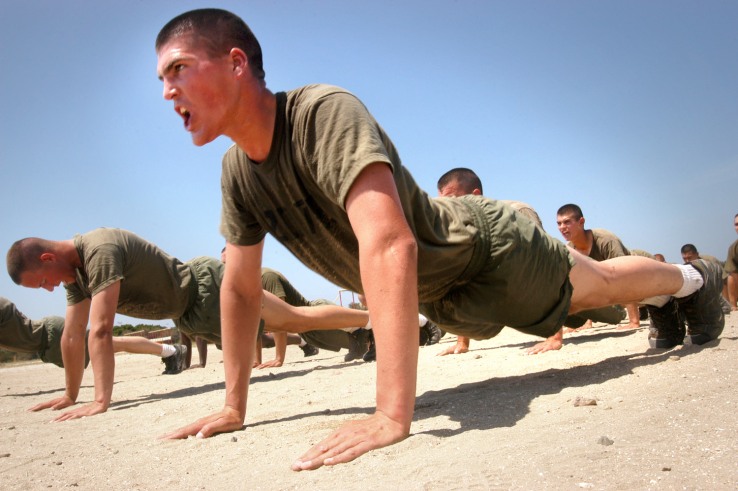
Marines_do_pushups
From bootcamps to ballet, there’s a work-out for everyone on YouTube.

From BMJ 14th January 2017

Although guidelines recommend spreading exercise throughout the week, weekend warriors, who compress the recommended amount into the weekend, still experience substantial benefits.

JAMA Internal Medicine reported that risk of death from all causes were 30% down, cardiovascular disease deaths were 40% down  and cancer deaths were 18% down, compared to inactive adults. 

(doi:10.1136/bmj.j126)

Diabetes and Professional Sporting Careers

“It’s like having a team-mate by my side.”

Would you say that about your diabetes? It’s an unusual viewpoint perhaps, but a positive way to think about it.

Uefa.com ran an article this week about Real Madrid player, Nacho – real name, José Ignacio Fernández Iglesias. The central defender, who also plays as a right or left back, has had type 1 diabetes since the age of 12.

When you have type 1 diabetes, it’s always interesting to read about people in the limelight who also have the condition.

When Nacho was first diagnosed, he ‘d already been on Real Madrid’s books for two years. His doctor told him his footballing days were over. However, three days later he saw an endocrinologist who said the opposite – he should keep playing football, as exercise is important when it comes to blood sugar control.

Nacho said that the extra care involved in taking care of yourself when you have diabetes does help his football career. Diabetes, he says, makes you take greater care with your diet and the way you rest. And it makes you more responsible.

The 27-year-old doesn’t take things easy when he’s on holiday either, choosing to cycle in the mountains or do duathlons and triathlons. He eats everything, but he says he is more careful about certain food types. His diabetes is under control, and he gets on very well with his doctor.

Talking to Gonzalo Aguado at Uefa.com, Nacho said: “[Diabetes] makes you a more responsible person and you look after yourself much more. I know it’s going to be there for the rest of my life – well, unless they find a cure. It’s like having a teammate by my side.”

Type 1 diabetes? Bring it on…

Margaret Coles: Invite this Physiotherapist into your home

At  www.movingtherapy.co.uk. you can find Margaret Cole’s free educational resource to help your health and well being.

home-physio

Margaret worked as a community physiotherapist and when she retired she decided to put her knowledge and experience to good use. She produced videos covering a lot of different situations that you can face regarding your physical and mental states and has put them on the site. She also gives advice on how to lose weight.   People from all over the world have visited the site since 2011.

NHSinform Scotland and her local authority also promote the site.


Most people need a minimum of one hour exercise a day

walking

How Much Exercise Compensates for Sitting at a Desk for eight Hours A Day?

Diabetes in Control August 27th 2016

At least an hour of physical activity needed to offset risk for several chronic conditions and mortality

Sedentary behavior has been associated with increased risk of several chronic conditions and mortality. However, it is unclear whether physical activity attenuates or even eliminates the detrimental effects of prolonged sitting. A new study examined the associations of sedentary behavior and physical activity with all-cause mortality.

The meta-analysis of trials involving more than 1 million individuals was reported online July 27 in The Lancet. It is one of a special series of papers on physical activity.

The Lancet notes that its first series on physical activity in 2012 concluded that, “physical inactivity is as important a modifiable risk factor for chronic diseases as obesity and tobacco.” The meta-analysis found that 1 hour of moderate-intensity activity, such as brisk walking or riding a bicycle, can offset the health risks of sitting for 8 hours a day. Twenty-five percent of all individuals in the study reported this level of physical activity. The study also discovered that even shorter periods of 25 minutes a day can be beneficial.

For those of us who work by sitting at a desk, it can be very difficult not to sit while we do our jobs.  But, there are still many ways to get moving, like going for a walk during lunch, or even getting up and walking over to an associate to hand them a note instead of sending an email.  There are many ways to get in your physical activity.

According to the researchers, the data from more than a million people is the first meta-analysis to use a harmonized approach to directly compare mortality between people with different levels of sitting time and physical activity. They included 16 studies, with data on 1,005,791 individuals (aged >45 years) from the United States, Western Europe, and Australia.

Researchers divided the study participants into four groups based on their reported levels of physical activity: <5 min/day; 25-35 min/day; 50-60 min/day; and 60-75 min/day.

Researchers noted that, “Among the most active, there was no significant relation between the amount of sitting and mortality rates, suggesting that high physical activity eliminated the increased risk of prolonged sitting on mortality.” But as the amount of physical activity decreased, the risk for premature death increased.

Researchers found prolonged sitting associated with an increase in all-cause mortality, mainly due to cardiovascular disease and cancer (breast, colon, and colorectal), noting that, “A clear dose-response association was observed, with an almost curvilinear augmented risk for all-cause mortality with increased sitting time in combination with lower levels of activity.”

Compared with the referent group (i.e., those sitting <4 h/day and in the most active quartile [>35·5 MET-h per week]), mortality rates during follow-up were 12–59% higher in the two lowest quartiles of physical activity (from HR=1·12, 95% CI 1·08–1·16, for the second lowest quartile of physical activity [<16 MET-h per week] and sitting <4 h/day; to HR=1·59, 1·52–1·66, for the lowest quartile of physical activity [<2·5 MET-h per week] and sitting >8 h/day). Daily sitting time was not associated with increased all-cause mortality in those in the most active quartile of physical activity. Compared with the referent (<4 h of sitting per day and highest quartile of physical activity [>35·5 MET-h per week]), there was no increased risk of mortality during follow-up in those who sat for more than 8 h/day but who also reported >35·5 MET-h per week of activity (HR=1·04; 95% CI 0·99–1·10). By contrast, those who sat the least (<4 h/day) and were in the lowest activity quartile (<2·5 MET-h per week) had a significantly increased risk of dying during follow-up (HR=1·27, 95% CI 1·22–1·31). Six studies had data on TV-viewing time (N=465 450; 43 740 deaths). Watching TV for 3 h or more per day was associated with increased mortality regardless of physical activity, except in the most active quartile, where mortality was significantly increased only in people who watched TV for 5 h/day or more (HR=1·16, 1·05–1·28).

In conclusion, the researchers emphasized that high levels of moderate intensity physical activity (i.e., about 60–75 min per day) seem to eliminate the increased risk of death associated with high sitting time. However, this high activity level attenuates, but does not eliminate the increased risk associated with high TV-viewing time. These results provide further evidence on the benefits of physical activity, particularly in societies where increasing numbers of people have to sit for long hours for work and may also inform future public health recommendations.

In another study published online by JAMA Ophthalmology in August, they found that sedentary behavior may be associated with diabetic retinopathy.  The analysis included 282 participants with diabetes. The average age was 62 years, 29 percent had mild or worse DR, and participants engaged in an average of 522 min/d of SB. The author found that for a 60-min/d increase in SB, participants had 16 percent increased odds of having mild or worse DR; total PA was not associated with DR.  “The plausibility of this positive association between SB and DR may in part be a result of the increased cardiovascular disease risks associated with SB, which in turn may increase the risk of DR.  In order to prove a cause and effect of SB and worsening DR s larger study would be needed.”

Practice Pearls

  • Inactivity is linked to a decreased production of certain hormones.
  • We need to break up periods of sitting for prolonged periods with short bursts of activity.
  • Walking 5 minutes every hour can offset sitting for the other 55 minutes per hour.

Lancet. Published online July 27, 2016. Abstract Editorial How Much Exercise Compensates for Sitting at a Desk Eight Hours A Day?#848 (1)]–[www_diabetesincontrol_com_how_]-[MTExNjQyNDI1NTE1S0]–

Apps for Activity Tracking

jawboneMeet my new toy – the Jawbone Up activity tracker.

As activity trackers go, this is one of the basic ones. It tracks your movement and your sleep. But that’s still something. The analytics include a log of the longest time you’re active and idle and it tells you your sleep patterns too.

My husband got one through work, but wasn’t interested. As it was going spare, I took it up. You download an app for it, pair it with the device and away you go. Walk walk, walk…

So far, I’ve only done a couple of other forms of exercise while wearing it – a Joe Wicks work-out I found on YouTube, which it recorded, and some body weight exercises that don’t seem to register unless you count the steps you move while performing them.

You can log your other exercise and the app claims if you do this, the app will learn to recognise things. That might be interesting for a class such as spin, for example.

Anyway, it is interesting wearing a tracker and it does compel you to move more. I’m a bit competitive with myself so I’m always aiming to achieve high step figures. My average is about 14,500 steps a day so far. The app my daily step count puts me in the highest percentage of users – and in the top 10 percent for my age.

Go me…

We’ve been lucky in Scotland this winter so far, in that it has been fairly dry. If wet, windy weather comes along, tallying up those steps might not be as easy.

Do you use an activity tracker? Has it changed your behaviour and do you find it useful?

Exercise Versus Activity: Walk About A Bit and Then Go Home

diabetes dietExercise. What does it mean? An interesting article in the Daily Telegraph* recently highlighted what exercise isn’t or what it shouldn’t be.

A London gym – I won’t name them because I don’t want to give them the publicity – recently issued a press release, where they boasted of a class so extreme that they had defibrillators on hand.

Exercise is vital for type 2 diabetics – and type 1s too, though there is less research on exercise and type 1s, as there are fewer of us. The health benefits of exercise for type 2s include:

  • It helps your body use insulin more effectively, which will give you better control over your diabetes
  • It burns extra body fat
  • It strengthens your muscles and bones
  • It improves your blood flow
  • It lowers your blood pressure, cuts LDL cholesterol levels and raises HDL cholesterol
  • It boosts your energy and mood, and it de-stresses you.**

Exercise: The Definition

But what is exercise? Is it the kind of class where they need defibrillators on hand because it’s so hard? As the exercise expert in the Telegraph pointed out, don’t bother paying for that class. Just do 500 burpees in a row as fast as you can.

For all the people who post that irritating, “go hard, or go home” meme, nine out of ten of their readers will think, “I’m off home”. Not, “Yeah! I’m gonna exercise till I puke”. Who wants to do that and more importantly, who can keep doing that?

Think in terms of activity instead. Instead of “go hard, or go home”, try “walk about a bit and then go home”.

Low levels of activity performed regularly throughout the day count. What sounds more do-able to you? Getting changed into your gym gear, walking or driving to said gym and doing an insanity class you pay for featuring lots of burpees and lunge jumps, or going for a 15 minutes’ walk two or three times a day?

Body Weight Exercises

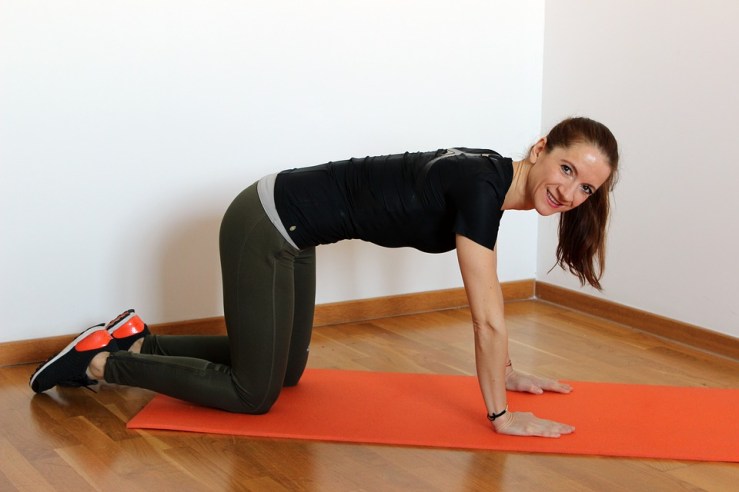
Other activity ideas include housework, standing instead of sitting in front of a computer, walking up and down your stairs frequently and doing short bouts of body weight exercises while watching TV.

There is a place for hard exercise. If you’re an athlete, you need hard exercise so you can compete. The rest of us? Not so much. The occasional high-intensity interval exercise session can be practised once or twice a week (the 4-minute Tabatha method, for example) if you like. Insanity classes are not HIIT. They are just hard, exhausting, stressful exercise sessions that people use to punish themselves.

As you might have guessed from the angle of this post, I love walking. I do about two hours a day, split between walks to the shop/library/train station and then all the steps I perform in general. I used an online tracker for a while to count it up and then stopped once I knew what I needed to complete 10,000 steps a day. (And it’s not as much as two hours, more like one hour 15 minutes.) I am fitter, happier and healthier than I’ve ever been in my exercising life.

If you can increase the amount of time you are walking, stretching and lifting so that you minimise the amount of time you are sitting, you provide your body with the benefits it needs. For further reading and information, I recommend you check out the work of Katy Bowman, who promotes movement and activity over exercise, and suggests various ways you can add activity to your daily life.


*I can’t find the original article unfortunately.

**So long as you don’t do insanity classes!

Public Health Collaboration: Free booklets


LA2-vx06-konsthallen-skulpturThis is the link to the Public Health Collaboration site where you can download for free or order print versions, at a modest cost, of illustrated health booklets that will help you:
 

know what to eat for a wide variety of good health outcomes

plan your meals

count your carbohydrates

lose fat

https://www.PHCuk.org/booklets/


Hopefully you will end up somewhere between the extremes of our sisters up there!

When is the best time of day to exercise?


050529-N-4729H-109From Diabetes in Control 14th July 2016
Is there a best time to work out, based on circadian rhythms?

Circadian rhythms are estimated 24 –hour biological cycles that function to prepare the organism for daily environmental changes. There is a molecular clock mechanism found in most cell types including skeletal muscles.  Disturbances in the circadian rhythms have been shown to have harmful impacts on health, which may lead to metabolic syndrome.
Experiments in mice suggest that the timing of exercise may be critical for the maintenance of molecular rhythms.  Scheduled exercise functioned to enhance the stability of both activity and heart rate rhythms.
Another study determined the significant differences in circadian rhythms  in healthy non-diabetic young men. 59 subjects between the ages of 20-34 were recruited and studied for 60 days. They were grouped based on their BMI as healthy weight, overweight or obese and all were free from cardiovascular disease, diabetes, pulmonary disease and many diseases.

Resting heart rate and blood pressure were measured, so was their body composition and a maximal graded exercise test performed. Their circadian rhythm parameters were measured by noninvasive wrist temperature rhythm monitoring and recording devices.

Subjects recorded daily questions concerning sleep, frequency and timing of nutritional intake, alcohol use, and smoking, and removal times of wrist skin temperature monitor.

There was no association between body fat and peak wrist temperature during night time hours (r= -0.05; P= 0.79). The poor % fat group (109.10 ± 14.12) had significantly lower circadian temperature stability than the optimal % fat (166.52 ± 17.84) or fair % fat group (175.21 ± 23.96).
Another recent study was performed to determine the exact time one needs to work out, based on circadian rhythm, to obtain a better outcome. In this study it was found that the various times one exercises give different outcomes.

For instance, when one exercises from  7 to 9am, their pain tolerance is higher but they have poorer flexibility  since their body temperature is low and therefore more likely to sustain an injury. (My comment: so not great for yoga or running but maybe better for walking, meditiation or  weight training?)

Exercising from 10 am to 12 p.m. is good for any skill based sports that require alertness and short term memory peaks.  (Anyone for tennis?)

Meanwhile from 4 to 8 pm showed an overall performance peak since it coincides with the peak body temperature. Body temperature is normally high at that time since there is a higher lung capacity, blood flow to muscle and flexibility. (So good for a run and yoga and indeed most sports and activity)
In conclusion the best time for one to work out is whenever is appropriate for and suits that person since many things affect the circadian rhythms.
Practice Pearls:
Circadian rhythms is a molecular clock mechanism found in most cell types including skeletal muscles.
Presence of a molecular clock is argued to be a necessary timekeeping mechanism to prepare the cell for daily changes in environmental conditions
The best time to work out is when it is convenient for one since every time frame has its advantages and disadvantages.

Comment from Dr. Sheri Colberg, Ph.D., FACSM, Advisory Board Member:
It has been suggested that many different things affect circadian oscillations, and in people with diabetes and in aging, some of these normal controls fail to work effectively.  For example, alterations in the release of melatonin, a critical hormone that regulates sleep and central nervous system balance, occur in both states (diabetes and aging) that lead to more imbalances.  Exercise of any type helps reset autonomic function, or the balance between sympathetic and parasympathetic branches of the autonomic nervous system.  For management of diabetes and successful aging both, being physically active on a regular basis is likely more important than the time of day that activity is undertaken.

References:
Colino Stacey “What is the best time of the day to exercise? The answer is complicated”. US News 6 July 2016. Web. 14 July 2016.
Schroder, Elizabeth A., and Karyn A. Esser. “Circadian Rhythms, Skeletal Muscle Molecular Clocks and Exercise.” Exercise and sport sciences reviews 41.4 (2013): 10.1097/JES.0b013e3182a58a70. PMC. Web. 14 July 2016.
Tranel, Hannah R. et al. “Physical Activity, and Not Fat Mass Is a Primary Predictor of Circadian Parameters in Young Men.” Chronobiology international 32.6 (2015): 832–841. PMC. Web. 14 July 2016.