The best diet for optimal blood sugar control & health
Author: Emma
Emma Baird is an award-winning writer, specialising in romcoms and fiction that focuses on relationships, and a type 1 diabetic. She is also the co-author of The Diabetes Diet, co-written with a doctor. Most importantly, she is the guardian of one very spoiled cat…
The Center for Science in the Public Interest created this video – a fresh take on the iconic Hilltop ad, pointing out the diseases and health conditions that can be associated with excessive sugar consumption.
Big corporates like Coca Cola spend a lot of money on advertising and creating the look of a lifestyle which is mean to be aspirational. The drink ads often show care-free people enjoying themselves. Naturally, they are always slim, attractive and healthy looking.
Got a glut of broccoli? OK, I wrote that sentence without irony but bear with me…
Broccoli isn’t at the top of most people’s preferred foods, but adding a tablespoon of butter to it helps a great deal, as does turning into a soup. Use home-made stock and the results improve immeasurably.
Soups are often associated more with winter than spring/summer – but why let tradition stop your enjoyment of warm, savoury deliciousness..?
I treated myself to an app recently to record my blood test results. Historically, this hasn’t been a strength of mine (ahem!). When I was first diagnosed with diabetes in 1982 (way, way before the internet folks, imagine…) blood testing wasn’t common, and when it did come in, you were issued with log books to write down your results.
I’m sure I was not the only teenager who sat in the diabetic clinic’s waiting room, filling in weeks of blood test results using different-coloured pens to give my made-up results added authenticity.
This week I had a large pot of Greek yoghurt seeking a happy culinary ending so I decided to make a moussaka.
Lots of moussaka recipes use a béchamel sauce which obviously pushes up the carbohydrate content and make it unsuitable for coeliacs because of the flour in the sauce, and as I was going to be entertaining a coeliac then this version is ideal for the gluten-free AND the low-carber.
I like mince done in the slow cooker as I think you get a concentrated flavour (and it’s easier), but I’ve also given you the conventional method for cooking the mince part.
Place the mince, onion, garlic, tinned tomatoes, ground cinnamon, ground cumin, rosemary, tomato puree and 1tbsp olive oil in your slow cooker and mix very well. Top up with enough water to cover.
Cook on slow for 6-7 hours, or high for 4 hours.
For the conventional method:
Heat 1tbsp olive oil in a large sauce pan and brown the lamb mince, breaking up clumps with a wooden spoon as it cooks. (You might need to do this in two batches). Once the meat has browned and excess water boiled off (about 10 minutes, add the onions, garlic and herbs and cook, stirring, for another three or four minutes. Add the tomatoes and tomato puree, mix well and add in a little water – about 100-200mls. Bring to the boil.
Cover, turn down to a simmer and cook for 30 minutes. You might need to take the lid off for the last few minutes to condense the sauce. You are looking for a thick, concentrated sauce.
For both methods:
Season the lamb well with salt and pepper.
Meanwhile, cook the aubergine slices. Brush the slices with the remaining tbsp olive oil, sprinkle with a little salt and pepper and cook in a pre-heated oven (180 degrees C) for 15 minutes.
Beat the two eggs and mix with the yoghurt. Using a large rectangular, oven-proof casserole dish, layer up the lamb, then aubergine slices, then lamb, a final layer of aubergine and top the lot with the egg/yoghurt mixture, and the grated cheese.
Cook for 30 minutes in the pre-heated oven until the topping is golden-brown.
This moussaka has approximately 20g of carbs per serving.
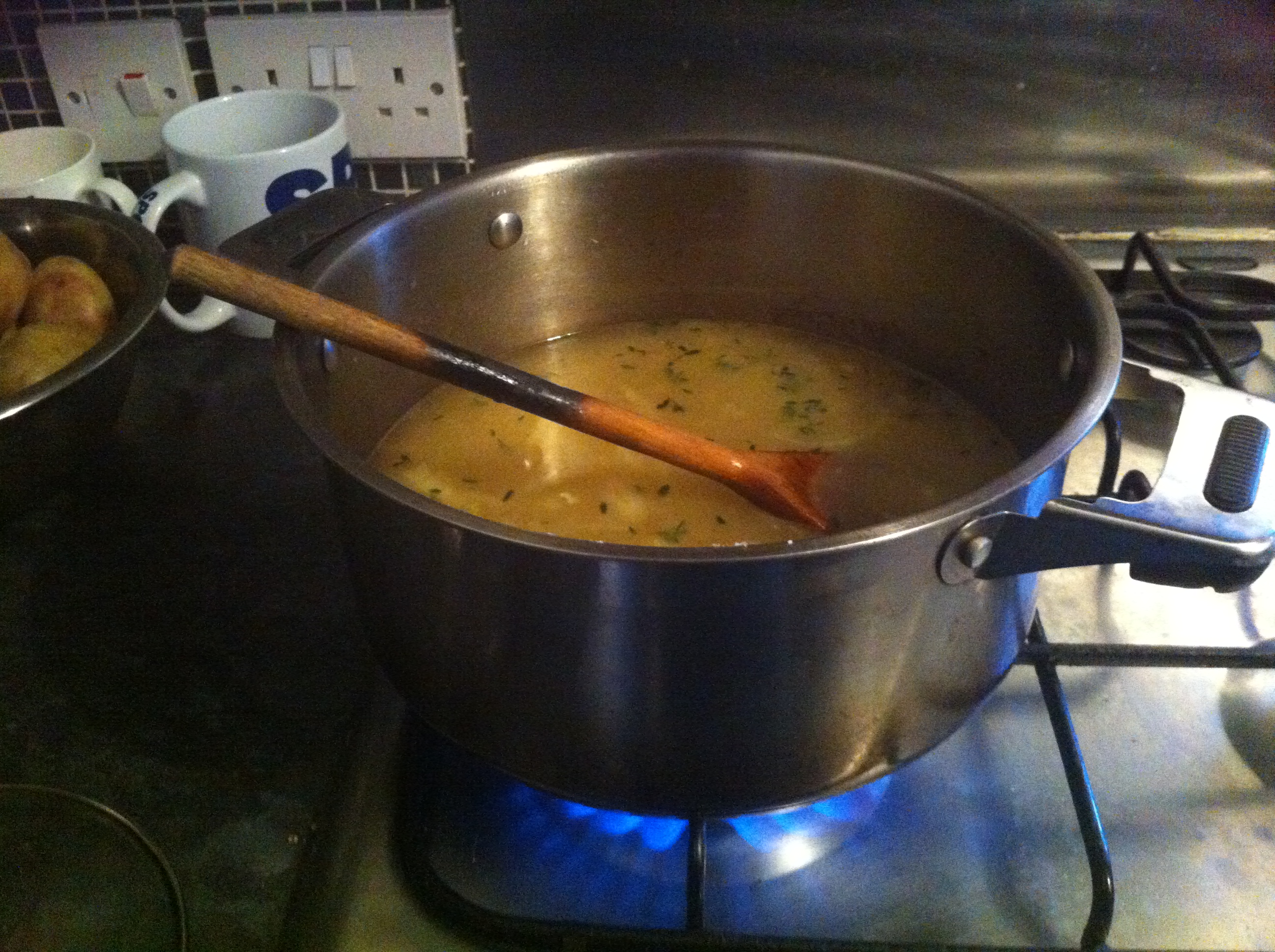
Recently, I made a big pot of stock (or bone broth as it’s more fashionably known these days) using a chicken carcass, carrots, celery, onions and cider vinegar.
I wanted a recipe that would make the most of the flavour of the stock – or one where the stock was the star – so I opted for French onion soup sans croutons.
Animals may have been harmed in the makings of this research.
It’s difficult to avoid news about diabetes, as there are regular articles in the press – from the doom and gloom predictions about burdens on the healthcare system to simplistic pieces about “cures”, diabetes makes the news on a regular basis.
As an optimist by nature, I prefer to ignore the first and concentrate on the second and its potential; however, if you are interested – there’s a good discussion of it on the NHS news website, which separates the attention-grabbing headlines from the facts and discusses the origins of the research.
[In short, the NHS reckons the Daily Telegraph’s coverage of the study which was carried out by the Universities of Queensland and other universities in Australia, the Netherlands, the UK and the US, expressed the results in way that could be misleading. Saying for example that “female patients are twice as likely to die from heart disease than men with [type 1 diabetes]” was too simplistic an explanation because men do not generally live as long as women.
The researchers did not directly compare rates of death in men and women – they compared risk of death over a given period in women with type 1 diabetes, compared to that of women in the general population and then made the equivalent comparison with men.]
The other piece of news was about the development of “smart insulin”: i.e. an insulin which can respond to blood sugar levels directly and bring them under control. Type 1 diabetics and some people with type 2 diabetes take insulin to control blood sugar levels, but it can be tricky to work out how much to take, as there are many different things that have an impact on your blood sugar levels – from doing exercise, to missing a meal, from feeling ill to feeling stressed, under or over estimating the number of carbohydrates in a meal, drinking alcohol, hormonal fluctuations in the lead-up to getting your period (women of menstruating age) and more.
The smart insulin study was carried out by researchers from Massachusetts Institute of Technology in the US, funded by donations from the Leona M. and Harry B. Helmsley Charitable Trust and the Tayebati Family Foundation.
An animal study on mice found that “smart insulin” containing a molecular switch could directly respond to blood glucose levels (high levels) and bring them under control for as long as 13 hours after the initial injection. The study involved giving mice with type 1 diabetes a sugary drink. The “smart insulin” was a modified insulin containing two small chemical molecules that bind to insulin, one of which was a glucose sensor. Having taken sugary solutions, the mice with diabetes who had been given the modified insulin were able to rapidly normalise blood glucose levels – in a similar way to healthy, non-diabetic mice.
The NHS news site called the results “promising”, but pointed out that the research was in its very early stages and that it had been carried out on mice. Years of research and clinical trials would be needed – developing the treatment for humans, seeing if it was safe for humans, carrying out research on large numbers of people – before “smart insulin” could be used by humans. Promising research into the treatment of mice with diabetes does not equate to effective results for human beings.
In short, a simple, take-home message is: don’t wait out in the hope of the appearance of smart insulin any time soon, and in the meantime those with type 1 and type 2 diabetes (male OR female) should look to controlling their diabetes as best they can.
Lately, I have been eating A LOT of celeriac, sometimes called celery root…
It’s delicious and it’s low carb, and there are a number of ways to prepare it. Mostly, you can use it as a potato substitute – roast celeriac instead of roast potatoes, mashed celeriac instead of mashed potatoes etc.
If you’re not familiar with celeriac (and I wasn’t until very recently) the taste is similar to celery, but the texture is very different. It has a really savoury taste and you might end up preferring it to potato.
100g of celeriac contains roughly 9g of carbs (with 2g of fibre) and it is a good source of Vitamin C, potassium and magnesium.
Here is a very simple recipe for braised celeriac, which goes well with roast chicken.
Peel the celeriac and cut it into two-inch cubes. Heat the olive oil or butter in a large saucepan and add the cubes.
Brown the cubes for a few minutes, add the garlic and cook briefly (make sure the garlic doesn’t burn) and then add 100ml or about five tablespoons of water.
Put a lid on the saucepan, turn the heat down the lowest setting and cook for 25 minutes – or until the celeriac is soft. Add salt and pepper to taste.
Here’s another great recipe for celeriac, and one for a celeriac salad, and let us know if you have a great use for what is arguably the world’s ugliest vegetable.
I know how crazy, perverse, and outlandish such a concept sounds. And of course, I wish no one suffered from Diabetes. In a perfect world, there would be no diseases, no disabilities, nothing that can’t be cured. But truth be told, that is, at this juncture, not a realistic standpoint. We ARE making great strides, and getting closer to cures for ailments and whatnot, but for now, we need to learn to love the hand that we were dealt.
For instance… I love my Diabetes for the wakeup call it provided. It forced me to be honest with what I eat, how active I am, how some of my lifestyle choices could be hindering me. It opened my eyes to how even small changes can make a huge difference. It forced me to look within and find my inner strength to deal with things I dislike, such as needles, taking…