Book review: Chimpanzee Politics by Frans De Waal

902659773_a49809aeb5_z

This book was first written in 1982 and has stayed in print since. It was updated for its 25th Anniversary and this was the version that I read. What makes this book about a group of chimpanzees in a Dutch Zoo so popular with humans?

Chimpanzees are man’s closest ape relatives. We have only 2% difference in our DNA. Chimpanzees are about the same size as humans but are much stronger and have much more developed teeth, especially the adult males, who have canine teeth to rival a panther’s. Chimpanzees are much more acrobatic than humans and make excellent use of both hands and feet. One important difference is that they, and gorillas, cannot swim.

Like humans, they live in social groups that are hierarchically based and that are designed to maximise the well- being of the group and deter potential rivals for territory and food. They can be very aggressive indeed and hunt, kill and even eat other monkeys alive. They can mutilate and kill humans and other chimpanzees and can be highly unpredictable. For this reason humans at the zoo only had direct contact with infant and juvenile chimpanzees.

Interactions between the different individual adult males and females and juvenile chimpanzees were systematically recorded over a period of years. Hierarchy was determined by a development of subservience behaviour in the form of oral greetings and dominant behaviour in the form of displays and assaults.  Making up, coalitions, friendly and dominance behaviour were common.  In general male adults have the capacity to do more damage but they tend to reign in their aggression, whereas female adults are somewhat less powerful but tend to do a lot more damage in fights.

The leader of the pack, the alpha male, has more opportunity to mate with the females. Males lower in the hierarchy, may or may not be allowed to mate by the alpha male, but sex on the side can be arranged by the support and deceit of a helpful female.

Although the appearance, voice and behaviour patterns of each chimpanzee is individual, it is not usually possible for any male chimpanzee to be sure of the parentage of offspring in the group, since multiple matings often occur.  The adult male chimpanzees will curry favour with the females by grooming them and tickling and playing with the babies. Sometimes however, like male lions, and humans, they will kill infant chimpanzees.

What I found fascinating about this book is the way that human behaviour mirrors chimpanzee behaviour so closely.  We have better language and tool skills than chimpanzees, and our group activities are much more organised, but every day you will see behaviour that you clearly recognise as parallel to our hairier and not much less aggressive relations.

Can we humanise doctors’ working lives and all be safer?

NHS Hand-in: Department of Health
38 Degrees members deliver a petition of over 410,000 names to the NHS. Their message: Save Our NHS

The Kings Fund, new GMC chairman and Canadian researchers hope so. So do many practising doctors. With the workload pressures, lack of extra resources and retention and recruitment crisis doing nothing is no longer an option. We are very strong on patient education on our site, but no matter how smart we can be about managing our diabetes and associated conditions, there are inevitably times that we will need to see a doctor and go into hospital for some procedure. The better the whole system is running the better it is for patients.

John Toussaint, CEO of the USA ThedaCare Center for Healthcare Value, says that freeing frontline clinicians to solve problems rather than controlling or blaming them could yield major improvements in three years. Organisations should radically change their leadership behaviour, make respect for people a guiding principle and ensure that productivity improvements did not lead to employee lay-offs.”

“Redesigning care to take wasteful steps out of processes improve quality and lower costs at the same time. Leaders must act with humility, take a sincere interest in what their staff  are telling them, and build a culture of trust and systems geared to continuous improvement. Senior executives should scrap surplus strategic initiatives that are contributing to staff burn-out, focus on a few core goals, and give proper authority to clinical teams.  He said that Western Sussex Hospitals had adopted elements of his system and achieved an outstanding rating from the Quality and Care Commission. He said that the hardest part was eliminating waste in non-clinical areas such as administration, IT, human resources and finance.”

When it comes to eliminating wasteful practice,  the Quality and Outcomes framework is a good example. Payment by performance in British General Practice was a massively expensive experiment set up in 2004. In Scotland it has just been abandoned. Almost all GPs hit the desired targets for chronic disease health care identification and monitoring. 25% of GP income was tied to the targets, often of dubious value. Many GPs left or retired and it is believed that the strain of delivering QOF has put many young doctors off being GPs. A study in the Lancet however showed all this was for nothing. There was no benefit to total mortality for any of the diseases covered compared to usual care.

Terrence Stephenson is the current chairman of the General Medical Council in the UK. He delivered a lecture to the Royal Society of Medicine in which he expressed the desire that the GMC shake off the “policeman” image that they have.

“For most doctors, the GMC is known for tackling bad practice and striking doctors off the register. The GMC get 10,000 complaints a year, most of which come from the general public. Making complaints is free, easy and you can even do it online. Unfortunately it can be used in highly inappropriate ways. For instance someone complained that trees from a practice’s garden were blocking their sunlight. Of these complaints 250 are directed to a tribunal and of these 55 doctors were struck off the register.”

“ I think we need reforms to this procedure. Many complaints are erroneous. Many could be dealt with locally. Many patients would be better satisfied if they went through local complaints procedures or the ombudsman.  It is my ambition to make the GMC more focussed on patient safety. The sad truth is that medicine is a high risk profession. It is safety critical industry and people are harmed by healthcare. In any human business there will be human error that can never be eradicated but I think it behoves us to try and fix it”.

When it comes to human errors we all know that lack of sleep, overwork, interruptions, boredom, unfamiliarity with the work can all contribute. Being hungry and thirsty also impair us.

Canadian researchers suggest regular meal breaks for doctors. Many work long shifts with no guaranteed breaks. Healthy food should be available. (Not just sandwiches and crisps I hope!). Food outlets should be open 24 hours to accommodate shift workers. Staff should be able to store and eat food near to where they actually work. They also suggest that professional bodies increase awareness of doctors’ nutrition and their well-being and promote self-care for doctors.


Based on several articles in the BMJ 4 June 16

Ending blame culture would improve NHS care in three years by Matthew Limb freelance journalist

QOF and mortality Richard Lehman Lancet 2016 doi:10.1016/SO140-6736(16)00276-2

Fitness to practice process must change by Abi Rimmer

Five ways to help doctors eat healthily at work doi:10.1136/postgradmedj-2016-134131


Jovina Cooks Italian: Orange Roasted Chicken

chicken-875268_960_720

Orange Roasted Chicken

  • Servings: 8
  • Difficulty: easy
  • Print

Ingredients

  • Zest of 5 bergamot oranges (or ordinary oranges if you can’t get them)
  • 1 cup bergamot orange juice
  • 3 finely minced garlic cloves
  • 2 tablespoons finely chopped herb mixture (rosemary, sage, thyme, oregano)
  • ¼ cup olive oil
  • 1 (3-pound) chicken, cut into 8 pieces, bone-in, skin-on
  • ¼ cup butter, softened and room temperature
  • ½ teaspoon paprika
  • 1 bergamot orange, cut into thick slices for garnish
  • Sea salt and freshly ground black pepper
  • Herb sprigs for garnish

Directions

  1. In a mixing bowl, combine half of the orange zest with the orange juice, garlic, herbs and olive oil. (Set aside the remaining zest for later.)
  2. Stir to combine and pour into a very large zip-lock bag. Add the chicken pieces and move them around to ensure they’re all coated with the marinade.
  3. Seal the bag and place into a bowl (in case it leaks) and then into the refrigerator to marinate for at least 3 hours and up to overnight.
  4. Preheat the oven to 375 degrees F.
  5. In a mixing bowl, combine the softened butter with the paprika and the remaining orange zest.
  6. Remove the chicken pieces from the bag and place them in a  9 X 13 X 2-inch baking dish. (Set aside the marinade in the bag.)
  7. Season both sides of the chicken with salt and pepper and then using your hands rub the butter mixture under the skin of each chicken piece and on top of the skin.
  8. Pour the marinade over the chicken and add the orange slices. Place the baking dish in the oven and roast the chicken until it’s cooked through, about 45 minutes.
  9. Baste the chicken several times during cooking.
  10. Let the chicken rest for at least 10 minutes before serving. Garnish with fresh herbs, if desired.

From Jovina Cooks Italian.

Insulin Before Exercise May Be Needed to Lower Morning Highs

Diabetes in Control has a lessons learned section for health professionals. Although we commonly think of exercise that will lower our blood sugars some insulin users find the opposite occurs. This is the case report.

Insulin_Application

A man with type 1 diabetes started an exercise program to help him manage his early morning highs. He exercised every evening, at which time his glucose levels would drop during and after exercise. Thinking that exercise would lower his early morning highs, he did not take his insulin before exercise. He was surprised to see his glucose would go up after exercise rather than go down….

He discussed this with his endocrinologist who recommended he take a very small amount of fast- or rapid-acting insulin before exercise. His glucose levels did well. He was surprised to see his levels did not get low, nor were they high after exercise anymore. This became his regular regime.

Lesson Learned:
•Even though exercise makes an individual more insulin sensitive, one still needs insulin for muscles to use glucose. Without enough insulin, glucose levels can rise.
•Individuals can and usually do have different insulin needs throughout the day.
•To lower post-exercise highs, start low and go slow to learn the amount of insulin your patient needs. Some need only one unit.
•Check before, during, and after exercise, or better yet, use CGM and track trends.

Anonymous

Copyright © 2015 HIPER, LLC

From Diabetes in Control 27 April 2015

Statin therapy associated with increased insulin resistance and type two diabetes

flag-of-finland-725x445

According to a new study, statin therapy may increase the risk of type 2 diabetes by decreasing insulin sensitivity and secretion. Overall, there was a 46% increase in the risk of type two diabetes.

Statins are considered to be safe and well-tolerated medications commonly used for the prevention of cardiovascular disease (CVD) events in individuals with and without diabetes. However, recent studies showed that statins might increase the risk of type 2 diabetes. The goals of this study were to analyze the effects of statins on the risk of type 2 diabetes and investigate the mechanisms of this process based on insulin resistance and insulin secretion.

This study was a 6-year follow-up of the population-based Metabolic Syndrome in Men (METSIM) performed in 2005 to 2010. A total of 8,749 non-diabetic men aged 45 to 73 years old was randomly selected from a population in Kuopoi, Eastern Finland. An OGTT (75 g of glucose, glucose and insulin measurements at 0, 30, and 120 min) was performed, then glucose tolerance was classified based on the American Diabetes Association criteria. Exclusion criteria included patients with previously diagnosed type 1 diabetes, newly or previously diagnosed type 2 diabetes, or those without an OGTT at baseline. A total of 625 of the 8,749 individuals enrolled were diagnosed with type 2 diabetes during a 5.9 year follow-up study. Out of 8,749 individuals, 2,142 patients were on statin medication at baseline. Measured variables included height, weight, BMI, waist circumference, smoking status, family history of diabetes, physical activity, alcohol intake, the use of beta-blockers and diuretics at baseline, and history of non-fatal myocardial infarction or stroke. Laboratory measurements included plasma glucose, HbA1c, plasma insulin concentrations, LDL, HDL, and total triacylglycerols. T-test and chi-squared tests were used for statistical analyses.

The results showed that individuals on statin treatment had a 46% increased risk of type 2 diabetes (adjusted HR 1.46 [95% CI 1.22, 1.74]). The increased risk is dose-dependent for atorvastatin and simvastatin (simvastatin HR 1.44 [95% CI 1.23, 1.68] and 1.28 [95% CI 1.01, 1.62] for high and low dose, respectively, and atorvastatin HR 1.37 [95% CI 1.14, 1.65]). Study also showed that statin treatment increased glucose AUC, 2 h glucose (2hPG), and fasting plasma glucose at follow-up. Insulin sensitivity and insulin secretion were decreased by 24% and 12%, respectively, in statin group compared to non-statin group (p<0.01). The decrease in insulin sensitivity and insulin secretion were dose dependent for atorvastatin and simvastatin.

In conclusion, after adjustment for confounding factors, statin treatment was shown to increase the risk of type 2 diabetes due to decreases in insulin sensitivity and insulin secretion.

Practice Pearls:
•Statin therapy was associated with a 46% increase in the risk of type 2 diabetes.
•Insulin sensitivity and insulin secretion were decreased by 24% and 12%, respectively in statin group compared to non-statin group.
•For atorvastatin and simvastatin, the risk of type 2 diabetes and the decreased in insulin sensitivity and insulin secretion were dose-dependent.

Cederberg et al. “Increased risk of diabetes with statin treatment is associated with impaired insulin sensitivity and insulin secretion: a 6 year follow-up study of the METSIM cohort.” Diabetologia. May 2015;58(5):1109-1117.


From Diabetes in Control 24 April 2015


The best meatballs you will EVER eat…

Half the amount of breadcrumbs or leave them out if you are doing the strict end of a low carb diet. Then dig in!

tastefullysimplewithjohn's avatartastefullysimplewithjohn

Ok… Ok… Ok… Admittedly, I’ve been slow rolling with the blog, trying to get something out with consistency but vacations can play havoc with that. Lol.

We are vacationing in Texas and I am cooking for nine people. With four adults, two teens, four pre teens, and my little two year old, portions ave how much to make is always a concern.

Yesterday, I made spaghetti and meatballs AND I’m going to share a GREAT meatball recipe. I hope you love it as much as we did.

Ingredients:

2 lbs ground meat (80/20)

1 lb ground pork

7 cloves of garlic, minced

3 eggs

3/4 cup of water

Salt and pepper, to taste

2 cups parmesan cheese

1 cup seasoned breadcrumbs

(This makes 24 nice sized meatballs so adjust accordingly)

Preheat your oven to 375.

Let’s start with putting your meat in a large bowl. Mix the ground meat, pork…

View original post 103 more words

First ever guidelines for assessing and treating the diabetic foot


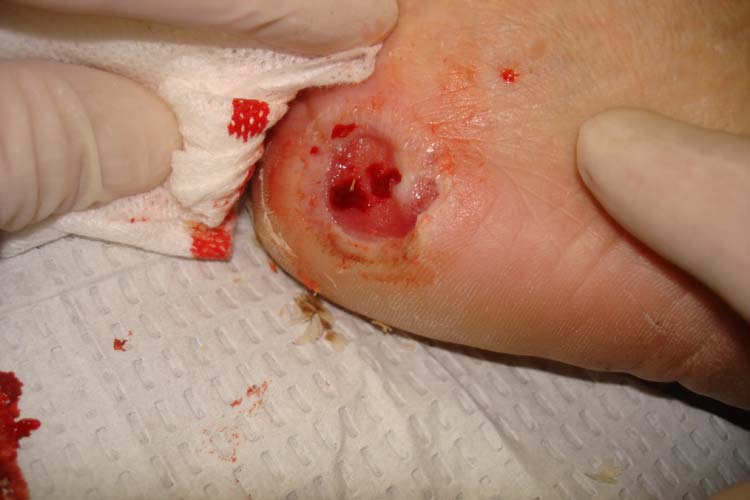
4276166167_e2cf9e2e47_oThe Society for Vascular Surgery, the American Podiatric Medical Association and the Society for Vascular Medicine collaboratively publish first-ever set of clinical practice guidelines for treating the diabetic foot. These  took three years to develop and are available online.


Specific areas of focus included (1) prevention of diabetic foot ulceration, (2) off-loading, (3) diagnosis of osteomyelitis, (4) wound care, and (5) peripheral arterial disease.

They include preventive recommendations such as those for adequate glycemic control, periodic foot inspection, and patient and family education.

They recommend using custom therapeutic footwear in high-risk diabetic patients, including those with significant neuropathy, foot deformities, or previous amputation. In patients with plantar diabetic foot ulcer (DFU), they recommend off-loading with a total contact cast or irremovable fixed ankle walking boot.

In patients with a new DFU, they recommend probe to bone test and plain films to be followed by magnetic resonance imaging if a soft tissue abscess or osteomyelitis is suspected.

They provide recommendations on comprehensive wound care and various débridement methods. For DFUs that fail to improve (>50% wound area reduction) after a minimum of 4 weeks of standard wound therapy, they recommend adjunctive wound therapy options.

In patients with DFU who have peripheral arterial disease, they recommend revascularization by either surgical bypass or endovascular therapy.

Whereas these guidelines have addressed five key areas in the care of DFUs, they do not cover all the aspects of this complex condition. Going forward as future evidence accumulates, they plan to update recommendations accordingly.

Diabetes is one of the leading causes of chronic disease and limb loss worldwide, currently affecting 382 million people. It is predicted that by 2035, the number of reported diabetes cases will soar to 592 million. This disease affects the developing countries disproportionately as >80% of diabetes deaths occur in low- and middle-income countries.

As the number of people with diabetes is increasing globally, its consequences are worsening. The World Health Organization projects that diabetes will be the seventh leading cause of death in 2030. A further effect of the explosive growth in diabetes worldwide is that it has become one of the leading causes of limb loss. Every year, >1 million people with diabetes suffer limb loss as a result of diabetes. This means that every 20 seconds an amputation occurs in the world as an outcome of this debilitating disease. Diabetic foot disease is common, and its incidence will only increase as the population ages and the obesity epidemic continues.

Approximately 80% of diabetes-related lower extremity amputations are preceded by a foot ulcer. The patient demographics related to diabetic foot ulceration are typical for patients with long-standing diabetes. Risk factors for ulceration include neuropathy, PAD, foot deformity, limited ankle range of motion, high plantar foot pressures, minor trauma, previous ulceration or amputation, and visual impairment. Once an ulcer has developed, infection and PAD are the major factors contributing to subsequent amputation.

Available U.S. data suggest that the incidence of amputation in persons with diabetes has recently decreased; toe, foot, and below-knee amputation declined from 3.2, 1.1, and 2.1 per 1,000 diabetics, respectively, in 1993 to 1.8, 0.5, and 0.9 per 1,000 in 2009. However, including the costs of outpatient ulcer care, the annual cost of diabetic foot disease in the United States has been estimated to be at least $6 billion. A Markov modeling approach suggests that a combination of intensive glycemic control and optimal foot care is cost-effective and may even be cost-saving.

DFUs and their consequences represent a major personal tragedy for the person experiencing the ulcer and his or her family as well as a considerable financial burden on the healthcare system and society. At least one-quarter of these ulcers will not heal, and up to 28% may result in some form of amputation. Therefore, establishing diabetic foot care guidelines is crucial to ensure the most cost-effective healthcare expenditure. These guidelines need to be goal focused and properly implemented.

This progression from foot ulcer to amputation leads to several possible steps where intervention based on evidence-based guidelines may prevent major amputation. Considering the disease burden and the existing variations in care that make decision-making very challenging for patients and clinicians, the SVS, American Podiatric Medical Association, and Society for Vascular Medicine deemed the management of DFU a priority topic for clinical practice guideline development. These recommendations are meant to pertain to all people with diabetes regardless of etiology.

Practice Pearls:
•“The Management of the Diabetic Foot,” was developed after three years of studies and later published online and in print in the Journal for Vascular Surgery.
•This progression from foot ulcer to amputation lends to several possible steps where intervention based on evidence-based guidelines may prevent major amputation.
•Every year, >1 million people with diabetes suffer limb loss as a result of diabetes.

Researched and prepared by Steve Freed, BPharm, Diabetes Educator, Publisher and reviewed by Dave Joffe, BSPharm, CDE

Anil Hingorani, MD Glenn M. LaMuraglia, MD, Journal of Vascular Surgery Feb 2016 , Volume 63, Issue 2, Supplement, Pages 3S–21S

April 23rd, 2016 Diabetes in Control

How your language can affect your lifestyle habits

3412105629_29ce059440_b.jpg

An interesting study seems to show a marked correlation between how the language you speak affects your motivation to do things that will only benefit you in the future. This means dieting, saving, exercising and paying into pensions.

Languages like Finnish don’t have a strong future orientation. You need to add words to “now speak” to describe the future. As a result, behaviours associated with current discomfort for future gain, seem more immediate compared to other languages such as English for example.  In English, there is a whole tense to describe the future. I am going to…. I will ….and so forth. As a result, well, tomorrow can seem a bit like manana….it never seems to come around.

Seems incredible?  This article and associated video explains:


http://www.theatlantic.com/business/archive/2013/09/can-your-language-influence-your-spending-eating-and-smoking-habits/279484/


8886657659_6a56422501_c

Low Carb Baked Custard

THIS RECIPE IS FOR TWO CUSTARDS. YOU CAN TRIPLE IT AND MAKE SIX SERVINGS. IT KEEPS IN THE FRIDGE FOR SEVERAL DAYS.

Low-Carb Baked Custard

  • Servings: 2
  • Difficulty: easy
  • Print
  • 1 whole egg
  • 1 egg yolk
  • 1/2 cup double cream or whipping cream
  • 1/2 cup water
  • 1 1/2  tbsp. Splenda  or similar granular sugar substitute
  • 1 1/2 tsp vanilla extract
  • 1/8 tsp salt
  • Ground nutmeg  (optional)

Lightly beat the egg and yolk.  Add cream, water, Splenda, vanilla and salt and mix well.  Pour into two un-greased 6-ounce custard cups.  Sprinkle with nutmeg.  Set in a pan containing 1/2 to 1 inch of hot water.  Bake at 350 degrees for 35 minutes or until set.

Yield:  2 servings; approximately 5 grams carbohydrate per serving.

5650179217_4c38d6aaba


Carb Counting Maths

noneedforscales's avatarnoneedforscales

I never thought I would be using maths again in my life, who needs calculus and trig for day to day work. Carbohydrate counting feels like I’m back in maths class, it’s like learning a foreign language. It is so confusing!

With type 1 diabetes you inject your insulin in regards to how many carbohydrates you have eaten in your food. Everyone’s ratio is different based on to sensitive their bodies are to carbs or not, but my ratio is 1:15. This means I inject 1 unit of novorapid to every 15g of carbohydrates that I eat in that meal or snack. Bit lost already? Don’t worry so was I when I had my first lesson in the hospital after being diagnosed.

Carbohydrate counting is super easy if you are eating packaged foods. All the information you need is on the back of a packet. On the back of the packet…

View original post 630 more words