Fit to serve: Brown Butter Cake

sponge cake 2

Low Carb Brown Butter Cake

Ingredients:

2 cups of (4 sticks) unsalted butter melted and lightly browned

6 large eggs

2 cups of finely milled almond flour

2 cups of sugar substitute

1 ½ teaspoon of baking powder

½ teaspoon of sea salt

Directions:

1.    Pre-heat oven to 350 degrees. Lightly grease a 10-inch spring-form pan with butter.

2.    Melt and lightly brown the butter in a saucepan and allow to cool completely.

3.    Beat all the eggs and sugar substitute in a stand-up mixer on high until mixture is thick and a shade of pale yellow, about 6 minutes.

4.    Add the almond flour by ¼ cup increments into the egg and sugar-substitute batter folding gently with a rubber spatula. *Do not over stir, mix only to combine

5.    Once the batter has been mixed add the now cooled melted brown butter gently fold into the batter until fully incorporated.

6.    Pour the batter into the prepared pan.

7.    Bake the cake for 35-40 minutes until a toothpick inserted in the center comes out clean.

8.    Allow this cake to cool completely before serving. Store in the refrigerator.

Enjoy in good health!

Cake makes 16 servings at 3.2 net carbs per slice

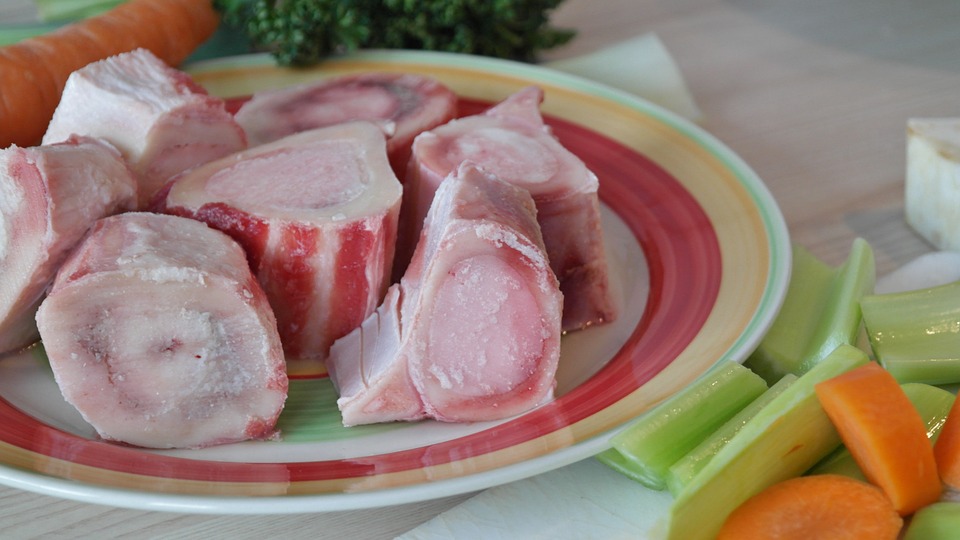
Kris Kresser: Bone broth is a traditional and nutritious addition to your meal plan

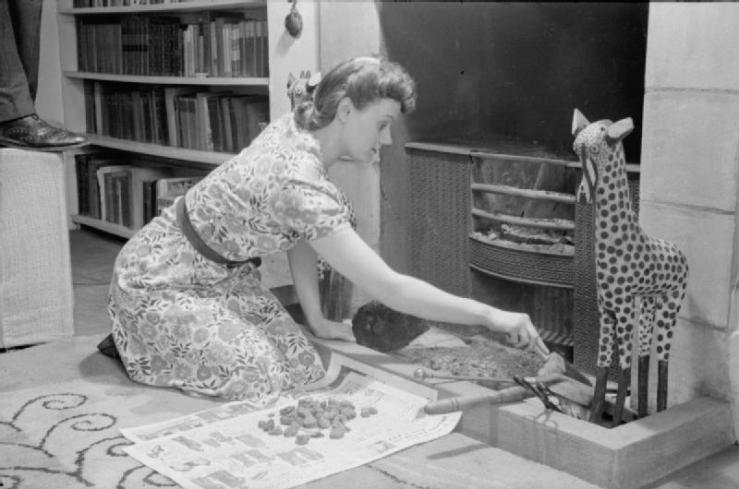
Whistle while you work

A_Day_in_the_Life_of_a_Wartime_Housewife-_Everyday_Life_in_London,_England,_1941_D2366


Physical exercise improves your sense of wellbeing but different intensities give different results.

Healthy adults were tested after doing various types of exercises and activities and compared how they felt.

Office work and driving a car were considered light intensity and were associated with  an improved mood.

Housework or walking  were considered moderate activities and not only improved mood but reduced pain, in those that suffered this.

Doing nothing reduced people’s moods.

Journal of Health Psychology doi:10.1177/1359105317691589

Adapted from article in Human Givens Vol 1 2017

Fit to serve: Ludicrously decadent brownie/shortbread cookies

The_MacDonald_boys_playing_golf.jpg

Low Carb Brownie Shortbread Cookies

by fittoservegroup

I love the rich buttery taste that shortbread cookies offer. It reminds me of those Danish cookies that come in a tin can. I must admit, I probably kept those people in business single handedly until I learned to bake. Frankly, I don’t know why it took me so long to sit down and create a low carb option. All I can say, is you’ll be glad I finally did.

This particular cookie has a layer of brownie on top. Why? Because you know what’s better than a low carb shortbread cookie? One that has a low carb brownie layer. It’s perfect for those times you can’t decide what you prefer.

Low Carb Brownie Shortbread Cookies

Ingredients

Low Carb Shortbread Base:

1 cup of finely ground almond flour (it needs to be finely milled)

¼ cup of sugar substitute

½ cup (1 stick) of unsalted butter allowed to soften at room temperature.

¼ teaspoon of sea salt

Low Carb Brownie Topping:

3 ounces of unsweetened baking chocolate bar

½ cup (1 stick) of unsalted butter

2 large whole eggs

1 cup of sugar substitute

½ teaspoon of baking powder

½ teaspoon of sea salt

  1. Pre-heat oven to 350 degrees. Lightly grease an 11 X 7 pan or a 10-inch round spring form pan like I did.
  2. Create the base of this cookie by mixing the almond flour and sugar substitute in a stand-up mixer. Once combined add the softened butter until dough forms.
  3. Place the layer of this dough into the bottom of your pan. dough so it doesI use wet hands to pat the dough so it doesn’t stick.  Bake until light and golden brown for 20 minutes and then allow to fully cool before proceeding.
  4. Leave your oven on and prepare the low carb brownie topping: Melt the chocolate and butter in a double-broiler or use the microwave in 1 minute intervals. Make sure to mix well and then set aside to cool.
  5. To the melted and cooled butter and chocolate mix, add the 2 eggs, baking powder and sea salt. Whisk well until fully combined.
  6. Spread this low carb brownie mixture to the low carb shortbread base evenly.
  7. Bake for about 20 minutes until the top rises slightly. The center will drop once it cools. You don’t want to over bake them so that they maintain a rich fudgy texture on top. Allow them to cool completely before slicing and enjoying. Makes one dozen bars at 3.1 net carbs each

Enjoy in good health!


Thank you very much, we don’t get these in Scotland!

Smoking rates down in young adults

girl-844051_960_720

Smoking decreased in all age groups in England between 2010 and 2016.  Overall 15.5% of the population smoke compared to 19.9%.

The greatest reduction was seen in young adults in the 18-24 age group, down from 26% to 19%.

Men are more likely to smoke, 19% than women, 14% but those who are unemployed are almost twice as likely to smoke compared to those who have jobs. 16% v 30%.

My comment: Diabetes and smoking is particularly hazardous long term. Unfortunately General Practitioners are reporting that smoking cessation schemes are losing funding due to budget cuts. If you don’t smoke, please don’t start. 

If you do smoke and think that you’ll never find the motivation to give it up, there are some people who managed it, who discuss what was important to them in the videos in this link:


https://www.cdc.gov/tobacco/campaign/tips/resources/videos/index.html?s_cid=OSH_tips_D9390


Rick: I’m a prick when I am low

 Tony the Tiger

I have been many things, husband, father, coworker and patient.  I am also a person with type 1 diabetes.  I have lived with type 1 for 42 years and I have to admit I am at least one more thing.   I can be a prick when I am low.  It’s true.  I acknowledge it.   Of course I often prick my finger to test my blood sugar, but I am also a prick.

Low Blood Sugar?

Having a low blood sugar is like being in an automated car wash without a car.  Having a low blood sugar feels like all the stimuli are coming at one thousand miles per hour and yet all you can think about is food.  It causes those around us to suffer sometimes.  I have many low blood sugar stories, some funny, some sad, and a few dangerous.  It is the accumulation of stories that show up after 42 years of taking an artificial hormone that allows me to live.

Low blood sugar is caused by not adequately matching food, exercise, and insulin. An insulin user can go low if they eat too few carbohydrates, exercise more than estimated, their body is assaulted by emotional stress (good or bad experiences), too much insulin is delivered, or a thousand other inputs that get out of balance.  No matter the cause; the result can be extreme sweating (I hate that one), rapid convulsive movement in hands or legs, unconsciousness, blurry vision, confusion, hunger, crying (I hate that one as well) or in some cases no discernible symptoms at all.  My most typical symptom is anger.  I tend to get defensive when I have a low blood sugar and I can turn into a raging lunatic.

But A Prick?

I can turn into a raging maniac based on the stimuli around me.  I have been known to throw things, yell, take off my clothes, laugh wildly, hit, and disobey those trying to help me.  I once opened and ate a box of Kellogg’s Frosted Flakes in the store.  When the manager asked why I was doing that I said the most important thing I could think of.  Because they’re GREAT!!!!!!

However, when I get upset is when someone remarks about my care while I am low.  These phrases always start with same words,   If you, you need, you should, if only followed by some prescription for what I did wrong or could do better to manage diabetes.  It angers me to hear these things, as if I wanted this outcome, or the speaker could do better.

Inputs and Outputs

Taking insulin is not strictly an input/output arrangement. The human body is much more complicated than the sum of its inputs.  I know this because sometimes I eat the same food, do the same exercise and take the same insulin and I get widely varying results.  It seems unfair that if I am sitting at home I can go low because my body metabolized its inputs differently.  Sometimes stuff happens.

Yes, we can control some parts of the equation.  I can put in less insulin, I can eat more or less carbohydrates and I can stay home while the family goes on a walk or swim, but that is like sitting on a four legged stool with two legs cut off. Most of the time I get it right.  I can usually keep the stool balanced but often, I make a mistake and my blood sugar goes too high or low.

What I have learned after 42 years of managing diabetes 24/7/365 is that no one can do it perfectly.  We miss and sometimes those misses are big. When that happens, I may need some help.  And if I ask for that help, know I do not mean to be a prick, but if I am also know my apology is sincere. After all I hate pricks those on my finger or the one that comes out when I am low.

Leoni from Low Carb Store: Sauces for meat, fish and vegetables

parsley-1444019_960_720

Parsley and Lemon Sauce 


This goes well with fish or vegetables

1/2 shallot
75ml double cream
2 tbsp fresh parsley
Lemon juice
1 tsp butter
Salt & pepper

Finely chop the shallot and cook gently in the butter until softened. On a low heat add the cream and parsley and cook until hot, stirring. Add a little squeeze of fresh lemon juice, and salt and pepper to taste. Add a dash of milk if you prefer a thinner sauce and pour over your fish and green vegetables.


Creamy Mushroom and Garlic Sauce

This goes well with white or red meat

100g mushrooms
75ml double cream
1 tsp butter
1 garlic clove
Salt & pepper

Crush the garlic and add to a pan with the butter. Cook gently for 1 minute then add the mushrooms. Cook until the mushrooms soften then pour in the cream. Heat gently until hot. Season with salt & black pepper and serve over white or red meat.

Keep safe when cycling

cyclist

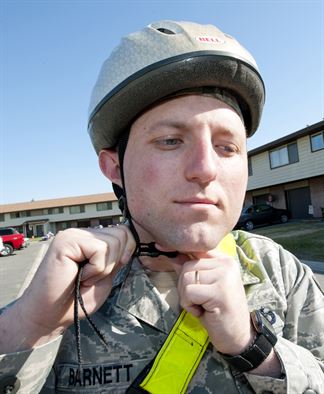
Reflective jackets are a great safety aid for cyclists riding in the dark, if they have them and  wear them consistently. A possible way to overcome a cyclists reluctance to wear the said jacket, say for example if they think to themselves, “I’ll be back before it gets dark or it’s too warm for my jacket” is to take the decision out of the equation.

Researchers have found that reflective tape attached to the rear frame of the bike and pedal cranks does the job of increasing visibility just as well as jackets do, but without any active behaviour required of the cyclist.

“Reflective tape is highly recommended to complement front and back lights in bicycle riding at night”, they conclude.

Human Factors, 2016, doi:10.177/001872081667145

Adapted from article in Human Givens Volume 24 No 1 2017

BBC – Hidden disabilities: Pain beneath the surface
help-686323_960_720Hidden disabilities: Pain beneath the surface

Imagine having to inject yourself thousands of times over the course of your lifetime, but never talking about it to anyone.

Many people live with hidden disabilities – conditions which don’t have physical signs but are painful, exhausting and isolating. Sympathy and understanding from others can often be in short supply.

Georgia Macqueen Black has Type 1 Diabetes.

She was diagnosed at the age of 11.

Type 1 Diabetes cannot be seen until I take out my insulin pen and inject myself, but the mechanical parts – blood tests and injections – are only the surface layers of what I have to manage.

Someone may see me inject, but there’s an isolating exhaustion I take with me afterwards. There will always be another injection and it can generate a disconnection between myself and other people.

Every day I gather the willpower to be a “good” diabetic, but when I follow the rules and still have high blood sugar I feel alone. It makes me feel foggy with a limited ability to concentrate. And the side-effects of too much or too little sugar in your blood can lead to you turning in on yourself.

The biggest challenge is accepting the monotony of managing diabetes. There are days when I’m tired of having a weaker immune system – a lesser known side-effect of diabetes – or when I find lumps under my skin from injections, but then I have to put those feelings to one side and carry on.

Some people might not think diabetes deserves the label “disability”, but if unmanaged it affects my ability to carry out tasks and I have to think how exercise, stress or dehydration will impact my blood sugar levels.

I often worry about how life will be when I’m older. This feeling of uncertainty hangs over me from time to time, and can make me feel lonely and a bit lost.

But I know there’s a silent solidarity out there. Someone with an impairment could be having a day where everything has become derailed and they feel ill, but I bet you they won’t show it. It’s that resilience that I really connect to.

Top tips on hidden disabilities


  • There’s so much mental labour involved so if I seem distracted it’s probably because of that
  • Believe me when I ask for help. Just because I don’t look like I need assistance, doesn’t mean I’m OK
  • Respect priority seats and wheelchair spaces on public transport
  • Listen to access requirements with an open mind – often small changes make a huge difference
  • Ask for what you need – in asking for help you don’t have to pretend to be someone else


Produced by Beth Rose

BBC Disabilties 5.7.17

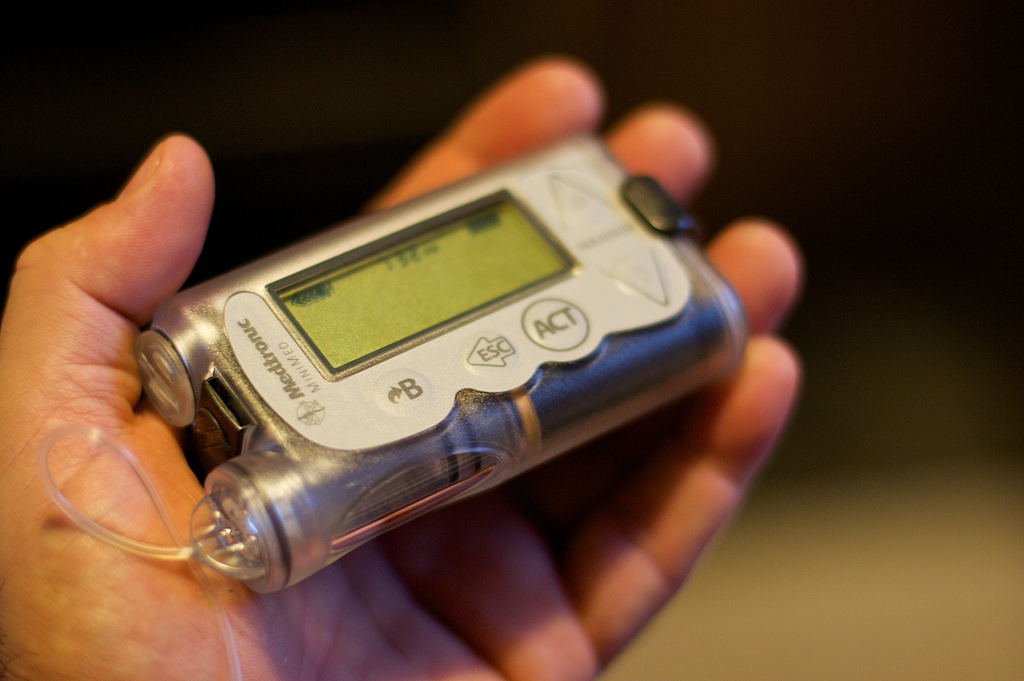
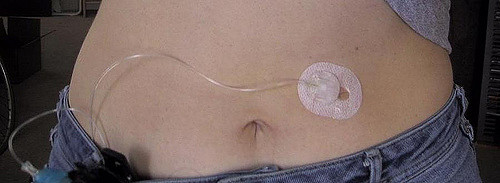
How does blood sugar control compare between pump users and insulin injecting adults?

insulin pump

If adults get the same level of education about blood sugar management there is only a tiny improvement in blood sugar control with a pump compared to a basal bolus injection regime.

The REPOSE trial was based in the UK with 315 participants across eight sites. Using small groups the patients were taught the DAFNE course, Dose Adjustment for Normal Eating. After the course the patients were randomised to either multiple daily injections which is standard UK management, or insulin pump use.

The organisers wanted to see how many people managed to get their hba1c below 7.5% after two years and what effects the regimes had on quality of life and hypoglycaemia.

Out of the original 315 patients, 260 finished the courses and entered the trial. There were small improvements in both groups for hba1c. The pump group got a 0.85% improvement in hba1c and the injectors got 0.42% improvement. This was not considered to be good enough to recommend pump provision, which is more expensive than pen injectors, to adults as a routine measure.

The pump group started with hba1s averaging around 9.5% and ended up around 8.7%. The injectors started with an average of 9.0% and ended up around 8.5%.  In addition there was no particular difference in hypoglycaemia or psychosocial outcomes.

My comment: It is a pity that DAFNE is considered the gold standard educational tool for type one diabetics when the outcomes are so underwhelming. The main problems are that although carb counting is included, carbohydrate restriction is not.  Insulin coverage of protein is not done and the seven unit rule is ignored. These are the main reasons that the outcomes are so poor. Structured education in person is expensive and time consuming for health care professionals. Why not grasp the nettle and actually teach people what they need to know to get normal blood sugars and not hba1cs of 8.5-8.7 which are certain to lead to diabetic complications?

Based on BMJ article BMJ 2017;356:j1285