New diabetes calculator helps determine if you are type one or type two

New calculator improves diagnosis of diabetes
Lynam A & al. BMJ Open 26 Sep 2019
curated by Pavankumar Kamat UK Medical News 30 Sep 2019

Scientists have developed a new calculator tool to help clinicians determine whether a patient has type 1 or type 2 diabetes, ensuring appropriate treatment and fewer complications. The beta version of the calculator is available here.

https://www.diabetesgenes.org/t1dt2d-prediction-model/
Determining the type of diabetes remains a challenge for clinicians, and current blood and genetic tests are not robust enough to provide a definitive diagnosis. The tool utilises a model that incorporates patient data (age of diagnosis and body mass index) and blood test results to provide a personalised approach.

It is useful in determining the likelihood of type 1 diabetes in patients, thereby reducing misdiagnosis.

Researchers at the Universities of Exeter, Oxford and Dundee analysed data on 1352 individuals with diabetes and tested the calculator in an additional 582 individuals.
The new tool follows the footsteps of another calculator previously developed at the University of Exeter which helps clinicians determine the presence of diabetes sub-type MODY. The tool has been successfully used by more than 100,000 people.
Dr Angus Jones, the lead researcher, said: “The right diagnosis in diabetes is absolutely crucial to getting the best outcomes for patients, as treatment is very different in different types of diabetes. Our new calculator can help clinicians by combining different features to give them the probability a person will have type 1 diabetes, and assess whether additional tests are likely to be helpful.”
References
Lynam A, McDonald T, Hill A, Dennis J, Oram R, Pearson E, Weedon M, Hattersley A, Owen K, Shields B, Jones A. Development and validation of multivariable clinical diagnostic models to identify type 1 diabetes requiring rapid insulin therapy in adults aged 18-50 years. BMJ Open. 2019;9(9):e031586. doi: 10.1136/bmjopen-2019-031586. PMID: 31558459


Alex the Crafted Kitchen: 4 ingredient Tomato soup


4 Ingredient Tomato Soup
 September 10, 2019 by trained chef, Alex Wojciak.


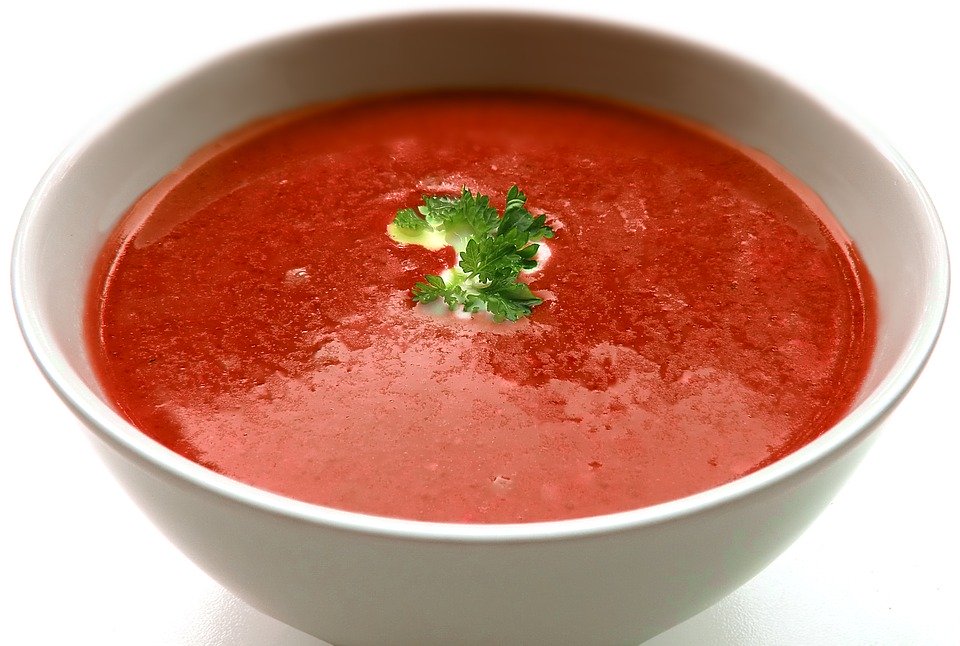
This tomato soup recipe couldn’t get any easier. If you don’t count the garnishes there are only four ingredients. I had an abundance of tomatoes – so many I had to pick a recipe that used up many of them. Soup seemed like a great idea.
Ingredients:
Tomato, 8 cups, fresh with the core removed, cut in half
Onion, 1  diced
Garlic, 6 cloves, minced
Chicken Stock, 3 cups
Extra Virgin Olive Oil, 2tbl

Method:
Begin by roasting tossing your tomatoes with the olive oil, and season with salt. Roast your tomatoes at 400 for about 20 minutes. Roast them long enough so you can peel off the skins with ease.
Meanwhile, heat a large sauce pot over medium heat and cook your onions until nicely browned and caramelized, about 7-8 minutes. If you season them with salt when you throw them in the pan, they will wilt and break down more quickly.

When the onions are nice and cooked, add in the garlic and continue cooking for 2 more minutes. Then, add the peeled tomatoes to the pot, along with the chicken stock, and bring to a boil. Purée the soup with an immersion blender (or a standing blender in batches). This might take longer with an immersion blender, but check the consistency to ensure it is smooth and velvety.

Taste for seasoning and adjust as necessary. Ladle into a bowl, and garnish with anything you’d like. I’ve garnished my soup with a dollop of crème fraiche and parsley.

Dr Ivor Cummings: Interview with Dr William Davis

In the last of our three part exploration of the cardiovascular disease epidemic, Irish doctor Ivor Cummings interviews Dr William Davis consultant cardiologist about what really prevents and reduces coronary artery atheroma. Also discussed is the most effective way to increase your magnesium intake which relaxes smooth muscle thereby reducing blood pressure.

Dr Cummings’s runs his blog  known as the Fat Emperor.


https://thefatemperor.com/ep37-william-davis-md-cardiologist-reveals-the-solutions-to-modern-chronic-disease/

Dr Aseem Malhotra: What is wrong with how we try to prevent cardiovascular disease

In part two of this series on cardiovascular disease Dr Aseem Malhotra, consultant cardiologist explains why putting faith in statins to resolve the cardiovascular disease epidemic is misguided. He explains that they only extend life by a matter of a few days yet need to be prescribed for years at considerable cost to the health service. Furthermore, he thinks that their side effects are not being explained to patients.

This is a medium length article which contains information on statins not readily seen in a single document.

https://www.europeanscientist.com/en/features/do-statins-really-work-who-benefits-who-has-the-power-to-cover-up-the-side-effects/

Belinda Fettke: The origins of the food companies behind the grain based diet

This is part one of a three part series on how we have ended up with a cardiovascular disease epidemic, what treatments we are using which don’t work, and what treatments do work.

The in first episode Belinda Fettke discusses the history behind the 7th Day Adventists who genuinely believed that they were bringing health to the USA population by promoting a grain based diet.

This is a long video but entertaining as well as informative.


Monthly lifestyle counselling improves heart outcomes

Adapted from Intensive lifestyle counselling and cardiovascular outcomes in patients with diabetes. September 14 2019  Diabetes in Control by Nour Salhab. Pharm. D from Zhang et al Lifestyle counselling and long term clinical outcomes in patients with diabetes. Diabetes Care. Aug. 2019.

Intensive lifestyle counselling has been shown to improve blood sugars in the Look AHEAD study but it was too underpowered to show any significant conclusions regarding cardiac outcomes.

This new study looked at patients with both type one and type two diabetes who had HbAICs over 7% and were over the age of 18. Lifestyle counselling involved diet, exercise and weight loss management. The goal was to get the patient’s HBAICs under 7%.

19,293 patients were involved and the mean HbAIC at the start was 7.8%. My comment: This is a very good average compared to British diabetics! 

The mean counselling sessions were 0.46 a month and the study ran for 5.4 years.

HbAIC reduced by 1.8% for patients who got monthly counselling and 0.7% for those who got less than monthly counselling.

The primary end point was time to the first episode of angina, heart attack or stroke or death from any cause. There was a small but significant decrease in the group who had monthly counselling compared to three monthly counselling.

The counselling occurred in academic centres so may not be applicable to other settings.

My comment: This level of counselling is much more intensive than can probably be delivered in the NHS population. The blood sugar levels in the patients was also much better to start with compared to the UK population. 

Anxiety Management During Pandemic Days~

Strange time, hmm? Loved this advice from Cindy.

cindy knoke's avatarCindy Knoke

Many of us are experiencing emotional distress from the pandemic which can affect each of us in different ways, but often presents as increasing anxiety, worry, sleep disruption, feelings of helplessness, panic, and/or depression.

The shrieking headlines don’t help do they? So what can we do to manage these feelings and feel stronger emotionally and psychologically as we prepare ourselves to face the difficult days ahead?

As a psychotherapist who has practiced for many decades, I have some ideas that can help. So if you are interested, read on.

We are going to make a customized anxiety toolbox. One approach doesn’t work for everyone, pick and choose what feels right for you. Of course I’m including relaxing photos intermixed in this post because looking at positive images is an objective and powerful anxiety reducer. What you perceive influences how you think and feel.

ANXIETY TOOLBOX:

Self Talk Reframing (Cognitive Therapy)

View original post 627 more words

Dapagliflozin now approved for type ones in Scotland

From Scottish Medicines Consortium 9 September 2019

Dapagliflozin has been accepted for the treatment of inadequately controlled type one diabetes mellitus as an adjunct to insulin if their body mass index is at or above 27.

The combination significantly improves glycaemic control.

My comment: In my experience the combination is also good for weight control. These findings have been known for several years from USA research so it is good that Scottish doctors are being encouraged in its use.


A little care goes a long way

Adapted from Annals of Family Medicine 2019 doi:10.1370/afm.2421

People diagnosed by their GP with type two diabetes had a 40-50% lower mortality rate over the next ten years if they experienced their GP and practice nurses as empathetic during the year after diagnosis, compared to those who considered that their primary health carers had low empathy.

This study looked at 879 patients recruited from 49 GP practices in the east of England.

My comment: The first year is when patients get their head round the fact that they have a long term condition that could affect how long they will live and the quality of the life they have left. At diagnosis many are willing to look at lifestyle changes. Encouraging them, helping them, and helping them set appropriate goals makes a good difference to a person’s ability to change their daily routines. If you are newly diagnosed and don’t get on with your health care providers for any reason, then maybe a change of provider makes sense in the light of this research. 

There are benefits to that pre-breakfast workout

Adapted from Edinburgh RM et al. Journal of Clinical Endocrinology and Metabolism 21 Oct 2019 

Research suggests that blood sugar levels can be better controlled by planned eating and exercise timings.

This study was conducted in Bath and Birmingham and involved a six week trial of 30 overweight or obese men. They were divided into three groups. One group ate breakfast before exercise, one group after exercise and the third group made no changes to their diet or exercise (or lack of it). Groups one and two swapped over after the first six weeks.

The researchers showed that you doubled the amount of fat burned during exercise if breakfast was delayed. This was mainly because the group had lower insulin levels due to their prolonged overnight fast. They could therefore burn more fat in their fat stores or muscle. The groups did not do more exercise than the pre-workout breakfast group.

Groups one and two swapped over after the first three weeks. The men’s BMI averaged at 30 and was closely matched in each group. Although insulin sensitivity was improved in the longer fasting group, there was not any significant weight loss.