
Sheri Colberg: Joint health is critical to staying active

vGqfCBC

Joint Health Is Critical to Staying Active

Diabetes in Control

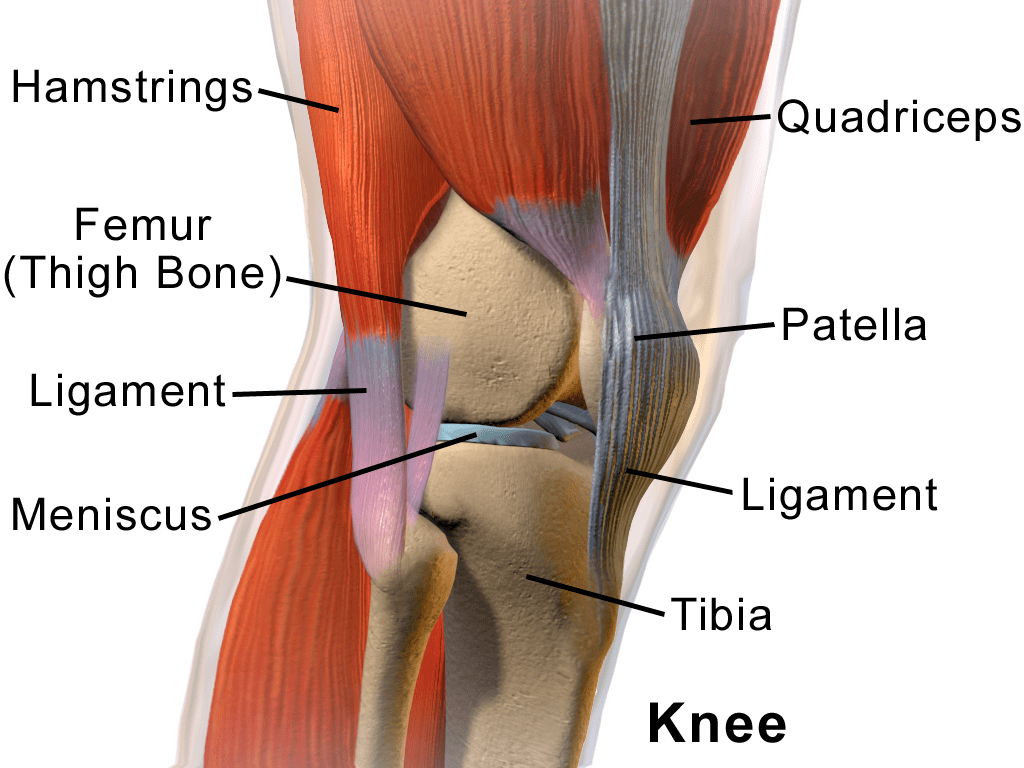
Without properly functioning joints, our bodies would be unable to bend, flex, or even move. A joint is wherever two bones come together, held in place by tendons that cross the joint and attach muscles to a bone on the other side and ligaments that attach to bones on both sides of the joint to stabilize it. The ends of the bones are covered with cartilage, a white substance formed by specialized cells called chondrocytes. These cells produce large amounts of an extracellular matrix composed of collagen fibers, proteoglycan, elastin fibers, and water. Tendons and ligaments are also made up primarily of collagen.

Joints can be damaged, however, making movement more difficult or painful. Joint cartilage can be damaged by acute injuries (i.e., ankle sprain, tendon or ligament tears) or overuse (related to repetition of joint movements and wear-and-tear over time). Damage to the thin cartilage layer covering the ends of the bones is not repaired by the body easily or well, mainly because cartilage lacks its own blood supply.

Aging alone can lead to some loss of this articular cartilage layer in knee, hip, and other joints—leading to osteoarthritis and joint pain—but having diabetes also potentially speeds up damage to joint surfaces. Although everyone gets stiffer joints with aging, diabetes accelerates the usual loss of flexibility by changing the structure of collagen in the joints, tendons, and ligaments. In short, glucose “sticking” to joint surfaces and collagen makes people with diabetes more prone to overuse injuries like tendinitis and frozen shoulder (1; 2). It may also take longer for their joint injuries to heal properly, especially if blood glucose levels are not managed effectively. What’s more, having reduced motion around joints increases the likelihood of injuries, falls, and self-imposed physical inactivity due to fear of falling.

Reduced flexibility limits movement around joints, increases the likelihood of orthopedic injuries, and presents a greater risk of joint-related problems often associated with diabetes, such as diabetic frozen shoulder, tendinitis, trigger finger, and carpal tunnel syndrome. These joint issues can come on with no warning and for no apparent reason, even if an individual exercises regularly and moderately, and they may recur more easily as well (3). It is not always just due to diabetes, though, since older adults without diabetes experience inflamed joints more readily than when they were younger.

So what can you do to keep your joints mobile if you’re aging (as we all are) and have diabetes? Regular stretching to keep full motion around joints can help prevent some of these problems, and also include specific resistance exercises that strengthen the muscles surrounding affected joints. Vary activities to stress joints differently each day. Overuse injuries occur following excessive use the same joints and muscle in a similar way over an extended period of weeks or months, or they can result from doing too much too soon.

Doing moderate aerobic activity that is weight-bearing (like walking) will actually improve arthritis pain in hips and knees (4). People can also try non-weight-bearing activities, such as aquatic activities that allow joints to be moved more fluidly. Swimming and aquatic classes (like water aerobics) in either shallow or deep water are both appropriate and challenging activities to improve joint mobility, overall strength, and aerobic fitness. Walking in a pool (with or without a flotation belt around the waist), recumbent stationary cycling, upper-body exercises, seated aerobic workouts, and resistance activities will give you additional options to try.

Finally, managing blood glucose levels effectively is also important to limit changes to collagen structures related to hyperglycemia. Losing excess weight and keeping body weight lower will decrease the risk for excessive stress on joints that can lead to lower body joint osteoarthritis (5). Simply staying as active as possible is also critical to allowing your joints to age well, but remember to rest inflamed joints properly to give them a chance to heal properly. You may have to try some new activities as you age to work around your joint limitations, but a side benefit is that you may find some of them to be enjoyable!

References:

  1. Abate M, Schiavone C, Pelotti P, Salini V: Limited joint mobility in diabetes and ageing: Recent advances in pathogenesis and therapy. Int J Immunopathol Pharmacol 2011;23:997-1003
  2. Ranger TA, Wong AM, Cook JL, Gaida JE: Is there an association between tendinopathy and diabetes mellitus? A systematic review with meta-analysis. Br J Sports Med 2015;
  3. Rozental TD, Zurakowski D, Blazar PE: Trigger finger: Prognostic indicators of recurrence following corticosteroid injection. J Bone Joint Surg Am 2008;90:1665-1672
  4. Rogers LQ, Macera CA, Hootman JM, Ainsworth BE, Blairi SN: The association between joint stress from physical activity and self-reported osteoarthritis: An analysis of the Cooper Clinic data. Osteoarthritis Cartilage 2002;10:617-622
  5. Magrans-Courtney T, Wilborn C, Rasmussen C, Ferreira M, Greenwood L, Campbell B, Kerksick CM, Nassar E, Li R, Iosia M, Cooke M, Dugan K, Willoughby D, Soliah L, Kreider RB: Effects of diet type and supplementation of glucosamine, chondroitin, and msm on body composition, functional status, and markers of health in women with knee osteoarthritis initiating a resistance-based exercise and weight loss program. J Int Soc Sports Nutr 2011;8:8


In addition to my educational web site, Diabetes Motion (www.diabetesmotion.com), I also recently founded an academy for fitness and other professionals seeking continuing education enabling them to effectively work with people with diabetes and exercise: Diabetes Motion Academy, accessible at www.dmacademy.com. Please visit those sites and my personal one (www.shericolberg.com) for more useful information about being active with diabetes.

Fit to serve: Bacon carbonara casserole

Mush-shrimp_cream_sauce_step_2

Once we made eating a low carb keto diet a lifestyle change, we really thought we would never have anything that even remotely looked like pasta again. This of course was until I discovered spaghetti squash. Although not devoid of carbs, it’s certainly a much healthier lower in carb option.

Using spaghetti squash as a pasta alternative is great because of its mild flavor. It simply takes on the flavor profile of whatever sauce you choose to use. In addition, it has an amazing pasta-like texture that has you questioning if you aren’t just have a real bowl of pasta and cheating. You can actually even twirl the spaghetti squash around your fork, like you do with real spaghetti. Now that’s when I was sold.

Unlike zucchini and other vegetables that are spiraled into a pasta-like texture, spaghetti squash does not give your dishes extra moisture. Don’t get me wrong I use zucchini all the time to make a low carb lasagna, but if not eaten right away the extra moisture the zucchini releases can turn some people off.

I finally decided to sit down and share a recipe using spaghetti squash after getting a few family requests. Although it’s a very popular pasta option in our low carb keto community, it’s still has not been discovered by many.

My creamy bacon carbonara sauce with spaghetti squash is filling enough to stand as a meal, which is why I opted not to add any additional protein in the form of chicken.

Low Carb Bacon Carbonara Casserole

Ingredients:

1 large spaghetti squash (cooked)

3 eggs

¼ cup of butter

1 small onion finely chopped

½ pound bacon (reserve ½ cup for topping)

½ cup of chopped mushrooms

2 cups of heavy whipping cream

1 ½ cups of grated cheese parmesan cheese (reserve ½ cup for topping)

dash of nutmeg

¼ cup of finely chopped parsley (for topping)

½ teaspoon of sea-salt

1 clove of crushed garlic

¼ teaspoon of black pepper

½ teaspoon of sea-salt (or to taste)

dash of red pepper flakes

Spaghetti Squash Cooking Instructions

Cook your spaghetti squash sliced in a 375-degree oven for 30 minutes. Or if you prefer you can do what I do and cook it whole in the microwave oven. I pierce the skin of the spaghetti squash several times and microwave at a high temperature for about 6 minutes. Once cooked and allowed to cool, I slice the squash in half and take out the center seeds. Using a fork, scrap the inside of the squash to get the spaghetti-like strands. Place the squash strands in an oven-proof bowl in preparation for the sauce.

Low Carb Bacon Carbonara Sauce

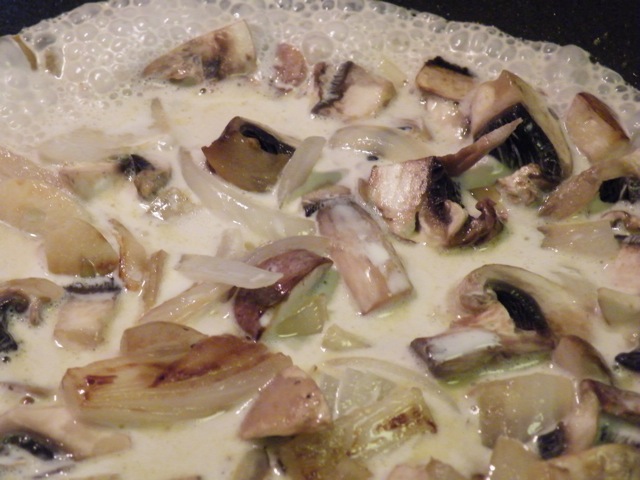
  1. Cook in a large frying pan over medium-high heat the bacon, once slightly crispy set aside. Reserve ¼ up of the bacon grease to cook the onion, garlic and mushrooms until tender.
  2. Remove the sautéed mushrooms, garlic and onions and add the butter to the pan.
  3. Reduce the heat to low-medium and add the cream, parmesan cheese, and spices minus the parsley. Cook on low until the sauce starts to thicken. Turn the stove off and allow to cool. Whisk in the 3 whole eggs, making sure that the eggs are fully incorporated. Note: It’s important that you don’t add the raw eggs to the sauce if it’s really hot, to avoid scrambling the eggs.
  4. To the now thickened sauce add the cooked mushrooms, onion, garlic and bacon and stir to combine well.
  5. Pour the carbonara sauce over the cooked spaghetti squash and transfer into an oven-proof casserole.
  6. To the casserole add the reserved parmesan cheese, bacon and parsley as a toping.
  7. Bake in a 350-degree oven for 30-35  minutes.

Makes 6 servings at 9 net carbs.

Enjoy in good health!

Stephan Guyenet: Why your brain makes you fat

hqdefault (2)

In this interview, which you can listen to or read,  neuroscientist Stephan Guyenet discusses various topics related to a big issue with a lot of people, how we get fat and what we can do about it, with Kris Kresser.


https://chriskresser.com/why-your-brain-makes-you-fat-with-stephan-guyenet/?utm_source=activecampaign&utm_medium=email&utm_term=rhr-why-your-brain&utm_content=&utm_campaign=blog-post

Diabetic children miss out on hospital checks

foot examination.jpg

Paediatric endocrinology clinics have a  non-attendance rate of 11.4% in the south west of the UK. The majority of these patients have diabetes.

Children who did not attend were more likely to  come  from families living in areas of high deprivation and to have a child protection alert in their hospital records.

In 60% of the cases, the GP was not informed that the child had not appeared, so they were not in a position to follow the child up themselves. Some of the children were sent other appointments, some were given an open attendance appointment and some were discharged.

About half of the children were eventually seen within a year and a third attended A and E. Almost a quarter went back to see the GP and half of these were re-referred.

My comments: In my own practice I am aware that a minority of parents are very poor at attending diabetic clinics with their children. We are always informed and keep out an eye for opportunistic intervention when the child attends for another matter. Our hospital has a good nurse liaison service and they do their best to keep a dialogue open with the parents and visit at home. Sometimes lack of money for bus fares is given as an issue. Sometimes work commitments or having to make arrangements to look after other children in the family is the reason. For one reason or another, the child’s diabetes management does not have the priority that it is given in other homes, and that doesn’t work out well on the long term.

Reported in BMJ 24th June 2017 by Ingrid Torjesen BMJ 2017;357:j2983


Fit to serve: Brown Butter Cake

sponge cake 2

Low Carb Brown Butter Cake

Ingredients:

2 cups of (4 sticks) unsalted butter melted and lightly browned

6 large eggs

2 cups of finely milled almond flour

2 cups of sugar substitute

1 ½ teaspoon of baking powder

½ teaspoon of sea salt

Directions:

1.    Pre-heat oven to 350 degrees. Lightly grease a 10-inch spring-form pan with butter.

2.    Melt and lightly brown the butter in a saucepan and allow to cool completely.

3.    Beat all the eggs and sugar substitute in a stand-up mixer on high until mixture is thick and a shade of pale yellow, about 6 minutes.

4.    Add the almond flour by ¼ cup increments into the egg and sugar-substitute batter folding gently with a rubber spatula. *Do not over stir, mix only to combine

5.    Once the batter has been mixed add the now cooled melted brown butter gently fold into the batter until fully incorporated.

6.    Pour the batter into the prepared pan.

7.    Bake the cake for 35-40 minutes until a toothpick inserted in the center comes out clean.

8.    Allow this cake to cool completely before serving. Store in the refrigerator.

Enjoy in good health!

Cake makes 16 servings at 3.2 net carbs per slice

Kris Kresser: Bone broth is a traditional and nutritious addition to your meal plan

Whistle while you work

A_Day_in_the_Life_of_a_Wartime_Housewife-_Everyday_Life_in_London,_England,_1941_D2366


Physical exercise improves your sense of wellbeing but different intensities give different results.

Healthy adults were tested after doing various types of exercises and activities and compared how they felt.

Office work and driving a car were considered light intensity and were associated with  an improved mood.

Housework or walking  were considered moderate activities and not only improved mood but reduced pain, in those that suffered this.

Doing nothing reduced people’s moods.

Journal of Health Psychology doi:10.1177/1359105317691589

Adapted from article in Human Givens Vol 1 2017

Fit to serve: Ludicrously decadent brownie/shortbread cookies

The_MacDonald_boys_playing_golf.jpg

Low Carb Brownie Shortbread Cookies

by fittoservegroup

I love the rich buttery taste that shortbread cookies offer. It reminds me of those Danish cookies that come in a tin can. I must admit, I probably kept those people in business single handedly until I learned to bake. Frankly, I don’t know why it took me so long to sit down and create a low carb option. All I can say, is you’ll be glad I finally did.

This particular cookie has a layer of brownie on top. Why? Because you know what’s better than a low carb shortbread cookie? One that has a low carb brownie layer. It’s perfect for those times you can’t decide what you prefer.

Low Carb Brownie Shortbread Cookies

Ingredients

Low Carb Shortbread Base:

1 cup of finely ground almond flour (it needs to be finely milled)

¼ cup of sugar substitute

½ cup (1 stick) of unsalted butter allowed to soften at room temperature.

¼ teaspoon of sea salt

Low Carb Brownie Topping:

3 ounces of unsweetened baking chocolate bar

½ cup (1 stick) of unsalted butter

2 large whole eggs

1 cup of sugar substitute

½ teaspoon of baking powder

½ teaspoon of sea salt

  1. Pre-heat oven to 350 degrees. Lightly grease an 11 X 7 pan or a 10-inch round spring form pan like I did.
  2. Create the base of this cookie by mixing the almond flour and sugar substitute in a stand-up mixer. Once combined add the softened butter until dough forms.
  3. Place the layer of this dough into the bottom of your pan. dough so it doesI use wet hands to pat the dough so it doesn’t stick.  Bake until light and golden brown for 20 minutes and then allow to fully cool before proceeding.
  4. Leave your oven on and prepare the low carb brownie topping: Melt the chocolate and butter in a double-broiler or use the microwave in 1 minute intervals. Make sure to mix well and then set aside to cool.
  5. To the melted and cooled butter and chocolate mix, add the 2 eggs, baking powder and sea salt. Whisk well until fully combined.
  6. Spread this low carb brownie mixture to the low carb shortbread base evenly.
  7. Bake for about 20 minutes until the top rises slightly. The center will drop once it cools. You don’t want to over bake them so that they maintain a rich fudgy texture on top. Allow them to cool completely before slicing and enjoying. Makes one dozen bars at 3.1 net carbs each

Enjoy in good health!


Thank you very much, we don’t get these in Scotland!

Smoking rates down in young adults

girl-844051_960_720

Smoking decreased in all age groups in England between 2010 and 2016.  Overall 15.5% of the population smoke compared to 19.9%.

The greatest reduction was seen in young adults in the 18-24 age group, down from 26% to 19%.

Men are more likely to smoke, 19% than women, 14% but those who are unemployed are almost twice as likely to smoke compared to those who have jobs. 16% v 30%.

My comment: Diabetes and smoking is particularly hazardous long term. Unfortunately General Practitioners are reporting that smoking cessation schemes are losing funding due to budget cuts. If you don’t smoke, please don’t start. 

If you do smoke and think that you’ll never find the motivation to give it up, there are some people who managed it, who discuss what was important to them in the videos in this link:


https://www.cdc.gov/tobacco/campaign/tips/resources/videos/index.html?s_cid=OSH_tips_D9390


Rick: I’m a prick when I am low

 Tony the Tiger

I have been many things, husband, father, coworker and patient.  I am also a person with type 1 diabetes.  I have lived with type 1 for 42 years and I have to admit I am at least one more thing.   I can be a prick when I am low.  It’s true.  I acknowledge it.   Of course I often prick my finger to test my blood sugar, but I am also a prick.

Low Blood Sugar?

Having a low blood sugar is like being in an automated car wash without a car.  Having a low blood sugar feels like all the stimuli are coming at one thousand miles per hour and yet all you can think about is food.  It causes those around us to suffer sometimes.  I have many low blood sugar stories, some funny, some sad, and a few dangerous.  It is the accumulation of stories that show up after 42 years of taking an artificial hormone that allows me to live.

Low blood sugar is caused by not adequately matching food, exercise, and insulin. An insulin user can go low if they eat too few carbohydrates, exercise more than estimated, their body is assaulted by emotional stress (good or bad experiences), too much insulin is delivered, or a thousand other inputs that get out of balance.  No matter the cause; the result can be extreme sweating (I hate that one), rapid convulsive movement in hands or legs, unconsciousness, blurry vision, confusion, hunger, crying (I hate that one as well) or in some cases no discernible symptoms at all.  My most typical symptom is anger.  I tend to get defensive when I have a low blood sugar and I can turn into a raging lunatic.

But A Prick?

I can turn into a raging maniac based on the stimuli around me.  I have been known to throw things, yell, take off my clothes, laugh wildly, hit, and disobey those trying to help me.  I once opened and ate a box of Kellogg’s Frosted Flakes in the store.  When the manager asked why I was doing that I said the most important thing I could think of.  Because they’re GREAT!!!!!!

However, when I get upset is when someone remarks about my care while I am low.  These phrases always start with same words,   If you, you need, you should, if only followed by some prescription for what I did wrong or could do better to manage diabetes.  It angers me to hear these things, as if I wanted this outcome, or the speaker could do better.

Inputs and Outputs

Taking insulin is not strictly an input/output arrangement. The human body is much more complicated than the sum of its inputs.  I know this because sometimes I eat the same food, do the same exercise and take the same insulin and I get widely varying results.  It seems unfair that if I am sitting at home I can go low because my body metabolized its inputs differently.  Sometimes stuff happens.

Yes, we can control some parts of the equation.  I can put in less insulin, I can eat more or less carbohydrates and I can stay home while the family goes on a walk or swim, but that is like sitting on a four legged stool with two legs cut off. Most of the time I get it right.  I can usually keep the stool balanced but often, I make a mistake and my blood sugar goes too high or low.

What I have learned after 42 years of managing diabetes 24/7/365 is that no one can do it perfectly.  We miss and sometimes those misses are big. When that happens, I may need some help.  And if I ask for that help, know I do not mean to be a prick, but if I am also know my apology is sincere. After all I hate pricks those on my finger or the one that comes out when I am low.