Today is World Diabetes Day. We send fond greetings to all those with diabetes all over the world.
No doubt, innovations in healthcare continue to offer improvements for we diabetics. When I was diagnosed in the 80s, blood testing wasn’t routine, there were few insulins on the market and logging your results meant writing them down in a little book. [As a teenager, I used to sit in the doctor’s waiting room, filling in the results using different-coloured pens to fool the doctor that I’d been doing tests regularly – did anyone else do this?!]
And now – there’s continuous glucose management, FDA approval of a so-called artificial pancreas and access to tonnes of information about diabetes thanks to the internet. There’s never been a better time to be a diabetic.
On the other hand, levels of type 2 diabetes are soaring. Our healthcare systems will not have the funds to cope with this epidemic. What will happen in the future when there are so many people suffering from diabetes-related complications? What will happen to families, watching people suffer from this condition?
Take time to think about diabetes today. If you have diabetes yourself, we wish you long and continued good health. And if there’s a diabetic in your life, give them an extra hug today.
This is the link to the Public Health Collaboration site where you can download for free or order print versions, at a modest cost, of illustrated health booklets that will help you:
know what to eat for a wide variety of good health outcomes
Go to bed early with a good book and other advantages to diabetes.
How much does diabetes shape your personality? If you’ve ever experienced high blood sugars while at a party or surrounded by other people, you’ll know feeling tired and ill turns you into an introvert. Making conversation, especially with strangers, requires far too much effort.
Perhaps many of we introverted diabetics are extroverts dying to get out? Without the ups and downs of diabetes, we’d be flinging ourselves at strangers, auditioning for the X Factor, dominating meetings at work and organising sing-songs whenever we get together with friends and family?! Everyone would secretly dread us coming into a room. “Oh no, it’s XXXX. Now we’re going to be bullied into singing/dancing/playing some daft game.”
Just a thought…
When you experience on target blood sugars, the resultant energy gives you confidence – the kind of confidence that makes life’s more extroverted activities do-able and possible. I was diagnosed with type 1 diabetes at the age of nine and it’s been with me for all of my adult life.
There are plenty of positives diabetes has given me. One of the blogs we follow – Georgina M Llloyd – listed 30 ways diabetes has helped improve her life. I had a think about some of the ways it has shaped mine.
Here they are:
Organisational skills. You need tip-top organisational skills to stay on top of diabetes – ensuring you have enough medication, ordering and picking up repeat prescriptions, making sure you have carry enough medical gear with you, planning for exercise, keeping glucose tablets or jelly babies on hand, preparing for holidays etc.
An appreciation of the UK health system. A civilised country provides free healthcare to its citizens. As a type 1 diabetic, I’m so glad I live in the UK. All my medication, hospital appointments and eye checks are free. If I want extra help from a diabetic nurse, that won’t cost anything either. I’ve got gum disease (it’s one of the side effects of diabetes, but it’s also common among the general population) and I’m receiving treatment at the dental hospital. That’s free too.
The ability to say no. Georgina mentioned this one too. When you’re a people pleaser as I am, it jars to say no to food people have lovingly prepared and placed in front of you. Practise it enough and it becomes automatic. And then you can use that ability elsewhere; being asked to do too much, for example.
A love of walking. I’ve tried lots of forms of exercise over the years. Walking is the best – it’s gentle, easy and it serves more than one purpose. It’s exercise, but it gets you from A to B. It’s exercise, but it helps lower your blood sugar levels. It’s exercise, but it calms the mind at the same time. It’s exercise and it gives you access to fresh air, beautiful views, chats with dog owners and more.
Health and fitness is my hobby. It might have become one of my interests anyway, but thanks to diabetes I’ve always found diet and activity fascinating. These days, we’re lucky enough to have access to lots of information. we can do our own research and work out the best ways to look after ourselves.
It gives you an excuse to go to bed early. A cosy bed and a good book? Just tell your other half that you want to read, sneak upstairs, put your pyjamas on and dive in. It’s legit because you need more sleep anyway, right?
How has diabetes improved or changed your life? What are you grateful for?
Influenza vaccination may reduce cardiac-related hospital admissions and all cause mortality in patients with diabetes.
Currently, only low-quality evidence exists to support efficacy of influenza vaccination to prevent seasonal influenza in patients with diabetes. There is even less information regarding the impact of influenza vaccination on cardiovascular events or all-cause mortality in this population. A recent study published in the Canadian Medical Association Journal was designed to evaluate the impact of seasonal influenza vaccination on admission to the hospital for acute myocardial infarction, stroke, heart failure, or pneumonia, and all-cause mortality in patients with type 2 diabetes.
Conducted over a 7-year time period from 2003 – 2009, the study analyzed retrospective patient data from the Clinical Practice Research Datalink in England. The analysis included 124,503 adult patients diagnosed with type 2 diabetes. At baseline, characteristics such as age, sex, smoking status, BMI, cholesterol labs, HbA1c, blood pressure, medications, and comorbidities were compared between patient groups. Vaccination rates of the included participants ranged from 63.1% to 69.0% per year. In general, unvaccinated participants were younger, had lower rates of pre-existing comorbidities, and were taking fewer medications.
The baseline characteristics of subjects enrolled in this retrospective analysis showed that sicker subjects received the flu vaccination more frequently. Given this observation, and seasonal confounding of flu outbreaks, data adjustments favored fewer cardiovascular events and lower rates of all-cause mortality during the influenza season spanning 7 years of data. While other studies have shown that influenza vaccination can reduce the risk of cardiovascular events in high-risk patients, this study is the first to demonstrate a reduction in cardiovascular events associated with influenza vaccination in patients with diabetes. This study is notable for its large sample size and long duration. However, given the retrospective nature of the study, further trials are warranted to offer conclusive evidence about the benefits of influenza vaccination in patients with diabetes.
Practice Pearls:
Previous clinical trials aimed at studying the effectiveness of the flu vaccine in patients with diabetes are often small, inconclusive, and have not investigated cardiovascular outcomes.
When data was adjusted for baseline covariates and seasonal residual confounding, patients who received the influenza vaccination had significantly reduced rates of hospital admissions for stroke, heart failure, pneumonia or influenza, and all-cause mortality.
Large experimental or quasi-experimental trials are needed to establish a causal link between influenza vaccination and clinical endpoints in patients with diabetes.
References:
Vamos EP, Pape UJ, Curcin V, Harris DPhil MJ, Valabhji J, Majeed A, et al. Effectiveness of the Influenza vaccine in preventing admission to hospital and death in people with type 2 diabetes. CMAJ. 2016 July 25.
Remschmidt C, Wichmann O, Harder T. Vaccines for the prevention of seasonal influenza in patients with diabetes: systematic review and meta-analysis. BMC Med 2015;13:53.
Researched and prepared by Alysa Redlich, Pharm.D. Candidate, University of Rhode Island, reviewed by Michelle Caetano, Pharm.D., BCPS, BCACP, CDOE, CVDOE
From Diabetes in Control: Disasters averted series
August 2nd, 2016
When it comes to metformin, when appropriate, I recommend the extended release version.
Last week my patient, female, 56 years of age, type 2 diabetes, visited. A1C was elevated, and she gained 5 pounds. She had been on metformin ER for the last 6 months and doing well. She said she recently noticed a bean-looking/pill-looking thing in her stools that seemed to be related to her metformin. (She hadn’t looked before this).
She stopped her metformin and said she didn’t see it after that. “If it was coming out of me, it must not have been working, so I stopped it.” She refuses to check her glucose or weigh herself, therefore she did not notice the increase in her glucose levels. She did mention noticing her pants being tighter around her waist.
I informed her that the bean-looking/pill-looking thing in her stool was the metformin, but that did not mean it wasn’t working, it was. It was just a different method of delivery to be a slower release than other medications she takes or has taken. Some call the remains…ghost pills.
She resumed her metformin. Sure enough, she saw them again, but she did not stop taking her metformin. Three months later, her A1C and weight returned to the levels before stopping.
Lessons Learned: Understand that some controlled or extended release medications may look like they haven’t been “digested,” but that’s the formulation of the medication. The active ingredient has been released. When starting your patients on medications that seem to not be “digested” such as extended release metformin, teach they may see this.
Learn more at: http://www.ncbi.nlm.nih.gov/pmc/articles/PMC2847989/ and http://www.ncbi.nlm.nih.gov/pmc/articles/PMC4110830/
My comment: As a GP I have come across this. At least I know what to say about it now.
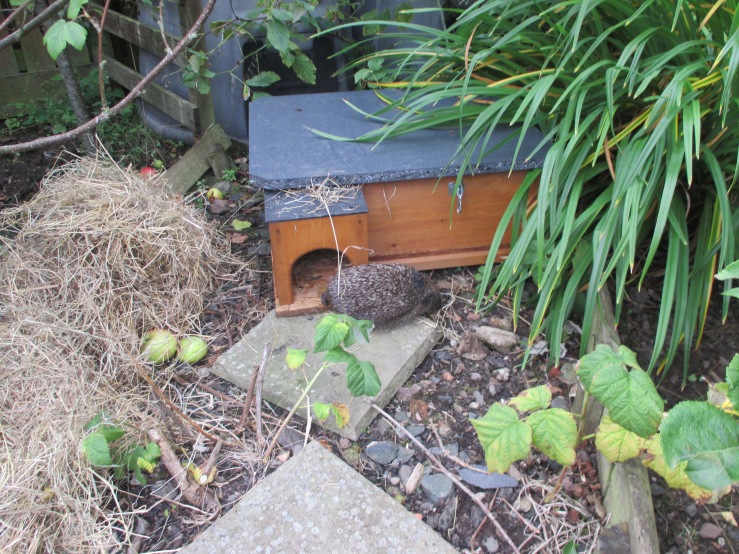
Earlier this summer I found two hedgehogs eating suet/mealworm pellets which I put out for birds in a ground cage in the garden. As I know that the species is in decline in the UK, I was keen to encourage them. Therefore I started putting out cat food in the evenings for them and in due course bought a hedgehog house.
The two hedgehogs seemed very pally and would grunt loudly at each other. This is a courtship behaviour called huffing. They were much keener on wet cat food than the hedgehog kibbles and I wonder if this is partly because wet food appeals to their sense of smell.
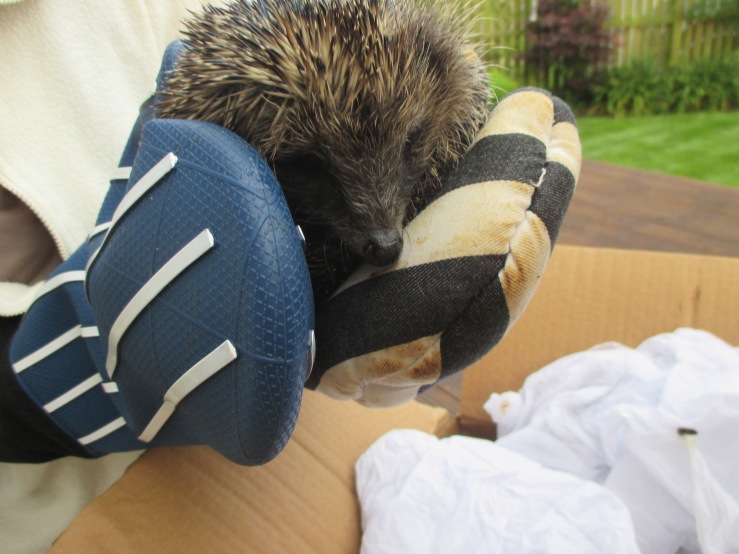
Later in the summer I was informed that Hessilhead Wildlife Trust near Beith, Ayrshire, was wanting to re-locate over a hundred hedgehogs that had been taken off of a Scottish Island to conserve wild bird nest sites. I was very keen to have some more garden visitors and in due course brought home a mummy hedgehog and her two babies, who by this time were quite big.
What surprised me was how smelly they were and how mobile their long snouts were. I put them all in the hedgehog house which I had filled with hay. Mummy hedgehog went to sleep but being typical teenagers, the kids decided to come out into the early evening sunshine even though it was hours till wake time.
One baby hedgehog made a beeline for the food in the bird cage and once there didn’t want to come out. The other spent a long time skipping about the grass, obviously delighted with the feel of grass under its feet. They had been born in captivity and had spent the time in a shed rather that in in a garden.
For weeks the food we have been putting out in the evenings continued to disappear but we only got rare sightings of them. They have not eaten anything for the last week, so either they are eating enough from the garden or they have moved elsewhere. I hope that at least one of them will come back to the hedgehog house to hibernate.
If you want to encourage hedgehogs in your garden put out wet cat food, but not fish flavoured. Think about a hedgehog house or putting up some planks against a wall to provide a sheltered spot. Have openings in fencing or walls so that hedgehogs can move from one garden to another. Cover ponds so they can’t drown in them. Avoid giving bread or milk as this causes diarrhea in hedgehogs. Be very careful when cutting back foliage in the autumn. Use strimmers only when you can see that there isn’t a hedgehog sleeping. It is helpful for hedgehogs if you can keep some areas sheltered and with enough foliage to support bedding and their diet.
Hedgehogs can do you some favours too. They eat lots of slugs, beetles and Daddy Long Legs larvae.
There is some evidence that a low carb diet can help prevent cancer and also improve the outlook for people who already have the condition. Here are too sites that discuss the issue.
This book was first written in 1982 and has stayed in print since. It was updated for its 25th Anniversary and this was the version that I read. What makes this book about a group of chimpanzees in a Dutch Zoo so popular with humans?
Chimpanzees are man’s closest ape relatives. We have only 2% difference in our DNA. Chimpanzees are about the same size as humans but are much stronger and have much more developed teeth, especially the adult males, who have canine teeth to rival a panther’s. Chimpanzees are much more acrobatic than humans and make excellent use of both hands and feet. One important difference is that they, and gorillas, cannot swim.
Like humans, they live in social groups that are hierarchically based and that are designed to maximise the well- being of the group and deter potential rivals for territory and food. They can be very aggressive indeed and hunt, kill and even eat other monkeys alive. They can mutilate and kill humans and other chimpanzees and can be highly unpredictable. For this reason humans at the zoo only had direct contact with infant and juvenile chimpanzees.
Interactions between the different individual adult males and females and juvenile chimpanzees were systematically recorded over a period of years. Hierarchy was determined by a development of subservience behaviour in the form of oral greetings and dominant behaviour in the form of displays and assaults. Making up, coalitions, friendly and dominance behaviour were common. In general male adults have the capacity to do more damage but they tend to reign in their aggression, whereas female adults are somewhat less powerful but tend to do a lot more damage in fights.
The leader of the pack, the alpha male, has more opportunity to mate with the females. Males lower in the hierarchy, may or may not be allowed to mate by the alpha male, but sex on the side can be arranged by the support and deceit of a helpful female.
Although the appearance, voice and behaviour patterns of each chimpanzee is individual, it is not usually possible for any male chimpanzee to be sure of the parentage of offspring in the group, since multiple matings often occur. The adult male chimpanzees will curry favour with the females by grooming them and tickling and playing with the babies. Sometimes however, like male lions, and humans, they will kill infant chimpanzees.
What I found fascinating about this book is the way that human behaviour mirrors chimpanzee behaviour so closely. We have better language and tool skills than chimpanzees, and our group activities are much more organised, but every day you will see behaviour that you clearly recognise as parallel to our hairier and not much less aggressive relations.
I have a new toy and I LOVE it – the Freestyle Libre, the new glucose monitoring system.
Dr Morrison blogged about the Freestyle Libre earlier this year. I was given one when I attended the diabetic clinic yesterday as an Abbot representative (Abbot make them) was at the clinic and handing out samples.
So what is it? The Freestyle Libre monitors what is called interstitial fluid glucose level via a sensor you attach to your upper arm. The sensor stays in place or 14 days, and you use a reader to scan it and get your glucose levels. It takes a second to do.
What are the pros and cons?
The advantages:
No finger pricking
No inserting sticks into a machine
You can scan through your clothes
You can scan as often as you want
You get an eight-hour glucose history
For parents, you can scan a child while he or she is sleeping to check they are okay
There’s a trend arrow that shows you where your glucose levels are heading.
The disadvantages:
It can’t replace blood glucose testing. If you are going to drive, you should still test your blood sugar levels beforehand. The same applies if you think you are hypo, and the scan doesn’t show you are.
This one’s a biggie… Freestyle Libre isn’t available on the NHS. Sensors need to be replaced every 14 days and they cost £57.95. If you have type 1 diabetes, you can claim relief from VAT which brings the costs down to £48.29. It’s still a huge amount of money, and there’s no way I can afford that.
To keep costs down, you needn’t use the sensor all the time. Perhaps you could use it every few months just to get a clearer idea of how your glucose levels behave over a 14-day period.
I’m told Abbot is working hard to make the sensors available on the NHS. Fingers crossed, hmm? I’m one day into my 14-day trial and I love it.
An interesting study seems to show a marked correlation between how the language you speak affects your motivation to do things that will only benefit you in the future. This means dieting, saving, exercising and paying into pensions.
Languages like Finnish don’t have a strong future orientation. You need to add words to “now speak” to describe the future. As a result, behaviours associated with current discomfort for future gain, seem more immediate compared to other languages such as English for example. In English, there is a whole tense to describe the future. I am going to…. I will ….and so forth. As a result, well, tomorrow can seem a bit like manana….it never seems to come around.
Seems incredible? This article and associated video explains:
 Today is World Diabetes Day. We send fond greetings to all those with diabetes all over the world.
 This is the link to the Public Health Collaboration site where you can download for free or order print versions, at a modest cost, of illustrated health booklets that will help you:


 From Diabetes in Control: Disasters averted series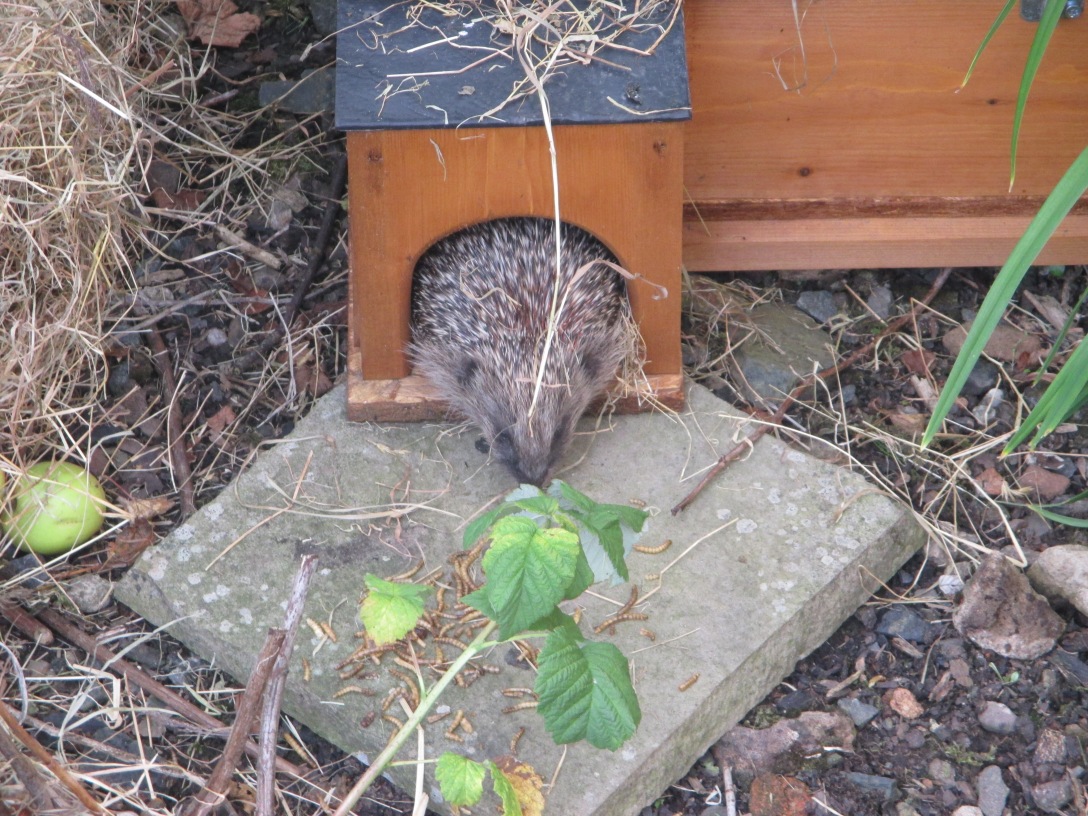








 Diabetes Diet