

|
The best diet for optimal blood sugar control & health
|

As reported in Naturally Healthy News Issue 24
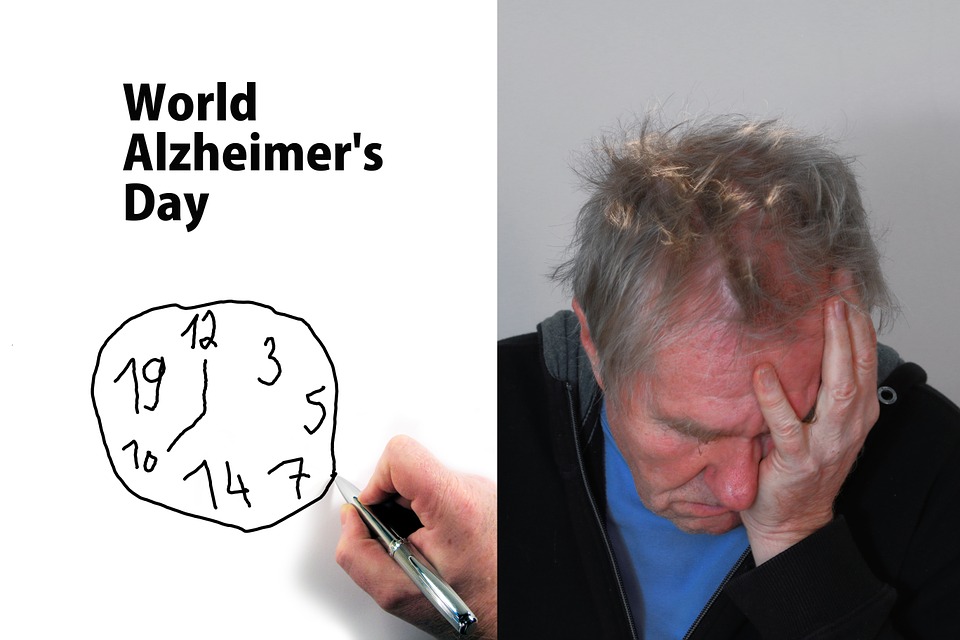
Eating a diet that’s rich in carbohydrates – sweets, soft drinks, bread, pasta and potatoes- is a direct cause of mild dementia and memory loss as we get older. Starch and sugar cause cognitive impairment.
A diet that is high in fats and protein is far less likely to cause mental decline, say Mayo Clinic researchers.
They have found that carbohydrates interfere with the body’s ability to metabolise glucose and insulin which are needed to feed the brain.
The carbohydrate link was found when researchers analysed the lifestyles and diets of 937 people aged 70-89 years. They found that those who ate the most carbohydrates were 3.6 times more likely to show mild cognitive decline, including problems with memory, language, thinking and judgement.
Those who ate fats were 42% less likely to suffer cognitive decline and those who ate high protein diets had 21% less risk.
( Alzheimers Dis, 2012;32:329-39)
Great recipe for low-carb crackers.

So, can I be frank with you? Getting enough fiber in a low carb keto diet can prove to be a bit challenging at times. Sure, there are supplements you can take to ensure your fiber levels are high enough, but why? If I’m given the option of taking a fiber supplement or a a tasty snack, what do you think I’m going to choose?
This foodie wanted to create a delicious low carb high fiber cracker. I know there are plenty of good recipes out there for low carb crackers, but I not only wanted a delicious cracker, I wanted it to meet my fiber needs too. Can I hear an amen from those who’ve been wanting the same thing?
I must admit that at times I crave regular wheat crackers but a high carb, gluten-loaded cracker is the last thing I need. Which is why I just let…
View original post 603 more words

In part two of Dr Lardinois’ interview for Diabetes in Control we learn more often overlooked points regarding albumin.
 In part 2 of this exclusive interview from AACE 2016, Dr. Claude Lardinois discusses why albumin is a driver of cardiovascular disease.
Steve Freed: I woke up with a nightmare and I said to myself (and it goes to what you’ve been saying) microalbumin in the urine can actually be an indicator for heart disease, diabetes, and kidney failure.
Dr. Lardinois: And congestive heart failure too.
Steve Freed: I was told by a doctor that 10% of the population has some form of kidney issues and that if we prevent one person from going on dialysis, that’s a quarter of a million dollars over their lifetime. Just one person. I said to myself. Well, wait a second, we have microalbumin tests right now. I looked into it and you can perform a microalbumin test with blood, you can also do a dip stick in your office. But there is no FDA approved test for home use to detect microalbumin. Now if you remember, we had colon cancer tests where you put a piece of feces in the mail, and we found all these people and we saved millions and millions of dollars.
Dr. Lardinois: I would say two things: one is, I would discontinue using the term microalbumin. Now the reason I say that is I’ve actually asked students or residents what microalbumin is, and do you know what they think it is? It’s a smaller molecule of albumin. It’s a small albumin molecule. There’s a small albumin and a big albumin. Well, there’s not! It’s just albumin, period.
Steve Freed: So I said to myself, let me investigate this. So I went out and I found overseas a test that’s like a pregnancy test. A plastic container, put two drops of urine in it. If the red line comes up, you’ve got “albumin” in the urine. Obviously if you’re lifting weights, you might have albumin in the urine. If you have a cold, you might have albumin in your urine. So I asked the doctor, he said you know I tried this about 20 years ago, and what they discovered was it was too costly. Well, I found a way to get this thing made for less than a dollar. It has to get FDA approved. My thought is you can send these out and I would send two, maybe even three tests out, and if one was positive, you do another one in a week and if that was positive, you can do another one. If you get two positives then you need to contact your physician and have them do further testing. Because you could be at risk. I know I can’t say that you’re diagnosed. All I can say is you’re at risk and more tests have to be done and you need to contact your physician. Send this out to the self-insured companies that have 10,000 employees, send it out with your tax refund, if the check is no good.
Dr. Lardinois: I’ll share with you, I’ve got a couple of very important things. You said something about nightmares though?
Steve Freed: Well I had a nightmare because of all these people I have to talk to, this doctor and I said a quarter of a million dollars.
Dr. Lardinois: You don’t have diabetes do you?
Steve Freed: No, it’s in my family.
Dr. Lardinois: Because what I tell you is that I tell people that a nightmare or a bad dream is a hypoglycemic reaction. When you said that, I used to do camps for kids and there were kids that would have a 400 blood sugar in the morning and everybody thought they didn’t take their insulin. They had too much insulin and they rebounded. Here’s the issue with albumin…. Albumin in the urine. What do they tell you your albumin in the urine should be? Less than 30. Where did that number come from?
Steve Freed: The albumin test is greater than 20.
Dr. Lardinois: That’s because you have to correct for grams of protein so it actually becomes 30. It’s 20 mg but when you correct for creatinine it’s actually 30. That number of 30 was generated by the nephrologists. What they showed was that if you had less than 30 mg of albumin in your urine, your chances of going onto end stage renal disease was zero, almost zero. If you had between 30 and 300, that’s where they came up with the term microalbumin. It really wasn’t microalbumin, it was just albumin in the 30 to 300 range. You had a small percentage of going into end stage renal disease. If you had more than 300 in your urine, I tell my patients, you better start learning the word nephrologist. Not endocrinologist, because you’re going to do that. But I can tell you, the true value, the goal for albumin in the urine is 7.5 in women and 4 in men.
Steve Freed: You say 4 and 7, what does that mean?
Dr. Lardinois: I’m saying instead of 30 it should be 7.5 for you [Joy], and 4 for you [Steve]. There are studies now, and I will show this data, that once your albumin in the urine is more than 5 mg per gram of creatinine, your mortality starts to go up. When you get to 30, you’ve already doubled your mortality. So you’re twice as likely to die if you have a 30 as a 5, but everybody says it’s normal because you’re less than 30. The other thing they don’t take into account, but I’ve learned from a couple nephrologists here, that they actually are addressing now is you [Steve] versus her, because you have a bigger muscle mass than she does. You’re going to have a seriously lower creatinine because it’s an albumin to creatinine ratio, because you have a bigger creatinine, your numbers actually are going to be lower. But when you correct it for lean body mass, your numbers should be lower, so yours should be 4 and hers is 7.5. But I’m going to do a whole hour on that.
Steve Freed: So what do you think of that? I’ve already got a lab, we’re working on it, we’re putting it together, we’re putting together a business plan to develop this and get it FDA approved.
Dr. Lardinois: I think it would be a great idea, but I’m hoping that the FDA and that societies will stop looking at 30 as the normal.
Steve Freed: Where can I get this information?
Dr. Lardinois: Which information?
Steve Freed: That 30 is not normal.
Dr. Lardinois: I can give you all the information you want. I can send you the talk I gave in Hawaii and it’s going to be similar in December, but obviously I’ve got some new information just in the last couple weeks. I always update my presentations.
Steve Freed: I’d like to transcribe it so I can hand it to the National Kidney Foundation.
Dr. Lardinois: I’ve been very adamant. I’ve not got anywhere with it. Even some of them say, what are you talking about, let’s do a physician paper. I said ok fine, but your blood pressure, lipids, continuous glucose monitoring. Why don’t you actually do one on albumin? In fact I even said I would be happy to even chair it, if you were willing to do it, because I think it’s something that’s really important. The problem with albumin right now, is we’ve never designed any good control studies, so all the data we have is observational. Observational studies, that’s the problem with nutrition. All of them are observational studies, and that’s been flawed. So that’s prevented us. Until the FDA will accept albumin as a legitimate marker, and say, ok, we must get below 7.5 in you, we must get below 4 in you, let’s see what happens? I’ll guarantee you, I’m from Nevada but I don’t spend money at the casinos, but I would [spend] some serious money on that. I’ll bet you, I’ll bet $25,000 that if you did a clinical study and you got it below 7.5 in women and 4 in men, you would save a lot of lives.
Steve Freed: That’s going to take time to show.
Dr. Lardinois: Exactly, but they’ve got studies where they’ve done it, but they didn’t want it. It wasn’t part of the end point. But they’ve got studies like Life study which shows normal albuminuria and the death rates up 200% with a “normal” albuminuria. I’ll be happy to send you that.
Diabetes in Control will continue to provide updates as more information becomes available.
Claude K. Lardinois, M.D., FACP, FACE, MACN, is a professor of medicine at the University of Nevada School of Medicine and a member of the graduate faculty for Nevada Studies in Nutrition at the University of Nevada, Reno.
Portions of this interview transcript have been edited for brevity and clarity.

What To Cook In January | jovinacooksitalian

This is a hearty entree and only needs one vegetable as a side. flounder comes in large sizes here on the gulf and mine weighed 14 oz. Substitute an equal amount of smaller fillets. If you can’t get flounder this recipe works well with any flat white fishfillet eg sole.
For 2-3
Ingredients
Crab Filling
1 tablespoon each of minced onion, celery and bell pepper
2 tablespoons mayonnaise
1 tablespoon Dijon mustard
¼ teaspoon seafood seasoning (Old Bay)
1/2 pound lump crab meat
Flounder
12-14 oz flounder fillet or fillets
Paprika
Chopped fresh parsley
Directions
In a small bowl, combine all the filling ingredients, except the crab. Then, gently fold in the crab. Place the flounder in a baking dish coated with olive oil.

Spoon the crab mixture evenly over the fillet or fillets. Sprinkle with paprika and parsley.
Bake at 400°F for 20-24 minutes or until the fish is cooked through.

Warning: this blog contains some details squeamish readers might find unpleasant…
A couple of weeks I blogged about my cat’s diet. Slightly off-topic I admit, but knowing how fond the internet is of cats, I thought regular readers might forgive me.
I’ve been experimenting with feeding my podgy puss a raw food diet to a) slim him down, and b) improve his health, specifically his digestion. My cat is sick after eating a lot. The general household rule is that whoever discovers the pile of puke wherever it lurks clears it up. My husband sometimes claims he only spotted it just before he left for work. Hmm…
The raw food diet for cats is rather like the low-carb diet we propose for people with diabetes. Admittedly, it doesn’t include mayonnaise, cheese or double cream and other such goodies, but it’s made up of unprocessed food and is very low in carbohydrates because it doesn’t include kibble, a product bulked up with grains.
Experts warn that patience and persistence are necessary for the transition. As Sandra, a reader of this blog commented, it’s a bit harder to be persistent when you’re at home with your cat all day. My moggie has trained me very well. He knows I’m a soft touch. A little pitiful meowing, or staring pointedly at the cupboard where the cat food is kept is hard to resist.
I can’t interest him in raw bones at all. I bought a box of them from Asda and even chopped them up for him. (Little aside, if you want to feel like a proper carnivore, cut bones up.) Nothing doing.
He refused to touch liver too, apart from the first time I put it down. Again, I’ve read that cats are very fussy about the freshness of meat. Liver goes off so fast, I think it would need to be fresh out of the animal for him to eat it. Years ago, my dad used to shoot rabbits, and he’d give them to the farm cats. He’d take the back legs and rip them apart down the middle, and the cats would dive into them with tremendous enthusiasm. You don’t get fresher than that, but it’s not something that is practical for me to do. I’m not keen on the idea either!
I’ve had the most success with raw mince and fresh, diced beef. As the diced meat is a bit harder to eat quickly, I prefer giving that than mince. The raw diet hasn’t stopped my cat throwing up, and he often throws up if he eats too fast. What’s worse? Clearing up regurgitated raw meat or cat food? Hard to tell.
What I have noticed is that I think he isn’t whining as much. The constant whinging for food I had put down to hunger because of poor quality nutrition and/or his bulimic tendencies seems to have eased off a bit. Is he more energetic? I don’t know. Freddie is an old-ish cat, as he is coming up for ten years old this year. He still sleeps a lot, but he also goes outside and jumps up and down on everything.
(Hygiene freaks look away now—yes, everything including the kitchen units and the dining table.)
I’m not feeding him an entirely raw food diet. It is expensive, and as he isn’t eating a lot of the components that make up the ideal raw food diet for cats, I worry that he is missing out on certain nutrients, so I’ve kept in the kibble just to be on the safe side. I think asking my sister-in-law to feed him raw food while we are on holiday would be taking favour-asking too far.
As for his weight… ah. It’s either gone up or stayed the same. The last time he was at the vet’s (October), he weighed 6kg. We weighed him a few times after that and his weight went down to 5.7kg. Now, it’s 6kg again. Argh! I suspect he gets fed elsewhere. Freddie’s a bold boy. He happily wanders into other people’s houses. There are plenty of cats in my neighbourhood, so he’s probably helping himself to food. What can I do, apart from attaching a tag to his collar – “PLEASE DON’T FEED ME”?!
The raw food diet hasn’t achieved what I wanted it to do – better digestion and a lighter-weight cat. That said, I’ll probably keep up the half raw/half cat food diet. I don’t know if I’ve given it enough time to work. I should start weighing out what I’m giving him to make sure it isn’t too much.
Wish me luck!

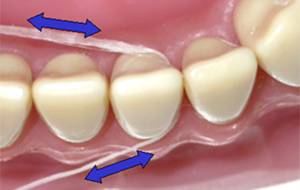
Researchers in the Athlone Institute of Technology in Dublin Ireland have been researching the effects on coconut oil on oral health. They have found that coconut oil kills most bacteria in the mouth and importantly the ones that cause tooth decay. The oil is also effective against Candida Albicans that causes thrush.
The team think that it should be added to commercial toothpastes. Indeed there are some makes available. You can also make it yourself. One recipe has coconut oil, baking soda and peppermint oil.
As poor dental health, gingivitis and thrush do affect diabetics more severely than many people perhaps this new finding can help.
(Reported in Naturally Healthy Issue 24 www/ait.ie/aboutaitandathlone/newsevents/pressreleases/2012pressreleases/title-16701-en.html)
 Omega 3 fatty acids may help in the treatment of type 1 diabetes, according to a recent article in the news.
Medical News Today reported that new research published in The Journal of Clinical Investigation showed Omega 3s reduced the auto-immune responses typical of type 1 diabetes, and that supplementation could treat and even reverse autoimmunity in type 1 diabetes.
Researchers, led by Allan Zhao at the Guangdong University of Technology, China, added Omega 3 fatty acids to the diet of non-obese mice with type 1 diabetes. They also increased the levels of Omega 3s in the mice through genetic modification.
The mice were tested every three months for glucose and insulin tolerance. The examined the pancreas of the mice for insulitis—an infiltration of lymphocytes in the islets of the pancreas, a phenomenon typical of type 1 diabetes. They collected blood from the mice and measured their levels of serum insulin.
The study found that adding Omega 3s to the diet significantly improved the metabolism o glucose and decreased the incidence of type 1 diabetes in the mice.
There was a decrease in pro-inflammatory cell-signalling protein and a considerable drop in insulitis. Zhao and his team also noticed signs of beta cell regeneration in mice that had been treated with Omega 3s.
Supplementation AND genetic therapy normalised blood sugars and insulin levels for a minimum of 182 days.
The researchers concluded that their observations “may offer clinical guidance” to people who were at the early onstage of type 1 diabetes*, or who have consistently sound management of their blood glucose levels.
There are a lot of stages from animal tests to prescribed treatment for humans. In the meantime, can we recommend adding in plenty of oily fish to your diet? It won’t do any harm. Here are some of our favourite fishy recipes:
If you buy grass-fed beef, and eggs from free-range hens that are fed a diet high in Omega 3s, you can get your nutrients that way too.
*Sigh. It’s always the newbies, isn’t it?!

This is a two part interview with Professor of Internal Medicine Dr Claude Lardinois given to Diabetes in Control. We learn new things from him that are not emphasised enough in the medical community.
Continued smoking is THE factor that causes the most amputations in diabetics.
Feet should be examined EVERY time a diabetic sees a health care professional.
Diabetes = cardiovascular disease due to insulin resistance + high blood sugars
Apart from blood pressure and cholesterol, urinary albumin and genetic tests can help individualise the advice and treatment that is given to patients.
P E N T A D is a memory aid for doctors when they see a diabetic: protein in the urine, eyes, e, necklace, toes, A1C, document.
The Impact of Genetics in Cardiovascular Disease
In part 1 of this exclusive interview from AACE 2016, Dr. Claude Lardinois discusses amputations and SGLT-2s, and genetic risk factors for cardiovascular issues in diabetes patients.
I think smoking is a huge factor in amputations. In fact, I personally think that in my practice anyway, 90% of the patients that have amputations are the ones that continue to smoke.
Joy Pape: So, how do you teach your patients about foot care and preventing amputations?
Dr. Lardinois: We have a policy that you have to get your shoes and socks off immediately when you get in the room.So we inspect the feet every time we see the patients. When I have patients that are smokers, I look at their leg and I’m checking for sensory and that and I say, do you like your legs?
Well of course, Dr. Lardinois, I like my legs. Well if you keep smoking, you’re not going to have your legs. I say, do you know what a black and decker is? Well yeah. We might as well do a black and decker right now. Because that’s what’s going to end up happening if you keep smoking.
I’m amazed because I’ve actually had patients that have quit smoking. I just saw one of my patients not too long ago, and the nurse said your black and decker’s here today. She laughed, she said you got me to quit smoking, because you emphasized to me the importance of my legs.
Joy Pape: This could be very interesting. You might come up with some very interesting ways of getting people motivated to manage their diabetes better. Something else we were talking about earlier [was] about cardiovascular disease. Or just managing diabetes and the topic of genetics. Tell me more.
Dr. Lardinois: Let’s talk about diabetes and cardiovascular disease, because if you look at patients with diabetes and patients without diabetes, the only difference is one has an elevated blood sugar, the other does not.
So, intuitively, the thought process was, particularly from the ADA, is if you lower the glucose to normal, your heart disease will go away. Doesn’t happen. You still have heart disease, because it turns out it’s not the glucose, it’s that you have insulin resistance.
I’ve been accused by my colleagues that I’m really not an endocrinologist, I’m a cardiologist disguised as an endocrinologist, because I really don’t get too hung up about the blood sugar. I don’t have to have it 6.5 or 7. I tell my patients, you are going to die of heart disease.
So what are the factors that make the most difference in cardiovascular disease?
Blood pressure. I’m a very big believer in blood pressure control. Lower is better. Again, you have to be careful in some elderly patients.
But cholesterol is very important, measuring albumin in your urine is very important. So these are all factors, but even after we do that, we’re still evaluating people as a group, not as an individual. That’s where the genetics come in.
There are certain genetic tests that everybody should have done, whether you have diabetes or not. Some of those are Apo-E [tests].
Apo-E is a very important gene that really determines what type of nutritional recommendations you’re going to make for your patient. If you’re a 2-2 or a 2-3, or if you’re a 3-3 or a 3-4, it’s going to vary on what the nutritional recommendations are.
Another thing is, we always talk about alcohol as being good for you — modest alcohol consumption. If you’re an Apo-E 4 and 25% of the population has either 3-4 or 4-4, alcohol actually makes your cholesterol worse and it increases cancer, particularly breast cancer in women. Some of my colleagues say I’m not going to measure my Apo-E 4, because I like alcohol. You’re going to tell me I can’t drink anymore. But we have to explain to those patients that they really have to limit their alcohol to one drink a day. So that’s very important nutritional information, right from the start, that you would never get by just following the standard guidelines.
There’s other genetic markers. There’s actually a statin marker — a lot of controversy behind it. But I stand firm that there’s a certain gene that we have called KIF6, and if you don’t have the variant, the studies with two of the cholesterol drugs weren’t very compelling, that they lowered LDL, but they didn’t reduce heart disease. So I tell a lot, if you don’t know what your KIF6 variant is, which most doctors don’t (I know mine), you have to be very discretionary in which statin you prescribe.
Then there’s other genes that you could also look at. One is haptoglobin; haptoglobin is how we carry our oxygen around. It turns out that there’s three different haptoglobins, 1-1, 1-2, and 2-2. Well, patients with type 2 diabetes who have 2-2, have a 45 percent increased cardiovascular event rate.
So again, that’s why I think with cardiology, we have these studies, even if we aggressively treat their lipids, we still have this 30% residual. Well, I don’t think that residual is cholesterol. I think it’s haptoglobin, APO-E, maybe the statin that you’re prescribing; other factors, albumin in the urine.
I think albumin in the urine is a powerful risk factor for heart disease. But unfortunately the FDA doesn’t see it as a good primary endpoint. I think until they do that, and actually establish a primary endpoint for that, we will never get a valuable answer. There’s no question about albumin in the urine. People think it’s just the kidney, albumin in the urine is the kidney telling you, you have endothelial disease. That you are leaking albumin throughout your entire body. That albumin drives cardiovascular disease. Big time.
Joy Pape: So, do you refer your patients for genetic counseling? If this is the way you practice, how do you learn more about their profile?
Dr. Lardinois: Right now it’s been kind of challenging. The diabetes [practice] I was in, they were not all that receptive. Change is always hard to do. So I actually worked with two of my former medical students, who are now practicing physicians in Reno. There’s a concierge service. I helped them set-up a genetic thing, so if patients do want to come in, they pay cash now. It’s only $1000 for the genetic testing. You do a treadmill which is $1100, and that doesn’t tell me anything. I think treadmills are kind of useless. I went 16 minutes on the treadmill, and I’ve got heart disease. I went 16 minutes. Well they’d tell me I’m just fine. Well, I’d be dead now. That’s what happened to the guy on Meet the Press. He had a treadmill [test] and three days later he was dead. What was his name? I’ll think of it in a second. [ed. note: Tim Russert.] Right now, it’s been hard to get it implemented, and I’m moving to a different position in a different hospital and maybe I can get involved with a cardiologist and get this up and running. I do think there’s basic genetic testing that should be implemented in the management of everybody with any disease, and it’s not that expensive.
Joy Pape: So we talk about patient education and people making changes. Behavior change. So how did it work? How does it work if your patients find they have this certain gene and they need to cut down on their drinking? Have you had any experience with that?
Dr. Lardinois: Oh yeah, some of them aren’t really happy with that. But I say, I provide you a service. I’m not your mom or your dad and I provide you a service and I say based on this information, you should reduce your alcohol consumption to one drink a week.
Joy Pape: Is it effective?
Dr. Lardinois: In some people it is. I think 70% of patients will follow along with you, but I think 30% no matter what you do [won’t]. There’s patients that I say [to], I feel sorry, I feel bad today. They say why? You came in, I gave you these recommendations three months ago, you didn’t do any of them. Your A1C, your blood pressure, your cholesterol, your kidney test is all the same. I’m going to have to charge you $75 for this. We live in Nevada, you could go to a nice big buffet with your whole family for $75. So I feel kind of bad, I’m taking their money away because why did they even bother to come? They didn’t do anything.
Joy Pape: Well, I’m sure glad you came today. I think it’s obvious why you got this award that you’ll be getting tonight. So congratulations and thank you.
Dr. Lardinois: Just one other point I’d like to share that I think is important. One of the things I try to do is, I work with the VA to try to set up ways to get doctors to better manage their [patients’] diabetes. I actually came up with this thing called PENTAD. I published it in Archives of Family Medicine. It was very short. Just a little card, a pocket card. The P stood for Proteinuria, which would be albumin. The E stood for Eyes. Make sure you have your patients get their eye exam. N was necklace or bracelet. Make sure they have a bracelet. T was toes, check the toes. The A was A1C. And then you say well it’s PENTAD, you have the D, so what’s the D? I said that you Document in the chart that you did the PENTA. I was very successful. It worked very well. I was going through some old papers of mine and I came up and had a few of my PENTAD cards left that I did. I did camps for kids with diabetes for 18 years and I think Lilly or somebody nicely made these PENTAD cards, so we just gave them out to everybody.
Joy Pape: It’s great to have those memory tags, something to remember.
Dr. Lardinois: We actually had a stamp. We had a stamp at the VA where we just stamped the PENTAD in and you could just write it in. That improved compliance tremendously, because it’s a reminder.
Joy Pape: I know it’s something I’ll use. Thank you so much.

Cooking The Italian Provinces – Rome | jovinacooksitalian

Serves 4
Ingredients
Directions
In a heavy-bottom saucepot, heat the olive oil.
Season the oxtail pieces with salt, browning each side of the pieces. Remove; set aside.
Add the onions and a pinch of salt to the pan. Sweat the onions until they are translucent, about 5 minutes.
Add the carrots, cooking until tender, about 5 minutes. Add the celery and garlic. Cook 3 minutes more.
Add the oxtail pieces back to the pot. Deglaze with the wine over high heat, cooking about 2 minutes.
Add the tomatoes; bring to a boil. Continue boiling to cook off some of the tomato water.
Add the beef stock just to cover the meat, then the pepper and cloves.
Bring to a boil. Once it boils, lower the heat to a simmer, cover with a circle of parchment paper, and cook for 4 hours (stirring occasionally).
Once the oxtail is tender, remove the pieces to a serving dish. Cover with aluminum foil; set aside.
Strain the sauce, pressing down on the vegetables to extract all the juices.
Skim all the fat off the top, and pour into a smaller saucepan. Bring to a boil and cook, reducing by 1/4.
Taste for seasoning. Pour the sauce over the oxtail and serve

 Diabetes Diet