Mayo Clinic Statin decision aid

Mayo clinic statin decision aid


https://statindecisionaid.mayoclinic.org/index.php/statin/


The Mayo Clinic have a free online decision aid which will graphically represent the difference in heart attack risk that you face over the next ten years. You can choose three different calculation algorithms. Each varies a bit regarding factors that they consider important. The units section can transfer according to what system your lab uses for cholesterol results. In the UK they use the mmol/mol and in the US it is mg/dl.

Like other decision aids it has no facility to calculate the possible downside to statin use.

I put my measurements in and got a 3% risk on the AHA figures which would drop to a 2% risk on low dose statins. High dose statins would make no difference to this. Using the Framingham criteria my risk came in at 8% dropping to 6% on low dose statins. The Reynolds criteria uses high sensitivity CRP which we don’t measure in the UK. 


Susan Pierce Thompson: How to be happy, thin and free

the-3-huge-mistakes-report

This March, Susan’s first book, Bright Line Eating: The Science of Living Happy, Thin & Free, arrived in bookstores.

Here’s what she had to say:

Susan, in Bright Line Eating, you argue that the reason so many people struggle with their weight is that the human brain blocks weight loss. How so?

The human brain was designed to keep us stable in a right-sized body. But modern processed foods and the modern pace of life have hijacked various systems in the brain, and the result is that now, in the present-day environment, the brain does indeed block weight loss.

Here’s how: willpower is a finite resource in the brain. And it doesn’t just help us resist temptations or persevere in the face of challenges – it helps us do all kinds of things, like make decisions (e.g., checking email, going shopping), regulate our emotions (e.g., having kids, being in traffic), and regulate our task performance (e.g., working in Excel, giving a presentation).

After a brief period of time doing any of these things, if we start to think it might be a good time to get something to eat, we’re likely to fall into the Willpower Gap.

This is why so many of us order out for pizza or take-out on a Friday night after a long week, irrespective of how sincere we were when we pledged that this time we would stick with our diet until we lost all our excess weight.

In our modern society, the Willpower Gap is waiting for us, nearly always. Most plans of eating implicitly ask you to rely on your willpower to stick with the plan over the long term. The truth about your brain is that that will never work. You need a plan of eating that assumes you have no willpower at all (because, at any given moment, you may not), and works anyway.

To avoid relying on willpower, you suggest people adopt 4 “bright lines” into their eating habits. What are they?

Bright lines are clear, unambiguous boundaries that you don’t cross, no matter what–similar to how a smoker who wants to quit and get healthy throws up a bright line for cigarettes. The four bright lines I recommend are:

  1. No added sugar or artificial sweeteners
  2. No flour of any kind
  3. Eating only at meals–no snacking or grazing
  4. Bounding quantities of food, both to make sure you get enough vegetables, and to make sure you don’t eat too much of everything else.

What’s one thing everyone reading this can do right now to improve their chances of maintaining a healthy weight?

To really bridge the Willpower Gap, start writing down what you’re going to eat for the day in a little journal, ideally right after dinner the night before. Do it religiously until it becomes a habit. The next day, your job is to eat only and exactly that, no matter what. Make sure there’s no sugar or flour in your food plan for the day, and, ideally, stick with three meals a day, because three meals are much more automatizable than five or six.

Within a few weeks these habits will be automatic, and eating the right things, and not the wrong things, will start to be as easy as brushing your teeth.


(From original interview by Ron Friedman)

Sheri Colberg: Things that can unbalance your blood sugars

girl with a cold

Physical Activity Is Only One Part of the Equation


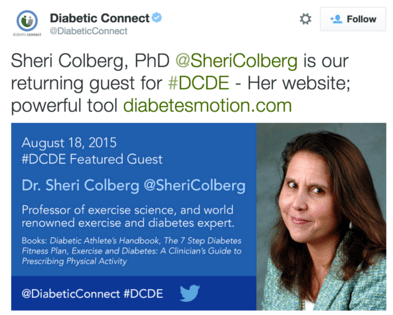
By Sheri Colberg, Ph.D.


Although a single bout of exercise usually improves insulin action for 2 to 72 hours afterward, the effect also depends on how much you eat before, during, and after working out, how you manage your diabetes medications (particularly insulin), your prior control over your blood glucose levels, how much sleep you get, whether you’re stressed out or not, etc. As you can imagine, it’s not easy to manage and predict all of the possible effects of these various things.

Sometimes it feels like stress can override any or all benefits you were supposed to receive from being active. Getting upset, angry, anxious, frustrated, sad, or depressed can basically erase your improvements in insulin action, although on the flip side, working out can also lower many of those negative feelings if you exercise after they occur. Not only is exercise an acute mood enhancer, but it also allows you to get tired enough that you don’t have as much energy to devote to sustaining your negative emotions.

Having a nasty cold last week also reminded me that simply being sick—even moderately so—can really wreak havoc on blood glucose levels. For me, exercising doing anything other than moderate walking is hard when I’m sick, and you really shouldn’t exercise much or intensely when you’re sick anyway or you can make your illness worse.

Exercise acutely lowers the concentration of illness-fighting immune cells in the bloodstream, and simply overtraining can increase your risk of getting colds and the flu. If you normally use exercise to manage your blood glucose levels more effectively and you’re deprived of doing that while sick, you can often find yourself dealing with not just one thing (illness) that can raise your blood glucose, but two at the same time (lack of exercise being the second). On top of that, you may not be sleeping as well as normal because of being sick, and lack of sleep raises insulin resistance as well. Nothing like a simple cold to throw your whole diabetes regimen out of whack!

It’s also so incredibly easy to override the effects of your last workout with food. You may not want to focus on how much/long you have to exercise to expend enough calories to equal what you eat on a daily basis (it’s a whole lot!), but suffice it to say that most people overestimate the impact of their exercise and underestimate the calorie content of the foods. Most people have to walk at least a mile to burn off close to 100 calories. A modest handful of nuts has closer to 200 calories, and get a burger at a fast-food restaurant and you’ll probably take in over 1,000 calories. Just keep in mind that food can easily have an even greater impact on your blood glucose levels unless you’re one of those avid exercisers that exceeds the daily recommended amounts (30 minutes of moderate activity) by exercising hours a day.

If you already exercise regularly, sometimes you fail to get the same glucose lowering effect as someone who is just starting out with training. With training, your body becomes adapted to the activity, which can make fat use higher and blood glucose use lower during the same activity. So, what used to really feel like it revved up your insulin action afterwards may not do much for you anymore, and when you don’t do your usual activities, you pay the price of having to deal with rising blood glucose levels unless you up your medications or cut back your food (or both).

It may sound like I’m trying to talk you out of exercising regularly to help with diabetes management, but really nothing could be farther from the truth. I’m simply warning you that life can throw many different monkey wrenches into your usual responses, so go easy on yourself when you don’t get it right every time. Lose the guilt, and just manage your blood glucose levels the best you can on any given day and stay active for your overall health.

In addition to my educational web site, Diabetes Motion (www.diabetesmotion.com), I also recently founded an academy for fitness and other professionals seeking continuing education enabling them to effectively work with people with diabetes and exercise: Diabetes Motion Academy, accessible at www.dmacademy.com. Please visit those sites and my personal one (www.shericolberg.com) for more useful information about being active with diabetes.

Eric Barker: How to make friends as an adult

friendship gibran

 Originally posted in Welcome to the Barking Up The Wrong Tree weekly update for February 19th, 2017.

This Is How To Make Friends As An Adult: 5 Secrets Backed By Research

Click here to read the post on the blog or keep scrolling to read in-email.

When you were a kid it was a lot easier. In college you almost had to be trying not to make friends. But then you’re an adult. You get busy with work. Your friends get busy with work. People get married. Have kids. And pretty soon being “close” means a text message twice a year.

You’re not alone… Or, actually, the whole point of this is you really may be alone. But you’re not alone in being alone. These days we’re all alone together. In 1985 most people said they had 3 close friends. In 2004 the most common number was zero.

Via Social: Why Our Brains Are Wired to Connect:

In a survey given in 1985, people were asked to list their friends in response to the question “Over the last six months, who are the people with whom you discussed matters important to you?” The most common number of friends listed was three; 59 percent of respondents listed three or more friends fitting this description. The same survey was given again in 2004. This time the most common number of friends was zero. And only 37 percent of respondents listed three or more friends. Back in 1985, only 10 percent indicated that they had zero confidants. In 2004, this number skyrocketed to 25 percent. One out of every four of us is walking around with no one to share our lives with.
Friends are important. Nobody would dispute that. But I doubt you know how very important they are.

So let’s see just how critical friends can be — and the scientifically backed ways to get more of them in your life…

Loneliness Is A Killer

When people are dying, what do they regret the most? Coming in at #4 is: “I wish I had stayed in touch with my friends.”

And neglecting your friends can make those deathbed regrets come a lot sooner than you’d like. When I spoke to Carlin Flora, author of Friendfluence: The Surprising Ways Friends Make Us Who We Are, she told me:

Julianne Holt-Lunstad did a meta-analysis of social support and health outcomes and found that not having enough friends or having a weak social circle is the same risk factor as smoking 15 cigarettes a day.
Maybe your grandparents lived to 100 and you take good care of yourself. You’re healthy. But if you want those years to be full of smiles, you need to invest in friendship. 70% of your happiness comes from relationships.

Via The 100 Simple Secrets of Happy People:

Contrary to the belief that happiness is hard to explain, or that it depends on having great wealth, researchers have identified the core factors in a happy life. The primary components are number of friends, closeness of friends, closeness of family, and relationships with co-workers and neighbors. Together these features explain about 70 percent of personal happiness. – Murray and Peacock 1996
The Grant Study at Harvard has followed a group of men for their entire lives. The guy who led the study for a few decades, George Vaillant, was asked, “What have you learned from the Grant Study men?” Vaillant’s response?

That the only thing that really matters in life are your relationships to other people.
So friendships are really really really important. But maybe you’re not worried. Maybe you have lots of friends. Guess what?

In seven years, half of your close friends won’t be close to you anymore.

Via Friendfluence: The Surprising Ways Friends Make Us Who We Are:

A study by a Dutch sociologist who tracked about a thousand people of all ages found that on average, we lose half of our close network members every seven years. To think that half of the people currently on your “most dialed” list will fade out of your life in less than a decade is frightening indeed.
Ouch. Scared yet? I am.

(To learn an FBI behavior expert’s tips for getting people to like you, click here.)

So what do we do? (No, going back to college is not the answer.) How do we make new friends as adults?

1) The New Starts With The Old

The first step to making new friends is… don’t. Instead, reconnect with old friends:

These findings suggest that dormant relationships – often overlooked or underutilized – can be a valuable source of knowledge and social capital.
Doing this is easy, it’s not scary, they’re people you already have history with, and it doesn’t take a lot of time or work to get to know them. Go to Facebook or LinkedIn for ideas and then send some texts. Boom. You already have more friends.

If you’re going to be strategic, who should your prioritize? You probably met a disproportionate number of your friends through just a handful of people. Those are your “superconnectors.”

Rekindle those relationships. And then ask them if there’s anyone you should meet. Next time you get together, see if that new person can come along. Not. Hard. At. All.

(To learn how to deal with a narcissist, click here.)

But maybe this feels a little awkward. Maybe your friendship muscles have atrophied. Maybe you weren’t great at making friends in the first place. So what really makes people “click”?

2) Listen, Seek Similarity, and Celebrate

Clicking with people is a lot less about you and a lot more about focusing on them. Don’t be interesting. Be interested. And what are the best ways to do that?

Listen, Seek Similarity, and Celebrate.

Studies show being likable can be as easy as listening to people and asking them to tell you more.

And mountains of research show similarity is critical. So when they mention something you have in common, point it out.

Finally, celebrate the positive. When someone talks about the good things in their life, be enthusiastic and encouraging.

Via The Myths of Happiness:

The surprising finding is that the closest, most intimate, and most trusting relationships appear to be distinguished not by how the partners respond to each other’s disappointments, losses, and reversals but how they react to good news.
(To learn more about how to be someone people love to talk to, click here.)

Alright, your superconnectors are making introductions and you’re clicking. But how do you get close to these new people? We’ve all met people we thought were cool… but just didn’t know how to take it to the next level and go from acquaintance to friend. It’s simple, but not necessarily easy…

3) Be Vulnerable

Open up a bit. Don’t go full TMI, but make yourself a little bit vulnerable. Nobody becomes besties by only discussing the weather.

Close friends are what leads to personal discussions. But personal discussions are also what leads to close friends.

Via Click: The Magic of Instant Connections:

Allowing yourself to be vulnerable helps the other person to trust you, precisely because you are putting yourself at emotional, psychological, or physical risk. Other people tend to react by being more open and vulnerable themselves. The fact that both of you are letting down your guard helps to lay the groundwork for a faster, closer personal connection.
Close friends have a good “if-then profile” of each other. Once you have an idea of “if” someone was in situation X, “then” they would display behavior Y, that means you’re really starting to understand them. And this leads to good friendships:

People who had more knowledge of their friend’s if-then profile of triggers had better relationships. They had less conflict with the friend and less frustration with the relationship.
How many close friends do you need? If we go by the science, you want to aim for at least five.

Via Finding Flow: The Psychology of Engagement with Everyday Life:

National surveys find that when someone claims to have five or more friends with whom they can discuss important problems, they are 60 percent more likely to say that they are ‘very happy.’
(To learn the lazy way to an awesome life, click here.)

So you have new friends. Awesome. Now how do you not screw this up?

4) Don’t Be A Stranger

First and foremost: make the time. What’s the most common thing friends fight about? Time commitments.

Via Friendfluence: The Surprising Ways Friends Make Us Who We Are:

Daniel Hruschka reviewed studies on the causes of conflict in friendship and found that the most common friendship fights boil down to time commitments. Spending time with someone is a sure indicator that you value him; no one likes to feel undervalued.
You need to keep in touch. (Remember: not keeping in touch is how you got into this problem in the first place.)

If you want to stay close friends with someone, how often do you need to check in? Research says at least every two weeks.

(To learn the four rituals neuroscience says will make you happy, click here.)

So even if you need to set a reminder on your calendar, check in every two weeks. But, actually, there’s a better way to make sure you don’t forget…

5) Start A Group

Denmark has the happiest people in the world. (I’m guessing Hamlet was an exception.) Why are Danes so happy? One reason is that 92% of them are members of some kind of social group.

Via Engineering Happiness: A New Approach for Building a Joyful Life:

The sociologist Ruut Veenhoven and his team have collected happiness data from ninety-one countries, representing two-thirds of the world’s population. He has concluded that Denmark is home to the happiest people in the world, with Switzerland close behind… Interestingly enough, one of the more detailed points of the research found that 92 percent of the people in Denmark are members of some sort of group, ranging from sports to cultural interests. To avoid loneliness, we must seek active social lives, maintain friendships, and enjoy stable relationships.
And what’s the best way to make sure you’re in a group? Start one. That makes it a lot easier to stay in touch and a lot easier to manage those big 5 friendships with 20% of the effort.

A weekly lunch. A monthly sewing circle. A quarterly movie night. Whatever works. Friends bring friends and suddenly it’s not so hard to meet cool new people. And who does everyone have to thank for this? You.

And make the effort to keep that group solid for everyone. Many studies show older people are happier. What’s one of the reasons? They prune the jerks out of their social circles:

Other studies have discovered that as people age, they seek out situations that will lift their moods — for instance, pruning social circles of friends or acquaintances who might bring them down.
(To learn the 6 rituals ancient wisdom says will make you happy, click here.)

Alright, popular kid, we’ve learned a lot. Let’s round it up and find out how to keep your new friendships alive over the long haul…

Sum Up

Here’s how to make friends as an adult:

  • The new starts with the old: Touch base with old friends and leverage your superconnectors.
  • Listen, seek similarity and celebrate: Don’t be interesting. Be interested.
  • Be vulnerable: Open up a bit. Form an “if-then” profile.
  • Don’t be a stranger: Check in every two weeks, minimum.
  • Start a group: Things that are habits get done. So start a group habit.

What does Carlin Flora, author of Friendfluence, say is the number one tip for keeping friendships alive?

Reach out to your good friends and tell them how much they mean to you. It’s just not something we’re accustomed to doing. It’ll make you feel great, it’ll make them feel great and it will strengthen the bond between you. Be more giving to the friends you already have. People in romantic relationships always celebrate anniversaries, yet you might have a friend for 15 years and you’ve probably never gone out to dinner and raised a glass to that. We need to cherish our friendships more.
Okay, you’re done reading. Time to start doing. Reach out to a friend right now. Send them this post and let’em know you want to get together.

Listen to what they’ve been up to. Celebrate their good news. Offer to help them out with something.

After all, that’s what friends are for.

Please share this. (It’s a very friendly thing to do.) Thank you!


Thanks for reading!
Eric
PS: If a friend forwarded this to you, you can sign up to get the weekly email yourself here.

What’s new in the prevention of the microvascular complications of diabetes?

Apart from blood sugar control what’s new in the prevention of the microvascular complications of diabetes?

 eye-eyelashes-face-woman-63320

Retinopathy

At diagnosis, 10.5% of type two diabetics already have retinopathy. New research has shown that severe proliferative diabetic neuropathy can be predicted by measuring the size of retinal blood vessels, but this is still being developed in research centres. It could become a part of the usual screening process in the future.

Lowering blood pressure in those who are hypertensive by at least 10 points, can reduce the onset of retinopathy but does not affect the rate at which it develops into proliferative retinopathy. What does seem to work is the use of oral Fenofibrate.

Laser photocoagulation reduces the rate of progression of proliferative retinopathy and the onset of severe visual loss. Direct injection of drugs that inhibit Vascular Endothelial Growth Factor such as pegaptanib, ranibizumab, and bevacizumab also help but they are less freely available, due to cost.

dialysis

Nephropathy

NICE recommend spot urinary albumin to the creatinine ratio and glomerular filtration rate on diagnosis and then yearly. If the rate is raised on 2 out of 3 samples within six months then nephropathy is confirmed and the severity graded.

Blood pressure targets are 140/90 for those without nephropathy and 130/80 for those that have it. Some people may benefit from lower blood pressure targets of 120 systolic such as Asian, Hispanic and African American populations.

Both ACE inhibitors and Sartans (ARB) reduce nephropathy and ACE inhibitors also improve all- cause mortality.  These drugs are the first choice for most diabetics when prescribing anti-hypertensives.

Early referral to a nephrologist showed an improvement in interventions and mortality rates. There was also a small improvement in kidney function when the new drug Dapagliflozin was used.

foot-1199763_960_720.jpg

Neuropathy

There are other causes of neuropathy that may need to be considered before diabetic neuropathy is diagnosed. These are: alcohol, chemotherapy, vitamin B12 deficiency, hypothyroidism, renal disease, paraneoplastic syndromes due to eg multiple myeloma and bronchogenic carcinoma, HIV infection, chronic inflammatory demyelinating neuropathy, inherited neuropathies and vasculitis.

A new Japanese drug Epalrestat improved diabetic neuropathy but did not improve autonomic neuropathy.

There was insufficient evidence to show that exercise, pulse infrared light therapy, education about foot ulceration and complex interventions such as combining patient education, podiatry care, foot ulceration assessment, motivational coaching to provide self- care, worked or not.


BMJ 4th February 2017 Willy Marcos Valencia and Hermez Florez from Miami Florida.

 BMJ 2017;356:i6505

Planning a pregnancy: the importance of getting slim before you get started

newborn baby

In Europe the World Health Organisation estimate that more than 50% of men and women are overweight or obese and 23% of women are obese.

In a pregnant woman obesity raises her chances of gestational diabetes and pre-eclampsia. She is also more likely to get metabolic syndrome and type two diabetes later in life. The resulting children are more likely to come to harm in utero and at birth and also more likely to become fat children. They are then more likely to develop higher blood pressure and excess weight in early adulthood.

Despite the push to improve the outcome for the babies in utero, lifestyle changes and medical interventions have largely proved unsuccessful.

Women with a BMI over 25 find it more difficult to conceive in the first place and then are more likely to miscarry compared to their slimmer sisters. The miscarriage rate is 1.67. Congenital abnormalities become more common.

The placenta responds to maternal insulin levels. In normal weight women they become 40-50% less sensitive to insulin but this bounces back within days of delivery. Obese women show greater decreases in insulin sensitivity, this affects lipid and amino acid metabolism. African Americans and Southern Asians get these changes at lower body masses than Europeans.

Obese women are more likely to go into labour early. They also may need to be delivered early. They have a higher rate of failed trial of labour, caesarean sections and endometritis and have five times the risk of neonatal injury.

Anaesthetic complications are more common. The Royal College of Obstetrics and Gynaecology recommend that women with a BMI over 40 see an obstetric anaesthetist before going into labour. Epidural failure is more common. The woman may have lower blood pressure and respiratory problems and the baby may have more heart rate decelerations in labour.

Broad spectrum antibiotics are recommended for all caesarean sections. Despite this, overweight women get more post- operative infections. The wounds are also more likely to come apart.

Obese pregnant women are obviously at even more risk.

Babies of obese mothers are usually fatter at birth compared to other babies. Obese mums tend to put on more weight than average during the pregnancy and then find it even harder to lose weight after delivery.

Recent randomised controlled trial  have shown that interventions started after pregnancy have little or no effect. These include increasing the mum’s physical activity and cutting the dietary glycaemic load. These things reduced the weight gained in pregnancy a little but did not affect adverse pregnancy outcomes and the birth of fat babies. Thus there is now a bigger push to intervene before pregnancy.  

Currently between ten and twenty percent of obese women lose weight between pregnancies. This has been found to reduce weight gain in the next pregnancy and also the risk of pre-eclampsia.  Supervised intensive lifestyle interventions can be done, work and are safe, even in breast feeding mothers. Pre-pregnancy classes to get women fit for pregnancy would help improve the outcome for the babies of the future.  The metabolic environment, a mixture of inflammation, insulin resistance, lipotoxicity, and hyperinsulinemia,  can then be optimised prior to conception. After this, it is really too late.


Adapted from Obesity and Pregnancy. Patrick M Catalano and Kartik Shankar from Cleveland Ohio and Little Rock Arkansas Universities.  BMJ 18 February 2017 BMJ 2017;356;j1

Fit to serve: Chocolate coconut cupcakes (nut free)

WordPress.com

Obesity raises the risk of cancer

cancer

Obesity is strongly associated with eleven different cancers.

These are: oesophageal, multiple myeloma, stomach, colon, rectum, biliary tract, pancreas, breast, endometrium, ovary and kidney.  For many cancers there seems to be a dose response.

This was found by Kyrgiou and colleagues by studying over 95 meta-analyses from various sources.

The BMJ reports, “The unavoidable conclusion is that preventing excess adult weight gain can reduce the risk of cancer. Furthermore, emerging evidence suggests that excess body fat in early life also has an adverse effect on the risk of cancer in adulthood. Clinicians, particularly those in primary care, can be a powerful force to lower the burden of obesity related cancers, as well as the many other chronic diseases linked to obesity such as diabetes, heart disease and stroke. The data are clear. The time for action is now.”

As a GP, I don’t really think that I am a “powerful force” that can turn the obesity epidemic round. It is amazing what faith the authors Yikyung Park and Graham Colditz have regarding our abilities.


Adapted from Adiposity and cancer at major anatomical sites BMJ 2017; 356:j477 and BMJ 2017;356:j908

What being frail means

Miss Havisham

Getting older and frailer is something that we are all going to experience unless we die of something else. We are liable to lose weight, particularly muscle mass, tire very easily, have muscle weakness and be unable to perform our usual activities, and we will walk, if at all, much more slowly.

Along with the obvious external signs, our hearts, kidneys, immune system and bones will weaken. We are more likely to become diabetic, get dementia and other neurological disorders, break bones and get cancer. Our senses dull too, with poor vision, hearing and balance problems. Our appetites dull and we will eat less.

In the USA, a quarter of over 65s are considered frail. Other disease processes could be going on as well as simply getting more frail with age.  Poverty, lonliness, poor diet, polypharmacy and cognitive decline make the situation worse.

More than 70% of frail people have two or more chronic diseases. The commonest are hypertension and osteoarthritis. Insulin resistance leads to type two diabetes. The combination makes falls and fractures more likely than people with simple frailty.

Cardiac failure, anaemia, osteoporosis occur. Parkinson’s disease, Alziehmer’s, Vascular Dementia and Depression are several times more common in the frail population. Cancers, infections and a poorer response to vaccination occur.

Drug reactions are more of a problem in this group of people. They have accumulated more diseases and symptoms and thus more drugs, but they also have a lower body mass and poorer kidney and liver function so that drugs accumulate more easily in the system.  Some drugs cause confusion, instability and falls. A study in a geriatric day hospital showed that on average a person was on 15 different medications and that you can expect about nine of these to have the potential for some problem.

Diogenes and Havisham syndrome refers to a situation where an elderly person lives in socially isolated and filthy conditions. They continue to neglect themselves and are resistant to change. This is more common in those suffering from dementia.

Pressure ulcers may occur unless nursing care is of a very high standard.  Elder abuse can sometimes occur when demands on carers exceed what they can provide.

Although a major sign of frailty is weight loss, you can get a condition called sarcopenic obesity. The person still has too much body fat, but the muscle mass is very low. This population is increasing in numbers as the obesity epidemic continues.

The more frail a person is, the less well they come through surgery successfully.

Hypothermia is more likely in frail people, particularly older age groups, women, more chronic disease eg diabetes, social isolation and those who have sustained a hip fracture.

So, not too much to look forward too! I hope this information will help those of you who care for elderly relatives. When we are looking after ourselves, it is important to keep our muscle mass up to reduce sarcopenia and the difficulty mobilising that is a cardinal sign of the problem of normal aging.


Adapted from Frailty Syndrome- Medico legal considerations. Roger W. Byard, University of Adelaide, Australia. Printed in Forensic and Legal Medicine. Volume 30 Pages 34-38. Elselvier.

Teenagers with diabetes need extra support


divorce


Young adults between the ages of 14 and 22 were studied to see how their blood sugars changed from the paediatric diabetic clinic to the adult clinic. In all 126 young people took part. The average hba1c was 9.4% (80mmol/l) before transfer to the adult clinic and decreased by 0.3%  for each of the two years after transfer.

Those with divorced parents had hba1s 1.2% higher (14 mmol/l). Those with mental health conditions or intellectual and social impairment also had higher blood sugar levels.

A third of the patients were admitted to hospital for acute diabetes care.  Hospital admission was more common if there was a low outpatient attendance rate, a high baseline Hba1c level, intellectual and social impairment, mental health conditions or divorced parents.  Researchers concluded that these groups of families needed more support.

Reported in the Independent Diabetes Trust Newsletter March 2017 from an original article in Diabetic Medicine, January 2017).