FreeStyle Glucose Monitoring – an Update

freestyle libre on the Diabetes DietHashtag love the NHS—and the NHS in Scotland if we’re going to be specific.

Off I trotted to the diabetic clinic on Thursday armed with my best persuasion skills. Oh pleasy-weasy dear doctor, may I have a FreeStyle Libre flash glucose monitoring system? One of my arguments was going to be—Hey, you won’t be paying for it for too long. Did you see the recent research that tells me I can expect to knock eighteen years off my life expectation?!*

In the end, my polished debate wasn’t needed. Just as well as I couldn’t sell hot-water bottles to the Inuit. Or ice-cold beer to Australian sun-bathers for that matter. I brought the subject up. The doctor queried the number of blood tests I do per day and voila. I’m on a list. I’ll need to go to an education event and after that, a letter wings its way to my GP recommending she prescribes the sensors.

Sensors

Flash glucose monitoring for those of you who aren’t familiar with it is where you wear a sensor on your body (usually your upper arm) and you can take a reading from it using a monitor. It differs from blood testing in that it’s super quick and easy. You don’t need to prick your finger and you can check endlessly and the sensor works through your clothing.

Those of us who tend towards obsessive compulsive disorder—it’s hard not to when you’ve got diabetes—might baulk at that, but I am looking forward to monitoring what happens to me during exercise. And when I’m eating.

The device doesn’t come with an alarm—i.e. a warning when your blood sugar goes too far up or down, or it changes rapidly but there is software for that. The cat lover in me is delighted the manufacturers chose to call the software MiaoMiao, and this sends readings to your phone every five minutes, and will warn you of spikes.

Hello Big Brother!

You can even connect it to others’ devices, so they can monitor you too. I’ll skip that as it feels too Big Brother-y to me. Most type 1s hate other people telling them when they are hypo. Imagine how much worse this would be!

Incidentally, all this new diabetes-related tech has had a knock-on effect on the hospital I go to. Thursday’s clinic was running one hour late because it was so busy. The doctor told me he can’t get the GP support (where a GP handles some of the patients to gain experience in diabetes care), thanks partly to the fast development of new tech.

Our GPs are under so much pressure, it’s too difficult for them to keep up with all the tech that type 1s use these days—pumps, continuous glucose monitoring, flash glucose monitoring, software and more. My appointments have been spaced eight months apart for the last few years and that’s likely to change to a year from now on.

But in the meantime, I have my new toy and a whole heap of questions for Google. Can you wear it in the steam room? How much is MiaoMiao? How many actual blood tests do I still need to do to calibrate the thing?

Thanks again NHS Scotland. I look forward to reporting back.


*Whatevs. I debated discussing the research here and decided it wasn’t useful. Doom-laden stuff is such a turn-off isn’t it? 

Natural low carb store: Chocolate cake


Ingredients

9 Eggs (medium)
300g Dark Chocolate (minimum 72% cocoa)
150g Inulin Powder
70g Unsweetened Cocoa Powder
30ml Double Cream
1 tsp Vanilla Extract

Method

(makes approx. 18 servings)

Pre-heat the oven to 140°C. Melt the chocolate in a heat proof bowl over hot water (bain-marie) then stir through the double cream. Whilst the chocolate is melting separate the egg yolks and egg whites into two bowls. Whip the whites to form soft peaks. Combine the egg yolks with the inulin very gently (do not mix). Add the melted chocolate mixture to the egg yolks then sift in the cocoa powder and add the vanilla and combine together. Fold in the egg whites. Pour into a large round spring form cake tin (buttered if non-stick or lined if not) and place in the oven for 40 minutes. Remove and allow to cool so the cake comes away from the sides of the tin slightly. Serve with berries and a dollop of cream!

Treating hypos post sugar tax

Lucozade just isn’t what it used to be. With the sugar tax affecting the diabetics favourite emergency beverage the Independent Diabetes Trust have compiled a list of substitutes that you may wish to use.

For shear portability and cuteness Emma and I are great fans of Jelly Babies but you may have your own.


5-7 Dextrosol

4-5 Glucotabs

60 mls Glucojuice (one bottle)

150-200mls pure fruit juice

3-4 heaped teaspoons of sugar dissolved in water

4-5 Jelly Babies

Retirees are happier when they are active

An Australian study has shown that getting a good sleep at night and being active during the day was the most effective way to boost mood in retirees.

105 people took part in the Life After Work study. They were followed for six month before retirement to 12 months afterwards. They carefully logged their activities and their mood was measured.

The time spent on chores, physical activity, quiet time, screen time, self care, sleep, transport and work, all changed over this period of time. The most favourable substitution was replacing work time with physical activity and sleep.  Replacing work with screen time and social activity showed less effect on mood enhancement.

After retirement, depression, anxiety and stress all reduced.

Olds T et al One day you will wake up and won’t have to go to work: The impact of changes in time use on mental health following retirement. PLoS ONE.2018;13(6);e0199605.doi:101371/journal.pone.0199605. PMID:29953472

RCGP: What doctors need to know about types one and two diabetes in young people

The Royal College of General Practitioners have recently released an educational programme for UK doctors which they have very kindly allowed me to link to our website.

I recorded this over a year ago and I think the college held off production until their type two diabetes low carb course was also released for doctors.

This means that the RCGP joins the American Association of Clinical Endocrinologists as supporters of low carbing  for both type one and two diabetes.  Surely the other clinical associations and Royal Colleges will follow in due course?

The screencast includes information on diagnosis, emergency situations, blood sugar and dietary management and contraception.

“I have also separately produced an educational screencast on Diabetes in adults (type 1), children and young people (type 1&2) for the Royal College of General Practitioners in my role as an RCGP Clinical Adviser”

http://elearning.rcgp.org.uk/mod/page/view.php?id=8368


What factors are most predictive of a heart attack?

Dr Malcolm Kendrick recently discussed a paper in which computers analysed routine clinical data from UK GP practices to identify the factors that most accurately predicted a cardiovascular event over the next ten years.  All the 378,256  people whose records were analysed were initially free of cardiovascular disease and 48 variables were identified.

The top ten things that were most likely to see you in hospital with a heart attack or stroke, in order,  were:

Chronic Obstructive Pulmonary Disease

Prescribed oral steroids

Older age

Severe mental illness

South Asian ethnicity

Prescribed immunosuppressants

Socio-economic deprivation

Chronic Kidney Disease


The least predictive were LDL, Forced expiratory volume ( a measure of asthma) and AST/ALT ( a measure of liver function).  Total cholesterol was 25th.

Can machine learning improve cardiovascular risk prediction using routine clinical data? http://journals.plos.org/plosone/article?id=10.1371/journal.pone.0174944

Most of the public are blissfully unaware of serious diabetes complications

A survey by Walnut Unlimited asked 1,000 UK people, what can the effects of having diabetes be?

None of them were aware of the pregnancy related consequences of diabetes.

2% knew about stroke, 4% about kidney damage, and 6% about heart disease.  Similarly low numbers knew that diabetes is related to a shorter life span.  A quarter of those surveyed however did know that amputation and sight loss were complications of diabetes.

Diabetes affects more individuals in the UK than any other serious health condition such as dementia or cancer. 3.7 million people in the UK have diabetes. There are 8,700 diabetes related amputations and 1,600 cases of visual impairment every year.

Diabetic complications can be minimised or avoided by early diagnosis, education and support.

Cooking without limits: Refreshing lemonade

Ingredients:
3 lemon juices
1 liter water
A bunch of fresh mint leaves
½ tea spoon Stevia or sugar substitute to taste
Directions:
Mix everything together. If you don’t have ice put the jar in the fridge. Enjoy!

My friend Marion says don’t plant mint in your garden. It is so easy to grow it will take over everything.  Plant it in a pot and keep it on your patio. 

Lancet: Aspirin only works if it is the right dose for your weight

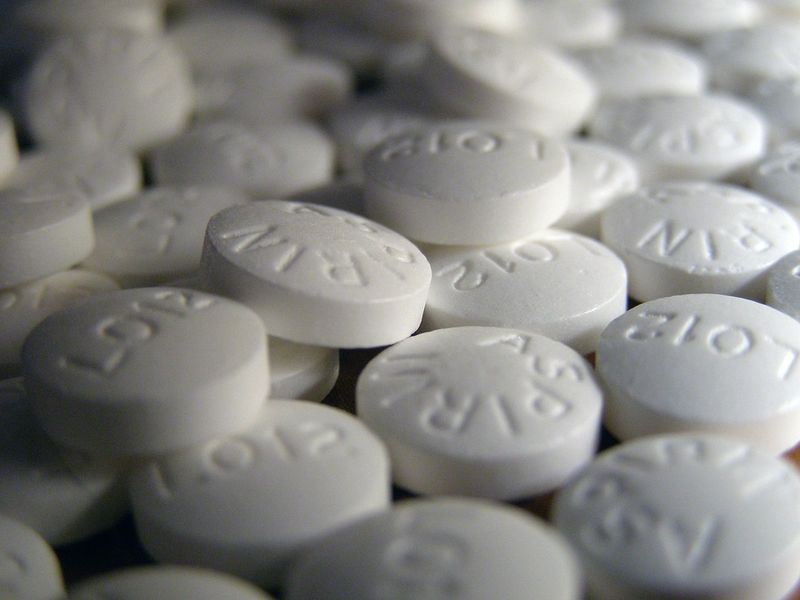
Low dose aspirin 75-100mg daily are only effective in reducing cardiovascular events in those who weigh less than 70kg found researcher Peter Rothwell.  This is the dose range used in the UK and the USA but 80% of all men and 50% of all women weigh more than 70kg.

Higher doses of aspirin are only effective for cardiovascular prevention in those over 70 kg and don’t work in those who weigh less than this. Therefore recommending the higher dose range won’t suit everyone either.

Some people also use aspirin to reduce the chances of other diseases such as colorectal cancer. The effects are thought to be dose related as well.

The take home message is that if you weigh less than 70kg stick to 75-100mg of aspirin a day, but if you weigh 70kg or over you should increase your dosage. For most people in the UK this will mean doubling up on 75mg to 150mg and in the USA where 82.5 mg is standard, upping this to 165mg daily.

Lancet doi:10.1016/S0140-6736(18)31133-4


BMJ: It doesn’t take much alcohol to damage your brain cells

Adapted from BMJ 24 February 18 Alcohol link to dementia is “robust” by Jacqui Wise

Chronic heavy drinking should be recognised as a major risk for dementia say French researchers.

They looked at over 31 million French adults discharged from hospital between 2008 and 2013. Over 1.1 million people had been diagnosed as having dementia.  In 57% of those with early onset dementia alcohol use was considered to be the cause.

Drinking more than 6 units of alcohol a day for a man and 4 units for a woman put you in the risk category of “heavy drinking” according to the World Health Organisation. This level will make both men and women more than three times more likely to develop dementia than they otherwise would.

Michael Schwarzinger said, ” The link between dementia and alcohol use is likely a result of alcohol leading to permanent structural and functional brain damage. Alcohol disorders also increase the risk of high blood pressure, diabetes, stroke, atrial fibrillation, and heart failure, which in turn increase the risk of vascular dementia. Heavy drinking is also associated with smoking, depression and low educational attainment which are also risk factors for dementia.”

Clive Ballard from the University of Exeter Medical School said, ” This study is immensely important. This evidence is robust and the public need to know about the relationship between alcohol consumption and dementia.”

My comment: I was really sad to read this report in the BMJ as I do love a nice glass of full bodied red when I’m eating a big lump of fatty spiced meat or a smelly gorgonzola. I was also dismayed to see what they regard as heavy drinking. 175 mls of most wines will be 2 units so two of them a day and you are three times more likely to get dementia, if you are a woman. I dread to think what a two week all inclusive holiday does to your brain. It is  always best to know these things before you get too batty to care.