Health anxiety for diabetics is as bad as for neurological patients


girl_suffering_from_anxiety

A quarter of Canadian diabetics, with either type one or two diabetes suffer from a tendency to worry about their health and thus misinterpret bodily sensations as more serious and threatening than they actually are.

Neurological patients have the same degree of anxiety, judged the highest for all patient groups.

Health anxiety was worse in younger patients, females, those recently diagnosed and those who were unmarried.

They had anxiety, a fear of diabetes complications, poorer adherence to dietary and self care activities and a lower physical quality of life.

The researches add, “The cognitive behavioural theory of health anxiety suggests than health anxiety increases when patients feel more vulnerable, perceive the medical condition to be more distressing, feel they are unable to cope with the medical condition, and believe that resources for coping with the medical condition are inadequate.”

From Human Givens Volume 21. No 1 2014

(Janzen Claude JA Hadjistavropoulos, HD and Friesen, L (2014) Exploration of health anxiety among individuals with diabetes: prevalence and implications, Journal of Health Psychology, 19,2 312-22)

Low carb store: Moussaka

low-carb pizza


 Moussaka for two
  • 150g lamb mince
  • 1 shallot, chopped
  • 100g tomatoes, chopped
  • 1 tsp oregano, cinnamon,thyme
  • 1 garlic clove
  • 1 aubergine, sliced
  • 1 mozzarella ball, sliced
  • 2 tbsp olive oil


Heat 1 tbsp of olive oil in a frying pan and add the garlic and shallot. Lightly fry until they are soft.Add the lamb mince and cook until brown. Add in the oregano, thyme, cinnamon and tomatoes and stir through. Leave to one side. Heat the remaining oil in a frying pan and add the aubergine slices cooking until softened on both sides.Take an oven proof dish, layer half the aubergine slices on the bottom of the dish and add half the lamb mixture.Top with mozzarella slices and repeat, layering the same ingredients again. Bake in the oven at 180oC for 30 minutes. Serve with a green salad dressed in olive oil.

A meaningful life will help you live longer and be happier

Having  a sense of purpose in life helps us live longer, and the earlier we discover it, the sooner the protective effects occur. meaning-in-life

Researchers looked at data from over 6,000 participants, focusing on their self reported purpose in life. Over the 14 year follow up period 569 people died and all of those who died had reported less purpose in life and fewer positive relationships with others than did survivors.

Greater purpose in life consistently predicted lower mortality risk right across the lifespan, even when taking into account other markers for psychological and emotional well being.

(Reported in Human Givens Magazine Volume 21, No 1 2014 from a report in  Psychological Science, 2014, doi:10.1177/09567976145311799)

Eric Barker blogs weekly about what will improve your health, happiness and productivity.  Click on this blog post for further information on the same topic:

http://www.bakadesuyo.com/2016/10/meaning-in-life-2/?utm_source=%22Barking+Up+The+Wrong+Tree%22+Weekly+Newsletter&utm_campaign=8491fcb5d5-meaning_10_9_2016&utm_medium=email&utm_term=0_78d4c08a64-8491fcb5d5-57758173

Dr Sheri Colberg: Why insulin does not always work predictably


Migraine.jpgHead Scratching Days with Insulin Action Changes

From Diabetes in Control
August 6th, 2016

by Dr. Sheri Colberg, Ph.D., FACSM
The topic of insulin action (resistance and sensitivity) has come up multiple times over the years in my articles, but it is admittedly much more complex than I often make it out to be.

In a DIC article last summer, you can find a short list of all the factors that can potentially improve insulin action (basically insulin sensitivity). In reality, though, sometimes it is impossible to know exactly what is causing your reduced insulin action from day to day and how to easily and consistently manage it.
Recently, I spent the majority of two days traveling in a car and not exercising, and I reached the point where I could barely eat anything without my blood glucose rising over 200 mg/dl, even when giving twice or three times my usual insulin dose for the same food.

Just sitting in a car and not exercising resulted in full muscle glycogen stores, with no room to store more carbohydrate—hence the resulting muscular insulin resistance.

Although I have an extensive working knowledge of nutrition, exercise, and diabetes overall, even I was frustrated by dealing with my lack of immediate control, even though I knew that physical inactivity was the cause. It was hard to anticipate how large of an impact it would have and how much insulin it would take to overcome it.
Based on my personal experience, I want to take some of the burden of always being on top of blood glucose levels off of people with diabetes (PWD). You have to realize that sometimes you can do everything right and your insulin action can still less (or more) than expected. It’s not necessarily your fault, nor can you always anticipate how to best combat it.
Here is my short list of factors from my personal experience that can make people insulin resistant one day and insulin sensitive the next—and not always as you would expect. I call those the “head scratching days,” but sometimes it’s more like hair pulling!
If you’ve had a prior hypoglycemic event
Going too low and staying there for a while (such as during sleep) may increase insulin resistance more than just having a simple hypo event and treating it quickly. Morning insulin resistance is the most variable anyway (higher levels of cortisol then). It is admittedly my most frustrating time of day since often the same exact breakfast and starting blood glucose level will result in a different rise in blood glucose levels. Sometimes an overnight low explains it, but sometimes it doesn’t.
If your blood glucose has been running high
Hyperglycemia begets more hyperglycemia because it causes insulin resistance. That is why sometimes it takes way more insulin than you would expect just to get back to a normal level, and it may take hours. Try not to overdose on insulin in the meantime (especially at your bedtime) or you’ll end up low and back on the blood glucose rollercoaster.
If you’ve drastically changed your normal exercise patterns
Heightened insulin action due to your last workout is fleeting, and sitting in a car for two days is a dramatic change for me, particularly since my basal and other insulin doses are set for being active, not for being inactive. Even a week of detraining (due to injury, vacation, sickness, or other life event) can cause insulin resistance to rise rapidly in everyone, not just in people with diabetes. If you start working out more overall or just more regularly, your overall insulin needs (including basal) may also decrease. Just try to be as consistent as possible to make it easier for yourself to manage.
If you ate more calories, fat, or protein than you realized
Eating out at restaurants is really hard for me because no matter what I order, it seems like it takes two to three times my usual insulin doses to cover it. It is likely because protein and fat kick in and affect blood glucose levels later on (3-6 hours after a meal) and restaurant meals have more calories in them than most home-cooked meals. Fat, sugar, and salt keep people coming back to the restaurant for more! You can strategically use protein and fat intake overnight or after exercise to help prevent later-onset lows, though.
If you’re stressed, mentally or physically
It is truly amazing how much of an impact that stress has on blood glucose levels. Just try going to court (if you’re not an attorney) and keep your blood glucose in check while your adrenaline is pumping. Your cortisol levels also go up and raise blood glucose. So, just being stressed out during the day, or being exhausted or sick (physical stress), can cause insulin resistance. Try to take deep breaths and get some exercise during the day to combat both the stress and the resulting insulin resistance. Getting sick and running a fever or having an infection can also drive your blood glucose and insulin needs up.
If you’re lacking on sleep
Not getting enough sleep is physically (and often mentally) stressful. I knew an oceanography professor who had to harvest samples at sea, sometimes for days at a time, on no sleep.  The longer he went without sleeping, the higher his insulin resistance became. Lack of sleep may be causing some of your unexplained highs since more cortisol (a stress hormone) is released when you are sleep-deprived.
If you’ve had some alcohol to drink
Alcohol interferes with the normal function of the liver in making and releasing glucose. While it can lead to hypos, it can also be used strategically to relieve insulin resistance or to keep it in check—and luckily it does not take much alcohol to have an effect. An older guy called me on a diabetes hotline I was manning for a TV station once and explained that he usually had two shots of whiskey at night and woke up with good blood glucose levels, but that if he ever had to skip the whiskey, he would wake up too high.  He wanted to know what he should do.  I said, “Keep drinking the whiskey!” No more than one drink daily for women or two for men is recommended, though, so do not overdo it or you raise your risk of other health problems.
If it’s a certain time of the month (women only)
You may have everything else accounted for and your blood glucose levels are still skyrocketing for apparently no reason—except that you’re either ovulating (and releasing extra hormones that promote insulin resistance) or in the few days or week leading up to your period when insulin resistance is highest.  This has been a bigger issue for me later in life since my cycles seem to be more extreme, although I do not know if this is the case for all women. I helped a diabetes educator recently figure out that she was actually pregnant when she simply could not figure out why her blood glucose levels were so whacked out; it can be as simple an explanation as that (and hopefully a desired one, if you are pregnant).
Regardless of what is causing your (unexplained) insulin resistance, just try to control your blood glucose levels the best you can and lose the guilt over not knowing exactly why it is high and not being totally in control of your blood glucose levels 24/7. Even the most knowledgeable of us have our head scratching and/or hair pulling days trying to figure it out!

In addition to my educational web site, Diabetes Motion (www.diabetesmotion.com), I also recently founded an academy for fitness and other professionals seeking continuing education enabling them to effectively work with people with diabetes and exercise: Diabetes Motion Academy, accessible at http://www.dmacademy.com. Please visit those sites and my personal one (www.shericolberg.com) for more useful information about being active with diabetes.

Jovina cooks Italian: Swordfish Messina Style

swordfish messina.pngPesce Spada alla Messinese (Swordfish Messina style)

Ingredients (serves 4)

1 lb (600 gr) swordfish cut into palm-sized pieces slices
2 cloves of garlic, chopped
2 spring onions, chopped
20 capers (if salted, rinse well first)
10 black olives, chopped
4 anchovy fillets
1 cup white wine
2 cups tomato passata (sauce)
15 oz can chopped tomatoes
Extra virgin olive oil
Salt and pepper
A pinch of crushed dried chili pepper
Parsley, chopped

Directions

Brush the swordfish slices with olive oil and set aside.

In a skillet heat enough olive oil to cover the bottom of the pan. Add the spring onions, garlic, capers, olives, chili pepper and anchovy fillets and cook until the anchovies melt into the oil and the onion is soft.

Put the slices of swordfish in the skillet and add the white wine. Burn off the alcohol and then add the tomatoes. Mix well, cover and cook for 30 minutes on very low heat.

When ready to serve, sprinkle with parsley.

Public Health Collaboration: Free booklets


LA2-vx06-konsthallen-skulpturThis is the link to the Public Health Collaboration site where you can download for free or order print versions, at a modest cost, of illustrated health booklets that will help you:


know what to eat for a wide variety of good health outcomes

plan your meals

count your carbohydrates

lose fat

https://www.PHCuk.org/booklets/


Hopefully you will end up somewhere between the extremes of our sisters up there!

Influenza vaccine reduces total mortality in diabetics

flu_shot_advertising


From Diabetes in Control

Could Influenza Vaccination Prevent More Than Just the Flu?


Currently, only low-quality evidence exists to support efficacy of influenza vaccination to prevent seasonal influenza in patients with diabetes. There is even less information regarding the impact of influenza vaccination on cardiovascular events or all-cause mortality in this population. A recent study published in the Canadian Medical Association Journal was designed to evaluate the impact of seasonal influenza vaccination on admission to the hospital for acute myocardial infarction, stroke, heart failure, or pneumonia, and all-cause mortality in patients with type 2 diabetes.

Conducted over a 7-year time period from 2003 – 2009, the study analyzed retrospective patient data from the Clinical Practice Research Datalink in England. The analysis included 124,503 adult patients diagnosed with type 2 diabetes. At baseline, characteristics such as age, sex, smoking status, BMI, cholesterol labs, HbA1c, blood pressure, medications, and comorbidities were compared between patient groups. Vaccination rates of the included participants ranged from 63.1% to 69.0% per year. In general, unvaccinated participants were younger, had lower rates of pre-existing comorbidities, and were taking fewer medications.

The baseline characteristics of subjects enrolled in this retrospective analysis showed that sicker subjects received the flu vaccination more frequently. Given this observation, and seasonal confounding of flu outbreaks, data adjustments favored fewer cardiovascular events and lower rates of all-cause mortality during the influenza season spanning 7 years of data.  While other studies have shown that influenza vaccination can reduce the risk of cardiovascular events in high-risk patients, this study is the first to demonstrate a reduction in cardiovascular events associated with influenza vaccination in patients with diabetes. This study is notable for its large sample size and long duration. However, given the retrospective nature of the study, further trials are warranted to offer conclusive evidence about the benefits of influenza vaccination in patients with diabetes.

Practice Pearls:

  • Previous clinical trials aimed at studying the effectiveness of the flu vaccine in patients with diabetes are often small, inconclusive, and have not investigated cardiovascular outcomes.
  • When data was adjusted for baseline covariates and seasonal residual confounding, patients who received the influenza vaccination had significantly reduced rates of hospital admissions for stroke, heart failure, pneumonia or influenza, and all-cause mortality.
  • Large experimental or quasi-experimental trials are needed to establish a causal link between influenza vaccination and clinical endpoints in patients with diabetes.

References:

Vamos EP, Pape UJ, Curcin V, Harris DPhil MJ, Valabhji J, Majeed A, et al.  Effectiveness of the Influenza vaccine in preventing admission to hospital and death in people with type 2 diabetes.  CMAJ. 2016 July 25.

Remschmidt C, Wichmann O, Harder T. Vaccines for the prevention of seasonal influenza in patients with diabetes: systematic review and meta-analysis. BMC Med 2015;13:53.

Researched and prepared by Alysa Redlich, Pharm.D. Candidate, University of Rhode Island, reviewed by Michelle Caetano, Pharm.D., BCPS, BCACP, CDOE, CVDOE

When is the best time of day to exercise?


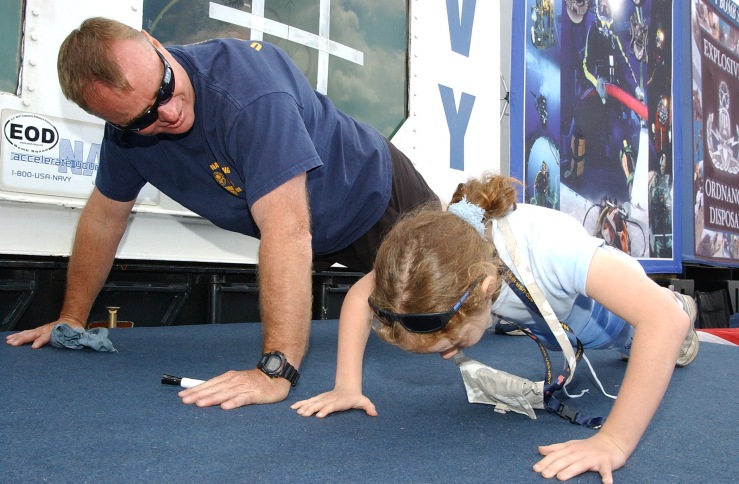
050529-N-4729H-109From Diabetes in Control 14th July 2016
Is there a best time to work out, based on circadian rhythms?

Circadian rhythms are estimated 24 –hour biological cycles that function to prepare the organism for daily environmental changes. There is a molecular clock mechanism found in most cell types including skeletal muscles.  Disturbances in the circadian rhythms have been shown to have harmful impacts on health, which may lead to metabolic syndrome.
Experiments in mice suggest that the timing of exercise may be critical for the maintenance of molecular rhythms.  Scheduled exercise functioned to enhance the stability of both activity and heart rate rhythms.
Another study determined the significant differences in circadian rhythms  in healthy non-diabetic young men. 59 subjects between the ages of 20-34 were recruited and studied for 60 days. They were grouped based on their BMI as healthy weight, overweight or obese and all were free from cardiovascular disease, diabetes, pulmonary disease and many diseases.

Resting heart rate and blood pressure were measured, so was their body composition and a maximal graded exercise test performed. Their circadian rhythm parameters were measured by noninvasive wrist temperature rhythm monitoring and recording devices.

Subjects recorded daily questions concerning sleep, frequency and timing of nutritional intake, alcohol use, and smoking, and removal times of wrist skin temperature monitor.

There was no association between body fat and peak wrist temperature during night time hours (r= -0.05; P= 0.79). The poor % fat group (109.10 ± 14.12) had significantly lower circadian temperature stability than the optimal % fat (166.52 ± 17.84) or fair % fat group (175.21 ± 23.96).
Another recent study was performed to determine the exact time one needs to work out, based on circadian rhythm, to obtain a better outcome. In this study it was found that the various times one exercises give different outcomes.

For instance, when one exercises from  7 to 9am, their pain tolerance is higher but they have poorer flexibility  since their body temperature is low and therefore more likely to sustain an injury. (My comment: so not great for yoga or running but maybe better for walking, meditiation or  weight training?)

Exercising from 10 am to 12 p.m. is good for any skill based sports that require alertness and short term memory peaks.  (Anyone for tennis?)

Meanwhile from 4 to 8 pm showed an overall performance peak since it coincides with the peak body temperature. Body temperature is normally high at that time since there is a higher lung capacity, blood flow to muscle and flexibility. (So good for a run and yoga and indeed most sports and activity)
In conclusion the best time for one to work out is whenever is appropriate for and suits that person since many things affect the circadian rhythms.
Practice Pearls:
Circadian rhythms is a molecular clock mechanism found in most cell types including skeletal muscles.
Presence of a molecular clock is argued to be a necessary timekeeping mechanism to prepare the cell for daily changes in environmental conditions
The best time to work out is when it is convenient for one since every time frame has its advantages and disadvantages.

Comment from Dr. Sheri Colberg, Ph.D., FACSM, Advisory Board Member:
It has been suggested that many different things affect circadian oscillations, and in people with diabetes and in aging, some of these normal controls fail to work effectively.  For example, alterations in the release of melatonin, a critical hormone that regulates sleep and central nervous system balance, occur in both states (diabetes and aging) that lead to more imbalances.  Exercise of any type helps reset autonomic function, or the balance between sympathetic and parasympathetic branches of the autonomic nervous system.  For management of diabetes and successful aging both, being physically active on a regular basis is likely more important than the time of day that activity is undertaken.

References:
Colino Stacey “What is the best time of the day to exercise? The answer is complicated”. US News 6 July 2016. Web. 14 July 2016.
Schroder, Elizabeth A., and Karyn A. Esser. “Circadian Rhythms, Skeletal Muscle Molecular Clocks and Exercise.” Exercise and sport sciences reviews 41.4 (2013): 10.1097/JES.0b013e3182a58a70. PMC. Web. 14 July 2016.
Tranel, Hannah R. et al. “Physical Activity, and Not Fat Mass Is a Primary Predictor of Circadian Parameters in Young Men.” Chronobiology international 32.6 (2015): 832–841. PMC. Web. 14 July 2016.

Jovina cooks Italian: Neapolitan Ragu

untitled


Neapolitan ragù is one of the two most famous varieties of Italian meat sauces called ragù. It is a specialty of Naples, as its name indicates. The other variety originated in Bologna.

The Neapolitan type is made with onions, meat and tomato sauce. A major difference is how the meat is used, as well as the amount of tomato in the sauce. Bolognese versions use very finely chopped meat, while the Neapolitan versions use large pieces of meat, taking it from the pot when cooked and served it as a second course. Ingredients also differ.

In Naples, white wine is replaced by red wine, butter is replaced with olive oil and lots of basil leaves are added. Bolognese ragù has no herbs. Milk or cream are not used in Naples. Neapolitan ragù is very similar to and may be ancestral to the Italian-American “Sunday Gravy”; the primary difference being the addition of a greater variety of meat in the American version, including meatballs, sausage and pork chops.

Ingredients

  • 1 pound rump roast
  • 1 large slice of brisket (not too thick)
  • 1 pound veal stew meat
  • 1 pound pork ribs
  • 2 large onions, sliced
  • 6 tablespoons of extra virgin olive oil
  • 2 tablespoon butter
  • 1 tablespoon tomato paste
  • 1 cup of red wine
  • 1 1/2 pounds tomatoes, pureed
  • Salt and pepper to taste
  • Fresh basil leaves

Directions

Season the meat with salt and pepper. Tie the large pieces with cooking twine to help them keep their shape. In a large pot heat the oil and butter. Add the sliced onions and the meat at the same time.

On medium heat let the meat brown and the onion soften. During this first step you must be vigilant, don’t let the onion dry, stir with a wooden spoon and start adding wine if necessary to keep them moist.

Once the meat has browned, add the tomato paste and a little wine to dissolve it. Stir and combine the ingredients. Let cook slowly for 10 minutes.

Add the pureed tomatoes, season with salt and black pepper and stir. Cover the pot but leave the lid ajar. (You can place a wooden spoon under the lid.)

The sauce must cook very slowly for at least 3-4 hours. After 2 hours add few leaves of basil and continue cooking.

During these 3-4 hours you must keep tending to the ragú, stirring once in a while and making sure that it doesn’t stick to the bottom. Serve with your favorite pasta.

Ghost pills: has it happened to you?


Metformin_500mg_TabletsFrom Diabetes in Control: Disasters averted series
August 2nd, 2016


When it comes to metformin, when appropriate, I recommend the extended release version.

Last week my patient, female, 56 years of age, type 2 diabetes, visited. A1C was elevated, and she gained 5 pounds.  She had been on metformin ER for the last 6 months and doing well. She said she recently noticed a bean-looking/pill-looking thing in her stools that seemed to be related to her metformin. (She hadn’t looked before this).

She stopped her metformin and said she didn’t see it after that. “If it was coming out of me, it must not have been working, so I stopped it.” She refuses to check her glucose or weigh herself, therefore she did not notice the increase in her glucose levels. She did mention noticing her pants being tighter around her waist.
I informed her that the bean-looking/pill-looking thing in her stool was the metformin, but that did not mean it wasn’t working, it was. It was just a different method of delivery to be a slower release than other medications she takes or has taken. Some call the remains…ghost pills.
She resumed her metformin. Sure enough, she saw them again, but she did not stop taking her metformin.  Three months later, her A1C and weight returned to the levels before stopping.
Lessons Learned:
Understand that some controlled or extended release medications may look like they haven’t been “digested,” but that’s the formulation of the medication. The active ingredient has been released.
When starting your patients on medications that seem to not be “digested” such as extended release metformin, teach they may see this.
Learn more at: http://www.ncbi.nlm.nih.gov/pmc/articles/PMC2847989/ and http://www.ncbi.nlm.nih.gov/pmc/articles/PMC4110830/


My comment:  As a GP I have come across this. At least I know what to say about it  now.