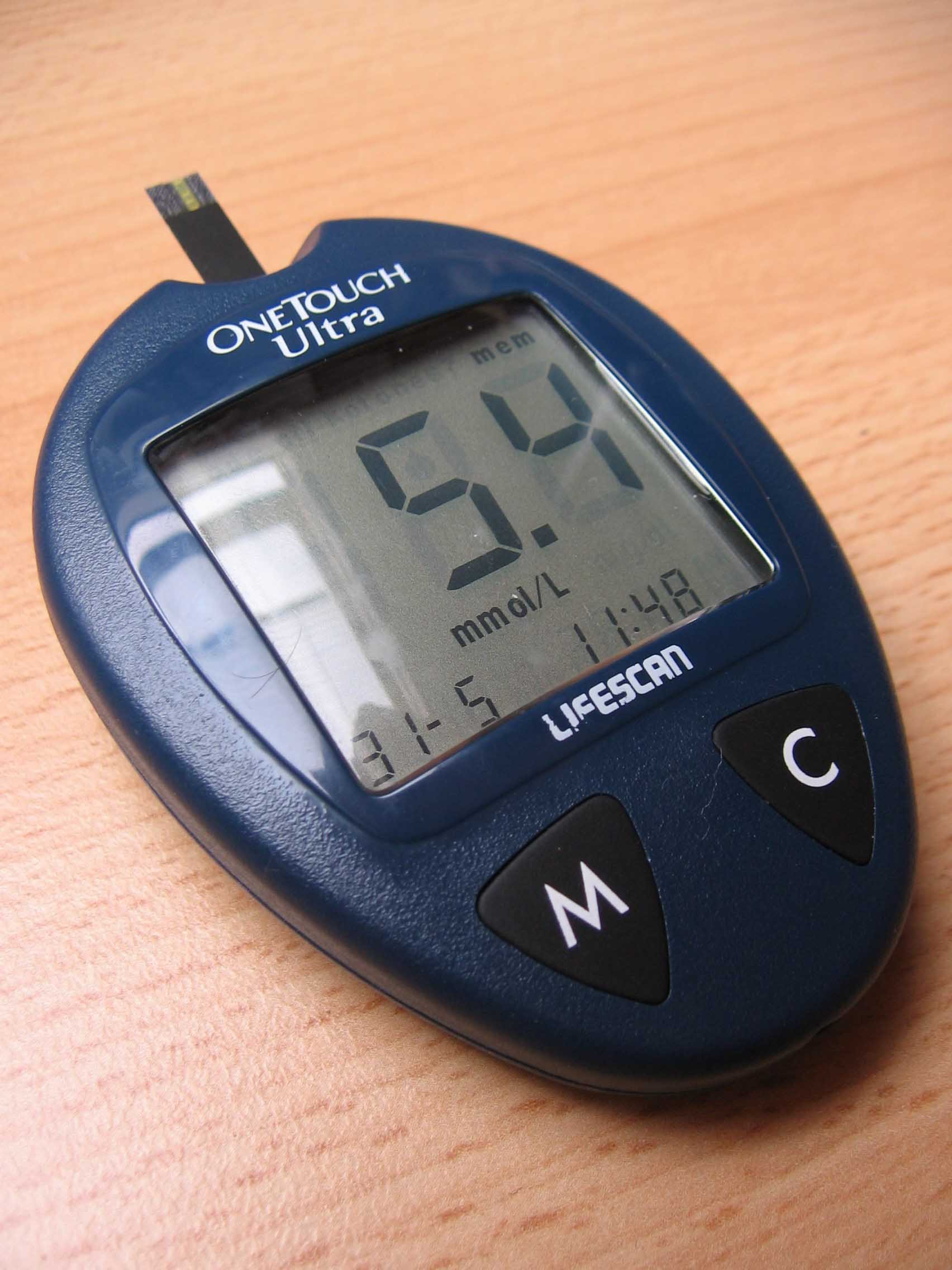
Inhaled Insulin

A story on a Minneapolis news website caught our eye this week – it was the story of a New Richmond man who is using inhaled insulin at meals instead of boluses through his pump.

The insulin inhaler – Afreeza – is used instead of injected insulin boluses to cover meals.

Software developer Trevor Schug who was diagnosed with type 1 diabetes last year said he had started using the inhaled insulin this year and he had found that it gave him better control of his blood sugar levels.

On the news website, he said that he felt the inhaled insulin was absorbed into the blood stream more quickly and that it didn’t stay in your system as long, whioch was another bonus as far as he was concerned.

Schug explained that when he would take extra insulin through his pump, it sometimes lingered in his system too long after a meal.

Endocrinologist Dr Mark Stesin said dosing was not as precise for inhaled insulin, which might not make it as suitable for everyone.

The inhaled insulin isn’t recommended for people who smoke or who have recently stopped, or anyone who has chronic lung disease or asthma.

How to Help People Who Can’t Afford Insulin

insulin syringeFrom time to time I expect you feel pretty miserable about having diabetes. Especially about these interminable injections…

Diabetes for everyone is a life sentence. But for some poor people in developing countries, parents cannot afford insulin for both a diabetic child and  food for the rest of the family. Hard choices have to be made.

Insulin for Life

The insulin for life organisation aims to help. They will ship your unwanted but in date insulin or other things such as lancets and test strips to those who would die without it.  They also help coordinate insulin supplies to disaster struck areas.

It is an Australian-based organisation whose president is Ron Raab. Ron has been a type one diabetic since he was 12 just like Dr Richard Bernstein. He became one of Dr Bernstein’s patients and reversed many of his longstanding diabetes complications (read his success story here ).

Insulin for Life is the website for the organisation that has affiliates in the US, Europe and the UK.

The InDependent Diabetes Trust

This is the UK organisation who will send your donated insulin to Insulin For Life.

Please send your no longer needed insulin – unused vials or cartridges and in date in a jiffy bag to:

Jenny Hirst
IDDT
PO Box
Northampton
NN1 4XS

The IDDT is a charity whose staff and membership is formed by diabetics and by those caring for diabetics. They aim to listen and support your needs.

They have an excellent website with articles of interest to insulin users about many different aspects of diabetes at: www.iddtinternational.org

Enquiries can be sent by e mail to:  enquiries@iddtinternational.org

The IDDT was formed from original members of Diabetes UK who were not being supported in their needs and preferences for animal insulins. Unlike Diabetes UK they receive no funding from pharmaceutical or food manufacturers.

Thanks to the political lobbying that IDDT have continued for years the UK still manufactures animal insulins. These are obtained  and purified from pigs and cows that have been slaughtered for their meat.

A small variety of long acting, short acting and mixed duration animal insulins are available in pen cartridge formulations and  vials from Wockhardt Pharmaceuticals. These can be shipped overseas.

Prescriptions for the insulins and pens are available from your UK GP in the usual way. A GP however may want a diabetologist to approve.

Quick Quiz:
1. Unopened and in date insulin vials and cartridges that you no longer need can be put to good use by two of these…
a Pharmacies
b Diabetes UK, the ADA or your equivalent national diabetes organisation.
c Insulin for life.
d The IDDT.

Have you got it?
1. C and D are correct. IDDT in the UK will send it to Insulin for Life who will arrange for worldwide distribution.  Please send  insulin with at least three months to go to expiry.  You can read more about this organisation and how you can help on this site.
 

NEW – ‘How To’ Course for Diabetics

The 'how to' course will help you achieve better blood sugar results.
The ‘how to’ course will help you achieve better blood sugar results.

Here at the Diabetes Diet, we’ve added some e-learning options for you. The ‘How to’ course written by GP Dr Katharine Morrison is an extensive learning resource suitable for anyone with diabetes (type 1 or 2, or gestational diabetes) and anyone who cares for those people, and it’s aimed at helping you improve your diabetes.

Although personal coaching at diabetes clinic occurs, there are often gaps in what would make that all-important difference to individuals. By following this course you will have all the advantages of the many tips and clearly set out steps to improvement that have been directly tested by other people with diabetes.

As you work your way through the course you will quickly realize that a reduced-carbohydrate diet is highly recommended. This is key to stabilising and then normalising blood sugars. In turn, this can reduce hunger if your aim is to lose body fat or improve metabolic control if you suffer from any of the glucose metabolism disorders.

The ‘How to’ course is available here, or through navigation from the top menu.


Last Word on Sugar Tax

jaffa cakes 2Pictured on your left are two items – one of which a large percentage of the population needs to buy and use regularly, and the other is a tampon.

Yup, this is the news that UK Prime Minister David Cameron faces a possible Commons defeat over the “tampon tax” as a group of Conservatives prepares to vote with Labour and other opposition parties (such as the SNP) to demand a strategy that will end the VAT on sanitary products.

VAT on sanitary products currently stands at 5 percent, and the attempt to get rid of VAT is led by Labour MP Paula Sheriff, who is tabling an amendment to the finance bill. Cameron has argued that is the EU that sets the rules on VAT and it would be difficult to get them overturned.

An amendment would force the Chancellor George Osborne to set out how he would negotiate the end of VAT on sanitary products.

VAT is a form of consumption tax, or a tax on the purchase price. Jaffa cakes have no VAT because they are classified as cakes, rather than biscuits and cakes are zero-rated. Customs and Excise took this case to tribunal – and lost because the tribunal thought Jaffa cakes “had enough characteristics of cakes to be accepted as such, and they were therefore zero-rated”.

So – Public Health England has called for a sugar tax in a bid to reduce this country’s battle with obesity, as we wrote about on The Diabetes Diet last week.

Jaffa cakes* escape taxes on the purchase price because they are “cakes” (why do cakes get to be zero-rated anyway?), and in the meantime David Cameron drags his heels over working to get rid of the extra money women pay for tampons and sanitary towels on top of having to buy them in the first place.

Crazy old world, hmm?


Ingredients in Jaffa cakes: Glucose-Fructose Syrup, Plain Chocolate (19%) [Sugar, Cocoa Mass, Vegetable Fats (Palm, Sal and/or Shea), Butter Oil (Milk), Cocoa Butter, Emulsifiers (Soya Lecithin, E476), Natural Flavouring], Sugar, Flour (Wheat Flour, Calcium, Iron, Niacin, Thiamin), Whole Egg, Water, Dextrose Monohydrate, Concentrated Orange Juice (8% Orange Juice Equivalent), Glucose Syrup, Vegetable Oils (Sunflower, Palm), Humectant (Glycerin), Acid (Citric Acid), Gelling Agent (Pectin), Emulsifiers (E471, Soya Lecithin), Raising Agents (Ammonium Bicarbonate, Disodium Diphosphate, Sodium Bicarbonate), Dried Whole Egg, Acidity Regulator (Sodium Citrate), Natural Orange Flavouring, Colour (Curcumin).

Yum yum.


Jeff Volek Calls for Signatories to a Petition Against Current US Dietary Guidelines

petitionThe Diabetes Diet’s attention was drawn to a recent call for signatories to a petition aimed at changing US dietary guidelines.

We’re British, but the official guidelines for nutrition in this country have been very similar to US advice in the past.

The plea for signatories to the petition comes from Dr Jeff Volek, a registered dietician and professor at the University of Connecticut, and regarded as an expert in low-carbohydrate diets. He is calling for people to sign the petition because he considers that the US dietary guidelines have not worked and obesity and diabetes is a public health crisis, with more than half the adult US population having diabetes or being pre-diabetic.


Dr Volek says that he recently attended the US House Agriculture Committee to discuss  the guidelines, where the secretary of the USDA and HHS were asked question about the current scientific report and guidelines that are likely to be published this December (2015).

Dr Volek says: “The chairman and multiple members of the House Ag[riculture] Committee were rightfully concerned about the report and the failure to acknowledge the problem of excess carbohydrate consumption and the body of literature on low-carbohydrate diets.

“I invite you to join me in asking the government to make a change and ensure that quality science generated from a variety of different experimental approaches be the center focus in determining the 2015 Dietary Guidelines. Progress can only occur if we are willing to disrupt the status quo and recognize the insights of newer, better and more credible science.”

The link to the petition is here: https://www.change.org/p/demand-that-quality-science-determines-the-2015-u-s-dietary-guide

You can read more about Dr Volek’s work at his website, artandscienceoflowcarb, and The Diabetes Diet contains lots of examples of meal plans and recipes you can follow if you’d like to eat  a low-carb diet yourself.


Photo thanks to the League of Women Voters.


Top 10 Countries – Rates of Diabetes

syringeA recent post on diabetes.co.uk looked at the rates of diabetes in other European countries – and the top rate of diabetes prize goes to… Turkey.

Some 14.71 percent of adults in Turkey have diabetes and it is described as one of the top priorities for the Turkish government. The country spends $895 on each person with diabetes.

At number two for diabetes, Portugal spends a lot more ($2,011 per person) on its 13.09 percent problem. But power is delegated to individual regions so it can depend on where you live.

Number three is on the table is Bosnia and Herzegovina, spending $523 per person and with 12.1 percent of people having diabetes. (Montenegro has 12 percent.)

Serbia comes in at number five, with 11.96 percent of its population suffering from diabetes and spending $666 per person. According to the report, high-risk groups are targeted but it is felt that not enough resources are allocated to the issue.

In sixth place is Germany, with an 11.52 percentage of population figure. Germany spends a massive $4,943 per person – one of the highest figures in Europe. However, it is felt that diabetes isn’t a priority on the political agenda in Germany.

Macedonia’s population is affected by diabetes with 11.44 of Macedonians diagnosed with the condition. Funds are limited though, with only $403 spent per person.

Malta spends $2,113 per person and 10.69 percent of the population have diabetes. Most of their prevention methods focus on lifestyle changes, according to the article, with people are encouraged to eat well, exercise more, and give up smoking.

Spain, with 10.58 percent of its population suffering from diabetes, spends $3,090 per person. However, diabetes associations in the country don’t think there’s enough support or resources to make a difference.

Some 10.2 per cent of Cypriots have diabetes and it is estimated that Cyprus spends $2,295 on each person with diabetes. A large-scale prevention plan to be introduced in 2016.

Where, you might ask, is the UK in terms of numbers of people with diabetes – surprisingly, the report says that 6.6 percent of the UK population have diabetes – 43rd place in Europe. According to the American Diabetes Association, in the US some 9.3 percent of the population has diabetes (2012 figures).

Read the full report here.


For help managing your diabetes, Check out our book, The Diabetes Diet. Pic thanks to Melissa Wiese on Flickr

I’d Like to Teach the World… A New Slant

The Center for Science in the Public Interest created this video – a fresh take on the iconic Hilltop ad, pointing out the diseases and health conditions that can be associated with excessive sugar consumption.

Big corporates like Coca Cola spend a lot of money on advertising and creating the look of a lifestyle which is mean to be aspirational. The drink ads often show care-free people enjoying themselves. Naturally, they are always slim, attractive and healthy looking.

Anyway, see what you think…

Logging Your Results

Screenshot 2015-04-10 12.44.22I treated myself to an app recently to record my blood test results. Historically, this hasn’t been a strength of mine (ahem!). When I was first diagnosed with diabetes in 1982 (way, way before the internet folks, imagine…) blood testing wasn’t common, and when it did come in, you were issued with log books to write down your results.

I’m sure I was not the only teenager who sat in the diabetic clinic’s waiting room, filling in weeks of blood test results using different-coloured pens to give my made-up results added authenticity.

Continue reading “Logging Your Results”