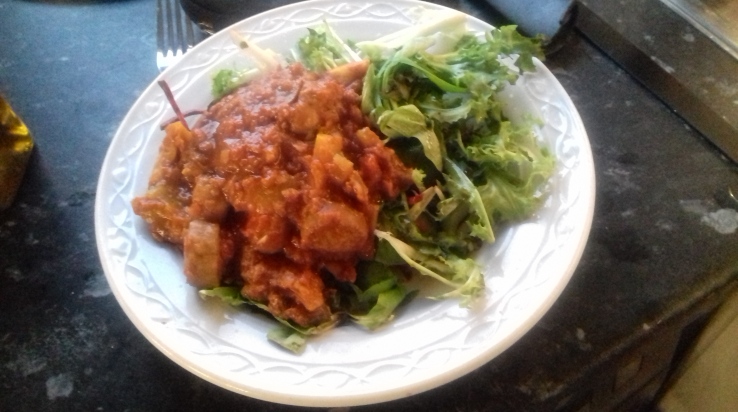
Sausage, Pepper and Red Lentil Casserole

Plate of sausage casserole on The Diabetes DietProving once again, a low-carb diet can be plant-based*, I bring you the sausage, pepper and red lentil casserole!

My ‘beef’ (see what I did there) with the hi-jacking of the term ‘plant-based’, is that it’s assumed to mean vegan, whereas I’d argue you can eat meat, fish and eggs and still have most of your diet made up of plants.

Sausages and lentils have a long dating history. The French twin them together for cassoulets as lentils soak up meat juices and add cheap bulk to a dish. Bulk’s important to me. Who wants a small bowlful of food when you can have a big one?

The better quality your sausages, the better the finished dish. The casserole is great with buttered cauliflower or broccoli. Or you could add another 250-300ml of vegetable or chicken stock to turn it into soup.

And a cheeky helping of grated cheese on top always adds extra deliciousness.

Sausage, red pepper and lentil casserole

  • Servings: 4
  • Difficulty: easy
  • Print

  • Two peppers, insides removed and chopped
  • 100g celery, sliced finely
  • 100g mushrooms, sliced
  • 75ml red wine
  • Four, good quality pork sausages, each cut into chunks
  • 75g chorizo, sliced
  • 75g red lentils
  • 2 cloves garlic, crushed
  • 400g tinned, chopped tomatoes
  • 1 chilli, chopped (optional)
  • 1tsp smoked paprika
  • Salt and pepper

Put everything into your slow cooker, stir well and put on the high setting for four hours.

The mix makes a soupy casserole because it’s done in the slow cooker. You might want to take the lid off yours for the last 20 minutes to get rid of some of the excess liquid.

To make the recipe on the stove, use a large saucepan. Place the chorizo slices in the pan, then turn on a gentle heat so the oils from the sausage run out. Add the other sausages, celery, peppers, mushrooms and garlic, mix well and cover. Cook over the gentle heat for ten minutes. Add the tomatoes, lentils, red wine, chilli and paprika, stir well and bring to the boil. Turn down to a simmer and cook for a further 30 minutes, mixing from time to time.

In both instances, add salt and pepper to taste.

Each portion has 17g carbs and 4g fibre.

*And also that my food styling and photography skills get no better.


What factors are most predictive of a heart attack?

Dr Malcolm Kendrick recently discussed a paper in which computers analysed routine clinical data from UK GP practices to identify the factors that most accurately predicted a cardiovascular event over the next ten years.  All the 378,256  people whose records were analysed were initially free of cardiovascular disease and 48 variables were identified.

The top ten things that were most likely to see you in hospital with a heart attack or stroke, in order,  were:

Chronic Obstructive Pulmonary Disease

Prescribed oral steroids

Older age

Severe mental illness

South Asian ethnicity

Prescribed immunosuppressants

Socio-economic deprivation

Chronic Kidney Disease


The least predictive were LDL, Forced expiratory volume ( a measure of asthma) and AST/ALT ( a measure of liver function).  Total cholesterol was 25th.

Can machine learning improve cardiovascular risk prediction using routine clinical data? http://journals.plos.org/plosone/article?id=10.1371/journal.pone.0174944

Most of the public are blissfully unaware of serious diabetes complications

A survey by Walnut Unlimited asked 1,000 UK people, what can the effects of having diabetes be?

None of them were aware of the pregnancy related consequences of diabetes.

2% knew about stroke, 4% about kidney damage, and 6% about heart disease.  Similarly low numbers knew that diabetes is related to a shorter life span.  A quarter of those surveyed however did know that amputation and sight loss were complications of diabetes.

Diabetes affects more individuals in the UK than any other serious health condition such as dementia or cancer. 3.7 million people in the UK have diabetes. There are 8,700 diabetes related amputations and 1,600 cases of visual impairment every year.

Diabetic complications can be minimised or avoided by early diagnosis, education and support.

#Type1Runs—Race Report

Paisley 10k medal at The Diabetes DietAh, Instagram abounds with diabetics who perform superhuman feats of athleticism while battling their blood sugar levels at the same time.
Not me. I’m here as your bog-standard ordinary gel whose only prize ever will be persistence. Did you note I got a massive disclaimer in there before going on to write about my latest race?! I like to make sure I’ve lowered the audience’s expectations before I start.

Anyhoos, for those of you still reading, here it is. On Sunday, I ran another 10k in preparation for the BIG ONE (the half-marathon) next month. Conditions were much more promising than the last time. Back in June, Scotland experienced an unprecedented spell of warm weather. Plus, that course was hilly. And I woke up that morning with a blood glucose reading of 13.1.

Scottish summer

In theory, the Paisley 10k should have heralded a vast improvement. I’ve been running for longer, the back-to-usual Scottish summer conditions (dreich, grey and cool) were present, and the course is flatter.

Still sensing that disclaimer?

Bah, humbug dear readers. I added three minutes to my previous time. Not only that, the online system was cruel enough to remember I took part in the Paisley 10k ten years ago when I achieved my personal best. There it was, my 2008 time taunting me with its nine minutes faster brilliance.

Sprint finish

For those who want the numbers, I awoke on Sunday morning with a blood sugar of 8.5 (I’d knocked one unit off my basal rate the night before). Half an hour before the race, I was 8.1. I ate half a Hike bar before starting (10-15g carbs) and I finished the race at 11.1, possibly because I put on a sprint finish. Nothing like pretending your race pace is much faster than it really is.

I didn’t take insulin afterwards, ate the second half of the Hike bar and went off for a session in the sauna. An hour later, my blood sugar level was 4.9. A massive portion of battered fish and mushy peas later (I know, NOT low-carb), further low blood sugars and indigestion kicked in*… 3.3 one hour after the meal, 5.8 two and half hours later.

Lessons to take—eat more. Try something other than a Hike bar. Drop the daytime basal injection rate. Keep practising. Keep experimenting. Expect fluctuations and weirdness.

All shapes and sizes

Mass running events are special though. I’d recommend everyone takes part in at least one if they are able to—and these days there are loads of 5ks and even 3ks you can do. You see all shapes, sizes and abilities (and the two former don’t predict the latter), the crowds cheer you like a champ and even a slowcoach like me will overtake enough people to feel gratified**. The runners’ high exists.

Now, time to take off my medal. It is two days later after all.

Low carb diets ‘could shorten your life’

diabetes diet by Emma Baird
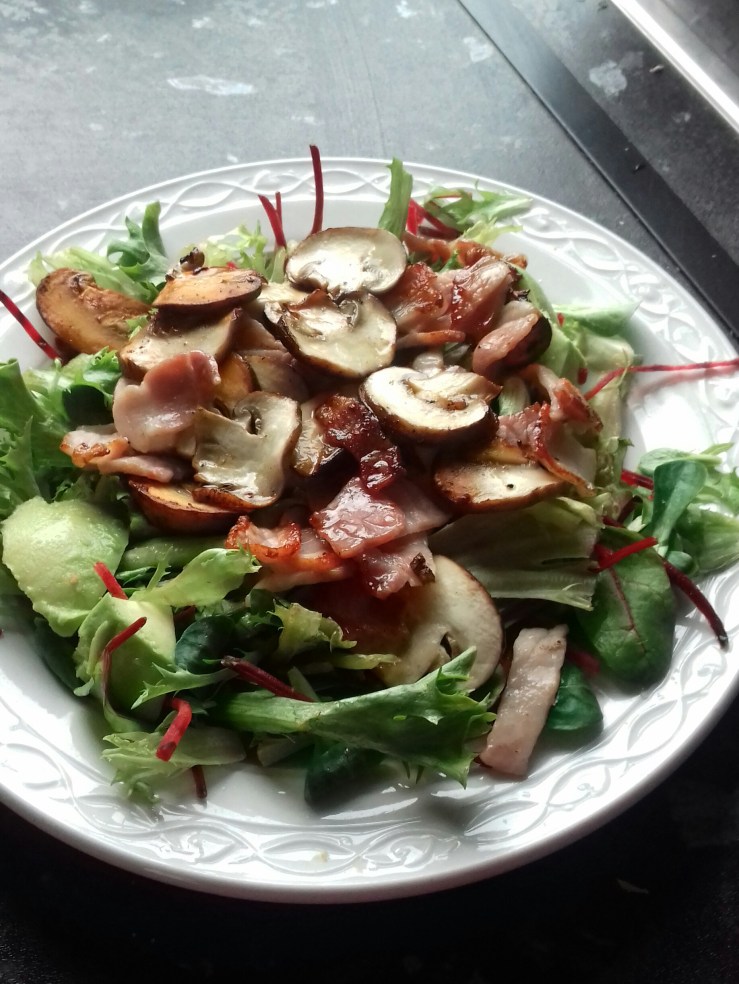
Avocado, mushrooms, bacon and salad – plant-based.

And now for something completely different… Last week, headline news suggested low-carb diets were dangerous—more likely to lead to an earlier death.

As it’s a rare week, some nutritional or lifestyle study doesn’t hit the news, I sighed. “Oh, whatever.”

I don’t have the skills or knowledge to interpret the data, but two websites I trust have commented on the studies (and more importantly, the way they were reported). You can read them here:

https://www.dietdoctor.com/all-over-media-low-carb-diets-could-shorten-life

https://www.diabetes.co.uk/news/2018/aug/new-low-carb-link-to-life-expectancy-should-be-interpreted-with-caution-99971624.html


*Was worth it.

**One of whom wore a tee shirt saying Vegan Runners. Just sayin’.

Cooking without limits: Refreshing lemonade

Ingredients:
3 lemon juices
1 liter water
A bunch of fresh mint leaves
½ tea spoon Stevia or sugar substitute to taste
Directions:
Mix everything together. If you don’t have ice put the jar in the fridge. Enjoy!

My friend Marion says don’t plant mint in your garden. It is so easy to grow it will take over everything.  Plant it in a pot and keep it on your patio. 

Lamb, Hummus—an Ethical Eating Experience?

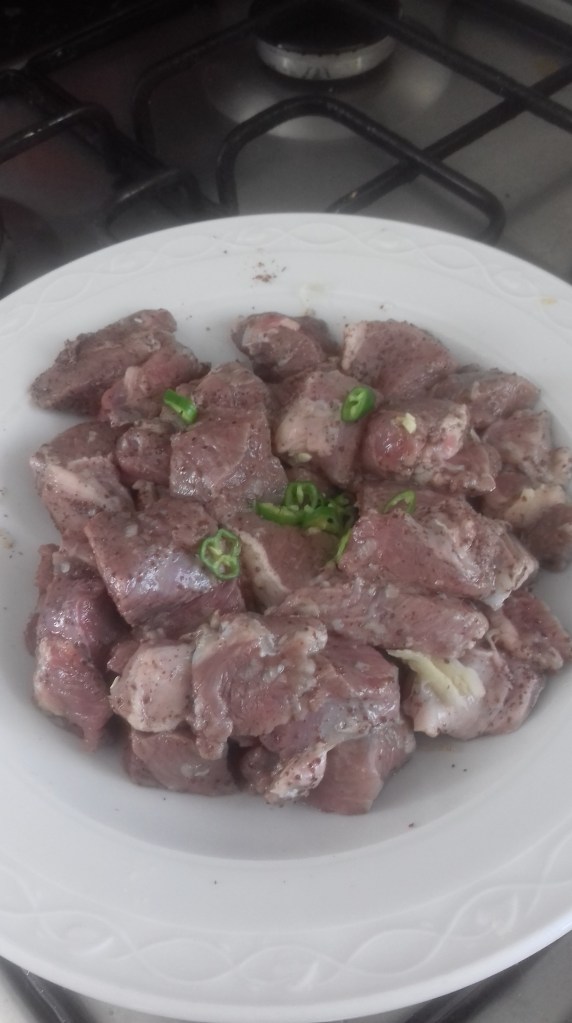
a picture of chunks of lamb marinating in a dish by The Diabetes DietCan you be an ethical carnivore? I asked the question in a post a few weeks ago as I’ve been reading The Ethical Carnivore – My Year Killing to Eat by Louise Gray.
The one-time vegetarian in me wants to feel that the food choices I make cause minimal suffering and don’t impact the environment as negatively as factory farming does. At the same time, I like following an omnivorous diet and think that is the best possible health choice.

So, what to eat?

Eat less meat

I believe in what small-scale producers do. They deserve our support, but their products are expensive and more of an effort to seek out. As many people have discovered before me, the answer is to eat less meat, which is what most people did in years gone by, and buy the best quality you can sourced from farms that treat their animals with respect and dignity.

Chicken, pork and beef are all problematic unless you buy them from farmers’ markets and small co-operatives because of the ways they are farmed before they are killed. The same applies to dairy. As for fish, most of the stuff in supermarkets comes from fish farms and/or is sourced from far-away countries, making it an environmentally unfriendly choice.

Unlike Louise Gray, I can’t bring myself to directly kill anything, hypocritical as that is. But I’m open to eating a lot less meat, trying out plenty of low-carb vegetarian dishes and including more beans and pulses in my diet.

Lamb – the ethical choice

I’m also happy to continue eating lamb, as the production of lamb doesn’t lend itself easily to factory faming. And there are sound arguments for it here. If you want to eat lamb in this country, it can be a challenge sourcing the UK stuff (an irony that appals me as a farmer’s daughter) because most supermarkets import New Zealand lamb.

Nevertheless, if you do find it, lamb lends itself to many delicious dishes, including this one – lamb with home-made hummus. This amount makes enough for two to three dinners.

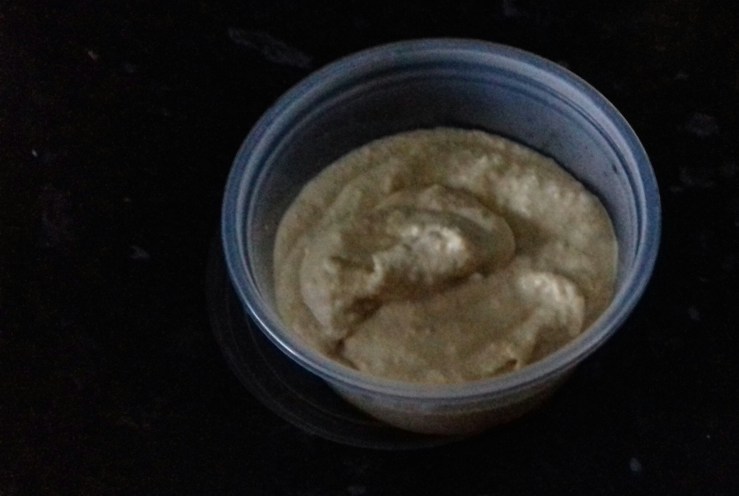
a pot of hummus made by The Diabetes DietFor truly velvet-y hummus, you should take the skins off the chickpeas. I’ve done it—once—and it makes quite a difference. But it’s a tedious job. Skins-on chickpeas will still make a fabulous-tasting dish.
Lamb with Hummus

  • Servings: 2-3
  • Difficulty: easy
  • Print

  • 2 lamb leg steaks, chopped into equal sized chunks
  • Juice of a lemon
  • 2 cloves garlic, crushed
  • I green chilli, sliced finely
  • 1 tbsp sumac
  • Rapeseed oil
  • 1 tin chick peas, drained
  • 3tbsp tahini
  • Salt and pepper

Mix the chopped meat in a bowl with a tablespoon of the lemon juice, salt and pepper, the sumac, chilli and one of the cloves of crushed garlic. Set aside to marinate for at least 30 minutes, though a couple of hours will benefit the dish.

Blend the garlic, lemon juice and tahini in a food processor so a minute or so to get it as smooth and combined as possible. Add the drained chickpeas and two tablespoons of rapeseed oil. Mix well. Add a tablespoon of water if you feel the mix is too thick. You can also use a hand blender to make the dish.

Heat a tablespoon of oil in a frying pan and add the meat. Cook over a high heat—the meat will take about five to ten minutes.

Serve with the hummus.

My carb-loving husband made his own flat breads to go with this, but it’s fine just as it is with a salad on the side—perhaps a Greek one to continue the Mediterranean theme.

Allow about 8-10g carbs per serving.


Lancet: Aspirin only works if it is the right dose for your weight

Low dose aspirin 75-100mg daily are only effective in reducing cardiovascular events in those who weigh less than 70kg found researcher Peter Rothwell.  This is the dose range used in the UK and the USA but 80% of all men and 50% of all women weigh more than 70kg.

Higher doses of aspirin are only effective for cardiovascular prevention in those over 70 kg and don’t work in those who weigh less than this. Therefore recommending the higher dose range won’t suit everyone either.

Some people also use aspirin to reduce the chances of other diseases such as colorectal cancer. The effects are thought to be dose related as well.

The take home message is that if you weigh less than 70kg stick to 75-100mg of aspirin a day, but if you weigh 70kg or over you should increase your dosage. For most people in the UK this will mean doubling up on 75mg to 150mg and in the USA where 82.5 mg is standard, upping this to 165mg daily.

Lancet doi:10.1016/S0140-6736(18)31133-4


BMJ: It doesn’t take much alcohol to damage your brain cells

Adapted from BMJ 24 February 18 Alcohol link to dementia is “robust” by Jacqui Wise

Chronic heavy drinking should be recognised as a major risk for dementia say French researchers.

They looked at over 31 million French adults discharged from hospital between 2008 and 2013. Over 1.1 million people had been diagnosed as having dementia.  In 57% of those with early onset dementia alcohol use was considered to be the cause.

Drinking more than 6 units of alcohol a day for a man and 4 units for a woman put you in the risk category of “heavy drinking” according to the World Health Organisation. This level will make both men and women more than three times more likely to develop dementia than they otherwise would.

Michael Schwarzinger said, ” The link between dementia and alcohol use is likely a result of alcohol leading to permanent structural and functional brain damage. Alcohol disorders also increase the risk of high blood pressure, diabetes, stroke, atrial fibrillation, and heart failure, which in turn increase the risk of vascular dementia. Heavy drinking is also associated with smoking, depression and low educational attainment which are also risk factors for dementia.”

Clive Ballard from the University of Exeter Medical School said, ” This study is immensely important. This evidence is robust and the public need to know about the relationship between alcohol consumption and dementia.”

My comment: I was really sad to read this report in the BMJ as I do love a nice glass of full bodied red when I’m eating a big lump of fatty spiced meat or a smelly gorgonzola. I was also dismayed to see what they regard as heavy drinking. 175 mls of most wines will be 2 units so two of them a day and you are three times more likely to get dementia, if you are a woman. I dread to think what a two week all inclusive holiday does to your brain. It is  always best to know these things before you get too batty to care.