Dr Lois Jovanovic:Everything you need to know about diabetes in pregancy

Dr Lois Jovanovic from Santa Barbara is an expert in getting great results with diabetic women in pregnancy. This video series from Diabetes in Control covers in depth interviews with Lois. Even if you are not pregnant or intending to be you can pick up information on how to get excellent blood sugar control in these videos.

Sheri Colberg: Quality of life matters more than longevity


Henny Nonne (geb. Heye), Max Nonne

For many years, I have focused on aspects of lifestyle and health management that can enhance quality of life, especially when living with a chronic disease like diabetes, rather than simply on living a long time (longevity). Much of my motivation is derived from the personal experience of watching my maternal grandmother suffer through six (long) years of severe disability related to cardiovascular complications of diabetes starting at the age of 70 that left her unable to feed herself or communicate, bed bound, and with almost no quality of life for her final six years of life. Really, what is the point of simply being alive when you’re really not experiencing life under such conditions?

This topic has come up again recently. New research published online ahead of print in Diabetologia in Spring 2016 (1) presented results showing that the life expectancy and disability-free life expectancy (with 95% uncertainty interval) at age 50 years were 30.2 and 12.7 years, respectively, for men with diabetes, and 33.9 and 13.1 years for women with diabetes. Really think about what those estimates mean: If you’re female and have diabetes at age 50, you would be expected to live almost to age 84, but likely be disabled in some way from the age of 71 forward. If the disability is severe (as in the case of my stroked-out grandmother), then that is a lot of pointless years of being alive without really living, not to mention the cost of caring for someone with medical disabilities that could be a huge burden to your family and the health care system.

Admittedly, that’s pretty discouraging. The best solution may be to focus on what we can do to prevent disability as we age rather than simply living longer, especially with diabetes. Here are three proven ways to improve your quality of life with diabetes (and likely your longevity):
1. Exercise regularly and be more physically active overall.

Even if you already have some diabetes-related health issues like peripheral neuropathy, which can negatively impact quality of life, exercising regularly can help. In a small study on older adults with diabetes and neuropathy, engaging in just 8 weeks of moderate-intensity aerobic exercise was shown to be a cornerstone in improving their quality of life, including experiencing less pain, more feeling in their feet, less restriction in their activities of daily living, better social interactions, and a greater overall life quality—just after 8 weeks of training (2). Other types of physical activity have similar and profound effects on living well with neuropathy (3), so choose the activities that you enjoy doing the most and start with those.
2. Eat more fiber, found abundantly naturally in plant-based foods.

We all know we should be eating more fiber, but where can you find it (besides in Metamucil, which may not have the same health benefits)? Look for it in plant-based foods, mainly fruits, vegetables, grains, beans, and nuts and seeds. Why can it enhance your health and quality of life? Dietary fiber and whole grains contain a unique blend of bioactive components including resistant starches, vitamins, minerals, phytochemicals, and antioxidants, all of which are critical to healthy living. A higher fiber intake helps prevent or protect against many of the health issues that can decrease both quality of life and longevity, including certain gastrointestinal diseases, constipation, hemorrhoids, colon cancer, gastroesophageal reflux disease, duodenal ulcer, diverticulitis, obesity, diabetes, stroke, hypertension, and cardiovascular diseases (4). It also keeps the healthful gut bacteria in your digestive tract more abundant, which directly can benefit health and even prevent obesity. Aim for as much as 50 grams of fiber in your daily diet for optimal health.
3. Improve the quality and quantity of your sleep.

Both sleeping better and sleeping adequate amounts (7 to 8 hours a night for most adults) lower insulin resistance and can help improve diabetes control; alternately, not getting enough good sleep can make your blood glucose levels much harder to manage effectively. As you age, it may require taking a melatonin supplement to help you fall asleep and may help improve diabetes control (5), but exercising regularly certainly assists in both as well, so try taking your daily dose of exercise to optimize sleep.

Get started on these three easy changes today to improve your chances for living longer without disabilities. Remember, there’s more to life than living a long time. What’s the point of living longer if you can’t live well and feel your best every day of your life? It really is your choice to make because you can affect the outcome.

References cited:
1.Huo L, et al. “Burden of diabetes in Australia: life expectancy and disability-free life expectancy in adults with diabetes” Diabetologia 2016; DOI: 10.1007/s00125-016-3948-x.
2.Dixit S, Maiya A, Shastry B: Effect of aerobic exercise on quality of life in population with diabetic peripheral neuropathy in type 2 diabetes: a single blind, randomized controlled trial. Quality of Life Research 2014;23:1629-1640
3.Streckmann F, Zopf EM, Lehmann HC, May K, Rizza J, Zimmer P, Gollhofer A, Bloch W, Baumann FT: Exercise intervention studies in patients with peripheral neuropathy: a systematic review. Sports Med 2014;44:1289-1304
4.Otles S, Ozgoz S: Health effects of dietary fiber. Acta Scientiarum Polonorum Technologia Alimentaria 2014;13:191-202
5.Grieco CR, Colberg SR, Somma CT, Thompson A, Vinik AI: Melatonin supplementation lowers oxidative stress and improves glycemic control in type 2 diabetes. International Journal of Diabetes Research, 2(3): 45-49, 2013 (doi: 10.5923/j.diabetes.20130203.02)

In addition to my educational web site, Diabetes Motion (www.diabetesmotion.com), I also recently founded an academy for fitness and other professionals seeking continuing education enabling them to effectively work with people with diabetes and exercise: Diabetes Motion Academy, accessible at http://www.dmacademy.com. Please visit those sites and my personal one (www.shericolberg.com) for more useful information about being active with diabetes.

by Dr. Sheri Colberg, Ph.D., FACSM


Published in Diabetes in Control 2nd July 2016

Continuous glucose monitors give 1% reduction in Hba1c

free styleVancouver doctors took 12 patients  type two diabetes who were using insulin and gave them continuous blood sugar monitors to help them improve their blood sugars.

Participants used these for 3 months, kept food records and maintained weekly contact with a registered dietitian/registered nurse team.  After 3 months, patients were told to discontinue sensor use and weekly contact and return to usual care.

HbA1c averages started at  8.2  which decreased to 7.1 during the program period and did not increase during the 15 months of patient follow-up.

Hypoglycemia (glucose < 4 mmol) at the beginning of treatment, was an average of 3.5  per week and was unchanged at the end of the study to 2.8.

“In conclusion, our program empowered patients with the knowledge and skill to maintain glycemic control,” Dr Haniak said. “Furthermore, this program is a very effective teaching tool for those patients with severe hypoglycemia to also sustain and maintain glycemic control.”

Haniak P, et al. Abstract 179-OR. Presented at: American Diabetes Association’s 75th Scientific Sessions; June 5-9, 2015; Boston.

Focused Care Improves Control Without Hypoglycemia Risk

From Diabetes in Control June 26th, 2015

My comments: Surely giving patients the Freestyle Libre or similar for a period of time combined with education on a low carbohydrate diet and blood sugar management would be cost effective in the NHS?

Free Style Libre Trial – My Experiences

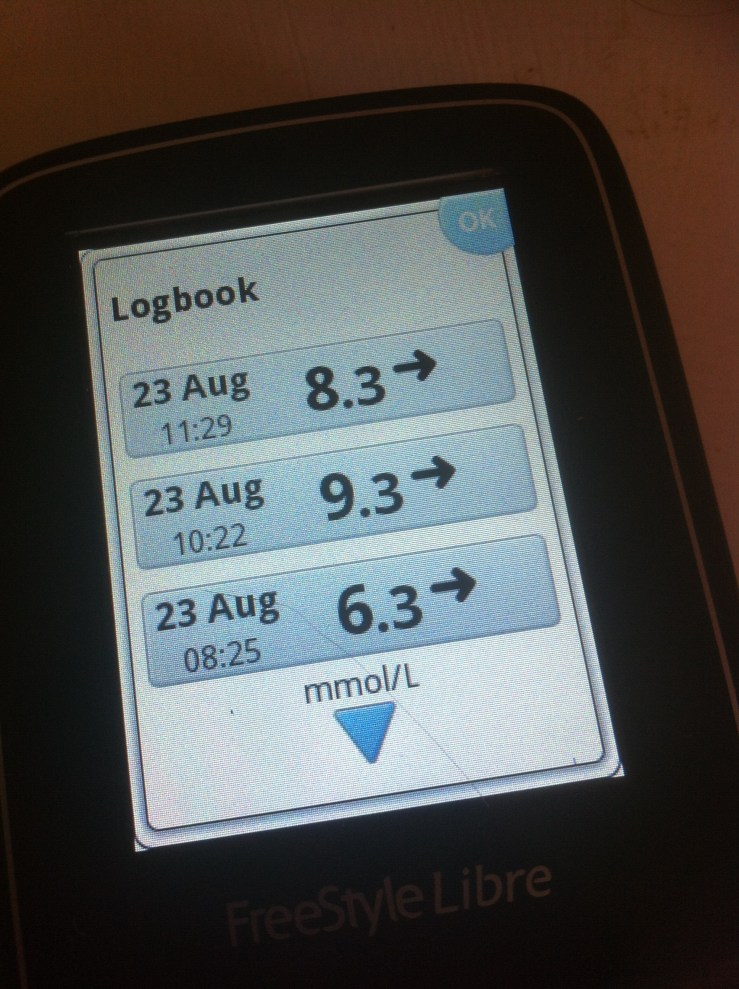
free styleMy Free Style Libre trial ended this week. Was it a good/bad/in different experience?

The Free Style Libre is a new way of testing your blood glucose levels. You attach a sensor to your upper arm (right arm if you’re left-handed like me and vice versa), and then you use a reader to scan the sensor and it gives you your results in a second.

You can also see what your blood glucose has been doing for the last eight hours, and you can tell if it’s going up or down, quickly or slowly, or staying stable.

Calculating Insulin Doses

There’s also a feature for calculating insulin doses, and you can use the reader in the traditional way to test blood glucose through a finger prick if you have the strips suitable for the system. I didn’t use either of these features.

It was interesting. As someone who only recently managed to get out of the slightly obsessive compulsive blood testing habit, I scanned a lot. It’ll be hard to go back to limited tests. Seeing what your blood sugar does over eight hours – particularly overnight – is also fascinating.

In general, my blood sugar dips first thing, and then rises through the hours of the morning – something I believe is common in most people.

Checking Levels

I liked it because I could check frequently. Do I think it improved my overall control? Too hard to tell and two weeks doesn’t give you that knowledge. Would I like to keep it? Yes. It’s wonderful being able to check your levels whenever you want. Jokes aside about obsessive compulsive testing – and actually, I didn’t do check half as much as I thought I would – knowing that you can check whenever you want is liberating. I get through five boxes of 50 blood testing strips every two months and sometimes it’s feels as if I’m eking them out, as that works out as less than five strips a day.

As I said in my original post, which you can read here, the biggest drawback of the Free Style Libre is that it is not available on the NHS. The sensors need to be replaced every 14 days and they cost £56 (£48 when you apply the VAT exemption you are entitled to as a type 1 diabetic), which works out at £1,248 a year if you use it all the time.

Occasional use is an option though. It would be nice to have a few sensors in stock for that possibility.

Have you used the Free Style Libre – or is it something that appeals to you? What do you think the benefits to you could be? We’d love to know.

Diabetes Self-Care is Often at The End of the List for Patients. Why?

Jim_Gaffigan_making_a_goofy_excited_face,_Jan_2014,_NYC

A team of Swedish medical researchers interviewed 24 people who had diabetes to see if there were factors that got in the way for self-caring behaviours that enhanced diabetes management. They found that some patients didn’t believe diabetes was all that serious, that it was way down the priority list compared to dealing with other life problems, that they didn’t believe it was under their control anyway and that it simply wasn’t worth sacrificing a good time for.

Any of this sound familiar?

Other illnesses, emotional distress, prioritising the needs of others and money problems all seemed to get in the way of getting to grips with self- care routines that are the crux of effective diabetes management.

For patients who are struggling with the condition, the authors think that medical professionals would be far better of focusing on what is desirable and realistic for individual patients rather than trotting out the “usual” advice, which is often perceived as being totally beyond the ability of some people and at some times in their lives.

Family support has been recognised as been a major factor in diabetes management adherence. The health care system and how easily it can be accessed is another environmental factor. Susann Strang, with her nursing background, understands that the patients’ life experiences, current situation, cultural background, beliefs and attitudes all affect their willingness and ability to follow treatment recommendations. If consultations are patient centred rather than protocol centred improvements in glycaemic control can be seen.

The patients who were interviewed for the study came from an area of Sweden with a high number of immigrants and a low socio-economic status. The number of smokers and amount of cardio-vascular disease was higher than more affluent areas in Sweden. A range of type two patients over the age of 18 were given in depth interviews. They were asked, “What does living with diabetes mean to you?”

Many people said that their lives had become more structured and limited by the diagnosis of diabetes. They were aware that food and medicine were basic issues in the control of the condition and had incorporated routines into their lives so that particularly those who had had diabetes for some time almost forgot about it. “For me diabetes is only something I have and I will have it as long as I live. I don’t think so much about it. It is like having a cup of coffee in the morning, or like going to the laundry.”

The lack of symptoms accompanying high blood sugars often led people to relax about diabetes management. Work responsibilities, home problems, lack of support, loneliness, and frank depression all reduced quality of life and put diabetes into the background. Immigrants often missed their old lives and countries or worried about relatives. Some had given up prior religious beliefs as a result of trauma they had witnessed.

Cardiac disease, high blood pressure, inflammatory problems, chronic obstructive lung disease and depression often seemed more important issues than diabetes, particularly when it was almost without any perceptible symptoms.

Some people thought that it was their fate to get diabetes. They also did not believe that changing their lifestyle was their responsibility. “The only thing the doctor complains about is losing weight. No matter how hard I try I can’t get below 84kg. I’m just like my parents. So it has to do with the genes. And you can’t change them.”

Respondents sometimes discussed feeling hopeless and resigned to the situation. One even thought that society was to blame for his lack of motivation to change his lifestyle.

Although most patients had had nutritional advice, most had trouble keeping to the plan. The social factors of enjoyment of food were seen as more important than eating right for diabetes control. The taste of food, perceived boredom of healthy food, and cooking ability all affected the degree to which people were willing to change their diet.

The majority of respondents were well aware of the positive effects of physical activity yet some took no exercise at all. To explain this they said they were lazy, exercise was boring, it was more convenient to sit on the couch or at a computer, it was painful to exercise, they were too tired, they were depressed, they had sleep problems, they had no idea how to go about it and they didn’t have enough money to exercise. Some worried that exercise was bad for the heart.

Sadly other studies by ST Miller and P Jallinoja also have identified the same unwillingness to change to a more beneficial lifestyle is not uncommon among people with diabetes.

The authors recommend that health care professionals learn about the way individual patients view living with diabetes and what type of care they really prefer. As patients can change their views over time, keeping the door open to change is recommended.

The Danish philosopher Soren Kierkegaard said, “If I want to succeed in bringing a person towards a specific goal, I must find out where she is and start from there.”

Adapted from Diabetes in the shadow of daily life: factors that make diabetes a marginal problem. Anders Agard, Vania Ranjbar, Susann Strang. Practical Diabetes March 2016.


Dr Bernstein’s Diabetes University on You Tube

Diabetes in Control Advisory Board member, Dr. Richard K. Bernstein, has recently created, “Dr. Bernstein’s Diabetes University,” a complete course of video classes geared towards patients, which is now available on Youtube. Dr. Bernstein’s Diabetes University Playlist includes these short videos: “Basic Science of Diabetes,” “Values and Methods of Exercise,” “How Much Protein,” plus much more. Just follow this link for more information: Dr. Bernstein’s Diabetes University Playlist
bernstein

Diabetes duration and control affects intellectual decline


324468854_8f9fd42793_z

People who have diabetes diagnosed in midlife have a higher risk of cognitive decline over the following 20 years compared to people with normal glucose levels. A prospective study done in the USA showed that there was a 19% increased risk of cognitive decline over the 20 years for those who had diabetes. This meant that having diabetes aged cognitive function by about five more years than normal.

The level of decline was associated with the degree of control of the diabetes. Those with HbA1cs over 7% were more at risk than those with a better degree of control.  Increased duration of diabetes also led to a higher risk.

The study reviewed 13,351 year olds who were aged 48-67 at the start of the study for 20 years. Associate professor of epidemiology Elizabeth Selvin of John Hopkins University said of her findings, ” The lesson is that to have a healthy brain when you are 70, you need to eat right and exercise when you are 50. Maintaining cognitive function is a critical aspect of successful ageing. Preventing diabetes and improving glucose control in people with diabetes offers important opportunities for preventing cognitive decline and delaying progression to dementia”.


Freestyle Libre: continuous blood sugar monitor available in the UK

Freestyle have released the first reasonably priced continuous blood sugar monitor in the UK. Unfortunately it is not yet available on the NHS. You can purchase it for £157 and get extra sensors which each last two weeks for just short of £60 each.

Most blood test strips cost between 30p and 50p each. Most type one diabetics will be using 5 or more test strips a day. This costs £9,125 per person based on 5 strips at 50p each. A years supply of sensors for the Freestyle Libre will cost £1,508 so you can see that it has been priced fairly reasonably.

The new system works by having a sensor, about the size of a ten pence piece, inserted in the triceps area of the upper arm for up to two weeks at time. The adhesive is strong enough to withstand daily baths, showers and swimming activities. After an hour the new sensor is good to go.

After initial programming with your personal blood sugar targets, the mobile phone sized monitor picks up not only your blood sugar but shows the trend in which it is directed by means of directional arrows. This is perhaps the most important feature of the new machine. It would be really helpful for most people to know this when they are about to drive for instance, or if they are trying to address rising blood sugars during an attack of flu.

The number of times you can check your blood sugar with the Freestyle Libre is limitless and there are well designed graphics to show you how your blood sugars have performed over time.

80% of the costs of diabetes on the NHS is related to the treatment of complications. It seems to me that it would be money well spent for the NHS to invest in this new technology that can help diabetics control hypoglycaemia better as well as helping them keep their blood sugars in range and avoid high blood sugars. DTR_Libre_6995.jpg


Diabetics benefit from moderate red wine with meals

hqdefault (1)

Red wine consumption has been linked with improved cardiovascular outcomes in patients. The results of a new study published in the Annals of Internal Medicine suggest that these benefits extend to diabetic patients as well. In addition, moderate consumption did not cause liver damage.

The study was a two-year randomized clinical trial that took place in Israel. The study included 224 randomly assigned subjects who were all following the Mediterranean diet without caloric restriction. All subjects were alcohol-abstaining and had well-controlled type 2 diabetes. The subjects were randomly assigned to drink 150 mL of mineral water, white wine, or red wine with dinner for the duration of the trial.

The study authors looked at two primary outcomes: lipid profiles and glycemic control. Patients in the red wine group saw their HDL cholesterol levels significantly increased by 2.0 mg/dL (95% CI, 1.6 to 2.2 mg/dL; P < 0.001) and their apolipoprotein(a)1 levels increased significantly by 0.03 g/L (95% CI, 0.01 to 0.06 g/L; P = 0.05). Furthermore, their total cholesterol to HDL cholesterol ratio decreased by an average of 0.27 (95% CI, -0.52 to -0.01; P = 0.039). Red wine also reduced the number of components of metabolic syndrome by 0.34 more than the mineral water group (95% CI, -0.68 to -0.001; P = 0.049).

Red and white wine patients who were slow ethanol metabolizers (carriers of the ADH1B*1 alcohol dehydrogenase allele) had significant improvements in fasting plasma glucose, insulin resistance, and hemoglobin A1c. Fast ethanol metabolizers (patients homozygous for ADH1B*2) did not see these benefits.

There were no changes among the groups for blood pressure, adiposity, drug therapy, symptoms, or liver function. This suggests that moderate wine with dinner will not cause liver damage. There was one quality of life improvement that patients in both wine groups saw over the mineral water drinkers: increased sleep quality (P = 0.040). Overall, this study suggests that moderate red wine intake in well-controlled diabetics in conjunction with a healthy diet is safe and improves lipid profiles. Patients who are slow ethanol metabolizers may also have glycemic control benefits.

This trial did have several flaws though. Patients and researchers both knew which group consumed what beverage. This could potentially have influenced the increased sleep quality reported in both wine groups. Perhaps more importantly, all the patients in this study were already adhering to a healthy Mediterranean diet, which is suspected to improve heart health itself and had well-controlled diabetes. Further studies are needed to elucidate the mechanisms and extent of ethanol’s benefits, especially in patients who are not well-controlled or consuming ideal diets. Patients should be cautioned that red wine consumption is not a substitute for heart or diabetes medicine.

Practice Pearls:
•In a study of well-controlled diabetes patients adhering to the Mediterranean diet, 150 mL of red wine with dinner improved lipid profiles.
•Patients who were slow ethanol metabolizers had improvements in glycemic control in both the red wine and white wine groups.
•The red wine and white wine groups did not have differences in liver function with the mineral water group.

Gepnyer Y, Golan R, Harma-Boehm I, et al. Effects of Initiating Moderate Alcohol Intake on Cardiometabolic Risk in Adults With Type 2 Diabetes: A 2-Year Randomized, Controlled Trial. Ann Intern Med. 2015 Oct 13. Epublished ahead of print. doi: 10.7326/M14-1650.

From Diabetes in Control October 15

Genteel claim first painless lancet device that takes accurate blood sugars from different sites

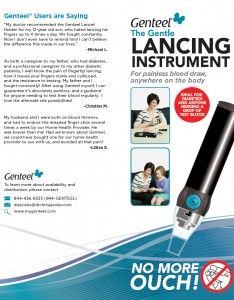
Genteel palm pic.pngThe USA company Genteel have developed a new lancet device that is reported to be painless and can be used successfully for blood sampling in a variety of sites.  It is only available in the USA but can be shipped from there.  It does cost $129 plus lancets and postage so it does not come cheap. The manufacturers explained how the new device has a role in diabetes management….

The common belief, presently held by many endocrinologists, is that test blood, drawn from the fingertips, gives a more current and accurate indication of blood glucose than blood drawn from alternate sites, such as the forearm, shoulder and stomach. Unfortunately, for many with diabetes, the fingertip areas are those most laden with pain nerves, causing the lancing process to be the most sensitive and uncomfortable as well as leaving the finger tips bruised, calloused and with reduced tactile sensation.

Fortunately, Genteel researchers have found four new test sites that appear to give the same response time and accuracy as finger tips, now affording the option of relief to these most common testing sites. These two sites are located on the fleshy area of the palms, on a line between where the thumb joins the palm and the center of the wrist (thenar), and fleshy area along a line connecting where the pinky joins the palm to the wrist (hypothenar).

To verify this assertion, the following tests were done at Genteel’s test facility. Test subjects fell into three categories: non-diabetic, pre-diabetic, and under-control diabetic. Tests consisted of simultaneously taking blood samples from alternate sites, such as the forearm, fingertips and from the thenar/hypothenar areas. The tests began at (t=0) after a prolonged period (at least 2 hours, and mostly after arising from a night’s sleep). This was considered the static blood glucose level, or baseline. Before first blood drawn all subjects sat for 15 minutes in a room at a temperature of between 68 and 73°F. At the start time (t=0), each test subject consumed the standard 15-gram load of fast-acting glucose. Thereafter, at 5-minute intervals, blood glucose levels were simultaneously measured in these same three test areas: alternate site, finger tips, and either the thenar or hypthenar areas. After testing at 5-minute intervals for 1 hour, test intervals were increased to 10 minutes, for another hour, or until blood glucose levels returned to at, or near, baseline levels, whichever came first.

Four Charts Using Typical Data, Out of the 24 Subjects Tested
Figure 1.1: Measuring Rate of Change Between Calf/Knee (Alternate Site), Finger Tip, Thenar and Hypothenar Eminence of Palm – #17

Figure 1.2: Measuring Rate of Change Between Calf/Knee (Alternate Site), Finger Tip, Thenar and Hypothenar Eminence of Palm – #31

Figure 1.3: Measuring Rate of Change Between Calf/Knee (Alternate Site), Finger Tip, Thenar and Hypothenar Eminence of Palm – #23

Figure 1.4: Measuring Rate of Change Between Calf/Knee (Alternate Site), Finger Tip, Thenar and Hypothenar Eminence of Palm – #27

Figure 1.5: Measuring Rate of Change Between Calf/Knee (Alternate Site), Finger Tip, Thenar and Hypothenar Eminence of Palm – DG

Conclusion:
Blood glucose levels on the thenar and hypothenar areas of both hands consistency matched those on the finger tips well within meter accuracy. Both areas had matching bell shaped curves reaching approximately (within meter accuracy) the same growth rates and peak levels at the same times. The alternate site not only lagged behind both the thenar and hypothenar areas by about 22 minutes, but only reached about 70% the rise from the static level to peak values.

Genteel’s test lab results indicate that the thenar and hypothenar areas are viable alternatives to finger sticks because they have less pain nerve density. However, blood does not rise easily or readily to the surface in these areas without using specific technology currently present in Genteel’s lancing instrument, and applied over the lancing site. With this technology, comfortable and extremely accurate blood draw is readily available, allowing finger tips to heal and regain sensation.

Contraindications:
All who now wish to test from these new sites should check with their doctor to be certain there are no special metabolic considerations that would preclude you from testing on these new areas.

Literature and laboratory research are continuing on the subject. If you would like to be informed of the latest results, go to support@mygenteel.com, provide your email and add the note, “Palm Research Results.”