Paperback Copy of the Diabetes Diet

If you’d like a paperback copy of The Diabetes Diet, you can now buy one via CreateSpace on Amazon. The e-book version has been there since 2014, but we know many people prefer to hold something solid when they are reading. It’s a lot easier to work from a book when you’re making recipes, for example.
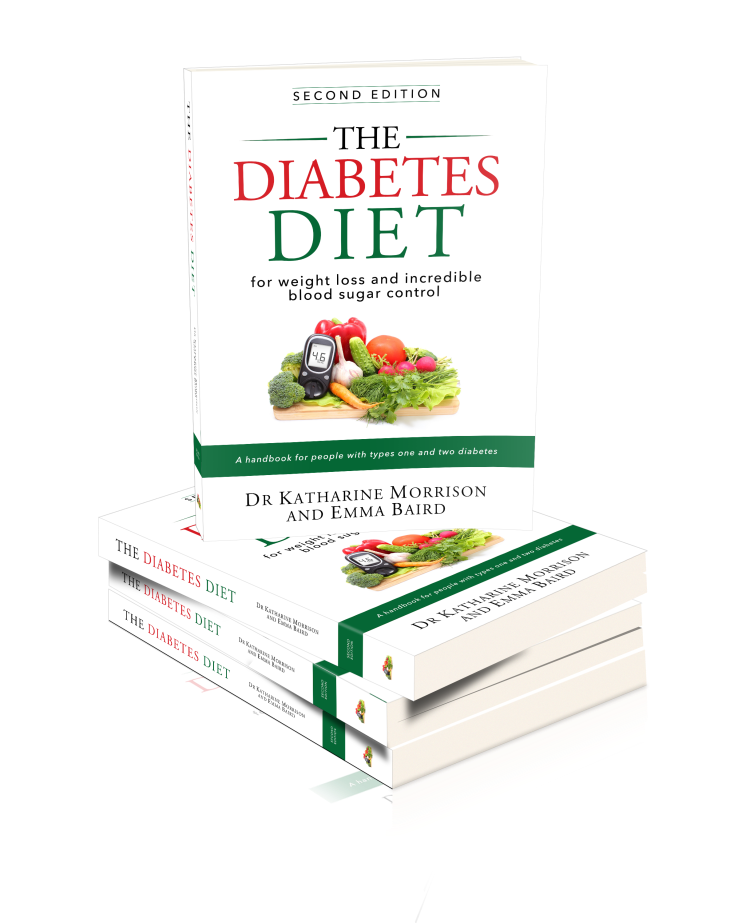
diabetes diet
The Diabetes Diet is now available in paperback and e-book.

The Diabetes Diet by Dr Katharine Morrison and Emma Baird explores what people affected with type one diabetes and type two diabetes, pre-diabetes and obesity need to do to get mastery over their blood sugar control, metabolism and weight.

The scientific reasoning behind the low carbohydrate dietary approach is fully referenced and made easy by menu plans and low-carb recipes. You will be introduced to information and case studies that help you decide what level of blood sugar control, carbohydrate restriction and monitoring is most appropriate for your individual needs.

Children, adolescents, women needing contraception or planning a pregnancy, drivers, keep fit enthusiasts, and those with emotional problems or co-morbidities will find advice in this book for them. We also help those new to exercise fit it into their lives.

In the Diabetes Diet, doctors, nurses and dieticians will learn about the dietary approach endorsed by the American Association of Clinical Endocrinologists and the Nutrition and Metabolism Society but which is not yet taught in most NHS diabetes clinics or by the American Diabetes Association.

The complexities of insulin management for optimal insulin to meal matching is covered in depth and other medications used in diabetes are discussed. Many people think that a sensible and scientifically accurate approach to blood sugar management is long overdue for diabetics including Ron Raab, ex vice president of the International Diabetes Federation, who has contributed his story about how this way of eating and low-carb recipes have helped him manage diabetes in this book.

This book can help those with type 1 diabetes AND type 2 diabetes. It won’t cure diabetes, but it will make living with the condition so much easier.

Money-Saving Tips for The Diabetes Diet

Emma Baird
A microwave is the cheapest way to cook. And I needed another excuse to share this picture.

January usually means tightening the belt, money-wise. Is it possible to do a low-carb diet cheaply? Here are our money and energy-saving tips…

If you want to spend less, one area to look at is how much energy you use to cook. This is where crock pots and pressure cookers come in, as they use far less energy than the oven and hob.

I listened to a recent episode of The Kitchen Café on Radio Scotland, and MasterChef Professionals winner Gary McLean raved about pressure cookers. You can do a lamb stew in about twenty minutes, as opposed to two hours.

While a crock pot (slow cooker) works the opposite way, they are also much more energy efficient. As is the case with pressure cookers, food cooked the slow cooker way doesn’t move as much as it would when done on top of the stove. This results in vegetables that are less mushy. Recipes that work in both the pressure cooker and the slow cooker are ones that involve liquid, so soups, stews and curries are your best bet.

Pressure and slow cookers work well for cuts of meat that need lots of cooking, i.e. the cheaper cuts.

Poach, rather than boil eggs. If you want a hard-boiled egg, you’ll need to bring the water to a boil and then keep it simmering – something that can take ten minutes or more. Poached eggs, on the other hand, can be done by boiling water in the kettle, putting it on the stove and bringing it to the boil, adding your egg and turning off the heat immediately. Cover the pan, and your egg will be done in five minutes.

Buy your eggs at the farmers’ market – they are usually cheaper than the supermarket (for free-range eggs) and tend to come from hens that are treated better.

Eat liver. Chicken and lamb’s liver are very cheap, quick to cook and super nutritious. Chris Kresser calls it the most potent superfood.

Batch cook. If you batch cook, you can create plenty of tasty meals that can be stored in the fridge or freezer. Many American recipes, for example, tend to specify lots of portions. If you batch cook, you might use the oven for more than one recipe, which is more energy efficient. It also saves time. Do all your cooking in one go for the week, and then you just need to heat up meals.

Buy the bargains. If you shop later at night, you’ll pick up meat that is on its sell-by date. You can freeze it immediately or do your batch cooking afterwards.

Make the most of mince. Mince is a versatile ingredient, and it’s interchangeable. Turkey mince can take the place of steam mince in most recipes and vice versa.

Use your microwave. Microwaves vary greatly, but if you can work out how to use yours to cook fillets of fish, poach eggs or do slices of bacon, you’re laughing. Microwaves don’t need to be heated before they will cook food, making them one of the most energy-efficient ways to cook.


Diabetes Resolutions for 2018

diabetes dietHave you made yourself big promises this year? It’s tempting to say, “Well, 2018 is THE year I eat low-carb ALL THE TIME and achieve near-normal HbA1c results every time I get my levels checked…”
I decided on some small goals this year. And when I’m finished, it’s your job to add your own super small goal to the comments – the more modest and dafter the better! As any goal-setter knows, wee ones are achievable and sustainable.

  1. Change the needle on my blood lancer more frequently. There is a video on YouTube where a young type 1 confesses to changing hers infrequently. I’m the same. (Blushes deep red – like, weeks can go by…)
  2. Inject mindfully. When you’ve had diabetes for 35 years, you do injections automatically to some extent. I won’t be the only person who sits down to a meal and can’t remember if the medication has been taken or not. Pump users don’t get this, as their device will tell them. You can also get pens that tell you too. In the meantime, FULL ATTENTION INJECTIONS only*.
  3. Stop going on about my steps. See my earlier post on this. Is there anything duller than the step bore?
  4. Tell people in the gym I have diabetes. Ahem, I don’t bother ‘fessing up when the instructors ask if anyone has anything wrong with them as I hate drawing attention to myself. But it’s irresponsible of me.
  5. Stop reading articles about the ‘potential’ cure for diabetes. Whatever stage this is at, it’s a long way off. I’ll pay attention when it’s the headline article on BBC News at Ten.
  6. Book in for a pedicure. Tenuous, I know, but we diabetics are supposed to take extra care of our feet so an hour of having them rubbed, descaled and anointed with unctuous cream counts, right?
  7. Stop thinking having diabetes makes people fabulous. My example here is James Norton. Before November 2017 I was already in love with James. Then, I found out he’s a type 1 diabetic and my heart imploded. Oh sod it, that’s not a resolution. Clearly, diabetes makes you AMAZING.
  8. Turn down s**t I don’t want to do and use the diabetic excuse. I’ve had 35 years of not using it, so it’s about time I took advantage.


*I joke about this, but there’s a serious side of course. Inject yourself twice accidentally, and you’re at serious risk of hypoglycaemia.

Plant-Based – Does it Just Mean Vegan?

diabetes diet by Emma Baird
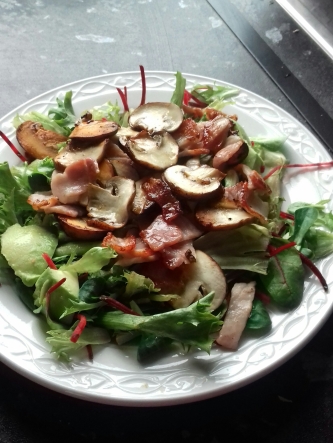
Avocado, mushrooms, bacon and salad – plant-based, hmm?

Happy New Year from all of us at the Diabetes Diet. Here’s wishing you health and happiness in 2018.

Anyone with an interest in health and fitness can’t have missed noticing the current furore around veganism. Proponents tout it as THE ethical and environmental way to eat, and it is very fashionable. Your local supermarket has probably vastly increased its vegan offerings (or the labelling of such foods anyway) and you’ll notice many restaurants and take-away chains have jumped on the bandwagon too.

There are even those who argue a vegan diet is helpful for diabetes, such as Dr Neal Barnard who promotes a vegan, fat-free way of eating as the way to reverse diabetes.

I don’t dispute veganism as an ethical choice. As far as environmental factors go, you could point out that wide-spread veganism would increase the production of mono-crops, a process that depletes the soil and cause issues. The recent over-consumption of coconut oil and avocados in the west has caused enormous problems in their countries of origin.

Health Benefits

When it comes to health, the bonuses of veganism often occur because people shift from a diet of highly processed foods and little fruit and veg to a way of eating that is plant-based. The health benefits may not come from ditching meat, fish and dairy per se, but more from vastly increasing how much fruit and veg they eat and getting rid of processed foods which are hard to find on a vegan diet*.

Let’s argue semantics here. I eat a plant-based diet. The bulk of the food on my plate is plants, nuts, some lentils and pulses and the odd wholegrain.

I just happen to eat meat, fish, eggs and dairy too. Yesterday, I ate scrambled eggs and chopped tomatoes for breakfast, an avocado, mushroom and bacon salad for lunch, and for dinner I had tomato, onion and barley stew with some haddock and steamed broccoli. I ate some peanuts for a snack.

That’s a plant-based diet, isn’t it?

Plant-based Taken to Mean Veganism

For whatever reason, plant-based is now taken to mean veganism. Perhaps someone somewhere thought plant-based sounded nicer than veganism, or they wanted distance from the term, which in the past might have had negative connotations.

Just as Dr Barnard puts forward an argument for veganism as a way of treating diabetes, so do we with low-carb eating. The global diabetes community, diabetes.co.uk, runs an award-winning digital health intervention for people with type 2 diabetes, pre-diabetes and obesity. It was developed using the feedback and opinions of more than 100,000 people who reported good results from low-carb. Like our approach to diabetes, the site’s website promotes lots of vegetables. Plant-based again, right?

If ethical concerns still bother you (as they do me), there are steps you can take.

  • Buy your eggs from the Farmers’ Market where they are likely to be free-range and organic.
  • Buy meat that has an RSPCA stamp on it, or again from the Farmers’ Market where animals are more likely to have been raised and slaughtered in a better way.
  • Eat dairy sparingly, and again choose organic options, preferably from local producers.
  • Investigate where your fish comes from and how it is farmed.
  • Base some of your meals around egg-free Quorn products and tofu.

Here’s to a plant-based 2018! And if you’d like to start a low-carb diet, check out our book – available in e-book and paperback on Amazon.

*Though the food industry is now doing its best to up its production of vegan junk food.

Curried Lentil Soup with Leftover Turkey

diabetes dietToo much turkey? Here’s an idea for something to do with those scraps of meat you have hanging around. This recipe uses lentils – carbohydrates, we know. But in soup, their impact will be minimal, and they add fibrous, protein-y goodness to your diet.

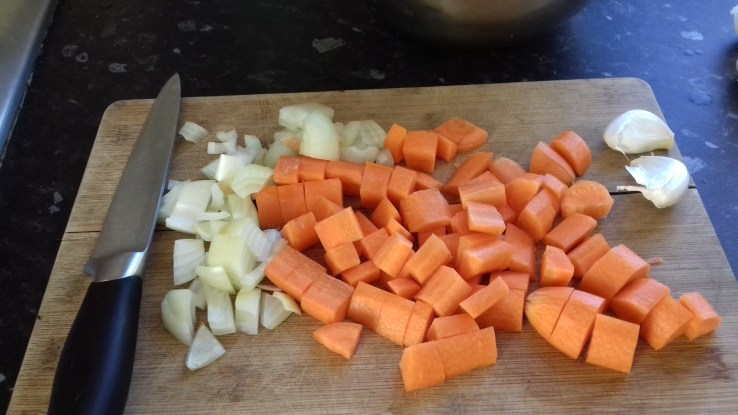
Other good things in this soup include turmeric (your liver will thank you for it at this time of year), chillies and garlic to ward off colds, and onions and carrots. I also made the stock from scratch, boiling up the turkey bones with a couple of onions and some carrots.

Enjoy – and all the very best from all of us at The Diabetes Diet. We wish you health, happiness and success in 2018.

Leftover Turkey and Curried Lentil Soup

  • Servings: 4-6
  • Difficulty: easy
  • Print

  • About 150g cooked, left-over turkey
  • 1 small onion, diced
  • 2 medium carrots, cut into chunks
  • 2tbsp rapeseed oil
  • 2 cloves garlic, crushed
  • 1tsp chilli flakes
  • 1tsp turmeric
  • 1/2tsp freshly ground black pepper
  • 150g red lentils
  • 1.25 litres fresh turkey or chicken stock
  • Salt to taste

Fry the onion and carrots in a large stock pot in the oil until softened – about five minutes. Add the lentils, chilli, turmeric and black pepper and mix well so the lentils are coated in everything.

Add the turkey, stock and garlic and bring to the boil. Turn down to a simmer and cook for 20 minutes until the lentils are softened. Add salt to taste – lentil can take quite a bit of salt.

Each serving has 14g of carbs (for 4) and 6g of fibre, so 8g net carbs. For six, it’s 9g carbs and 4g fibre per serving.


One Year of 10,000 Steps

I celebrated an anniversary earlier this month – one year of counting my steps every day. So, what has it taught me?

I’m very competitive – with myself. So, I have done at least 10,000 steps every day now for a year. I can’t bear to have a day where that doesn’t happen. I’ll get up early, if necessary, to walk.

I’m also boring about it. When I told my husband about the anniversary of doing those 10k steps, he said, “a year of hearing about it too”. My NY resolution is to stop going on about it.

A step counter does make you more active in general. If I’m doing housework, for example, I do it inefficiently. I don’t gather up all the stuff that needs to go upstairs or downstairs in one bundle. I take it up and down in a few trips. Going to the library, popping out for supplies from the shops, bringing in the bins…everything becomes an opportunity to add to the step count.

I’m a geek. The UP app is the one I use most on my phone. Have I done my steps yet? How does today compare to yesterday? What’s my average like for this week? The app also tracks your sleep, though that’s not quite as interesting.

You can use exercise instead of insulin. Proceed with caution here, my insulin-dependent friends. This is an individual thing that won’t work for everyone. But walks after lunch do the same job as insulin for me – sometimes.

Exercise won’t help you lose weight, but it will help you maintain. I’ve kept my weight consistent over the whole year, or at least I think it is as I don’t weigh myself. Everything in my wardrobe fits, though, and some of them date back more than ten years.

I feel better. Being active every day makes you feel TERRIFIC.

I’d definitely recommend one. I use the Jawbone Up, the basic model that costs about £5.99. I didn’t want a FitBit as they are much more expensive, and you need to charge them every five days, whereas my entry level tracker needs the battery replaced every two months. The Fitbit also seems invasive. I’m obsessive enough without something on my wrist bleeping at me if I haven’t moved for an hour or so.

Do you find exercise and activity helpful for the management of your diabetes?

The Pulse of Life!

Diabetes and how you cope with it is an ongoing exploration. Recently, I’ve been experimenting with pulses such as lentils, and beans (kidney and butter) and even (shock, horror) whole grains such as barley.

I find their effect on my blood sugar minimal, and I love the variety they add to my diet. I was vegetarian for a long time, and lentils were a favourite food – lentil curries, patties and stews, all delicious.

Keto proponents don’t approve of lentils and beans because such diets promote extremely low carb intakes as sub 50g, but if you aim for a more moderate carbohydrate intake, such as 90-150g a day, you can easily add in pulses and beans. Remember too, that they have a high fibre content and you’ll probably be able to subtract that from the carbohydrate total when you work out how much insulin you need to cover a meal.

Apart from adding variety to my diet, I’ve also gone back to pulses and beans because of their fibre content. A lot of nutritional research these days points towards the importance of fibre, and it’s difficult to get much fibre on an extremely low-carb diet.

My body seems like the pulses and beans, and my blood sugar results confirm this. If your diet opens up and allows you more variety, this is always a good thing.

So, to celebrate here’s my recipe for hummus. Hummus is high in fibre and relatively low-carb. Used as a dip or sauce, you’ll only be adding minimal carbs to your diet.

Now, one thing I tried with this is the peeling the skins off thing. I’d read about this online, that if you want velvety-smooth hummus, you need to peel the chickpeas. U-huh. I wouldn’t do this every time as it’s possibly the most tedious job in the world, but for a special occasion, absolutely. You get beautifully smooth hummus.

Velvety-Smooth Hummus

  • Servings: 4-6
  • Difficulty: easy
  • Print

·         1 x 400g tin chickpeas (save two tablespoons of the water)

·         Juice of one lemon

·         1-2 cloves garlic, crushed

·         2 heaped tablespoons tahini

·         Salt to taste

Drain the chickpeas, reserving two tablespoons of the water. Peel the skins off. The easiest way to do this is to pinch each chickpea between your thumb and finger, and it should pop out of its skin. Do this above a bowl and be prepared for a few to ping across the room.

Pop into a food processor, along with the garlic and reserved water and whizz for a minute or so. You can also use a stick blender, but this is the less messy method.

Add the lemon juice and tahini and whizz again, for a couple of minutes, so you get a smooth, creamy texture.

Add salt to taste – about ½ to one teaspoon.

Use as a dip, spread on your favourite low-carb bread. It’s also lovely spread on lamb steaks.

Total carbs – 24g, minus 11g for the fibre.


Having Hypos in Public

There was a story in the news this week* about a BBC presenter who had to apologise to listeners after having a hypo while on air.

World Service presenter Alex Ritson has type 1 diabetes, and apparently, his introduction to an early morning news programme left him stumbling over words. He later explained what had happened, and said it was appropriate, as the programme would also be running a story on new research into diabetes published in The Lancet.

I’ve often wondered how public figures who have type 1 diabetes cope with hypos. Those of us who aren’t famous only need to worry about treating them—and sometimes that isn’t always easy—but what about if you’re in the middle of presenting a news programme, or fighting with other politicians a la Theresa May?

[Perhaps she can blame low blood sugars for the immense confusion that currently surrounds Brexit. Some people get violent when they are hypo too so she could use that as an excuse to punch Boris.]

When you have experienced hypos over the years, your body adjusts to them, and the symptoms you get are nowhere near as severe as they were the first few times. Nevertheless, confusion and brain fog still occur.

I remember sitting at meetings or trying to explain myself at work and scrabbling around for words that suddenly seemed to vanish. You get a split second where you panic—where are the words, where are the words—before realising what is going on. I reckon that’s what happened to Alex Ritson, and the panic was probably vile because he was on-air and knew millions of people were listening to him.

Alex later said on Twitter that having a hypo on air had been a recurring nightmare for years, but the Twitter community responded really well with people sympathising, and the JDRF tweeted a handy infographic that showed the signs of hypos, a useful guide for family, friends and colleagues of we type 1s.

*While researching this article, I found out that actor James Norton is a type 1, which made me happy. Nothing at all to do with the fact that he’s exceptionally good looking, #T1DLooksLikeMe…


Diabetes Diet Book – Updated & Given a Make-over

We’ve been doing a little work in the background here at the Diabetes Diet. We decided to go for a print version via CreateSpace, and we’ve updated our book and uploaded it onto Kindle.

This is the new cover. What do you think?

diabetes diet
The Diabetes Diet is now on Amazon.

The Diabetes Diet explores what people affected with type one diabetes and type two diabetes, pre-diabetes and obesity need to do to get mastery over their blood sugars, metabolism and weight.

The scientific reasoning behind the low carbohydrate dietary approach is fully referenced and made easy by menu plans and low-carb recipes. You will be introduced to information and case studies that help you decide what level of blood sugar control, carbohydrate restriction and monitoring is most appropriate for your individual needs.

This book can help those with type 1 diabetes AND type 2 diabetes. It won’t cure diabetes, but it will make living with the condition so much easier.

The print version is going though some final checks, but should be ready in a few weeks’ time and we’ll update you.

You can buy the Diabetes Diet on Amazon.com here, and Amazon.co.uk here.

World Diabetes Day

Today is World Diabetes Day – happy diabetes day to my fellow (and female) diabetics the world over. May your blood sugars be stable for today at least. No hypos or hypers are allowed…

Who knows what the next year will bring? There have been lots of exciting developments in the diabetes world over the last 12 months – from the first hybrid insulin delivery system to the NHS’s decision to offer flash glucose monitoring, to the identification of a new biochemical ‘signature’ as a potential early indicator of type 1 diabetes onset, we edge closer than ever before to understanding and properly managing this condition.

One piece of news I spotted recently that has implications for all of us (and is relatively easy to do) was research that has shown that people with type 1 diabetes who are more active have a lower risk of premature death than those who don’t exercise.

Diabetes.co.uk reported that the Helsinki study. It followed 2,639 people with type 1 diabetes, 310 of them had diabetic kidney disease. They were followed up eleven years later. During the course of the research, some 270 people diets. In the least active group, the death rate was 14.4 percent. Only 4.8 percent died in the group who performed more exercise. Activity seemed to benefit patients who had kidney disease and those who didn’t.

The lead study author, Der Heidi Tikkanen-Dolenc from the University of Helsinki and Helsinki University Hospital, said: “Doctors have always prescribed physical activity for their patients with type 1 diabetes without strong evidence. Now we can say that in patients with type 1 diabetes, physical activity not only reduces the risk of diabetic nephropathy and cardiovascular disease events but also premature mortality.”

Keeping active is a challenge in this day and age. Our governments and big business have unwittingly conspired to create a world where the default way to live is a sedentary one where cheap, nasty junk food is all-too-readily available. Being active and exercising often takes a lot of effort, unlike populations who lived years ago who were active because they had to be.

But the message that exercise can help prevent premature death IS a powerful one. Let’s celebrate World Diabetes Day with a walk!

Pic thanks to maxipixelfreepictures.com