Depression doubles stroke risk even when treated

Persistent depression is associated with twice the risk of stroke in adults over 50.

Researchers interviewed 16,178 people every two years from 1998 over a 12 year period and assessed depressive symptoms and stroke. They showed that those people who scored significantly for depression on at least two consecutive interviews had double the risk of having a first stroke in the two years after the assessment compared to those with low depressive symptoms. The risk was slightly higher for women and those who had had previous depressive symptoms.

Paola Gilsanz of Harvard University said, ” Our findings suggest that depression may increase stroke risk over the long term. This risk remains elevated even if depressive symptoms have resolved, suggesting a cumulative mechanism linking depression and stroke. Physiological changes may lead to vascular damage over the long term. Depression is also linked to hypertension, ill effects on the autonomic nervous system and inflammatory responses that all cause vascular disease. In addition depressed people are more likely to smoke and by physically inactive.”

4254385133_c983bfbb00_o

From Research News BMJ 23 May 2015


Dana Carpender answers: what if I can’t cook?

Dana, many of our readers find cooking from scratch a chore. Often they even lack the basic cooking skills. How do you help the low carber who says “I can’t cook!”

First of all, by saying, “Yes, you can. You just haven’t done it enough. It’s nowhere near as hard as you think.” It’s such a tragedy that cooking has been eliminated from school curricula. But truly, folks, I can remember making gravy and mashing potatoes when I had to stand on a step-stool to reach the stove. That’s pretty much the definition of “child’s play.”

Get a good, basic, simple cookbook, find the recipes in it that work for our nutritional plan, and give it a few tries. I think you’ll be surprised.

That said, you can be a low carber without cooking. There are low carb convenience foods to be had, although you’ll spend more money than you would cooking from scratch. Consider:

* Rotisserie chicken

* Steamed lobster (if you have the cash, many groceries will do the deed for you)

* Salad bar salads

* Bagged salads

* Frozen cooked shrimp

* Canned tuna, crab, sardines, and the like (put ‘em on top of some bagged salad).

* Frozen vegetables – microwave according to package directions

* Frozen hamburger patties – you do have to cook these, but you don’t even have to thaw them first. 3 minutes per side in a hot skillet works great. Get a non-stick skillet for easy cleanup.

* Frozen grilled fish fillets

* Deli meats and cheeses, rolled up with mayo and mustard sandwiched in between the slices. Read the labels for the ones with the least added carbohydrate.

* Hot wings, but only unbreaded ones – Pizza Hut makes these. Be careful about sauces; many are sugary. The Pizza Hut Garlic Parmesan, Cajun Rub, Ranch Rub, and Naked Traditional Bone-in Wings are all good choices. Skip the “boneless wings;”they’re breaded.

* Pizza with extra cheese and low carb toppings – peel off the toppings and eat them, discarding the crust.


My local grocery stores have “bars” beyond the salad bar. One of my favorites is the Mediterranean bar, with a selection of olives, marinated feta, and the like. The grocery store deli is worth browsing. You can’t have potato or macaroni salad, of course, but you may well find chicken or tuna salad with no high carb ingredients. I’ve found tasty roasted vegetables, too. Be wary of coleslaw; often it’s heavily laced with sugar, but it’s worth asking. With growing awareness of food sensitivities, many grocery store delis post signs listing ingredients with each dish.

Ironically, I find the Atkins frozen dinners to be higher carb than I’d like.

hqdefault (3)

EU exit: Winter is here

The vote to take the UK out of the EU has chilled me to the bone. Social well-being is inextricably linked to health and a careless decision taken by a majority of around 52% of voters has just messed up our economic system on which our well-being as citizens and patients depends.

Scotland, Northern Ireland, central London and Gibraltar have unequivocally voted to stay in the EU. There are 1.3 million Brits who study, work or have retired to the EU, and many of these people were not able to vote in the referendum. If they had, the margin of success for Brexit would have been lessened considerably.

The people who voted to stay tended to be younger, have degrees, have jobs, and be wealthier. Those who wanted to leave tended to be older, be on benefits and perhaps feel that they will be more sheltered from the effects of their choice.

Economists, business leaders, bankers, most MPs, and the British Medical Association which represents the majority of UK doctors,   all want to stay in the EU. Reasoned discussion has been going on for months in such papers as the Guardian and the Times. Pictures of the Union Jack, the Queen, and rants about immigration and the millions that could be diverted to the NHS have been on the front pages of the tabloids for months. On the very morning of the result, Mr Farage, leader of the UKIP party, admitted that the slogans on the buses and billboards about money going to the NHS from the EU were lies. “Nothing to do with me”, he said.

Meanwhile the UK has lost David Cameron as Prime Minister. He has been an emotionally stable, sensible, well informed, inclusive, solution seeking head of the government. Very far from Maggie Thatcher or Tony Blair in performance or nature, he has felt the need to step down, despite demonstrating an integrity that Farage and the likes do not appear to emulate.

strasbourg-1166650_960_720

So, what has the EU done for us? Quite a lot as far as I can see. Most of it beneficial.

We have a decimal currency, much easier than the old 12 unit system. We get cheap good quality food, particularly fruit, vegetables, wine, ham, olive oil, nuts and cheese. Many of these items feature heavily in a low carbohydrate Mediteranean style diet which is so important in keeping well if you have diabetes.

For doctors, the European Working Time Directive, which limits junior hospital doctors working hours to 48 hours a week was a God send. I used to work 120-145 hours a week as a junior doctor. It was described as “training” but it was slave labour.  I was paid one third of my basic rate for the extra hundred or so hours I was on evenings and weekends. On Christmas day 1983 I earned 50 pence per hour and that was before tax.  Older doctors and consultants didn’t care. They did nothing about it. If we did it and survived, you can too was the mentality.  It took the EU to get doctors out of that mess and without the working directive it could easily revert back.

There is a workforce crisis in UK medicine as it is. Worsening of terms and conditions for doctors will lead even more of them to jack it in and head for Australia.

What of our working population generally? The EU have brought in laws to give reasonable hours, breaks, holidays and contracts to workers.  Without the EU there will be more likelihood for zero hour contracts to become the norm, if you can even get a job.

When it comes to selling a house, the main thing that estate agents say are important are location, location, location. When it comes to the well -being of a countries citizens the important things are economy, economy, economy.

Like it or lump it, we are all part of a global economy now. The EU is not responsible for all the bad things that are happening that affect the economy.  The immigration crisis is due to an undeclared third world war which is due to Islamic separatists destroying these people’s  homes, countries and own economies.

A government can’t hand out money to sick people, the unemployed, the NHS or anyone else unless they have money raised from taxation. They can’t get this unless people have jobs. If the economists are right, and there is no reason to believe that they will not be, there will be fewer jobs, worse terms and conditions, less money able to be raised from tax and therefore less money for pensions, benefits and health care.

Leaving the EU is not a vote for prosperity.

What can we do about it?

To really improve things we need to get a review of the referendum decision. If it can’t happen for the whole of the UK, the best option in my view, then perhaps it can be achieved in Scotland. This would mean a difficult choice for Scots. Do we stay with England and Wales? Do we stay with Europe?

When people look across at Southern Ireland it would appear that they have not done very well in terms of economic prosperity by staying in the EU. On the other hand do we revert back to the dark ages with the working classes being over worked and underpaid with a deficient social care system but with an elite few at the top as could happen for England and Wales?

What do you think of the result of the vote? What do you think we can do to makes things less awful than what has been predicted for us all?

Dr Katharine Morrison


Children born after the 1980’s fatter than previous generations

Children born in the UK since the 1980’s are two to three times more likely to be overweight or obese the the age of 10 compared to those born in previous generations. This was  found in an analysis of children’s weights from the 1940’s onwards.

The results of 56,632 children are concerning researchers who say that these finding indicate that these children are an an increased risk of chronic health conditions such as coronary heart disease and type two diabetes.

Based on an article by Susan Mayor BMJ 23 May 2015


InternationalSchoolMealsDayLaunchEvent.jpg

Diabetes in Hibernating Mode

Anna's avatar

I believe that the Diabetes Hibernating Mode can happen under some special circumstances and a little bit of luck. It’s what some call CURE. Cure sounds good but not good enough for me so I went around the net looking for the definitions.

ADA dances around the issue saying that “defining cure of diabetes is not as straightforward as it may seem” and that “the distinction between successful treatment and cure is blurred in case of diabetes.” Meaning that you can easily mistake one for the other. They could have just said that there is no cure for diabetes, period.

What is cure?

Medically, cure is defined as restoration to good health, while remission, on the other hand, is defined as disappearance of the symptoms that might be not permanent and can reappear. It is believed that only acute illnesses can be cured while chronic ones can be only put into…

View original post 640 more words

Don’t be stuck for words on your holiday with Duolingo

welcome-905562_960_720


Duolingo is a free site that offers you easy to do chunks of language learning in your own time.

Going on holiday with diabetes, particularly if you use insulin, can be trickier than average, so a little basic language can help you a great deal if you need to see a doctor or visit a pharmacy.

Duolingo gives modules on all of the basics that you can cover in 5-20 minutes a day. You set your own learning goals. You can even compete with your friends.

Food, directions, feelings, sports and medical words and phrases are all covered, as indeed are many other topics. For more advanced learners tenses are covered in more depth towards the end of the course.

All European and Scandanavian languages are covered. So are Russian, Ukrainian, many Asian and African languages. You can even learn Esperanto and Klingon! (Well you never know…)


1280px-Klingon_(1305760507)


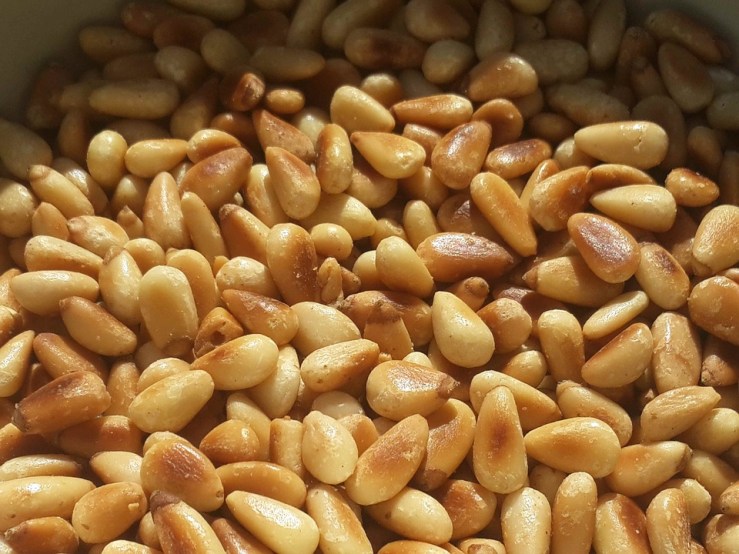
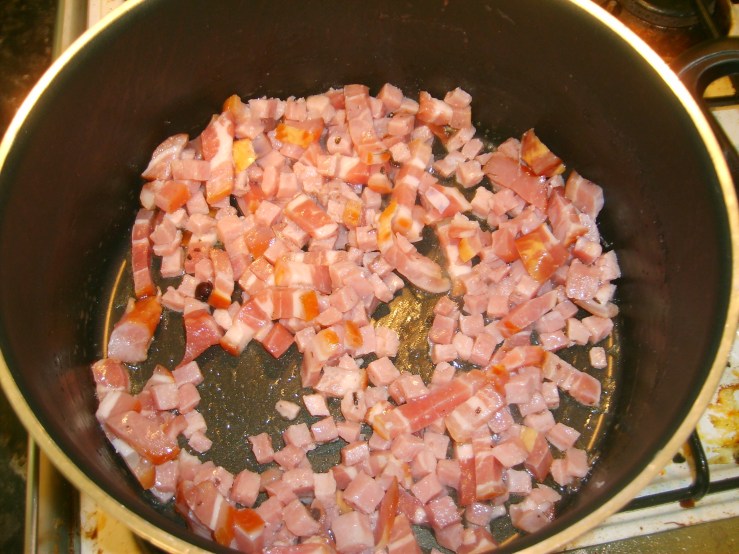
Avocado, pancetta and pine nut salad


pine-1088680_960_72012 slices pancetta                              50g pine nuts

balsamic vinegar                                olive oil

6 ripe avocados                                  4 big handfuls baby spinach

Serves 4


  1. Heat a frying pan and fry the pancetta till crispy. Remove from pan and set aside. In the same pan, lightly toast the pine nuts.
  2. Combine 1 tbsp balsamic vinegar with 2 tbsps olive oil and season with salt and black pepper.
  3. Taste to make sure dressing is balanced.
  4. Lay out avocado on serving plates, sprinkle over spinach leaves, pancetta and toasted pine nuts. Season well and drizzle dressing over.

Pancetta_(1126929204).jpg

Can young or thin people get type 2 diabetes?

Anna's avatar

If you think they can’t, think again.

SONY DSC

There is a certain stereotype of a person afflicted with type 2 diabetes as being overweight and inactive, like a couch potato chain-munching on Twinkies, and may be even smoking at the same time.

And the breaking news is, thin people get it, too.

The risk for developing type 2 diabetes is smaller if you’re thin but still, it’s real.   There is no standard definition for thin, says Everyday Health website.   Besides, weight isn’t the only contributing factor; this has to be in your genes.   If your parent or a sibling has T2D, you have at a greater than 3 times higher risk of developing it, too, compared with those that have no family history.

Genetics may explain why (some) thin folks develop type 2 diabetes while (some) of the overweight ones don’t.  And that is the truth.

Then there are lifestyle choices that…

View original post 104 more words

Drugs that change your weight

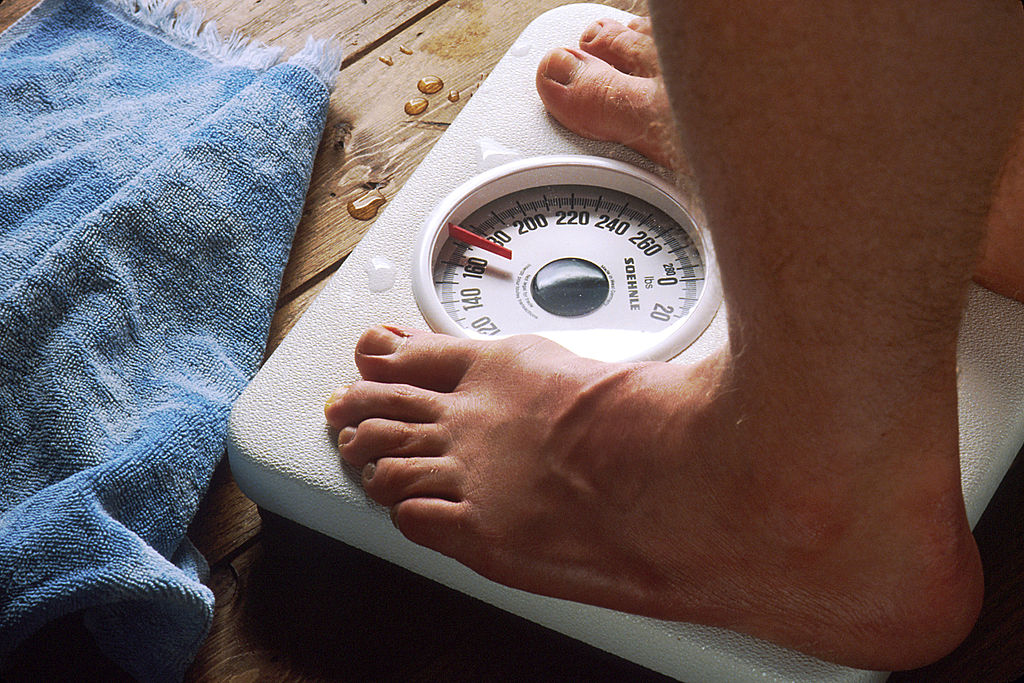
Researchers conducted a systematic review and meta-analysis  of 257 randomised controlled trials and  summarized the evidence about commonly prescribed drugs and their association with weight change.

They included 257 randomized trials (54 different drugs; 84,696 patients enrolled). Weight gain was associated with the use of: amitriptyline (1.8 kg), mirtazapine (1.5 kg), olanzapine (2.4 kg), quetiapine (1.1 kg), risperidone (0.8 kg), gabapentin ( 2.2 kg), tolbutamide (2.8 kg), pioglitazone (2.6 kg), glimepiride (2.1 kg), gliclazide (1.8 kg), glyburide (2.6 kg), glipizide (2.2 kg), sitagliptin (0.55 kg), and nateglinide (0.3 kg).

Weight loss was associated with the use of: metformin (1.1 kg), acarbose (0.4 kg), miglitol (0.7 kg), bupropion (1.3 kg), and fluoxetine (1.3 kg).

For many other remaining drugs (including antihypertensives and antihistamines), the weight change was either statistically nonsignificant or supported by very low-quality evidence.


JP Domecq. The Journal of Clinical Endocrinology and Metabolism Drugs Commonly Associated With Weight Change: J. Clin. Endocrinol. Metab. 2015 Jan 15;100(2)363–370, From MEDLINE®/PubMed®, a database of the U.S. National Library of Medicine.

Published in Diabetes in Control Feb 1Metformin_500mg_Tablets