Emma Porter: Cheesy bread pizza base

Emma has more recipes at http://www.thelowcarbkitchen.co.uk and is the co-author with Dr David Cavans of “Type 2 Diabetes Low Carb Recipes” which is available at bookshops and Amazon.

As promised this is Emma’s recipe for a cheesy bread recipe that can be eaten on its own or used as a pizza base. You can watch her make this on the PHC conference 2020 on You tube.  The recipe is at the end of the video and also here.

Ingredients:

180g grated mozzarella (150g for the dough and 30g to put on the top at the end)

3 garlic cloves

75g ground almonds

3 tablespoons Greek Yoghurt

Some fresh parsley

one teaspoon garlic powder (optional)

olive oil

salt

butter

one teaspoon baking powder

 Method: 

Preheat your oven to 180 degrees

Fry the finely chopped garlic cloves in olive oil.

Then add the 150g mozzarella gradually to melt it a bit.

Take it off the heat and start making your dough.

Add a little salt, 3/4 of the parsley, yoghurt, one teaspoon garlic powder (optional for more garlicky tasting base) and  baking powder. Mix thoroughly.

Now add in your almonds, and beaten egg and form the dough.

Form a ball then roll this out on a sheet of greaseproof paper or baking parchment or silicone liner.

Form into a rectangle, oval or circle according to your plans.

Bake for only 5 minutes.

Now take out and add the rest of the cheese and parsley for the cheesy bread.

If this is your aim put it back in the oven for another 5 minutes. Then take it out and eat.

If you would like to make a pizza,  don’t add the extra cheese topping after 5 minutes. Keep the dough in the oven for the full ten minutes. Once it is fully cooked, add the toppings such as cheese, THEN passata or tomato puree, more  cheese and then whatever you fancy/have available such as  mushrooms, ham, prawns, or peppers and then put it back in the oven for 5 minutes. Passata directly on the base can make the pizza a bit soggy in the middle.

You are then ready for your pizza or cheesy bread.



Public Health Collaboration conference online a great success

The Public Health collaboration online conference 2020  was very successful.  The videos are available on You Tube for free making the conference even more accessible for everyone who needs advice on what to eat to stay healthy.

If you are able to contribute to the PHC fund to keep up our good work please do so. Sam Feltham has suggested £2.00.  This is via the PHC site.

This year there were contributions from mainly the UK but also the USA.

Visitors to this site will be very pleased to know that keeping your weight in the normal range, keeping your blood sugars tightly controlled, keeping your vitamin D levels up, and keeping fit from activity and exercise, are all important factors in having a good result if you are unfortunate enough to be affected by Covid-19. We have been promoting these factors in our book and website for several years now, mainly with the view to making life more enjoyable, especially for people with diabetes, now and in the future. The reduction in the severity  to the effects of   coronavirus is a side effect of these healthy living practices.

Several talks went into the factors and reasons for this, but in a nutshell, if you are in a pro-inflammatory state already, you will have a much more pronounced cytokine inflammatory response to the virus than is useful for clearing the virus, and you end up with inflammed lung tissue which leaks fluid thereby impairing your blood oxygen levels.

A talk that I found particularly apt was the talk from a GP who had had a heart attack at the age of 44 despite a lack of risk factors except for massive stress. He gives a list of self care practices that helped him. I would also include playing with your animals. Emma and I are cat lovers and can vouch for this!

My talk is about VR Fitness, which was the only talk this year which was specifically exercise related. The Oculus Quest has only been out a year and has been sold out since shortly after New Year. I was fortunate enough to buy one in anticipation of my imminent retirement, and it has been great as an exercise tool over the long, cold, dark winter and more useful than I had ever anticipated over the lockdown as a social tool.

There were several very professional cooking and baking demonstrations on the conference this year, and indeed, this could not have otherwise happened on a traditional stage format.  We had low carb “rice”, bread, pancakes and pizza demonstrations which may well help you if you prefer to see how it is done step by step or if you want to broaden your repertoire.

I was particularly taken with the pizza base idea from Emma Porter and I will follow up with this in a later post.  The whole video is available from the PHC  site which takes you to all the videos on You Tube.


Self caring during illness

Adapted from online presentation by Beverly Bostock ANP 7 May 2020

If you have diabetes you are more at risk of serious complications from Covid-19 and should seek medical advice early in the illness.

Any febrile illness can raise your blood sugars, including the prodromal phase when you don’t otherwise have symptoms. Once you are aware that you are coming down with something there are some useful ways of remembering how to monitor yourself.

Particularly for insulin users:

S – SUGAR – check your blood sugar more frequently than usual. For instance, if you would normally check your blood sugar every 5 hours during the day, double this to every 2.5 hours.

I – INSULIN – Adjust your insulin according to your blood sugars to keep within your target blood sugar level.

C – CARBOHYDRATE – If your blood sugar is low eat or drink more glucose or sugar/starch food items. If your blood sugar is high, drink plain water or more diet drinks.

K – KETONES – Use blood ketone stix or urine ketone stix to monitor your ketones if you are a type one diabetic every 4 hours or so. This is particularly important if you feel very ill, are nauseated, vomiting or have abdominal pain. If your ketones are high consider extra insulin, keep well hydrated and alert medical staff sooner rather than later.

Particularly for type twos:

It is important to keep well hydrated when you experience any illness but particularly an illness where you are febrile, or have  vomiting, limited oral intake, or severe diarrhea.

Some drugs can worsen your response to dehydrating illness and you may need to seek advice from a doctor, nurse or pharmacist about stopping certain drugs and when it is appropriate to restart them.

You can remember what they are with the mnemonic: SADMAN

SGLT2 inhibitors, ACE inhibitors, Diuretics, Metformin, ARBs, and Non- steroidal anti-inflammatory drugs.


Over eating and drinking is causing liver damage in one in five young adults

Adapted from Abeysekera KWM et al. Prevalence of steatosis and fibrosis in young adults in the UK: a population based study. Lancet Gastroenterology and Hepatology. 2020 Jan 15.

A new study highlights just how common liver disease is becoming in young adults in the UK. One in five had fatty liver, known as steatosis. One in 40 had fibrosis, also known as cirrhosis. And the average age was only 24.  These results show how harmful unhealthy eating and drinking habits can be.

Subjects for the study were recruited through the Avon Longitudinal Study of Parents and Children. Transient elastography and controlled attenuation parameter scores were used for assessment of steatosis and fibrosis.

Steatosis was found in 20.7% of the participants and this was severe in 10% of those affected. Being overweight or obese was the main factor for causing this after adjusting for alcohol intake, social class and smoking.

Fibrosis was reported in 2.7% of the participants. This risk was significantly higher in those who also had an alcohol problem or addiction and already had steatosis after adjusting for smoking and social class.

The authors conclude that the obesity epidemic is affecting the current and future health of young adults by increasing their risk of non alcoholic steatohepatitis related cirrhosis, hepatocellular carcinoma, and complications of metabolic syndrome.


Life in lockdown

It has been over six weeks now since lockdown started in Britain. I understand why it is necessary but I’m fed up.

How are you bearing up?

I’m really glad I’m no longer a GP. Dealing with the corona issues on top of the 10 hour days is difficult enough, but coming home after this to clean your house every day, having difficulty buying food and toilet roll, with no social life and no holidays would be unbearable.  So that is a relief.

Due to my heavy workload, my social life was never that great, but I did usually have one or two things to look forward to each week, and this was enough to keep my batteries topped up. I have several holidays booked this year and the June one has been cancelled. Time will tell with the others, but even if hotels, cruise lines and airlines open for business, will the ones for my particular holidays get out of this intact? Will I ever see the money again?

The most important thing is that no one in my family or extended family has suffered ill effects from the virus.  I am reasonably sure that I got covid on 5th January this year, along with several police officers with whom I work. I am keen on getting the antibody test when it becomes available.

I do dread my son Steven getting the virus because of his type one diabetes. Diabetic ketoacidosis seems more of a threat than the respiratory issues.  So we work and shop carefully, isolate as best we can, and hope that when we get it, there is a ventilator and staff available if we need it.

I am fortunate to live in a lovely area of Scotland with access to country walks on my doorstep. I also have a garden and my four cats. I feel terribly sorry for people stuck in flats and people in nursing homes.

Digital technology has been marvellous. We have been playing quizzes on Alexa, watching Netflix and Amazon Prime films, and watching some of the National Theatre productions and playing games on the Oculus Quest. Steven and I have even been playing table tennis with each other even though I’m in Mauchline and he is in Leeds.

I hope you are all coping. I am worried for Rick, because he was going off to get his spinal surgery before the virus kicked in and I don’t know if he has come through it alright.

Best wishes to you all. This is a marathon, not a sprint.


Metformin reduces oesophageal cancer

Adapted from Wang QL et al. American Journal of Gastroenterology 1st January 2020

Metformin users were at a lower risk of developing oesophageal squamous carcinoma than non metformin users.

A growing number of observational studies have shown that metformin reduces overall cancer risk and a few specific cancer types such as colon, rectal, breast and stomach.

A population based cohort study included over 400,000 metformin and an equal number of non metformin users who were matched by age and sex.

There were 3.5 cases of oesophageal cancer in the metformin group per 100,000 person/years and 5.3 in the non metformin group. This finding was true for men, women and those in their sixties.  The odds ratio was 0.68 for metformin use.

Jovina cooks South African: Piri-piri chicken and cucumber sambal

Piri-Piri Chicken with Piri-Piri Sauce
Piri-Piri (sometimes spelled peri-peri) is Swahili for ‘pepper pepper’, or ‘strong pepper’ and refers to an African-style chili sauce. Piri-Piri Chicken is marinated in a hot chile pepper marinade, then grilled. This dish evolved in Angola and Mozambique (once Portuguese colonies) after Portuguese explorers and settlers brought American chili peppers to Africa.
The most basic piri-piri marinade recipe calls for just oil, cayenne pepper or minced fresh hot chile peppers, and salt. Many piri-piri recipes add an acidic liquid (usually lemon or lime juice, or vinegar, or possibly wine or liquor) which adds a tang and tenderizes the chicken. More elaborate versions also include additional flavorings and spices.
This recipe makes quite a bit and since I cook for two most days, I cut the recipe in half. This dish is delicious and the chicken turns out quite tender and juicy. The sauce has a bit of a kick but not overly spicy.
6-8 servings
Ingredients
4 lb chicken cut into parts or 4 lbs of your favorite chicken parts, about 8 pieces.
Peri Peri Marinade
3 red chilies (reduce for less heat or remove seeds), finely chopped or use 2 tablespoons red chili paste
1 green chili, finely chopped
3 cloves garlic, peeled and finely chopped
1 small red onion, finely chopped
1 red bell pepper, finely chopped
2 tablespoons lemon juice
2 tablespoons apple cider vinegar
1/2 teaspoon black pepper
2 tablespoons brown sugar
1 tablespoon smoked paprika
1 teaspoon of sea salt
2 tablespoons chopped cilantro or parsley
3 tablespoons vegetable oil or olive oil
Peri Peri Sauce
3 tablespoons reserved marinade
1/4 cup water
2 tablespoons sugar
Directions
Combine all marinade ingredients in a bowl large enough to hold all the chicken parts and blend well.

Reserve 3 tablespoons of the marinade in a small storage container and the coat the chicken with the remaining marinade. Cover and refrigerate 4 hours to overnight.

Heat an outdoor grill or stovetop grill pan.
For the Piri-Piri Sauce
Add reserved marinade, water, and sugar to a small saucepan and bring to boil. Cook for 2 minutes, remove from the heat and keep warm.
To cook the chicken
Place chicken bone side down on the grill. Cook for 10 minutes. Turn chicken over and cook for 25-30 minutes. Turn chicken over once more and grill for another 5 minutes. Remove the chicken to a serving platter and drizzle the sauce over the grilled chicken.

African Cucumber Sambal
Ingredients
2 medium garlic cloves, minced
1 shallot, minced
1/2 green chili (jalapeno pepper), minced
1 teaspoon sugar or natural sweetener (honey, agave nectar, etc.)
1 (2-inch) piece of ginger, peeled and grated
1 tablespoon apple cider vinegar
2 mint leaves, minced
1 large cucumber, peeled, seeded, quartered and thinly sliced
Directions
Combine all of the ingredients in a mixing bowl. Stir and toss well to cover.

Cover and let sit at room temperature for at least 1 hour before serving.
The Sambal will store up to 4 days refrigerated in a tightly covered container.


New diabetes calculator helps determine if you are type one or type two

New calculator improves diagnosis of diabetes
Lynam A & al. BMJ Open 26 Sep 2019
curated by Pavankumar Kamat UK Medical News 30 Sep 2019

Scientists have developed a new calculator tool to help clinicians determine whether a patient has type 1 or type 2 diabetes, ensuring appropriate treatment and fewer complications. The beta version of the calculator is available here.

https://www.diabetesgenes.org/t1dt2d-prediction-model/
Determining the type of diabetes remains a challenge for clinicians, and current blood and genetic tests are not robust enough to provide a definitive diagnosis. The tool utilises a model that incorporates patient data (age of diagnosis and body mass index) and blood test results to provide a personalised approach.

It is useful in determining the likelihood of type 1 diabetes in patients, thereby reducing misdiagnosis.

Researchers at the Universities of Exeter, Oxford and Dundee analysed data on 1352 individuals with diabetes and tested the calculator in an additional 582 individuals.
The new tool follows the footsteps of another calculator previously developed at the University of Exeter which helps clinicians determine the presence of diabetes sub-type MODY. The tool has been successfully used by more than 100,000 people.
Dr Angus Jones, the lead researcher, said: “The right diagnosis in diabetes is absolutely crucial to getting the best outcomes for patients, as treatment is very different in different types of diabetes. Our new calculator can help clinicians by combining different features to give them the probability a person will have type 1 diabetes, and assess whether additional tests are likely to be helpful.”
References
Lynam A, McDonald T, Hill A, Dennis J, Oram R, Pearson E, Weedon M, Hattersley A, Owen K, Shields B, Jones A. Development and validation of multivariable clinical diagnostic models to identify type 1 diabetes requiring rapid insulin therapy in adults aged 18-50 years. BMJ Open. 2019;9(9):e031586. doi: 10.1136/bmjopen-2019-031586. PMID: 31558459


Alex the Crafted Kitchen: 4 ingredient Tomato soup


4 Ingredient Tomato Soup
 September 10, 2019 by trained chef, Alex Wojciak.


This tomato soup recipe couldn’t get any easier. If you don’t count the garnishes there are only four ingredients. I had an abundance of tomatoes – so many I had to pick a recipe that used up many of them. Soup seemed like a great idea.
Ingredients:
Tomato, 8 cups, fresh with the core removed, cut in half
Onion, 1  diced
Garlic, 6 cloves, minced
Chicken Stock, 3 cups
Extra Virgin Olive Oil, 2tbl

Method:
Begin by roasting tossing your tomatoes with the olive oil, and season with salt. Roast your tomatoes at 400 for about 20 minutes. Roast them long enough so you can peel off the skins with ease.
Meanwhile, heat a large sauce pot over medium heat and cook your onions until nicely browned and caramelized, about 7-8 minutes. If you season them with salt when you throw them in the pan, they will wilt and break down more quickly.

When the onions are nice and cooked, add in the garlic and continue cooking for 2 more minutes. Then, add the peeled tomatoes to the pot, along with the chicken stock, and bring to a boil. Purée the soup with an immersion blender (or a standing blender in batches). This might take longer with an immersion blender, but check the consistency to ensure it is smooth and velvety.

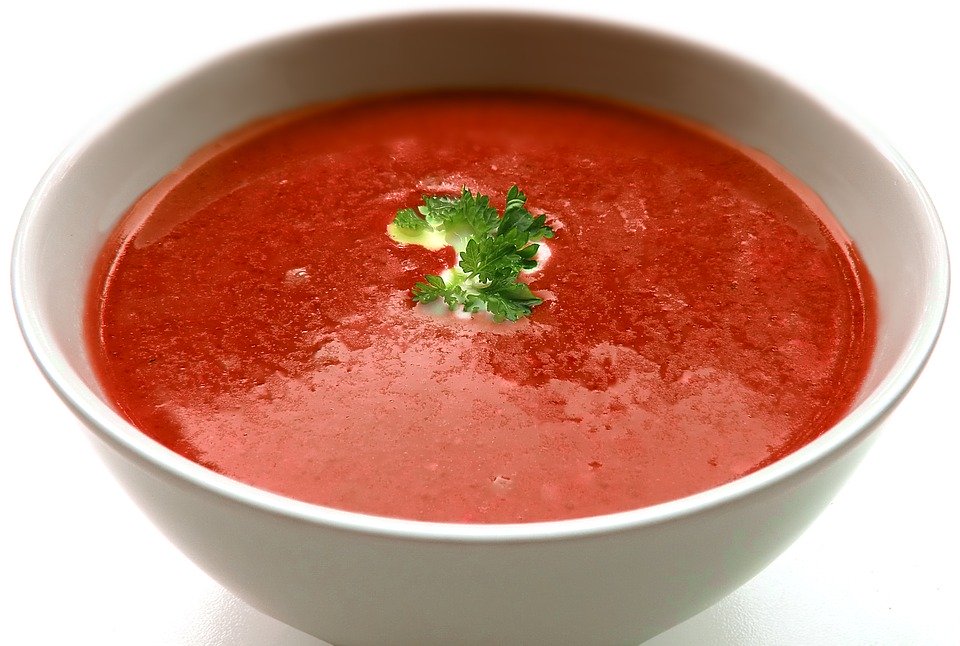
Taste for seasoning and adjust as necessary. Ladle into a bowl, and garnish with anything you’d like. I’ve garnished my soup with a dollop of crème fraiche and parsley.