Vegetable oil ingestion not so sunny after all

Adapted from BMJ 9 Feb 13 Use of dietary linoleic acid for secondary prevention  of coronary heart disease and death: evaluation of recovered data from the Sydney Diet Heart Study and updated meta-analysis. Christopher E Ramsden et al

Despite lack of evidence to the contrary I still see NHS dieticians telling patients to avoid naturally occurring saturated fat such as butter, cream and the fat in animal meats. This study didn’t get much publicity at the time so here it is again.

The question was, does increasing dietary omega 6 linoleic acid in the place of saturated fat reduce the risk of death from coronary heart disease?

What happened was that in the Sydney Diet Heart Study, a RCT done between 1966 and 1973, saturated fat (thought to produce heart attacks) was replaced by omega 6 fatty acids from Safflower oil ( vegetable oil and margarines, thought to be heart healthy). Although the blood cholesterol levels decreased in the intervention group, deaths from all causes, coronary heart disease and cardiovascular disease, all increased.

The subjects were all men aged 30-59 who had had a recent heart attack.  As an example, all cause mortality was 17.2% in the intervention group compared to 11.8% in the control group. Results for cardiovascular disease were similar.

It is mystifying that dietary advice telling people to swap lard for vegetable oils and butter for margarine is still going on. Very telling is that date that this study was done. The results would have been out by 1975.

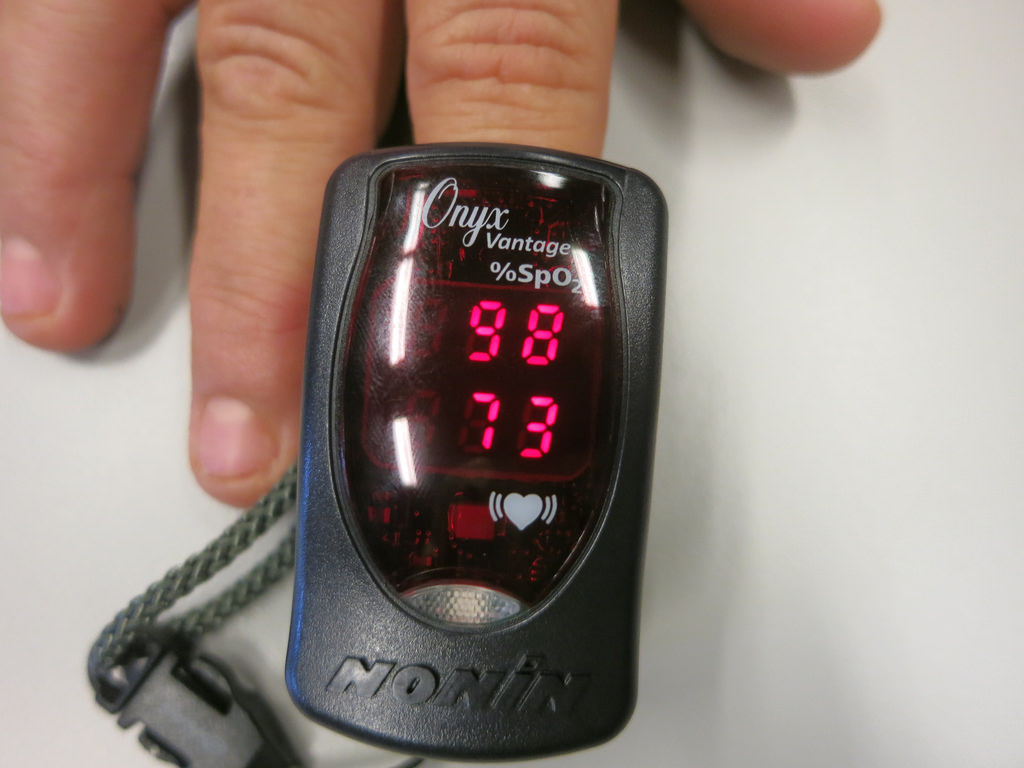
Your pulse is an indicator how long you will live as well as your fitness

A study published in Heart reports that your resting pulse generally indicates how fit you are. It also modestly predicts mortality rates from the obvious cardiovascular disease but just as strongly with such things as breast, colorectal and lung cancers. A difference of 10 beats per minute equates to a 10-20% difference in mortality.

Also reported in Neurology, Swedish women had their baseline fitness tested in 1968 by ergometry while cycling. There neuropsychiatric status was checked at intervals since.  Women in the highest fitness group delayed in onset of dementia by 9.5 years compared to the low fitness group and by 5 years in the medium fitness group.

Keep it up Emma, all that running about is doing you good. Meanwhile I’m sitting here typing with my resting pulse at 56. Maybe I don’t need to?

From articles originally published in Minerva BMJ 28 April 18 and 7 July 18


BMJ: How to get a better sleep if you work night shifts

From Optimising sleep for night shifts by Helen McKenna and Matt Wilkes 3rd March 2018

Night shift work happens when your body would rather be asleep. Alertness, cognitive function, psychomotor co-ordination and mood all reach their lowest point between 3am and 5am.

After a night shift is over, the worker has to try to sleep when the body would prefer to be awake. This shift away from the circadian phase compounds the fatigue and can lead to chronic  sleep disturbance. There is  more likelihood of occupational accidents, obesity, type 2 diabetes, heart disease and breast, prostate and colorectal cancers. Psychological and physical well being is affected and accidents or near misses when travelling home are much more likely to occur.

Performance on the night shift gets worse as people get older and it takes longer to recover from a night on.

On average most people sleep about 8 hours a night.  Some people cope with sleep deprivation better than others. Performance will be impaired after two hours of sleep deprivation and gets worse as sleep debt accumulates. Therefore before starting a set of night shifts it is wise to sleep in the morning before, avoid caffeine that day,  and if you can take a nap in the afternoon between 2pm and 6pm.  For a nap to be most effective you need 60-90 minutes asleep.

When you start the shift, try to fit in a nap of about 30 minutes if this is the sort of job that allows this, but have a coffee immediately before the nap, and don’t have any more caffeine after the nap.  Sleeping longer than 30 minutes can make you feel groggy as you move into deep sleep and are the roused from it. Caffeine can help performance but you also want to try to sleep the next morning. Avoid it for the 3-6 hours before you plan to go to sleep in the morning. If you are doing critical tasks especially between 3-5am it is wise to build in more checks to your work.

Working in bright light can perk you up on the night shift.

When it comes to eating you are probably best to eat your main meal immediately before the night shift then eat just enough to feel comfortable as the shift goes on.

Jet lag improves at the rate of one day for every hour you are out of phase.  Circadian adaptation is therefore impossible during short term rotating shift work. Therefore you have to do your best to optimise your sleep between the shifts so as to keep the sleep debt minimal.

If you can possibly arrange lifts home or travelling home on public transport after a night shift, do so.

You can try to improve the situation by wearing sunglasses in daylight on the way home, avoiding electronic device screens, using blackout blinds, ear plugs and eye masks or even white noise generators.  A warm bath and then sleeping in a not cold but cool room and wearing woollen nightwear may help. Melatonin taken in the morning after a night shift has been shown to improve sleep duration by up to 24 minutes. Avoid alcohol and caffeine as these won’t help. Drugs such as Zopiclone can improve sleep if taken during the day but it can be addictive and needs a prescription.

After a run of night shift work you may get into the swing of your regular routine by having a 90 or 180 minute sleep, as this is one or two sleep cycles,  or sleeping in to noon and then getting up and getting outside for some exercise in bright light. Do your best to include meals at the usual times and socialise a little.  You will also need to pay attention to paying back your sleep debt by going to bed earlier than usual and sleeping in later than usual for a few days. It is best to avoid day time naps during the recovery from shift phase.

The path to sleep optimisation is an individual thing. Feel free to experiment.

The UK and US are the only western countries where life expectancy is falling

Researchers looked at 17 high income countries to evaluate trends in national mortality.

In the UK there has been a drop of a few months in life expectancy for both men and women over the age of 65. Degenerative diseases were the main cause such as respiratory disease, circulatory disease, Alzheimer’s disease, nervous system disease and mental disorders.

In the USA drug overdoses were responsible for the decline in life expectancy.

The study looked at mortality between 2014 and 2015. A sixty five year old in the UK at that time would have been born in 1950, after the start of the NHS.

We will need to wait to see if this trend will reverse or not.

British Medical Journal. UK life expectancy drops while other western countries improve. National Health Services. 2018 August 16.

Younger age at diagnosis predicts earlier death in type one diabetes (on standard treatment)

Researchers in Sweden have found that the earlier children are diagnosed with type one diabetes, the less their life expectancy is. Matters are worse for women than men. They think that adults diagnosed in childhood need increased input to deal with cardiovascular risk factors as they get older. Currently age of onset is ignored when it comes to stratifying risk.

Those diagnosed under the age of 10 had 4 times the hazard ratio for all cause mortality, over 7 times the risk of cardiovascular disease, 4 times the risk for non cardiovascular mortality,  over 11 times the risk of cardiovascular disease, 31 times the risk of having a myocardial infarction, over 6 times the risk for stroke, 13 times the risk of heart failure, but almost the same risk as controls for atrial fibrillation.

There is a better outlook for those diagnosed in their late twenties. The risk was almost 3 times the background rate for total mortality and the most prominent risk was again for cardiovascular mortality coming in at 6 times the background rate.

What this means is that if you are a girl diagnosed with type one under the age of ten, you may expect to live almost 18 years fewer than your classmates and if you are a boy, 14 years fewer.

My comment: More effort could also be given to youngsters on diagnosis achieving normal blood sugars by advising parents about the easiest ways to control blood sugars such as the adoption of a low carb diet and advanced insulin techniques. Although these statistics are shocking to see, it doesn’t have to be like this at all. Many diabetics have changed their life expectancy around and reverse some complications by adopting practices that improve glycaemic control and metabolic factors such as we describe on this site.

Rawshani A et al. Excess mortality and cardiovascular disease in young adults with type 1 diabetes in relation to age at onset: a nationwide, register-based cohort study. Lancet 2018;392:477-86;doi:10.1016/S0140-6736(18)31506-X


Public Health Collaboration Conference 2018: Achieving your optimal blood sugar target

Videos of the lectures given at the Public Health Collaboration conference 2018 which was held in May over the royal wedding weekend have now been released on You Tube.

You can see my talk, Achieving your optimal blood sugar target, as well as others, on the link below. There are a wide variety of lifestyle topics discussed. Happy viewing.


https://www.youtube.com/results?search_query=public+health+collaboration+conference+2018

Polycystic ovary syndrome has health consequences for the whole family

Parents and siblings of women with polycystic ovarian syndrome are more likely than non relatives to develop insulin resistance. The older relatives are, the more likely they are to develop type two diabetes.

Polycystic ovaries affects 4-19% of women of reproductive age. Type 2 diabetes is significantly higher among both the mothers and fathers of women with polycystic ovaries. Both are over twice as likely to be diabetic compared to matched controls.  Type two diabetes is more prevalent in the sisters and brothers of those with polycystic ovaries but was not statistically significant. Fasting insulin levels and insulin resistance were significantly higher in the mothers, fathers and sisters of women with polycystic ovaries.

My comment: Doctors tend to regard polycystic ovaries as a gynaecological condition, but this research indicates that it is a disease of insulin resistance and increased likelihood of type two diabetes in the whole family and does not just affect women, but men in the family as well. 

Yilmaz B et al. Diabetes mellitus and insulin resistance in mothers, fathers, sisters and brothers of women with polycystic ovary syndrome: a systematic review and meta-analysis. Fertil. Steril.2018 June 27 doi:10.1016/j.fertnsert.2018.04.024.PMID:29960703

What factors are most predictive of a heart attack?

Dr Malcolm Kendrick recently discussed a paper in which computers analysed routine clinical data from UK GP practices to identify the factors that most accurately predicted a cardiovascular event over the next ten years.  All the 378,256  people whose records were analysed were initially free of cardiovascular disease and 48 variables were identified.

The top ten things that were most likely to see you in hospital with a heart attack or stroke, in order,  were:

Chronic Obstructive Pulmonary Disease

Prescribed oral steroids

Older age

Severe mental illness

South Asian ethnicity

Prescribed immunosuppressants

Socio-economic deprivation

Chronic Kidney Disease


The least predictive were LDL, Forced expiratory volume ( a measure of asthma) and AST/ALT ( a measure of liver function).  Total cholesterol was 25th.

Can machine learning improve cardiovascular risk prediction using routine clinical data? http://journals.plos.org/plosone/article?id=10.1371/journal.pone.0174944

EC-Funded Project Researches T1 Diabetes Cure

Have you heard of the LSFM4LIFE project? This week, I received an email about European Commission funded work into a potential permanent cure for type 1 diabetes.
The base of the research is a cellular therapy, growing human pancreas organoids (mini organs) from adult stem cells. The organoid of the pancreas then produces insulin, freeing type 1s from daily insulin injections.

Currently, the project is at the research stage. It involves eight partner teams from six different countries who are working to develop tools and technologies for cell-based therapy. The partners come from academia and industry, and include Goethe University, the University of Cambridge, InSphero and Sparks and Co.

Incidence of type 1 diabetes is increasing by 3 to 4 percent every year, especially among children.

You can read more about the project here: https://lsfm4life.eu/lsfm4life-in-depth/ and there’s a quick explanation of it on YouTube here.


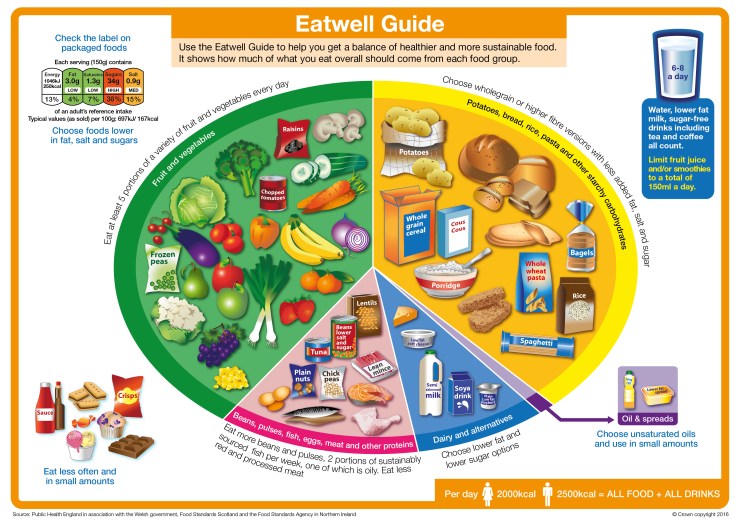
Eatwell plate advice doesn’t reduce cardiovascular disease

UPDATED_Eatwell_guide_2016_FINAL_MAR23-01


Adapted from  BMJ 27 Jan 2018 from a study reported in PLOS Med

The UK Food Standards Agency uses a scoring system of their own devising to determine whether a food is “healthy” or not.  Fruit, vegetables, fibre and protein get top marks and saturated fat, sugar and salt get a fail.

When 25 thousand participants in the European Prospective Investigation of Cancer study completed a seven day food diary at the start of the study, and their food choices were marked on perceived health benefits, there was no difference in the incidence of cardiovascular disease over the next 16 years.

Time to lay the Eatwell Plate advice in the bin?