Ghost pills: has it happened to you?


Metformin_500mg_TabletsFrom Diabetes in Control: Disasters averted series
August 2nd, 2016


When it comes to metformin, when appropriate, I recommend the extended release version.

Last week my patient, female, 56 years of age, type 2 diabetes, visited. A1C was elevated, and she gained 5 pounds.  She had been on metformin ER for the last 6 months and doing well. She said she recently noticed a bean-looking/pill-looking thing in her stools that seemed to be related to her metformin. (She hadn’t looked before this).

She stopped her metformin and said she didn’t see it after that. “If it was coming out of me, it must not have been working, so I stopped it.” She refuses to check her glucose or weigh herself, therefore she did not notice the increase in her glucose levels. She did mention noticing her pants being tighter around her waist.
I informed her that the bean-looking/pill-looking thing in her stool was the metformin, but that did not mean it wasn’t working, it was. It was just a different method of delivery to be a slower release than other medications she takes or has taken. Some call the remains…ghost pills.
She resumed her metformin. Sure enough, she saw them again, but she did not stop taking her metformin.  Three months later, her A1C and weight returned to the levels before stopping.
Lessons Learned:
Understand that some controlled or extended release medications may look like they haven’t been “digested,” but that’s the formulation of the medication. The active ingredient has been released.
When starting your patients on medications that seem to not be “digested” such as extended release metformin, teach they may see this.
Learn more at: http://www.ncbi.nlm.nih.gov/pmc/articles/PMC2847989/ and http://www.ncbi.nlm.nih.gov/pmc/articles/PMC4110830/


My comment:  As a GP I have come across this. At least I know what to say about it  now.

Dr Lois Jovanovic:Everything you need to know about diabetes in pregancy

Dr Lois Jovanovic from Santa Barbara is an expert in getting great results with diabetic women in pregnancy. This video series from Diabetes in Control covers in depth interviews with Lois. Even if you are not pregnant or intending to be you can pick up information on how to get excellent blood sugar control in these videos.

Kris Kresser: Dangers of Proton Pump Inhibitors


Continuous glucose monitors give 1% reduction in Hba1c

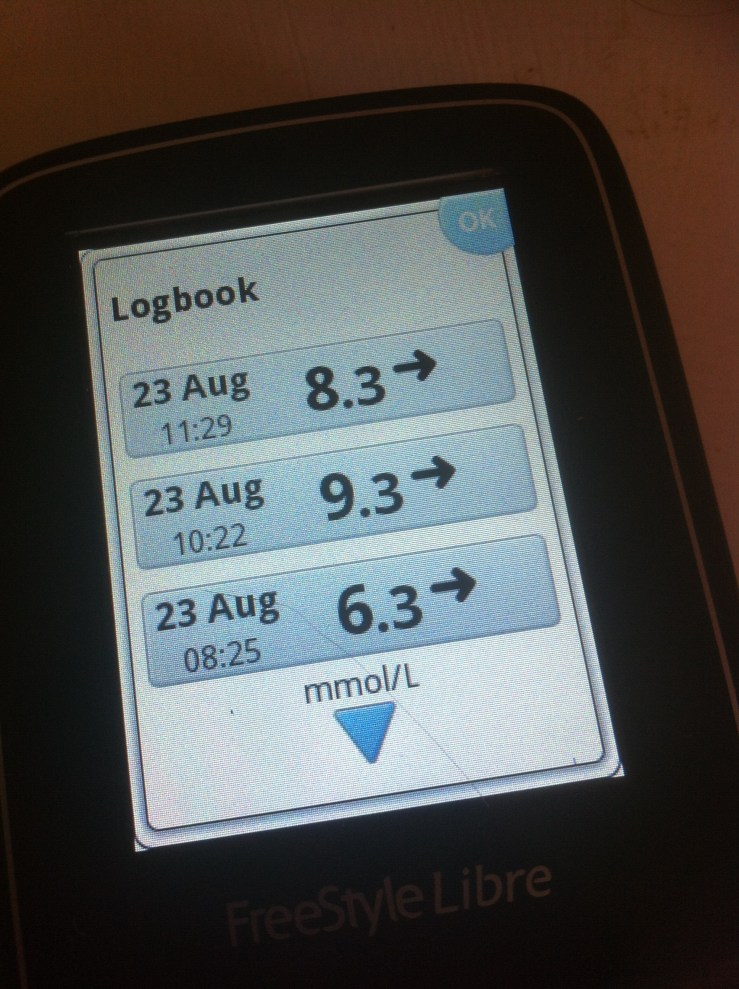
free styleVancouver doctors took 12 patients  type two diabetes who were using insulin and gave them continuous blood sugar monitors to help them improve their blood sugars.

Participants used these for 3 months, kept food records and maintained weekly contact with a registered dietitian/registered nurse team.  After 3 months, patients were told to discontinue sensor use and weekly contact and return to usual care.

HbA1c averages started at  8.2  which decreased to 7.1 during the program period and did not increase during the 15 months of patient follow-up.

Hypoglycemia (glucose < 4 mmol) at the beginning of treatment, was an average of 3.5  per week and was unchanged at the end of the study to 2.8.

“In conclusion, our program empowered patients with the knowledge and skill to maintain glycemic control,” Dr Haniak said. “Furthermore, this program is a very effective teaching tool for those patients with severe hypoglycemia to also sustain and maintain glycemic control.”

Haniak P, et al. Abstract 179-OR. Presented at: American Diabetes Association’s 75th Scientific Sessions; June 5-9, 2015; Boston.

Focused Care Improves Control Without Hypoglycemia Risk

From Diabetes in Control June 26th, 2015

My comments: Surely giving patients the Freestyle Libre or similar for a period of time combined with education on a low carbohydrate diet and blood sugar management would be cost effective in the NHS?

Low vitamin D doubles total mortality and dementia rates

hqdefault (2)

Being severely deficient in vitamin D is associated with a doubling of the risk of dementia according to a US study published in Neurology.

The Cardiovascular Health Study ran from the 1990s and tracked 1658 ambulatory citizens with no history of dementia or cardiovascular or cerebrovascular disease.

After a five year follow up time those who had vitamin D levels below 25 nmol/L had increased rates of dementia 2.2 times that of people who had levels over 50 nmol/L.

Researchers say that there are vitamin D receptors in the brain and vitamin D is thought to enhance macrophages that clear amyloid from the brain cells and reduce neuronal cell death.

(Based in article by Michael McCarthy in BMJ 16 August 14).


A combined European and US study showed that total mortality was increased by 57% for older adults with vitamin D levels below 25 nmol/L. Cardiovascular deaths and cancer deaths were increased in a dose responsive manner. 

(Based on and article by Stephen Robinson GP News 23 June 14)

Bizarrely the researchers didn’t think of the obvious solution, advise upping sun exposure or taking supplemental vitamin D, but decided that what this meant was that ill people were often stuck indoors and that was why they had low vitamin D levels.

The US study above does seem to contradict that view since all participants were ambulatory and had no known cardiovascular or cerebrovascular disease at the start of the study.  In my own practice in the west of Scotland most patients of all ages had very low levels of vitamin D. All walked into the surgery but had conditions that could have been affected by low vitamin D levels. The only patients who had levels over 50 nmol/L were taking supplements, cycled outdoors all year round, or used sunbeds.


Low carb high fat diets: useful for cancer prevention?

Images-Beautiful-morning-Pictures

There is some evidence that a low carb diet can help prevent cancer and also improve the outlook for people who already have the condition. Here are too sites that discuss the issue.

Dr Mercola provides an article.

http://articles.mercola.com/sites/articles/archive/2016/06/11/nutrition-influences-cancer.aspx?utm_source=dnl&utm_medium=email&utm_content=art1&utm_campaign=20160611Z1&et_cid=DM107622&et_rid=1525493561

Dr Gary Fettke appears on video.

https://www.youtube.com/watch?v=qa5Bcm8T9nU


Half of Cancer Deaths are Preventable

793258148_2d1fae3c3a
Harvard researchers find as many as 40 percent of cancer cases, and half of cancer deaths, come down to things people could easily change.

Many Americans often worry about whether chemicals, pollution or other factors out of their control cause cancer, but a new analysis shows otherwise: people are firmly in charge of much of their own risk of cancer. As we get older, our risk goes up, which could come from doing the same bad habits over a long period of time. The same can be said for being diagnosed with diabetes and prediabetes. Eating one large order of French fries will not increase your risk for cancer or diabetes, but eating two orders a week over 40 years would be over 4,000 orders, or over 2,000,000 calories and 259,000 carbohydrates, which can certainly be injurious to your health.

The team at Harvard Medical School calculated that 20 to 40 percent of cancer cases, and half of cancer deaths, could be prevented if people quit smoking, avoided heavy drinking, kept a healthy weight, and got just a half hour a day of moderate exercise. They used data from long-term studies of about 140,000 health professionals who update researchers on their health every two years for the analysis, published in the Journal of the American Medical Association’s JAMA Oncology.

“Not surprisingly, these figures increased to 40 percent to 70 percent when assessed with regard to the broader U.S. population of whites, which has a much worse lifestyle pattern than our cohorts,” wrote Dr. Edward Giovannucci of Harvard Medical School. The analysis was simple. They broke the 140,000 people into two groups: those with a healthy lifestyle, and everyone else. The healthy lifestyle definition was based on a large body of studies that have shown what personal habits are linked with higher or lower risks of cancer. They include not smoking; drinking no more than one drink a day for women, two drinks a day for men; keeping a healthy weight, defined as body mass index of between a very slender 18.5 and a slightly overweight 27.5; and getting the equivalent of just over an hour of vigorous exercise or two and a half hours of moderate exercise a week.

Heavy drinking raises colon, breast, liver and head and neck cancer rates. Obesity raises the risk of esophageal, colon, pancreatic and other cancers. Smoking causes 80 to 90 percent of lung cancer deaths. Only about 28,000 of the people analyzed qualified as following a healthy lifestyle. When the rates of cancer in their group were compared to rates in the rest of the volunteers, the differences were clear.

The purpose of the study was to estimate the proportion of cases and deaths of carcinoma (all cancers except skin, brain, lymphatic, hematologic, and nonfatal prostate malignancies) among whites in the United States that can be potentially prevented by lifestyle modification.The incidence rates of cancer were 463 per 100,000 for women in the “healthy” group, versus 618 per 100,000 for those not meeting the healthy goals. For men, it was 283 per 100,000 who met the healthy lifestyle goals versus 425 among those who did not. And these were health professionals, who should at least try to be healthier. When Giovannucci compared the healthy group to the general, white, U.S. public, the differences were even bigger. Plus, they didn’t add in other known factors, such as eating a healthy diet rich in fruits and vegetables, although they said those who followed the other healthy patterns did tend to eat better, also.

“These compelling data together with the findings of the current study provide strong support for the argument that a large proportion of cancers are due to environmental factors and can be prevented by lifestyle modification.” By “environmental,” they mean non-genetic causes. To a scientist, environment includes diet, exercise and other factors.

89,571 women and 46,339 men from 2 cohorts were included in the study: 16,531 women and 11,731 men had a healthy lifestyle pattern (low-risk group), and the remaining 73,040 women and 34,608 men made up the high-risk group. Within the 2 cohorts, the PARs for incidence and mortality of total carcinoma were 25% and 48% in women, and 33% and 44% in men, respectively. For individual cancers, the respective PARs in women and men were 82% and 78% for lung, 29% and 20% for colon and rectum, 30% and 29% for pancreas, and 36% and 44% for bladder. Similar estimates were obtained for mortality. The PARs were 4% and 12% for breast cancer incidence and mortality, and 21% for fatal prostate cancer. Substantially higher PARs were obtained when the low-risk group was compared with the US population. For example, the PARs in women and men were 41% and 63% for incidence of total carcinoma, and 60% and 59% for colorectal cancer, respectively.

From the results, it was concluded that a substantial cancer burden may be prevented through lifestyle modification. Primary prevention should remain a priority for cancer control.

Practice Pearls:
•89,571 women and 46,339 men from 2 cohorts were included in the study.
Many cancer cases and even more deaths among U.S. white individuals might be prevented by quitting smoking, avoiding heavy alcohol consumption, maintaining a BMI between 18.5 and 27.5, and exercising at a moderate intensity for at least 150 minutes or at a vigorous intensity for at least 75 minutes every week.
•These compelling data together with the findings of the current study provide strong support for the argument that a large proportion of cancers are due to environmental factors and can be prevented by lifestyle modification.

Preventable Incidence and Mortality of Carcinoma Associated With Lifestyle Factors Among White Adults in the United States. May 19, 2016. doi:10.1001/jamaoncol.2016.0843.

Diabetes in Control June 11th, 2016


First ever guidelines for assessing and treating the diabetic foot


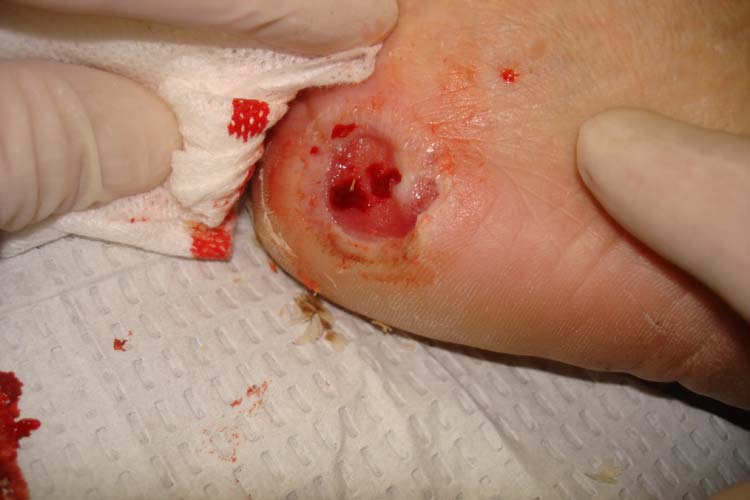
4276166167_e2cf9e2e47_oThe Society for Vascular Surgery, the American Podiatric Medical Association and the Society for Vascular Medicine collaboratively publish first-ever set of clinical practice guidelines for treating the diabetic foot. These  took three years to develop and are available online.


Specific areas of focus included (1) prevention of diabetic foot ulceration, (2) off-loading, (3) diagnosis of osteomyelitis, (4) wound care, and (5) peripheral arterial disease.

They include preventive recommendations such as those for adequate glycemic control, periodic foot inspection, and patient and family education.

They recommend using custom therapeutic footwear in high-risk diabetic patients, including those with significant neuropathy, foot deformities, or previous amputation. In patients with plantar diabetic foot ulcer (DFU), they recommend off-loading with a total contact cast or irremovable fixed ankle walking boot.

In patients with a new DFU, they recommend probe to bone test and plain films to be followed by magnetic resonance imaging if a soft tissue abscess or osteomyelitis is suspected.

They provide recommendations on comprehensive wound care and various débridement methods. For DFUs that fail to improve (>50% wound area reduction) after a minimum of 4 weeks of standard wound therapy, they recommend adjunctive wound therapy options.

In patients with DFU who have peripheral arterial disease, they recommend revascularization by either surgical bypass or endovascular therapy.

Whereas these guidelines have addressed five key areas in the care of DFUs, they do not cover all the aspects of this complex condition. Going forward as future evidence accumulates, they plan to update recommendations accordingly.

Diabetes is one of the leading causes of chronic disease and limb loss worldwide, currently affecting 382 million people. It is predicted that by 2035, the number of reported diabetes cases will soar to 592 million. This disease affects the developing countries disproportionately as >80% of diabetes deaths occur in low- and middle-income countries.

As the number of people with diabetes is increasing globally, its consequences are worsening. The World Health Organization projects that diabetes will be the seventh leading cause of death in 2030. A further effect of the explosive growth in diabetes worldwide is that it has become one of the leading causes of limb loss. Every year, >1 million people with diabetes suffer limb loss as a result of diabetes. This means that every 20 seconds an amputation occurs in the world as an outcome of this debilitating disease. Diabetic foot disease is common, and its incidence will only increase as the population ages and the obesity epidemic continues.

Approximately 80% of diabetes-related lower extremity amputations are preceded by a foot ulcer. The patient demographics related to diabetic foot ulceration are typical for patients with long-standing diabetes. Risk factors for ulceration include neuropathy, PAD, foot deformity, limited ankle range of motion, high plantar foot pressures, minor trauma, previous ulceration or amputation, and visual impairment. Once an ulcer has developed, infection and PAD are the major factors contributing to subsequent amputation.

Available U.S. data suggest that the incidence of amputation in persons with diabetes has recently decreased; toe, foot, and below-knee amputation declined from 3.2, 1.1, and 2.1 per 1,000 diabetics, respectively, in 1993 to 1.8, 0.5, and 0.9 per 1,000 in 2009. However, including the costs of outpatient ulcer care, the annual cost of diabetic foot disease in the United States has been estimated to be at least $6 billion. A Markov modeling approach suggests that a combination of intensive glycemic control and optimal foot care is cost-effective and may even be cost-saving.

DFUs and their consequences represent a major personal tragedy for the person experiencing the ulcer and his or her family as well as a considerable financial burden on the healthcare system and society. At least one-quarter of these ulcers will not heal, and up to 28% may result in some form of amputation. Therefore, establishing diabetic foot care guidelines is crucial to ensure the most cost-effective healthcare expenditure. These guidelines need to be goal focused and properly implemented.

This progression from foot ulcer to amputation leads to several possible steps where intervention based on evidence-based guidelines may prevent major amputation. Considering the disease burden and the existing variations in care that make decision-making very challenging for patients and clinicians, the SVS, American Podiatric Medical Association, and Society for Vascular Medicine deemed the management of DFU a priority topic for clinical practice guideline development. These recommendations are meant to pertain to all people with diabetes regardless of etiology.

Practice Pearls:
•“The Management of the Diabetic Foot,” was developed after three years of studies and later published online and in print in the Journal for Vascular Surgery.
•This progression from foot ulcer to amputation lends to several possible steps where intervention based on evidence-based guidelines may prevent major amputation.
•Every year, >1 million people with diabetes suffer limb loss as a result of diabetes.

Researched and prepared by Steve Freed, BPharm, Diabetes Educator, Publisher and reviewed by Dave Joffe, BSPharm, CDE

Anil Hingorani, MD Glenn M. LaMuraglia, MD, Journal of Vascular Surgery Feb 2016 , Volume 63, Issue 2, Supplement, Pages 3S–21S

April 23rd, 2016 Diabetes in Control

Dogs improve the immune response of babies

hqdefault (6)


A Finnish study has shown that growing up with a dog in the house improves the immune response of babies. Early respiratory infections, gastroenteritis and allergic reactions are reduced.

If a man has type one diabetes his chance of passing this on to his children is one in three. Maternal type one diabetes also increases the risk of type one in children but to a much lesser degree. Genetic susceptibility is reduced to a small extent if the baby is brought up in a house where the dog lives in the house. Unfortunately cats don’t confer the same benefit.

Reported in JAMA Paediatrics 2014 and BMJ 19th July 2014

Depression doubles stroke risk even when treated

Persistent depression is associated with twice the risk of stroke in adults over 50.

Researchers interviewed 16,178 people every two years from 1998 over a 12 year period and assessed depressive symptoms and stroke. They showed that those people who scored significantly for depression on at least two consecutive interviews had double the risk of having a first stroke in the two years after the assessment compared to those with low depressive symptoms. The risk was slightly higher for women and those who had had previous depressive symptoms.

Paola Gilsanz of Harvard University said, ” Our findings suggest that depression may increase stroke risk over the long term. This risk remains elevated even if depressive symptoms have resolved, suggesting a cumulative mechanism linking depression and stroke. Physiological changes may lead to vascular damage over the long term. Depression is also linked to hypertension, ill effects on the autonomic nervous system and inflammatory responses that all cause vascular disease. In addition depressed people are more likely to smoke and by physically inactive.”

4254385133_c983bfbb00_o

From Research News BMJ 23 May 2015