The best diet for optimal blood sugar control & health
Author: kaitiscotland
I am a Scottish doctor who is working to improve the outcomes for people who have diabetes using a low carb diet, and advanced insulin techniques when necessary. Professionally I provide expert witness reports in the clinical forensic and family medicine areas and I also provide complementary therapies. I enjoy cooking, cinema, reading, travel and cats.
A study reported in the American Journal of Clinical Nutrition has found that the highest levels of omega 3 fatty acids found in red blood cells were strongly associated with corresponding increased life expectancy.
This was a longitudinal study over 11 years. People in the top 5th of the erythrocyte fatty acid group had a life expectancy of 5 years more than the people in the bottom 5th.
This is actually as strong an association with mortality and cardiovascular events as traditional factors such as blood pressure, serum lipids and diabetes.
There are far fewer smokers now and many have transferred from cigarettes to the more benign vaping devices. Everyone knows not to start or stop if they possibly can, particularly people with diabetes, cardiovascular and lung disease. But is there a point when stopping becomes pointless?
Researchers performed a prospective cohort study with 517 Russian smokers who had been diagnosed with early stage, non small cell lung cancer.
Life lasted a whopping 21.6 months longer in those who stopped smoking soon after diagnosis.
Pontzer H et al. Daily energy expenditure through the human life course. Science. 2021 Aug 13.
A large scale study about energy expenditure has surprisingly showed that human metabolism peaks at about age one and only declines after the age of 60. There are no related changes at either puberty or the menopause, or after childbirth, which as many of us recognise, are key life stages when we all tend to put on weight, or more precisely for many of us, body fat.
The researchers measured the calories burned by 6,600 people aged from one week to 95 years old. They used the state of the art doubly labelled water technique to measure energy expenditure as they went around their daily lives in 29 countries.
Energy expenditure is highest in the first year of life compared to body mass. Then metabolism slows by about 3 per cent per year until you reach around 30. It then levels off. It only starts to decline after the age of 60. Even then this is only at a rate of 0.7 per cent per year.
This study suggests that the drivers of changes in metabolism are cellular changes unrelated to different stages of life.
My comment: So, for the most part we can’t blame our metabolisms for slowing down for our weight gain at various stages of life. The big gain times seem to me to be puberty, moving to university, pregnancy and after having a baby, the mid-forties and peri-menopause years, and retirement.
So what are the causes? I would say these are hormonal and lifestyle related.
Puberty is characterised by hormonal surges, appetite stimulation, and for girls in particular a reduction in active games and sport in preference to socialising. In pregnancy the appetite is stimulated and in my case, if I didn’t eat solid food every 3 hours day and night between weeks 10 to 20, I would vomit for hours. I had to set my alarm through the night and ate loads of breakfast cereal and milk, even keeping it in my car!
When students go to university and when they become exhausted new parents the lure of the quick fix carry out meal and sugary/alcoholic drinks becomes stronger.
The onset of the menopause reduces oestrogen and this leads to cortisol being less inhibited. Chronic stress and sleep deprivation, also enhance cortisol excretion and this stimulates the appetite and belly fat accumulation.
Retirement for many can prompt a resurgence of walking, golf and keep fit activities but also may lead to less activity if the job or commute involved a lot of walking or stair climbing.
Since we can’t just blame our metabolisms any more, we do need to consider what lifestyle changes we can make that will keep us slim and fit.
For any lingering controversy regarding eggs and cholesterol and heart disease, this new study reveals a considerable association between egg eating and a reduction in cardiovascular disease.
Introduction: Considerable controversy remains on the relationship between egg consumption and cardiovascular disease risk. The objective of this systematic review and meta-analysis was to explore the association between egg consumption and overall cardiovascular disease events.
Methods: We systematically searched Ovid MEDLINE, Ovid Embase, Ovid Cochrane Database of Systematic Reviews, Scopus, and Web of Science from database inception in 1966 through January 2020 for observational studies that reported the association between egg consumption and cardiovascular disease events. Two investigators independently reviewed data. Conflicts were resolved through consensus. Random-effects meta-analyses were used. Sources of heterogeneity were analyzed.
Results: We identified 23 prospective studies with a median follow-up of 12.28 years. A total of 1,415,839 individuals with a total of 123,660 cases and 157,324 cardiovascular disease events were included. Compared with the consumption of no or 1 egg/day, higher egg consumption (more than 1 egg/day) was not associated with significantly increased risk of overall cardiovascular disease events (pooled hazard ratios, 0.99; 95% confidence interval, 0.93-1.06; P < .001; I² = 72.1%). Higher egg consumption (more than 1 egg/day) was associated with a significantly decreased risk of coronary artery disease (pooled hazard ratios, 0.89; 95% confidence interval, 0.86-0.93; P < .001; I² = 0%), compared with consumption of no or 1 egg/day.
Conclusions: Our analysis suggests that higher consumption of eggs (more than 1 egg/day) was not associated with increased risk of cardiovascular disease, but was associated with a significant reduction in risk of coronary artery disease.
This recipe makes plus/minus 18 cookies, and the ingredients include:
2 cups almond flour
1 ½ teaspoon baking powder
¼ teaspoon salt
⅓ cup butter, softened
1/4 cup Swerve sweetener
½ cup monk fruit sweetener
1 egg
2 tablespoons heavy cream
1 teaspoon vanilla
½ bag Lily’s Chocolate Chips
To start in a bowl mix in all the dry ingredients. So the Almond Flour goes in there along with the baking powder and salt. Whisk it all together until it is combined.
In a separate bowl we will be adding in our wet ingredient. We have our butter and then our two types of sugar, the Swerve Sugar and the Monk Fruit. Beat that together until it is combined.
Next we add in an egg and the vanilla flavoring as well as the heavy cream to the second bowl. Beat all of the together with the existing wet ingredients until nicely combined.
Start to slowly add in your dry ingredients into the the wet ingredients while beating and mic everything together.
Now it is time for the chocolate chips. We like the Lily’s brand of Chocolate Chips because there is now extra sugar added but is still sweetened using stevia. Use about half a bag of the chocolate chips for this recipe.
Once you have added in the chocolate chips you just give it a mix to make sure it is all incorporated in properly. And the you are done and ready to scoop!
Scoop them into 1 inch balls (Ice-cream scoop is perfect for this) and space the about an inch to an inch and a half apart in the baking tray. Pop the scooped dough in the tray into the refrigerator for about an hour.
Once you take it out of the refrigerator pop it into the over for about 12 to 15 minutes. Preheat the oven to 350 Degrees. Once baked you will have soft and chewy chocolate chip cookies that are perfect for the keto diet.
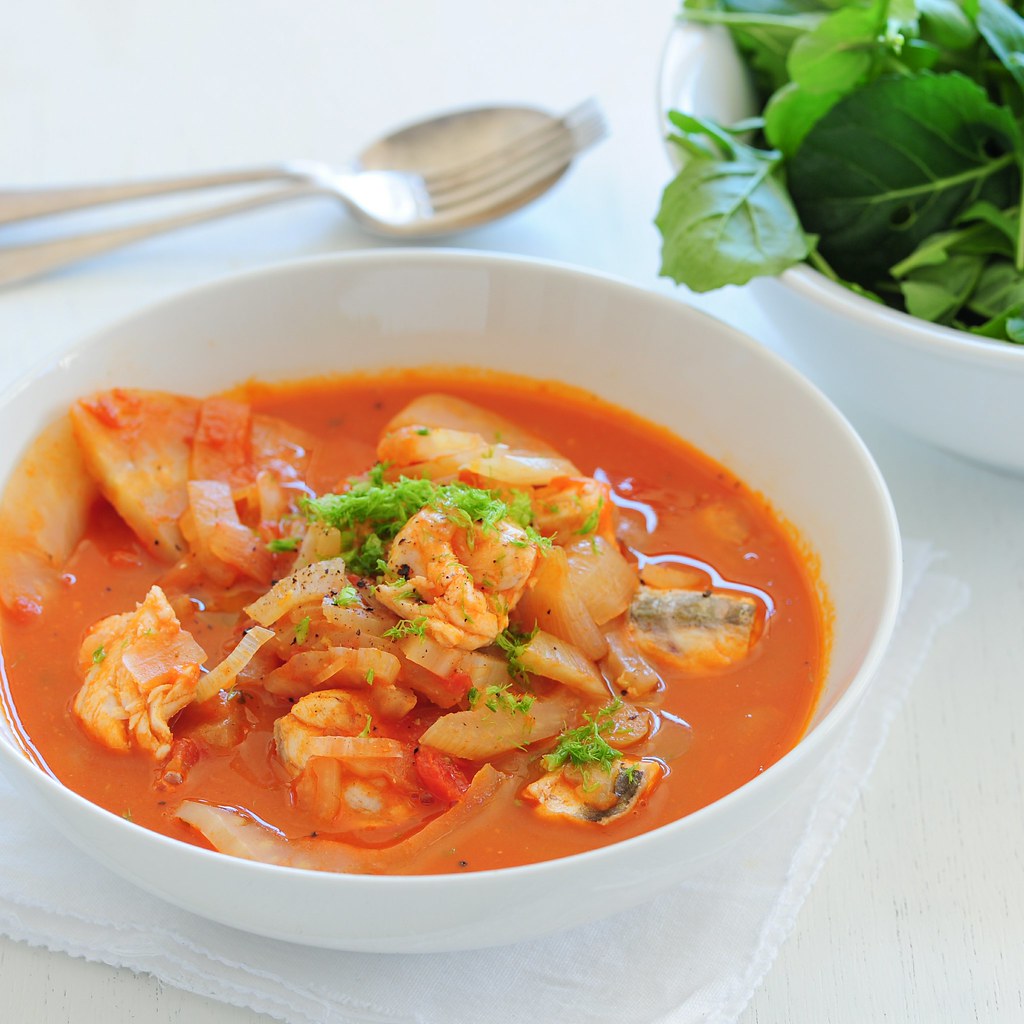
4 tablespoons extra virgin olive oil 1 large sweet onion, diced 2 celery ribs, diced 1 teaspoon salt ½ teaspoon black pepper 4 large garlic cloves, minced ½ teaspoon dried thyme ¼ teaspoon red pepper flakes ½ cup dry white wine 1 28-oz can whole cherry tomatoes 1 cup seafood broth 2 tablespoons capers 2 lb skinless sea bass fillet, about 1 ½-inch thick, cut into 4 pieces 8 large fresh or frozen medium shrimp, peeled and deveined 12 large sea scallops 1 teaspoon dried oregano, crushed ½ cup chopped fresh parsley leaves stems removed
Directions
Heat the olive oil in a large deep skillet with a cover over medium heat. Add onions, celery/ Cook, stirring regularly until softened (about 4 minutes). Add thyme, red pepper flakes, and garlic and cook briefly until fragrant (about 30 more seconds). Stir in the white wine. Bring to a simmer, and cook for 2 minutes. Add the tomatoes, broth, salt, pepper, and capers. Cook for 20 minutes over medium heat until flavors combine.
Pat the fish dry and season lightly with salt and pepper. Insert the fish pieces into the cooking liquid, and give everything a gentle stir. Bring to a simmer and cook for 5 minutes. Turn the heat off and cover the skillet. Let sit off the heat for another 5 minutes so that the fish will finish cooking. Fish should be flaky when gently pulled apart with a paring knife. Finally, stir in the chopped parsley. Ladle the hot fish stew into serving bowls.
Prue Leith, chef and restauranteur advised on the review of hospital food.
Adapted from BMJ 31 Oct 2020
An independent review of hospital food led by advisers including Prue Leith has produced a report including recommendations.
The government has said that it will establish and expert group of NHS caterers, dieticians, and nurses to act on the recommendations.
The group has advised that food be provided 24/7. Digital menus and food ordering systems should factor in dietary requirements. There should be professional standards agreed for NHS chefs. The role of nurses, dieticians and caterers should be increased in overseeing food services.
My comment: Here a some studies they should consider when it comes to formulating the meals.
BMJ 16 Feb 2021
The PURE study showed that those who had more than 350g of refined grains a day, or about 7 servings, had a higher risk of total mortality, major cardiovascular disease events compared to the lowest category which was less than 50g of refined grains.
The finding are robust and widely applicable as the study recorded more than 10,000 deaths or major cardiovascular disease events across the range of cereal grains, whole grains and white rice consumption. Different settings, cultures and dietary patterns were considered.
BMJ 20 March 21
The “Five a day” promotion of fruit and vegetable consumption originated in California in the 1990s from a partnership between the state health department and the agricultural and supermarket industries.
Five seems to have been chosen pragmatically as a realistic target rather than having been based on any nutritional evidence. But analyses of the Nurses Health Study and the Health Professionals Follow up study suggest that they got it right.
During 30 years follow up, the greatest mortality benefit was seen for five servings a day, and eating more didn’t give greater risk reductions.
Being employed seems to reduce the onset of dementia in women later on in life.
In the USA, 6 thousand women took part in the Health and Retirement study. Rates of memory decline were around 50% faster in those women who did not work for pay in the years after having children. Regardless of marital status and whether they had children, women who worked for pay in early adulthood and midlife showed slower rates of later life memory decline.
My comment: I wonder if the 80 years full time equivalent that I’ve racked up for the NHS will stand me in good stead then?
Once you are old, both men and women’s rates of memory decline from Alzheimer’s greatly accelerates if either experience the death of their spouse.
The Harvard Ageing Brain study did PET scans of participants’ brains at recruitment. They then had annual cognitive assessments. Those who had higher amyloid in the brain to star with deteriorated faster whether they were married or not, but the steepest drop occurred in those whose who were widowed.
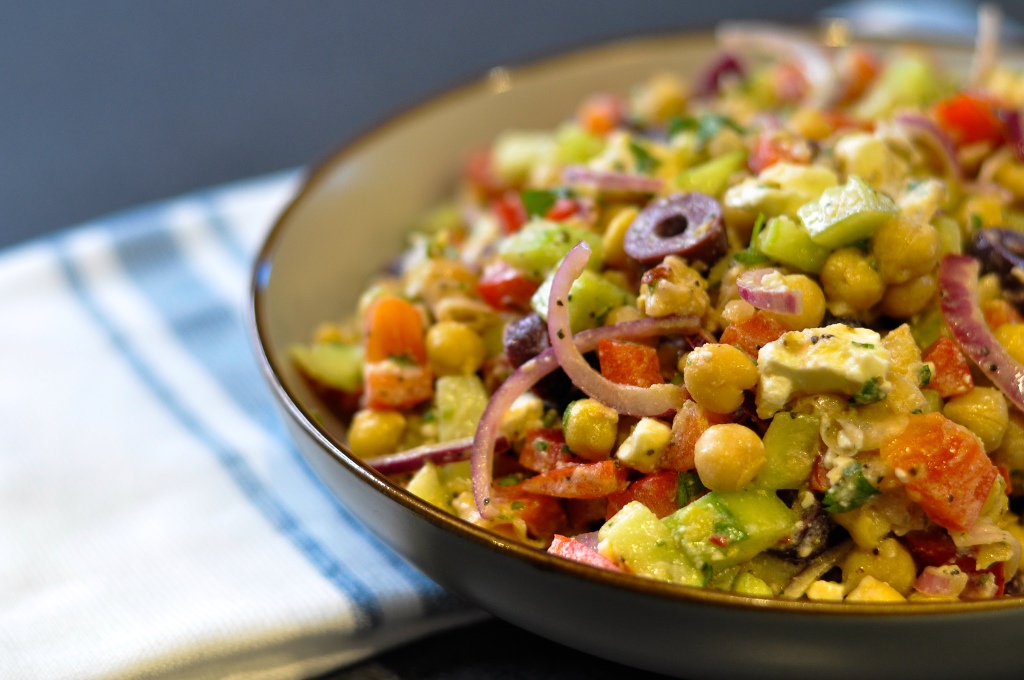
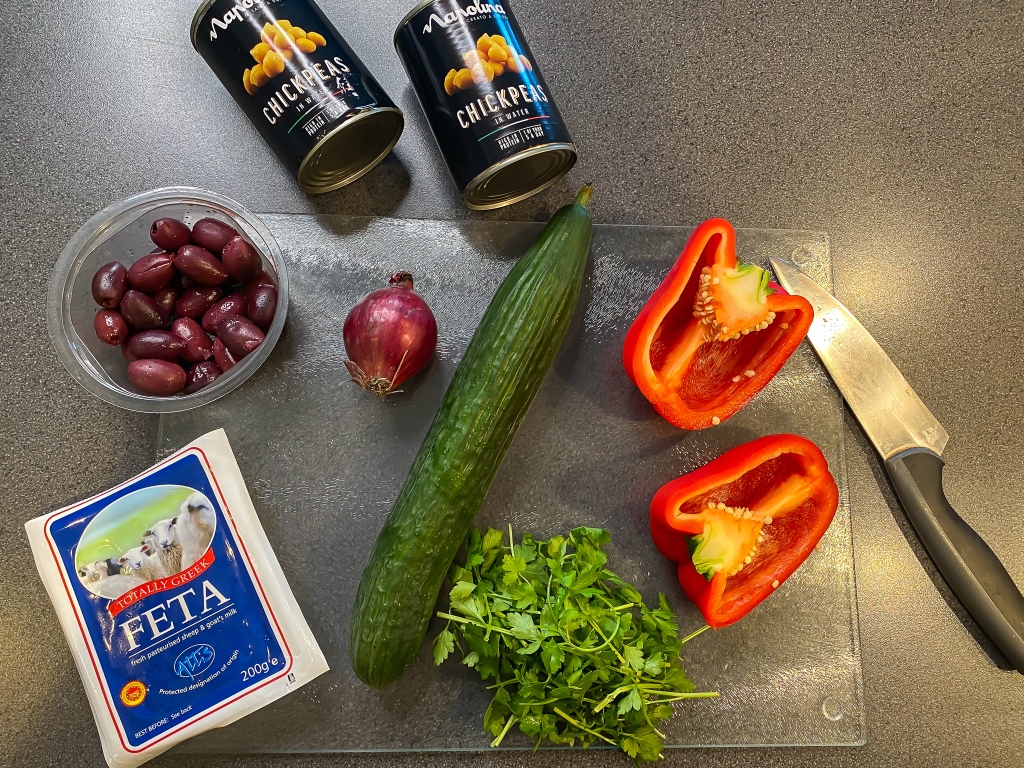
This chickpea salad is simply a must. It not only takes just under 10 minutes to make but also will keep you satisfied for hours. This salad very quickly become my favourite lunch option during the times when I was on my journey of losing weight, as chickpeas are loaded with fibre, which keeps us feeling fuller for a long period of time. But that’s not all the benefits this salad has. Chickpeas are high in vitamins and minerals, that help with reducing blood pressure, cholesterol, and also are boosting our immune system.
This easy 2-step salad can be simply enjoyed on its own or as a side dish for slow-cooked Greek lamb or burgers.