The best diet for optimal blood sugar control & health
Author: kaitiscotland
I am a Scottish doctor who is working to improve the outcomes for people who have diabetes using a low carb diet, and advanced insulin techniques when necessary. Professionally I provide expert witness reports in the clinical forensic and family medicine areas and I also provide complementary therapies. I enjoy cooking, cinema, reading, travel and cats.
Adapted from paper by Dr David S Ludwig and Dr Jens J Holst published in JAMA May 1 2023
Treatment that focuses on the root cause of a disease has guided research and clinical practice for centuries. The American Academy of Pediatrics (AAP) published a clinical practice guideline for the evaluation and treatment of children with obesity earlier this year. This guideline emphasises the use of weight loss drugs and bariatic surgery. Diet received little attention apart from advising the USDA’s MyPlate recommendations and the limitation of sugar sweetened beverages.
The researchers are of course constrained by available evidence and the results on weight loss for drugs and surgery do seem superior to the changes achieved by diet. Yet, the physiological changes that occur on a carbohydrate restricted diet have many similarities to what occurs in the body with drugs such as GLP-1 receptor antagonists.
GLP-1 RAs improve beta cell sensitivity to glucose so that the same amount of insulin will be released at a lower glucose concentration. It also slows the rate that the stomach empties after eating food. Thus people feel fuller up after eating for longer, and the lower blood sugars released from the stomach over time result in lowering the total amount of insulin from the pancreas. The lower the rate that the stomach empties, the more weight is lost.
Slower digesting carbohydrate, for instance, must travel farther down the gut before being fully absorbed. This causes lower post meal blood sugars and insulin secretion. Protein and fat also digest more slowly and stimulate less insulin secretion than an equivalent amount of rapidly absorbed carbohydrate. Additional similarities between low glycaemic load diets and GLP-1 RAs include lower leptin levels, suggesting lower leptin resistance, lower ghrelin levels and higher adiponectin levels. This dietary strategy shares mechanisms with gastric bypass surgery which shifts nutrient absorption from a more proximal to a more distal location in the intestines. Of special relevance is that natural GLP-1 secretion is increased with a low glycaemic load diet, which slows gastric emptying thus improving satiety, and bariatric surgery.
Although in theory a low carb diet should be able to replicate the results of GLP-1 RAs (15% weight loss) results are usually disappointing, except where a ketogenic diet with intensive behavioural support (12% weight loss) is provided. In other words, the results can be almost replicated but the person must stick to the diet.
GLP-1 RAs cost $1,400 per adolescent per month. Treatment of all adults with obesity would cost $1 trillion and all adolescents $100 billion per year. Instead of spending this sort of money to solve the obesity crisis, it would be more worthwhile to enhance dietary quality and create environments that would encourage physical activities and outdoor play as an alternative to screen time and electronic gadgets. This would improve mental as well as physical health.
Unfortunately, once GLP-1 RAs are stopped, the weight is usually rapidly regained. Therefore we are really looking at potentially lifelong drug treatment for the obese population. We do not know the effects of prolonged drug treatment on other health factors. A low quality diet could still produce a raised lifetime risk of cardiovascular disease, cancer and other chronic conditions, independent of weight.
Perhaps low glycaemic load diets when given in conjunction with GLP-1 RAs would improve the therapeutic effect and thus allow drug use at lower dosages. This could reduce adverse effects.
To advance science and social justice we must fund research into new dietary treatments and overcome obstacles to the provision of intensive behavioural interventions. Especially for children, diet and lifestyle must remain at the forefront of obesity prevention and treatment.
Adapted from Medscape article by Peter Russell 6 Dec 2022
Children with type one diabetes have more school absences than classmates who do not have the condition, but difficulties with blood sugar control were linked to the most absences.
Despite lower attendances many children with type one diabetes achieve good exam grades and go on to higher education. But those with higher HbA1c levels were more likely to get poorer grades and found it harder to get a place at college level.
Cardiff researchers think that children who struggle with their glycaemic control could benefit from more clinical and educational support.
Researchers looked at over a quarter of a million children aged 6 to 18 and over a thousand children with type one diabetes who attended schools and colleges in Wales between 2009 and 2016. Factors such as the child’s household socioeconomic status, neighbourhood deprivation, sex and age were taken into account.
The results showed that type one children were absent for 8.8 sessions per year more than children without diabetes. Those with the best glycaemic control missed 6.7 sessions per year and children with the poorest levels of control missed 14.8 sessions.
Children in the quintile with the best glycaemic control got results 4 grades higher than those without diabetes at the age of 16. However for those in the lowest quintile of HbA1c control attainment was 5 grades lower than their classmates who did not have the condition.
Those with the best glycaemic management were 1.7 times more likely to gain a place in higher education than the general population whereas those in the lowest quintile for glycaemic management were 0.4 times as likely to go onto higher education than those who did not have type one diabetes. In essense those in the highest quintile were almost three times more likely to attend higher education than in the least optimal quintile.
Dr Robert French, one of the researchers was impressed that children with diabetes under adequate control were as likely to progress to higher education as their non diabetic peers even though they lost more school days to diabetes.
Overachievement for children with type one diabetes who effectively managed their glycaemic control could be due to factors unrelated to glucose levels and could reflect socioeconomic conditions, family support and effective self management.
Robert French et al. Educational attainment and childhood onset type one diabetes. Diabetes Care 1 Dec 2022 45(12) 2852-2851.
My comment: I know from my own experience of being a parent of a child with type one diabetes that the formulation of strictly kept routines around blood sugar testing, meals, homework, activity, and sleep made a big difference to my son’s blood sugar control and educational attainment. By my son’s diagnosis it had been already discovered that 9 out of 10 diabetic children had worse school attainment than average for their peers and that high blood sugars affected concentration, mood and memory. It would seem that for most diabetic children the educational gap has been greatly improved in the 20 years since. The overachievement affect is understandable when a child or young adult is given more family support, and this is usually maternal support, during their adolescent years, than is perhaps the case for non diabetic children. The adoption of a low carb diet makes glycaemic control much easier for all diabetics and this is even more important when the hormonal surges of puberty are causing glycaemic uproar, and the need to perform in exams can determine future career paths.
Surgeon Scarlett Mc Nally writes: In the 30 and more years since I qualified, England has had 14 obesity strategies including 689 policies. In that time the prevalence of obesity has almost doubled from 15% in 1993 to 28% of the adults in the UK in 2019. This spectacular failure of policy is probably due to a misplaced focus on individual behaviours rather than social, fiscal, or regulatory policies.
High body mass index is the fourth leading risk factor for disease in the UK and a major risk factor for 13 cancers. People with obesity are 7 times more likely to develop type two diabetes, contributing to worsening health and the risk of amputations, sight loss, kidney dysfunction and complications of surgery.
Several aspects of physiology are not widely understood or applied. First, starchy carbohydrates such as bread, pasta, rice and potatoes, are rapidly converted to sugars that are preferentially stored as fat.
Release of the hormone insulin is triggered by high sugar levels, helping to store sugar as fat and leading to the post meal dip in blood sugar around two hours later. Fats, proteins and fibre cause a lower insulin spike, leaving us feeling fuller for longer. This is the basis of low carbohydrate diets.
Second, the balance of hormones means our bodies are either storing fat or using it. Any food intake reduces fat loss for some time. This is the justification for intermittent fasting routines.
Third, it takes 20 minutes to feel full after eating. Slower eating helps us to avoid overeating at meals, helps us consider portion sizes more wisely and helps us resist second helpings.
Fourth, exercise help the body to burn fat by lipolysis.
So what do we do with this knowledge? Perhaps suggesting what and when to eat is a better option than new, expensively promoted semaglutide injections, which mimic a hormone that decreases appetite.
Replacing carbohydrates means that more protein, fat, or fibre is needed. This can be difficult in a cost of living crisis, as obesity is highly related to social deprivation. A person is twice as likely to experience obesity (37%) in the most deprived areas as in the least deprived (19%).
Tackling obesity then should include social initiatives to fight deprivation such as healthy school meals.
Our environment needs to change, through improved funding and regulation. It should permit physical activity, with play parks, walkable neighbourhoods, cycle lanes, and low traffic areas.
Commercial food companies should be subject to the full weight of regulations, which should be applied to any junk food advertising. We need initiatives to improve access to affordable, high quality food, which is shamefully poor in many deprived areas.
Obesity should not be considered a “lifestyle” problem. It requires a whole community approach focused on environments, regulation, and funding.
Clean the leeks and cut the little ones, into small chunks. Peel the onion and cut it in small chunks too. Finally peel and cut the apple into cubes. Leave the apple in a bowl with water and a few drops of lemon so that it does not blacken.
Brown the bacon with a few drops of oil in the pan. Remove it and let it rest on absorbent kitchen paper.
In this same pan fry the onion for a few minutes, adding a little oil if necessary, and when you see it transparent add the leek over low heat and poach it for a few more minutes. When the leek looks well poached it is time to add the well drained apple. Soak until everything looks tender and soft.
In a large bowl beat the eggs with milk, cream and cheese.
Add the leek and bacon and mix well. Salt and pepper. You can add a little nutmeg.
Pour the mixture into a previously greased mold about 25 cm long.
After you grease it put it in the fridge for 30 minutes to help the cake come out smoothly at the end.
Put it in the oven and cook for about 30 minutes or until you see it well curdled. If you see that the surface browns too much you can cover it with aluminum foil.
Q: Can you speak to the ability or inability to “cure” T2D? Does it have to do with the loss of the pancreatic beta cells?
A: Yes, it has generally been shown that new-onset type 2 diabetes is easier to “reverse,” meaning that blood glucose levels can be so well managed that it appears diabetes has been cured. Over time, a loss of some insulin-making capacity occurs in people with long-standing T2D, particularly if it has not been well-managed, related both to the impairment of pancreatic β-cell function and the decrease in β-cell mass. (PMID: 27615139)
Q: Isn’t insulin resistance now found to be in T1DM as well?
A: Yes, anyone can develop insulin resistance, and it occurs in at least a third of people with type 1 diabetes as well, although it is not always associated with excess weight gain or overweight. Since people with T1D lack insulin due to the body’s own immune system killing off the pancreatic β-cells, greater resistance increases the total doses of insulin needed (whether injected, pumped, or inhaled). Thus, they have developed characteristics of both types and have “double diabetes.” (PMID: 34530819)
Q: Under lifestyle goals, would you include stress management?
A: Stress management was not assessed in the large multi-center clinical trials on type 2 diabetes prevention, but mental stress can certainly raise blood glucose levels due to the greater release of glucose-raising hormones like cortisol and adrenaline. It certainly would be beneficial to address better ways to manage mental stress as part of lifestyle goals for optimal blood glucose outcomes. (PMID: 29760788)
Q: As each person has their own limitations, how important is it to get a physician clearance and exercise guidelines before working with the client?
A: It really depends on the person’s circumstances. How intense will the planned activities be? Is the person currently sedentary? Has he/she been getting annual checkups to monitor blood glucose management and to check the status of any complications? Does he/she have diabetes-related or other health complications that could be worsened by physical activity? The lower the intensity, the more active an individual has been, and the lower the risk for cardiovascular complications, the less likely medical clearance is absolutely necessary.
The latest ACSM Consensus Statement on activity and T2D will be released in early 2022 in Medicine & Science in Sports & Exercise and states, “For most individuals planning to participate in a low- to moderate-intensity physical activity like brisk walking, no pre-exercise medical evaluation is needed unless symptoms of cardiovascular disease or microvascular complications are present. In adults who are currently sedentary, medical clearance is recommended prior to participation in moderate- to high-intensity physical activity.”
Q: Can flexibility training be used for warmups, or do you recommend it only after the workout?
A: While it is possible to do flexibility training at any point during a workout, joints tend to have a greater range of motion after blood flow to those areas has been increased with a light or short aerobic warmup. It may be prudent to do a quick aerobic warmup, some stretching, the full workout, and then more extensive stretching afterwards for optimal results.
Q: Was there any particular protocol for strength training? sets, reps, periodization? What is considered “intense” resistance work? Would fatigue based off of several sets of moderate intensity be recommended then?
A: That is a tough question, and it depends on who you ask. I have seen a lot of debate over the optimal strength training protocol during the many years I have been in the exercise/fitness world. If people are just starting out with resistance training, they will gain from doing even a minimal amount of training.
Starting out with 1-3 sets of 8 to 10 main exercises that work all of the large muscles groups at a light to moderate intensity is considered appropriate for most older or sedentary adults, many of whom have joint limitations or health issues. Moderate intensity is considered 50%-69% of 1-RM (1 repetition maximum) and vigorous is 70%-85% of 1-RM. Both intensity (fewer reps at a higher intensity) and the number of sets (3-5) or days of training (starting at 2, progressing to 3 nonconsecutive days) can increase over 2 to 3 months. Periodization is usually not undertaken by older adults, but may be appropriate for younger, fitter ones.
Q: Do you have any insight or are aware of any studies that involve high intensity (%1-RM) resistance training and T2DM? Or any studies that compare resistance training volume (Sets x Reps x Load)?
A: Some older studies have determined that glycemic management is improved by supervised high-intensity resistance training in people with type 2 diabetes (PMID 12351469). Others have also found that home-based (and, therefore, unsupervised) resistance training results in a lesser impact on blood glucose levels, likely due to reductions in adherence and exercise training volume and intensity (PMID 15616225).
Q: I’m still confused about glucose response to acute exercise. Which is better if you want to bring down your BG right now? Can you speak to the possibility of increased blood sugars with intense aerobic exercise?
A: Most light-to moderate-intensity aerobic exercise will lower blood glucose levels, assuming that some insulin is present in the body. (People who are very insulin deficient may have a rise in blood glucose from doing any activity.) Any activity that gets up into the intense/vigorous range, even if only during occasional intervals, has the potential to raise blood glucose due to a greater release of glucose-raising hormones during the activity. This is particularly true if the activity is short and intense. In individuals with any type of diabetes, declines in blood glucose during high-intensity interval exercise are smaller than those observed during aerobic exercise.
That said, if someone wants to lower blood glucose right now with exercise, it also depends on the timing of exercise. Doing something light to moderate for at least 10 to 30 minutes is the best bet, particularly after a meal when insulin levels are generally higher. Avoid doing intense aerobic or heavy resistance training as those may have the opposite effect. For early morning exercise, any intensity can potentially raise blood glucose due to higher levels of insulin resistance then and lower circulating levels of insulin in the body.
Q: I had an endocrinologist say that long runs or walks are better, and another one said to do a bit of weights.
A: Which activities someone chooses to do should depend on the goal of the training. Is it increased fitness, lowering blood glucose levels acutely, or gaining strength and improving overall blood glucose management? Long, slow aerobic training does have the benefit of increasing cardiorespiratory fitness and lowering blood glucose levels (in most cases). Resistance training, on the other hand, increases muscular strength and endurance and helps people gain and preserve muscle mass, which is where most carbohydrates are stored in the body. It may not, however, lower blood glucose levels, at least not acutely.
Both have their place in a weekly training regimen. Insulin resistance is lowered for 2 to 72 hours following a bout of aerobic training. Resistance training has more of a long-term impact on insulin action by enhancing carbohydrate storage capacity. The best advice is to do some aerobic training at least every other day and some resistance training at least 2, and preferably 3, nonconsecutive days per week. These activities can be done on the same days or different ones.
1 tablespoon plus 1/4 cup water ¼ teaspoon baking soda 1 pound tender steak{beef tenderloin tails, ribeye, or flank steak} trimmed, cut into 1-inch squares 3 tablespoons soy sauce, divided 3 tablespoons dry sherry or Chinese rice wine, divided up to 3 teaspoons cornstarch, divided up to 2 ½ teaspoons packed light brown sugar, divided 1 tablespoon oyster sauce 2 teaspoons rice vinegar 2 teaspoons toasted sesame oil 1/2 teaspoon coarsely ground pepper 3 tablespoons plus 1 teaspoon peanut oil, divided 1 red bell pepper, stemmed, seeded, and cut into 1-inch squares 1 green bell pepper, stemmed, seeded, and cut into 1-inch squares 6 scallions, white parts sliced thin on a bias, green parts cut into 2-inch pieces 3 garlic cloves, minced 1 tablespoon grated fresh ginger
Directions
Combine 1 tablespoon water and baking soda in a medium bowl. Add beef and toss to coat. Let sit at room temperature for 5 minutes.
Whisk 1 tablespoon soy sauce, 1 tablespoon sherry, 1½ teaspoons cornstarch, and ½ teaspoon sugar together in a small bowl. Add soy sauce mixture to beef, stir to coat, and let sit at room temperature for 15 to 30 minutes.
Stir-fry Sauce Whisk remaining ¼ cup water, remaining 2 tablespoons soy sauce, remaining 2 tablespoons sherry, remaining 1½ teaspoons cornstarch, remaining 2 teaspoons sugar, 1 tablespoon oyster sauce, 2 teaspoons vinegar, 2 teaspoons sesame oil, and ½ teaspoon pepper together in the second bowl.
Heat 2 teaspoons peanut oil in a 12-inch nonstick skillet over high heat until just smoking. Add half of the beef in a single layer. Cook without stirring for 1 minute. Continue to cook, stirring occasionally, until spotty brown on both sides, about 1 minute longer. Transfer to a bowl. Repeat with remaining beef and 2 teaspoon oil.
Return skillet to high heat, add 2 teaspoons peanut oil, and heat until beginning to smoke. Add bell peppers and scallion greens and cook, stirring occasionally, until vegetables are spotty brown and crisp-tender, about 4 minutes. Transfer vegetables to bowl with beef.
Return now-empty skillet to medium-high heat and add the remaining 4 teaspoons vegetable oil, scallion whites, garlic, and ginger. Cook, stirring frequently until lightly browned, about 2 minutes. Return beef and vegetables to skillet and stir to combine. Whisk sauce to recombine. Add to skillet and cook, stirring constantly, until sauce has thickened, about 30 seconds.
Adapted from Medscape 5 Dec 2022 by Vinod Rane BS Pharm
Glucosamine, popularly used for osteoarthritis, has previously been found to have anti-inflammatory properties and regular use has now been shown to reduce cancers overall and particularly kidney, lung and rectal cancer.
This was a large prospective study that included 453,645 participants aged 38 to 73 who did not have cancer at the start of the study.
19.4% were taking glucosamine regularly and 80.6% were not. The patients were followed up for a median of 12 years.
Cancer was reduced in cancer overall 0.95, kidney cancer 0.68, lung cancer 0.84 and rectal cancer 0.76.
The study did not include the dose, form and duration of supplement use and there could be a risk that the people who took glucosamine also followed other healthier behaviours than those who didn’t.
My comment: I have been taking glucosamine for 23 years now and it has been a great benefit to my joints. I can see that confounding could be a problem. Non smokers greatly reduce lung cancer, vitamin D users are less likely to get rectal cancer, and slim people are less likely to get kidney cancer.
Zhou J et al Associaton between glucosamine use and cancer mortality. A large prospective cohort study. Front Nutr. 2022;9:947818.
The Lancet has published research concerning the effect of clinical Covid 19 infection protection against further infections.
Looking at 65 research studies, the conclusion is that alpha, beta and delta variants strongly protected against future infection. There was 78% protection at 40 weeks post covid. The Omicron variant however was less protective, immunity only being 36% at 40 weeks.
Any infective agent however was highly likely to protect against hospital admission or death. The effectiveness was 90% at 40 weeks.
This was considered as useful has having had two mRNA vaccines.
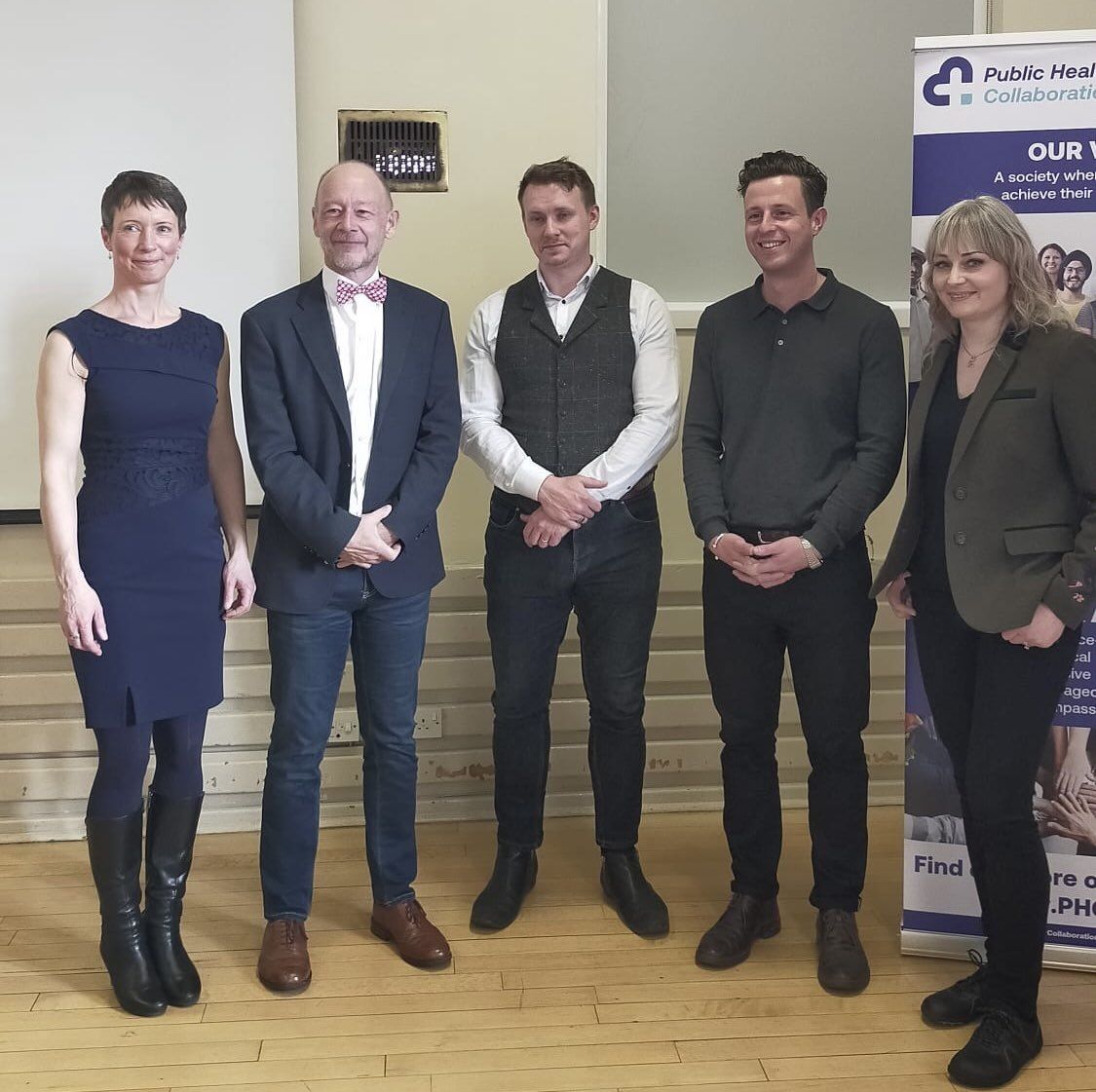
I attended the PHQ conference in Edinburgh on 17 March 23. This was the first such meeting in Scotland and it was well organised, interesting and well attended.
Moira Newiss is on your far left of the photo in her navy dress and black boots. Moira organised the meeting and also spoke about her experience of having post viral fatigue twice in her life. This led her to explore the functioning of the mitochondria in our cells. She found that the mitochondria don’t function normally and become depleted in chronic fatigue syndrome and fibromyalgia but that primitive pathways in the cell using ketones for fuel are still active. She started a ketogenic diet and recovered completely from her chronic fatigue syndrome. She now runs for a hobby.
Dr David Unwin is standing next to her and is wearing a bow tie and suit. He is now 65 years of age and has been promoting low carb diets in his practice for the last ten years with great results. He is having so much fun that he doesn’t want to retire!
He found that in many cases type two diabetics can reverse their condition completely by the adoption of a low carb or ketogenic diet. Statistical analysis showed that the people most likely to reverse their condition had had been diagnosed in the previous 18 months. There is thus a great window of opportunity for advice and coaching to be provided to these patients at the earliest opportunity after diagnosis.
Results after 18 months are more variable, with a great improvement in diabetes seen, but sometimes not to the extent that complete remission occurs. Some medication support is often still necessary. Insulin may be able to be substantially reduced or stopped but some alternative medication may still be required.
Monitoring of patients blood sugars will still be required for both groups lifelong in case high blood sugars return. This can be due to secondary beta cell failure and may require tightening up of the diet, the addition of medication and sometimes insulin. If higher blood sugars and weight loss is reported, pancreatic cancer requires consideration and this is detected by urgent MRI scans. Sometimes a patient has been wrongly diagnosed as type two when they are really type one. In all cases they will need to see their GP for diagnosis.
Dr Iain Campbell is standing next to Dr Unwin and is wearing a waistcoat and white shirt. Iain told us about his struggles with bipolar disorder. There certainly could be a creative advantage to this illness, as Iain spent his young day in a rock band and even now is a successful composer. He has now settled into fatherhood and medicine and since starting a ketogenic diet has been mentally stable. My comment: Dr Christopher Palmer in the USA has also researched this phenomenon and there is a blog article on this site about him. Iain works at the university of Edinburgh, and has done preliminary studies in other patients who have bipolar disorder and has found that anxiety, depression, mood swings and impulsiveness all improve with a ketogenic diet. Further research is planned.
Dr Rachel Bain, on your far right, is a psychiatrist and works with Ally Houston, who is standing beside her, to promote coaching for mental health patients in the low carb diet. The site is metpsy.com.
Rachel explained that the gut and brain are very intimately connected and share the same neurotransmitters. The gut microbiotica are affected by what we eat. This affects our mood. If leaky gut occurs inflammatory substances can gain access to our blood vessels and cross the blood /brain barrier to cause neuro-inflammation. This is one cause of degenerative brain conditions such as Alzheimer’s disease and Parkinson’s disease. The foods most likely to disrupt the junctions between the gut cells are sugar, starch, gluten and alcohol. She and Ally as well as other team members treat people who have Attention Deficit Disorder, Obsessive Compulsive Disorder, Binge Eating Disorder, Bipolar Disorder and Schizophrenia. They don’t aim for a person to stop their medication so much as to gain control of their lives.
Ally Houston used to be a physicist but is now a chef and low carb coach. Comment: Ally also appears in a previous blog post on the site. He explained what coaching was and wasn’t. It isn’t telling someone what to do. It is exploring with the person how their life works now and how they can introduce positive changes around eating sugar, starch, vegetable oils, exercise, stress reduction and sleep.
The services at met.psy.com are out with the NHS and there is a fee for the services, but it is very reasonably priced.
PHQ are expecting videos of the conference to be available on You Tube now or very shortly.
Mortality Reduced With Adherence to Low-Carb Diet in Type 2 Diabetes
Mar 24, 2023
Lower mortality seen with increases in total, vegetable, and healthy low-carbohydrate diet score
By Elana Gotkine HealthDay Reporter
×
FRIDAY, March 24, 2023 (HealthDay News) — For individuals with incident type 2 diabetes (T2D), a greater adherence to low-carbohydrate diet (LCD) patterns is associated with lower mortality, according to a study published online Feb. 14 in Diabetes Care.
Yang Hu, Ph.D., from the Harvard T.H. Chan School of Public Health in Boston, and colleagues calculated an overall total LCD score (TLCDS) among participants with incident diabetes identified in the Nurses’ Health Study and Health Professionals Follow-up Study. Vegetable (VLCDS), animal (ALCDS), healthy (HLCDS), and unhealthy LCDS (ULCDS) were also derived.
The researchers documented 4,595 deaths, of which 1,389 cases were attributable to cardiovascular disease (CVD) and 881 to cancer among 10,101 incident T2D cases, contributing 139,407 person-years of follow-up. Per each 10-point increment of postdiagnosis LCDS, the pooled multivariable-adjusted hazard ratios for total mortality were 0.87, 0.76, and 0.78 for TLCDS, VLCDS, and HLCDS, respectively. Significantly lower CVD and cancer mortality was seen in association with VLCDS and HLCDS. From the prediagnosis to postdiagnosis period, each 10-point increase in TLCDS, VLCDS, and HLCDS correlated with 12, 25, and 25 percent lower total mortality, respectively. For ALCDS and ULCDS, no significant associations were seen.
“Our findings provide support for the current recommendations of carbohydrate restrictions for T2D management and highlight the importance of the quality and food sources of macronutrients when assessing the health benefits of LCD,” the authors write.










 Diabetes Diet