Your brain needs 50g of glucose a day

Adapted from Richard Feinman’s Nutrition in Crisis 

We have all heard NHS dieticians and diabetologists telling us that we will die of brain failure or get severe brain damage when we go on low carb diets because the brain needs 130g of glucose a day.

We will typically remind them that the glucose does not need to be ingested since our livers are perfectly able to manufacture well over 130g of glucose a day, the process called gluconeogenesis.

Richard Feinman is a cell biologist and he has an even finer retort.

The 130g of glucose a day necessity was discovered by George Cahill. This was the amount of glucose that a brain uses in normal nutritional states. It is indeed the case that this glucose can be ingested or manufactured in the liver or both.

Under starvation conditions however, the brain will only use 50g of glucose a day.  In starvation, the utilisation of ketone bodies becomes more important for brain function.

Unfortunately, nutritionists picked up on the 130g of glucose a day message and have been repeating it ever since. Cahill is reported to have said that by the time he was aware of the simplified but inaccurate message, it was too late to stop it.

Thus, it is not always true that you need 130g of glucose a day for brain function and it is never true that this must be from dietary carbohydrate.

So, if you get the old chestnut thrown at you, you know what to say now!


Jovina cooks: Tomato and vegetable soup

My comment: this dish needs some advanced preparation to make the tomatoes easy to peel or you could use tinned tomatoes if the summer glut is over.

Homemade Tomato Soup
Ingredients
1/4 cup extra virgin olive oil
2 leeks, white and light green parts, diced
2 carrots with green tops, diced including the tops
3 stalks celery with leaves, diced
The top of one fennel bulb with fronds, diced (save the bulb for another recipe)
4 cloves garlic, minced
5 lbs fresh plum tomatoes
4 cups  chicken stock

salt and freshly ground black pepper
2 teaspoons honey (or a teaspoon of sugar)
A few dashes of hot sauce eg Tabasco
Directions
I freeze the tomatoes and then defrost them overnight. The skins slip off easily. Or you can bring a large pot of salted water to a boil; add the tomatoes to the boiling water and cook 4-5 minutes, or until skins loosen. Carefully remove tomatoes from the water with a slotted spoon. Set aside until tomatoes are cool enough to handle; carefully slip off the skins and discard. Chop the tomatoes and set aside.

Heat the oil in a heavy Dutch Oven ( Le Creuset casserole dish or similar) over medium-high heat; add the garlic, leeks, carrots, fennel, celery and sauté 3-4 minutes, or until vegetables are soft. Season with salt and pepper to taste. Add the chopped tomatoes.

Add the broth and honey. Simmer for 15 minutes. Use a handheld stick blender and process until smooth and creamy. Add the hot sauce and serve.

Dr Chris Palmer: Ketogenic diet now being used in mental health

Dr Chris Palmer from Harvard has been using the low-carbohydrate and ketogenic diets in practice for over 15 years now mostly for weight loss. Recently, he has found an anti-psychotic and mood stabilizing effect from specific types of the ketogenic diet. Now he is pursuing clinical research in this area to better understand the topic. As a result, he has also been speaking at national and international conferences.

Here area few of his podcasts/interviews:

http://lowcarbmd.com/episode-49-dr-chris-palmer-treating-schizophrenia-with-lifestyle

https://www.chrispalmermd.com/ketogenic-diet-psychology…/ and keto putting schizophrenia into remission.

https://www.chrispalmermd.com/ketogenic-diet-remission…/

https://www.chrispalmermd.com/keto-naturopath-by-karl-goldcamp-interview-christopher-palmer/

My comment: It is a very good idea for those people with schizophrenia to be on a low carb diet, mainly due to the side effects of the anti-psychotics which give people metabolic syndrome and diabetes. It is even better to hear that there conditions are improved so they are less reliant on these drugs.

Diet doctor: free online course with credit for medical professionals

This is a message from dietician Adele Hite:

I am thrilled to announce that Diet Doctor is now offering a free CME activity to all interested clinicians, patients and carers: Treating metabolic syndrome, type 2 diabetes, and obesity with therapeutic carbohydrate restriction.

Thanks to the support of our members, we can offer this CME at no cost to clinicians.

This fully referenced, evidence-based CME activity is certified for three AMA PRA Category 1 Credit(s)™. It is jointly provided by Postgraduate Institute for Medicine (PIM) and Diet Doctor and is intended for physicians, physician assistants, registered nurses, and dietitians engaged in the care of patients with metabolic syndrome, type 2 diabetes, and obesity.

The course was designed by clinicians for clinicians. As this course outline shows, it covers all clinicians need to know about dietary carbohydrate restriction and how to implement it safely and effectively with patients for whom it is appropriate. In keeping with Diet Doctor’s mission to “make low carb simple,” the course also comes with supplemental materials for clinicians and their patients to make it easy to translate evidence into practice.

We hope that this course will help reaffirm the scientific and clinical support for this approach and — along with other efforts by LowCarbUSA and expert clinicians — act as another step in solidifying a standard of care around low-carb nutrition. We would love it if you would share the news about this course with colleagues. You can forward this email to them or use this flyer to share or post.

Diet Doctor also has some new resources to help make low carb simple for patients and clinicians alike. For patients, we have:
‒ a sample menu
‒ shopping list
‒ a meal planning guide
‒ a substitutes for favorite foods handout
‒ simple meals and planned leftovers, and
‒ information about target protein ranges

For clinicians, we have handy one-pagers on:
‒ monitoring ketones
‒ fasting insulin and HOMA-IR ranges
‒ lab tests and follow-up schedule
‒ type 2 diabetes medication reduction, and
‒ a 5-day food diary for patients who need to monitor their intake

Of course, for those on the list who are not clinicians, anyone can register for and view the course. You just won’t be eligible for CME credits.

For clinicians, please let us know if we can help you help your patients in other ways. And if you are interested in supporting us as we continue to develop materials to make low carb easy for clinicians and patients, please think about becoming a Diet Doctor member yourself.

Finally, we are happy to hear suggestions for improvements moving forward. If you take the time to view the course, we’d love to hear what you think.

Best regards,
Adele

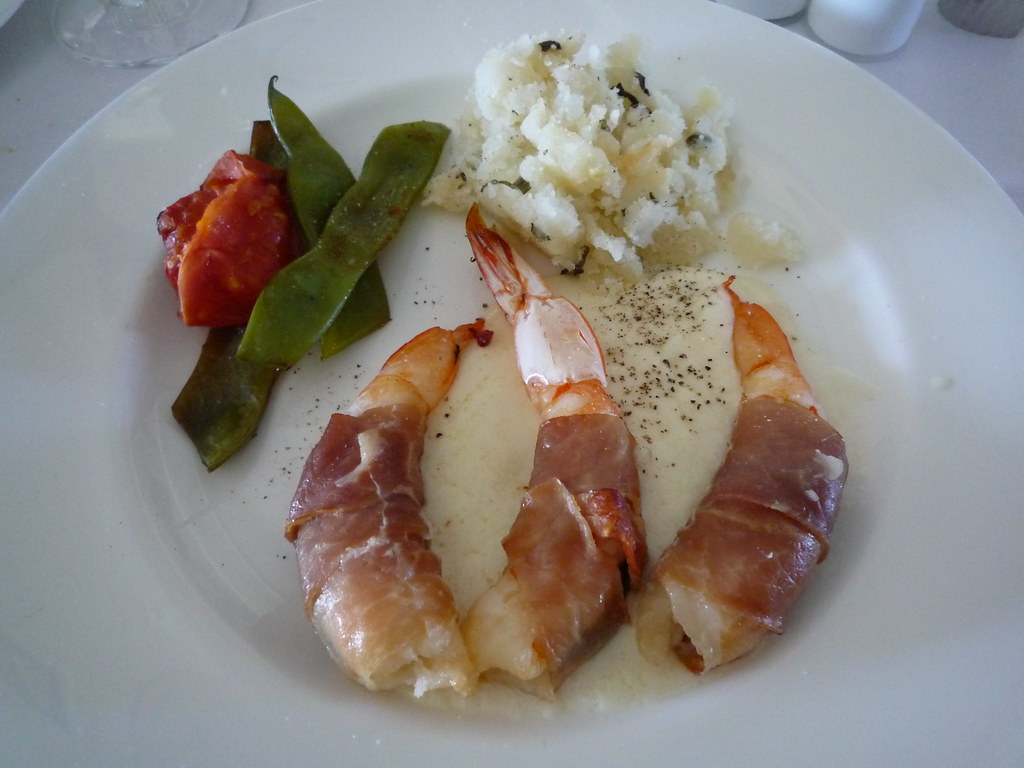
Jovina cooks Italian: Shrimp Saltibocca

My comment: this dish can also be cooked on the barbeque as long as you oil the shrimp first.

Shrimp Wrapped in Prosciutto di Parma (Saltibocca)
2 servings
Ingredients
2 tablespoons olive oil
12 fresh sage leaves
12 large shrimp, peeled, deveined, and tails removed
6 pieces Prosciutto di Parma, sliced very thin
Coarsely ground fresh black pepper
Directions

Cut each piece of prosciutto in half, lengthwise. Place a sage leaf on each shrimp. Wrap one Proscuitto half around each shrimp. Refrigerate for a few hours if you have time.

Heat a stovetop grill. Coat the pan with olive oil. Place the wrapped shrimp on the grill and cook for about 4 minutes on each side. The prosciutto will get crispy. Sprinkle with the black pepper and remove to a serving plate.