Health anxiety for diabetics is as bad as for neurological patients


girl_suffering_from_anxiety

A quarter of Canadian diabetics, with either type one or two diabetes suffer from a tendency to worry about their health and thus misinterpret bodily sensations as more serious and threatening than they actually are.

Neurological patients have the same degree of anxiety, judged the highest for all patient groups.

Health anxiety was worse in younger patients, females, those recently diagnosed and those who were unmarried.

They had anxiety, a fear of diabetes complications, poorer adherence to dietary and self care activities and a lower physical quality of life.

The researches add, “The cognitive behavioural theory of health anxiety suggests than health anxiety increases when patients feel more vulnerable, perceive the medical condition to be more distressing, feel they are unable to cope with the medical condition, and believe that resources for coping with the medical condition are inadequate.”

From Human Givens Volume 21. No 1 2014

(Janzen Claude JA Hadjistavropoulos, HD and Friesen, L (2014) Exploration of health anxiety among individuals with diabetes: prevalence and implications, Journal of Health Psychology, 19,2 312-22)

A meaningful life will help you live longer and be happier

Having  a sense of purpose in life helps us live longer, and the earlier we discover it, the sooner the protective effects occur. meaning-in-life

Researchers looked at data from over 6,000 participants, focusing on their self reported purpose in life. Over the 14 year follow up period 569 people died and all of those who died had reported less purpose in life and fewer positive relationships with others than did survivors.

Greater purpose in life consistently predicted lower mortality risk right across the lifespan, even when taking into account other markers for psychological and emotional well being.

(Reported in Human Givens Magazine Volume 21, No 1 2014 from a report in  Psychological Science, 2014, doi:10.1177/09567976145311799)

Eric Barker blogs weekly about what will improve your health, happiness and productivity.  Click on this blog post for further information on the same topic:

http://www.bakadesuyo.com/2016/10/meaning-in-life-2/?utm_source=%22Barking+Up+The+Wrong+Tree%22+Weekly+Newsletter&utm_campaign=8491fcb5d5-meaning_10_9_2016&utm_medium=email&utm_term=0_78d4c08a64-8491fcb5d5-57758173

Influenza vaccine reduces total mortality in diabetics

flu_shot_advertising


From Diabetes in Control

Could Influenza Vaccination Prevent More Than Just the Flu?


Currently, only low-quality evidence exists to support efficacy of influenza vaccination to prevent seasonal influenza in patients with diabetes. There is even less information regarding the impact of influenza vaccination on cardiovascular events or all-cause mortality in this population. A recent study published in the Canadian Medical Association Journal was designed to evaluate the impact of seasonal influenza vaccination on admission to the hospital for acute myocardial infarction, stroke, heart failure, or pneumonia, and all-cause mortality in patients with type 2 diabetes.

Conducted over a 7-year time period from 2003 – 2009, the study analyzed retrospective patient data from the Clinical Practice Research Datalink in England. The analysis included 124,503 adult patients diagnosed with type 2 diabetes. At baseline, characteristics such as age, sex, smoking status, BMI, cholesterol labs, HbA1c, blood pressure, medications, and comorbidities were compared between patient groups. Vaccination rates of the included participants ranged from 63.1% to 69.0% per year. In general, unvaccinated participants were younger, had lower rates of pre-existing comorbidities, and were taking fewer medications.

The baseline characteristics of subjects enrolled in this retrospective analysis showed that sicker subjects received the flu vaccination more frequently. Given this observation, and seasonal confounding of flu outbreaks, data adjustments favored fewer cardiovascular events and lower rates of all-cause mortality during the influenza season spanning 7 years of data.  While other studies have shown that influenza vaccination can reduce the risk of cardiovascular events in high-risk patients, this study is the first to demonstrate a reduction in cardiovascular events associated with influenza vaccination in patients with diabetes. This study is notable for its large sample size and long duration. However, given the retrospective nature of the study, further trials are warranted to offer conclusive evidence about the benefits of influenza vaccination in patients with diabetes.

Practice Pearls:

  • Previous clinical trials aimed at studying the effectiveness of the flu vaccine in patients with diabetes are often small, inconclusive, and have not investigated cardiovascular outcomes.
  • When data was adjusted for baseline covariates and seasonal residual confounding, patients who received the influenza vaccination had significantly reduced rates of hospital admissions for stroke, heart failure, pneumonia or influenza, and all-cause mortality.
  • Large experimental or quasi-experimental trials are needed to establish a causal link between influenza vaccination and clinical endpoints in patients with diabetes.

References:

Vamos EP, Pape UJ, Curcin V, Harris DPhil MJ, Valabhji J, Majeed A, et al.  Effectiveness of the Influenza vaccine in preventing admission to hospital and death in people with type 2 diabetes.  CMAJ. 2016 July 25.

Remschmidt C, Wichmann O, Harder T. Vaccines for the prevention of seasonal influenza in patients with diabetes: systematic review and meta-analysis. BMC Med 2015;13:53.

Researched and prepared by Alysa Redlich, Pharm.D. Candidate, University of Rhode Island, reviewed by Michelle Caetano, Pharm.D., BCPS, BCACP, CDOE, CVDOE

Could Metformin be useful to prevent Alzheimer’s?


hqdefault (2)


From Diabetes in Control.
July 16th, 2016
The diabetes drug may have a beneficial effect on neurodegenerative diseases.
Metformin, a biguanide, is an oral diabetes medicine used to improve blood glucose levels in people with type 2 diabetes. There have been various studies on other uses of metformin. It may be beneficial in Alzheimer’s disease, stroke and other degenerative brain cell diseases. An animal study found that metformin helps neurogenesis and enhances hippocampus, a key pathway (aPKC-CBP).

Type 2 diabetes doubles the risk of having dementia; though some studies show metformin helps reduce risk, other studies show antidiabetic medications like insulin are linked to increased risk of having dementia.

Animal studies show that metformin recruits endogenous neural stem cells and also promotes the genesis of new neurons. Metformin, however, needs to have been used for a longer period before a drastic reduction in neurodegenerative disease and its neuroprotective nature is seen.
The purpose of this study is to find a link between antidiabetic medications, especially metformin and other neurodegenerative diseases. Also, to know how long one has to be on these antidiabetics before the neuroprotective nature kicks in.

A cohort study of type 2 diabetes patients who are 55 years and above and being managed on a monotherapy antidiabetic drug of either metformin, sulfonylurea (SU), thiazolidinedione (TZD) or insulin were observed in a period of 5 years.

In the course of 5 years, dementia was identified in 9.9% of the patients. Comparing those taking metformin to those taking sulfonylurea, there was a 20% reduction in dementia in those taking metformin. The hazard ratio 0.79%, a 95% confidence interval of 0.65-0.95.

For TZD, metformin had a 23% reduction in having dementia as compared to TZD with hazard ratio of 0.77, 95% confidence interval of 0.66-0.90.

Whereas those on SU as compared to metformin had a 24% increased risk for dementia with a hazard ratio of 1.24, 95% confidence interval of 1.1-1.4.TZD had an 18% increased risk, hazard ratio of 1.18, 95% confidence interval of 1.1-1.4.

Insulin had the highest risk of 28% with hazard ratio of 1.28, 95% confidence interval of 1.1-1.6.

These findings proved that metformin use has neuroprotective benefits while insulin has an increased risk of one having dementia.
In yet another study, patients 50 years and older from Veterans Affairs, diagnosed with type 2 diabetes, were recruited. Those on insulin were followed from the time they started insulin. The exclusion criteria were neuropathy, vitamin B12 deficiency, cognitive impairment, cerebrovascular disease, renal disease, and those who took insulin for less than two thirds of the study period. The sample size after all exclusions was 6,046 patients with 90% of them being male and a median age of 5.25 years.

334 cases of dementia were diagnosed, 100 of them had Parkinson’s, 71 had Alzheimer’s disease and 19 had cognitive impairment during the follow up period. The incidence of developing neurodegenerative disease was lower (2.08) for those who never used metformin as against those who used it for less than a year, which was (2.47). Metformin usage for 4 years was 0.49, 2 to 4 years was 1.30 and 1.61 for less than 2 years. This proves that the longer one stays on metformin the better the neuroprotective benefits take effect.

This study was significant for dementia (0.567 at 2-4 years and 0.252 for more than 4 years), but for Parkinson’s and Alzheimer’s disease it was 0.038 and 0.229 respectively, which happened from four years and beyond. For future studies, a larger scale prospective cohort study is needed to approve the connection between metformin use and the risk for neurodegenerative disease.

A spatial learning maze test performed on mice showed those given metformin (200mg/kg) were significantly better to be able to learn the location of a submerged platform as compared to those given a sterile saline solution.

Other studies have also proposed that metformin could stimulate neurogenesis from human neural stem cells.
Metformin is known to cross the blood-brain barrier, and has pleiotropic effects. It is known to have other possible preventive roles in cancer and heart disease. From all these various studies, one can conclude that metformin does have a therapeutic potential for mild cognitive impairment and dementia.
Practice Pearls:
Metformin use for more than 2 years has a significant reduction in neurodegenerative disease; it is neuroprotective as well as promoting neurogenesis.
Though the mechanism between metformin and neurodegenerative disease is uncertain, it is known to cross the blood brain barrier and has pleiotropic effects.
Growing evidence suggests that neural stem cells play a role in the repair of injuries or a degenerated brain.

Shi Qian, Lui Shuqian, Foseca Vivian, et al. “The effort of Metformin Exposure on Neurodegenerative disease among Elder Adult Veterans with Diabetes Mellitus”. American Diabetes Association-76th Scientific session 2016. Web June 19 2016.
Wang Jing, et al. “Metformin Activates an Atypical PKC-CBP Pathway to promote Neurogenesis and Enhance Spatial Memory Formation”. Cell Stem Cell. Vol 11(1) July 2012. Web June 19 2016.
Knopman David S et al. “Metformin Cuts Dementia Risk in Type 2 Diabetes”. Alzheimer Association International. July 2013. Web 19 2016.

Kris Kresser: Dangers of Proton Pump Inhibitors


Continuous glucose monitors give 1% reduction in Hba1c

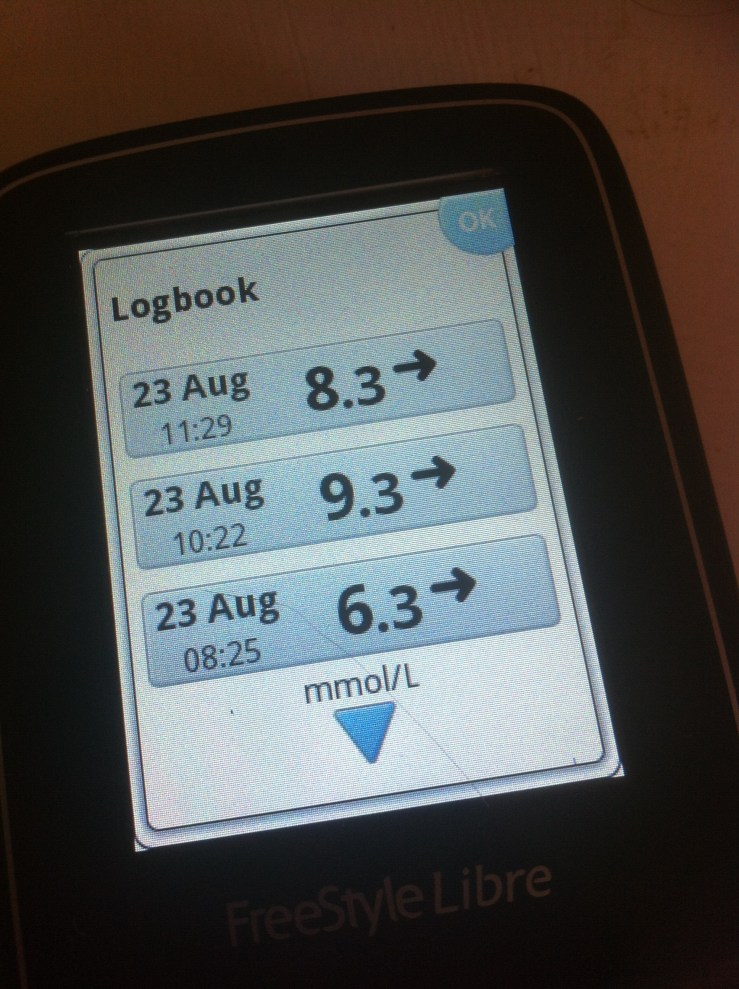
free styleVancouver doctors took 12 patients  type two diabetes who were using insulin and gave them continuous blood sugar monitors to help them improve their blood sugars.

Participants used these for 3 months, kept food records and maintained weekly contact with a registered dietitian/registered nurse team.  After 3 months, patients were told to discontinue sensor use and weekly contact and return to usual care.

HbA1c averages started at  8.2  which decreased to 7.1 during the program period and did not increase during the 15 months of patient follow-up.

Hypoglycemia (glucose < 4 mmol) at the beginning of treatment, was an average of 3.5  per week and was unchanged at the end of the study to 2.8.

“In conclusion, our program empowered patients with the knowledge and skill to maintain glycemic control,” Dr Haniak said. “Furthermore, this program is a very effective teaching tool for those patients with severe hypoglycemia to also sustain and maintain glycemic control.”

Haniak P, et al. Abstract 179-OR. Presented at: American Diabetes Association’s 75th Scientific Sessions; June 5-9, 2015; Boston.

Focused Care Improves Control Without Hypoglycemia Risk

From Diabetes in Control June 26th, 2015

My comments: Surely giving patients the Freestyle Libre or similar for a period of time combined with education on a low carbohydrate diet and blood sugar management would be cost effective in the NHS?

Low vitamin D doubles total mortality and dementia rates

hqdefault (2)

Being severely deficient in vitamin D is associated with a doubling of the risk of dementia according to a US study published in Neurology.

The Cardiovascular Health Study ran from the 1990s and tracked 1658 ambulatory citizens with no history of dementia or cardiovascular or cerebrovascular disease.

After a five year follow up time those who had vitamin D levels below 25 nmol/L had increased rates of dementia 2.2 times that of people who had levels over 50 nmol/L.

Researchers say that there are vitamin D receptors in the brain and vitamin D is thought to enhance macrophages that clear amyloid from the brain cells and reduce neuronal cell death.

(Based in article by Michael McCarthy in BMJ 16 August 14).


A combined European and US study showed that total mortality was increased by 57% for older adults with vitamin D levels below 25 nmol/L. Cardiovascular deaths and cancer deaths were increased in a dose responsive manner. 

(Based on and article by Stephen Robinson GP News 23 June 14)

Bizarrely the researchers didn’t think of the obvious solution, advise upping sun exposure or taking supplemental vitamin D, but decided that what this meant was that ill people were often stuck indoors and that was why they had low vitamin D levels.

The US study above does seem to contradict that view since all participants were ambulatory and had no known cardiovascular or cerebrovascular disease at the start of the study.  In my own practice in the west of Scotland most patients of all ages had very low levels of vitamin D. All walked into the surgery but had conditions that could have been affected by low vitamin D levels. The only patients who had levels over 50 nmol/L were taking supplements, cycled outdoors all year round, or used sunbeds.


Half of Cancer Deaths are Preventable

793258148_2d1fae3c3a
Harvard researchers find as many as 40 percent of cancer cases, and half of cancer deaths, come down to things people could easily change.

Many Americans often worry about whether chemicals, pollution or other factors out of their control cause cancer, but a new analysis shows otherwise: people are firmly in charge of much of their own risk of cancer. As we get older, our risk goes up, which could come from doing the same bad habits over a long period of time. The same can be said for being diagnosed with diabetes and prediabetes. Eating one large order of French fries will not increase your risk for cancer or diabetes, but eating two orders a week over 40 years would be over 4,000 orders, or over 2,000,000 calories and 259,000 carbohydrates, which can certainly be injurious to your health.

The team at Harvard Medical School calculated that 20 to 40 percent of cancer cases, and half of cancer deaths, could be prevented if people quit smoking, avoided heavy drinking, kept a healthy weight, and got just a half hour a day of moderate exercise. They used data from long-term studies of about 140,000 health professionals who update researchers on their health every two years for the analysis, published in the Journal of the American Medical Association’s JAMA Oncology.

“Not surprisingly, these figures increased to 40 percent to 70 percent when assessed with regard to the broader U.S. population of whites, which has a much worse lifestyle pattern than our cohorts,” wrote Dr. Edward Giovannucci of Harvard Medical School. The analysis was simple. They broke the 140,000 people into two groups: those with a healthy lifestyle, and everyone else. The healthy lifestyle definition was based on a large body of studies that have shown what personal habits are linked with higher or lower risks of cancer. They include not smoking; drinking no more than one drink a day for women, two drinks a day for men; keeping a healthy weight, defined as body mass index of between a very slender 18.5 and a slightly overweight 27.5; and getting the equivalent of just over an hour of vigorous exercise or two and a half hours of moderate exercise a week.

Heavy drinking raises colon, breast, liver and head and neck cancer rates. Obesity raises the risk of esophageal, colon, pancreatic and other cancers. Smoking causes 80 to 90 percent of lung cancer deaths. Only about 28,000 of the people analyzed qualified as following a healthy lifestyle. When the rates of cancer in their group were compared to rates in the rest of the volunteers, the differences were clear.

The purpose of the study was to estimate the proportion of cases and deaths of carcinoma (all cancers except skin, brain, lymphatic, hematologic, and nonfatal prostate malignancies) among whites in the United States that can be potentially prevented by lifestyle modification.The incidence rates of cancer were 463 per 100,000 for women in the “healthy” group, versus 618 per 100,000 for those not meeting the healthy goals. For men, it was 283 per 100,000 who met the healthy lifestyle goals versus 425 among those who did not. And these were health professionals, who should at least try to be healthier. When Giovannucci compared the healthy group to the general, white, U.S. public, the differences were even bigger. Plus, they didn’t add in other known factors, such as eating a healthy diet rich in fruits and vegetables, although they said those who followed the other healthy patterns did tend to eat better, also.

“These compelling data together with the findings of the current study provide strong support for the argument that a large proportion of cancers are due to environmental factors and can be prevented by lifestyle modification.” By “environmental,” they mean non-genetic causes. To a scientist, environment includes diet, exercise and other factors.

89,571 women and 46,339 men from 2 cohorts were included in the study: 16,531 women and 11,731 men had a healthy lifestyle pattern (low-risk group), and the remaining 73,040 women and 34,608 men made up the high-risk group. Within the 2 cohorts, the PARs for incidence and mortality of total carcinoma were 25% and 48% in women, and 33% and 44% in men, respectively. For individual cancers, the respective PARs in women and men were 82% and 78% for lung, 29% and 20% for colon and rectum, 30% and 29% for pancreas, and 36% and 44% for bladder. Similar estimates were obtained for mortality. The PARs were 4% and 12% for breast cancer incidence and mortality, and 21% for fatal prostate cancer. Substantially higher PARs were obtained when the low-risk group was compared with the US population. For example, the PARs in women and men were 41% and 63% for incidence of total carcinoma, and 60% and 59% for colorectal cancer, respectively.

From the results, it was concluded that a substantial cancer burden may be prevented through lifestyle modification. Primary prevention should remain a priority for cancer control.

Practice Pearls:
•89,571 women and 46,339 men from 2 cohorts were included in the study.
Many cancer cases and even more deaths among U.S. white individuals might be prevented by quitting smoking, avoiding heavy alcohol consumption, maintaining a BMI between 18.5 and 27.5, and exercising at a moderate intensity for at least 150 minutes or at a vigorous intensity for at least 75 minutes every week.
•These compelling data together with the findings of the current study provide strong support for the argument that a large proportion of cancers are due to environmental factors and can be prevented by lifestyle modification.

Preventable Incidence and Mortality of Carcinoma Associated With Lifestyle Factors Among White Adults in the United States. May 19, 2016. doi:10.1001/jamaoncol.2016.0843.

Diabetes in Control June 11th, 2016


Can we humanise doctors’ working lives and all be safer?

NHS Hand-in: Department of Health
38 Degrees members deliver a petition of over 410,000 names to the NHS. Their message: Save Our NHS

The Kings Fund, new GMC chairman and Canadian researchers hope so. So do many practising doctors. With the workload pressures, lack of extra resources and retention and recruitment crisis doing nothing is no longer an option. We are very strong on patient education on our site, but no matter how smart we can be about managing our diabetes and associated conditions, there are inevitably times that we will need to see a doctor and go into hospital for some procedure. The better the whole system is running the better it is for patients.

John Toussaint, CEO of the USA ThedaCare Center for Healthcare Value, says that freeing frontline clinicians to solve problems rather than controlling or blaming them could yield major improvements in three years. Organisations should radically change their leadership behaviour, make respect for people a guiding principle and ensure that productivity improvements did not lead to employee lay-offs.”

“Redesigning care to take wasteful steps out of processes improve quality and lower costs at the same time. Leaders must act with humility, take a sincere interest in what their staff  are telling them, and build a culture of trust and systems geared to continuous improvement. Senior executives should scrap surplus strategic initiatives that are contributing to staff burn-out, focus on a few core goals, and give proper authority to clinical teams.  He said that Western Sussex Hospitals had adopted elements of his system and achieved an outstanding rating from the Quality and Care Commission. He said that the hardest part was eliminating waste in non-clinical areas such as administration, IT, human resources and finance.”

When it comes to eliminating wasteful practice,  the Quality and Outcomes framework is a good example. Payment by performance in British General Practice was a massively expensive experiment set up in 2004. In Scotland it has just been abandoned. Almost all GPs hit the desired targets for chronic disease health care identification and monitoring. 25% of GP income was tied to the targets, often of dubious value. Many GPs left or retired and it is believed that the strain of delivering QOF has put many young doctors off being GPs. A study in the Lancet however showed all this was for nothing. There was no benefit to total mortality for any of the diseases covered compared to usual care.

Terrence Stephenson is the current chairman of the General Medical Council in the UK. He delivered a lecture to the Royal Society of Medicine in which he expressed the desire that the GMC shake off the “policeman” image that they have.

“For most doctors, the GMC is known for tackling bad practice and striking doctors off the register. The GMC get 10,000 complaints a year, most of which come from the general public. Making complaints is free, easy and you can even do it online. Unfortunately it can be used in highly inappropriate ways. For instance someone complained that trees from a practice’s garden were blocking their sunlight. Of these complaints 250 are directed to a tribunal and of these 55 doctors were struck off the register.”

“ I think we need reforms to this procedure. Many complaints are erroneous. Many could be dealt with locally. Many patients would be better satisfied if they went through local complaints procedures or the ombudsman.  It is my ambition to make the GMC more focussed on patient safety. The sad truth is that medicine is a high risk profession. It is safety critical industry and people are harmed by healthcare. In any human business there will be human error that can never be eradicated but I think it behoves us to try and fix it”.

When it comes to human errors we all know that lack of sleep, overwork, interruptions, boredom, unfamiliarity with the work can all contribute. Being hungry and thirsty also impair us.

Canadian researchers suggest regular meal breaks for doctors. Many work long shifts with no guaranteed breaks. Healthy food should be available. (Not just sandwiches and crisps I hope!). Food outlets should be open 24 hours to accommodate shift workers. Staff should be able to store and eat food near to where they actually work. They also suggest that professional bodies increase awareness of doctors’ nutrition and their well-being and promote self-care for doctors.


Based on several articles in the BMJ 4 June 16

Ending blame culture would improve NHS care in three years by Matthew Limb freelance journalist

QOF and mortality Richard Lehman Lancet 2016 doi:10.1016/SO140-6736(16)00276-2

Fitness to practice process must change by Abi Rimmer

Five ways to help doctors eat healthily at work doi:10.1136/postgradmedj-2016-134131


Statin therapy associated with increased insulin resistance and type two diabetes

flag-of-finland-725x445

According to a new study, statin therapy may increase the risk of type 2 diabetes by decreasing insulin sensitivity and secretion. Overall, there was a 46% increase in the risk of type two diabetes.

Statins are considered to be safe and well-tolerated medications commonly used for the prevention of cardiovascular disease (CVD) events in individuals with and without diabetes. However, recent studies showed that statins might increase the risk of type 2 diabetes. The goals of this study were to analyze the effects of statins on the risk of type 2 diabetes and investigate the mechanisms of this process based on insulin resistance and insulin secretion.

This study was a 6-year follow-up of the population-based Metabolic Syndrome in Men (METSIM) performed in 2005 to 2010. A total of 8,749 non-diabetic men aged 45 to 73 years old was randomly selected from a population in Kuopoi, Eastern Finland. An OGTT (75 g of glucose, glucose and insulin measurements at 0, 30, and 120 min) was performed, then glucose tolerance was classified based on the American Diabetes Association criteria. Exclusion criteria included patients with previously diagnosed type 1 diabetes, newly or previously diagnosed type 2 diabetes, or those without an OGTT at baseline. A total of 625 of the 8,749 individuals enrolled were diagnosed with type 2 diabetes during a 5.9 year follow-up study. Out of 8,749 individuals, 2,142 patients were on statin medication at baseline. Measured variables included height, weight, BMI, waist circumference, smoking status, family history of diabetes, physical activity, alcohol intake, the use of beta-blockers and diuretics at baseline, and history of non-fatal myocardial infarction or stroke. Laboratory measurements included plasma glucose, HbA1c, plasma insulin concentrations, LDL, HDL, and total triacylglycerols. T-test and chi-squared tests were used for statistical analyses.

The results showed that individuals on statin treatment had a 46% increased risk of type 2 diabetes (adjusted HR 1.46 [95% CI 1.22, 1.74]). The increased risk is dose-dependent for atorvastatin and simvastatin (simvastatin HR 1.44 [95% CI 1.23, 1.68] and 1.28 [95% CI 1.01, 1.62] for high and low dose, respectively, and atorvastatin HR 1.37 [95% CI 1.14, 1.65]). Study also showed that statin treatment increased glucose AUC, 2 h glucose (2hPG), and fasting plasma glucose at follow-up. Insulin sensitivity and insulin secretion were decreased by 24% and 12%, respectively, in statin group compared to non-statin group (p<0.01). The decrease in insulin sensitivity and insulin secretion were dose dependent for atorvastatin and simvastatin.

In conclusion, after adjustment for confounding factors, statin treatment was shown to increase the risk of type 2 diabetes due to decreases in insulin sensitivity and insulin secretion.

Practice Pearls:
•Statin therapy was associated with a 46% increase in the risk of type 2 diabetes.
•Insulin sensitivity and insulin secretion were decreased by 24% and 12%, respectively in statin group compared to non-statin group.
•For atorvastatin and simvastatin, the risk of type 2 diabetes and the decreased in insulin sensitivity and insulin secretion were dose-dependent.

Cederberg et al. “Increased risk of diabetes with statin treatment is associated with impaired insulin sensitivity and insulin secretion: a 6 year follow-up study of the METSIM cohort.” Diabetologia. May 2015;58(5):1109-1117.


From Diabetes in Control 24 April 2015