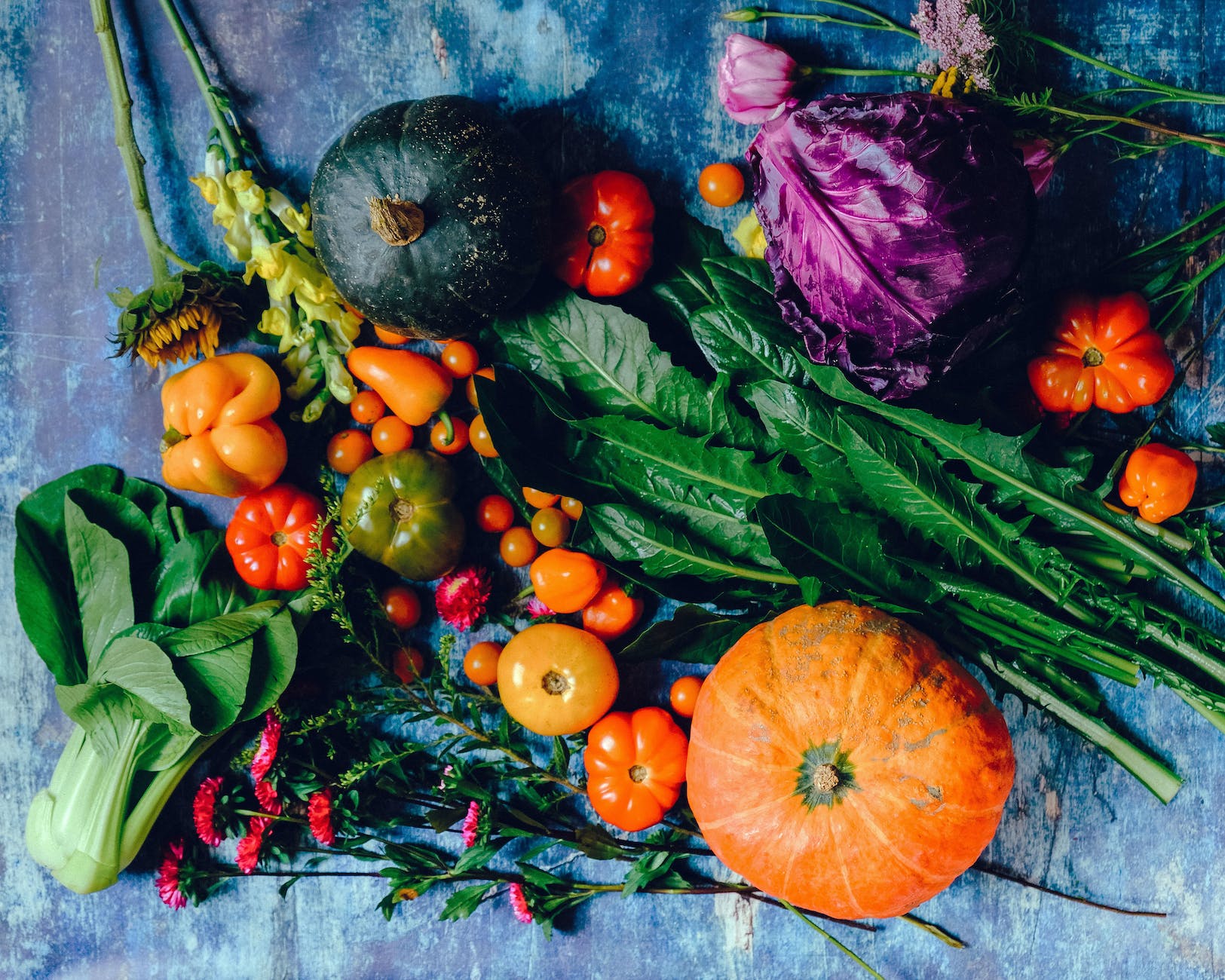
1 tablespoon olive oil 2 carrots, peeled and diced 2 celery stalks, diced 1 onion, diced 1 medium bell pepper, seeded and diced 1 pound Yukon gold potatoes, peeled and diced 1 garlic clove, minced 1 sprig of thyme 1/4 teaspoon celery seed 2 bay leaves 15 oz can chopped tomatoes 2 cups of seafood broth or clam juice 2 10-ounce cans of diced clams, drained with juice reserved Salt and black pepper to taste Chopped parsley Saltine crackers for serving
Directions
Heat the oil in a dutch Oven, Add vegetables and garlic, and cook, stirring frequently, until the vegetables are soft but not brown, approximately 10 to 15 minutes. Add drained clam broth, seafood broth, thyme and celery seed, and bay leaves.
Partly cover the pot, and simmer gently until potatoes are tender approximately 10 minutes.
When potatoes are tender, stir in tomatoes, and heat them through. Add chopped clams, stirring to combine. Add black pepper to taste. Let chowder come to a simmer, and remove from heat. Fish out the thyme and the bay leaf, and discard. Taste and adjust the seasoning.
The chowder should be allowed to sit for a while to develop flavor. Reheat it before serving, then garnish with chopped parsley. Serve with oyster crackers.
Photo by Miguel u00c1. Padriu00f1u00e1n on Pexels.com
Adapted from BMJ 7 Oct 2023
Engaging with a hobby is associated with better self reported health, happiness and life satisfaction and fewer depressive symptoms.
The proportion of people who report having hobbies varied considerably between countries.
Almost everyone in Denmark said they had a hobby and half of those in Spain had a hobby.
My comment: Having a hobby is dependent on having the free time to have a hobby. There also may be some expense involved. Often hobbies are a way of engaging with other people and sometimes they are solitary pursuits. They are a way of carving out time for yourself, doing something that you enjoy and can even nourish your body, mind and soul. One of the great joys of retirement that I have found is finally having lots of time to enjoy myself. I hope you are able to fit in a bit of what you enjoy into your weekly or monthly routine too.
Mortality in vegetarians and comparable nonvegetarians in theUnited Kingdom
Paul N Appleby et al. Cancer Epidemiology Unit, Nuffield Department of Population Health, University of Oxford, Oxford, United Kingdom
ABSTRACT
Background: Vegetarians and others who do not eat meat have been observed to have lower incidence rates than meat eaters of some chronic diseases, but it is unclear whether this translates into lower mortality.
Objective: The purpose of this study was to describe mortality in vegetarians and comparable nonvegetarians in a large United Kingdom cohort.
Design: The study involved a pooled analysis of data from 2 prospective studies that included 60,310 persons living in the United Kingdom, comprising 18,431 regular meat eaters (who ate meat 5 times/wk on average), 13,039 low (less-frequent) meat eaters, 8516 fish eaters (who ate fish but not meat), and 20,324 vegetarians (including 2228 vegans who did not eat any animal foods).
Mortality by diet group for each of 18 common causes of death was estimated with the use of Cox proportional hazards models.
Results: There were 5294 deaths before age 90 in .1 million y of follow-up. There was no significant difference in overall (all-cause) mortality between the diet groups: HRs in low meat eaters, fish eaters, and vegetarians compared with regular meat eaters were 0.93 (95% CI: 0.86, 1.00), 0.96 (95% CI: 0.86, 1.06), and 1.02 (95% CI: 0.94, 1.10), respectively; P-heterogeneity of risks = 0.082.
There were significant differences in risk compared with regular meat eaters for deaths from circulatory disease [higher in fish eaters (HR: 1.22; 95% CI: 1.02, 1.46)]; malignant cancer [lower in fish eaters (HR: 0.82; 95% CI: 0.70, 0.97)], including pancreatic cancer [lower in low meat eaters and vegetarians (HR: 0.55; 95% CI: 0.36, 0.86 and HR: 0.48; 95% CI: 0.28, 0.82, respectively)] and cancers of the lymphatic/hematopoietic tissue [lower in vegetarians (HR: 0.50; 95% CI: 0.32, 0.79)]; respiratory disease [lower in low meat eaters (HR: 0.70; 95% CI: 0.53, 0.92)]; and all other causes [lower in low meat eaters (HR: 0.74; 95% CI: 0.56, 0.99)]. Further adjustment for body mass index left these associations largely unchanged.
Conclusions: United Kingdom–based vegetarians and comparable nonvegetarians have similar all-cause mortality. Differences found for specific causes of death merit further investigation. Am J Clin Nutr 2016;103:218–30.
ObjectiveIt is well known that total cholesterol becomes less of a risk factor or not at all for all-cause and cardiovascular (CV) mortality with increasing age, but as little is known as to whether low-density lipoprotein cholesterol (LDL-C), one component of total cholesterol, is associated with mortality in the elderly, we decided to investigate this issue.
Setting, participants and outcome measures We sought PubMed for cohort studies, where LDL-C had been investigated as a risk factor for all-cause and/or CV mortality in individuals ≥60 years from the general population.
Results We identified 19 cohort studies including 30 cohorts with a total of 68 094 elderly people, where all-cause mortality was recorded in 28 cohorts and CV mortality in 9 cohorts. Inverse association between all-cause mortality and LDL-C was seen in 16 cohorts (in 14 with statistical significance) representing 92% of the number of participants, where this association was recorded. In the rest, no association was found. In two cohorts, CV mortality was highest in the lowest LDL-C quartile and with statistical significance; in seven cohorts, no association was found.
ConclusionsHigh LDL-C is inversely associated with mortality in most people over 60 years.This finding is inconsistent with the cholesterol hypothesis (ie, that cholesterol, particularly LDL-C, is inherently atherogenic). Since elderly people with high LDL-C live as long or longer than those with low LDL-C, our analysis provides reason to question the validity of the cholesterol hypothesis. Moreover, our study provides the rationale for a re-evaluation of guidelines recommending pharmacological reduction of LDL-C in the elderly as a component of cardiovascular disease prevention strategies.
This is an Open Access article distributed in accordance with the Creative Commons Attribution Non Commercial (CC BY-NC 4.0) license, which permits others to distribute, remix, adapt, build upon this work non-commercially, and license their derivative works on different terms, provided the original work is properly cited and the use is non-commercial. See: http://creativecommons.org/licenses/by-nc/4.0/
Mortality in vegetarians and comparable nonvegetarians in the United Kingdom2016
Paul N Appleby, Francesca L Crowe, Kathryn E Bradbury, Ruth C Travis, and Timothy J Key* Cancer Epidemiology Unit, Nuffield Department of Population Health, University of Oxford, Oxford, United Kingdom
ABSTRACT Background: Vegetarians and others who do not eat meat have been observed to have lower incidence rates than meat eaters of some chronic diseases, but it is unclear whether this translates into lower mortality.
Objective: The purpose of this study was to describe mortality in vegetarians and comparable nonvegetarians in a large United Kingdom cohort.
Design: The study involved a pooled analysis of data from 2 prospective studies that included 60,310 persons living in the United Kingdom, comprising 18,431 regular meat eaters (who ate meat $5 times/wk on average), 13,039 low (less-frequent) meat eaters, 8516 fish eaters (who ate fish but not meat), and 20,324 vegetarians (including 2228 vegans who did not eat any animal foods).
Mortality by diet group for each of 18 common causes of death was estimated with the use of Cox proportional hazards models.
Results: There were 5294 deaths before age 90 in .1 million y of follow-up. There was no significant difference in overall (all-cause) mortality between the diet groups: HRs in low meat eaters, fish eaters, and vegetarians compared with regular meat eaters were 0.93 (95% CI: 0.86, 1.00), 0.96 (95% CI: 0.86, 1.06), and 1.02 (95% CI: 0.94, 1.10), respectively; P-heterogeneity of risks = 0.082.
There were significant differences in risk compared with regular meat eaters for deaths from circulatory disease [higher in fish eaters (HR: 1.22; 95% CI: 1.02, 1.46)]; malignant cancer [lower in fish eaters (HR: 0.82; 95% CI: 0.70, 0.97)], including pancreatic cancer [lower in low meat eaters and vegetarians (HR: 0.55; 95% CI: 0.36, 0.86 and HR: 0.48; 95% CI: 0.28, 0.82, respectively)] and cancers of the lymphatic/hematopoietic tissue [lower in vegetarians (HR: 0.50; 95% CI: 0.32, 0.79)]; respiratory disease [lower in low meat eaters (HR: 0.70; 95% CI: 0.53, 0.92)]; and all other causes [lower in low meat eaters (HR: 0.74; 95% CI: 0.56, 0.99)]. Further adjustment for body mass index left these associations largely unchanged.
Conclusions: United Kingdom–based vegetarians and comparable nonvegetarians have similar all-cause mortality. Differences found for specific causes of death merit further investigation. Am J Clin Nutr 2016;103:218–30
BMJ 20 May 2023 Adapted from Letter of the Week by Ellen Fallows, British Society of Lifestyle Medicine
Changing the mindset in medicine
Clinicians are often overwhelmed when they see patients with many complex conditions who have brought both physical and social problems to a long awaited but short consultation.
When medical guidelines are viewed in totality, it is clear that we can’t see the wood for the trees, have forgotten the person behind the disease, and are failing to tackle the root cause of their symptoms.
Basic science now describes a common underlying pathology to long term conditions: immune dysregulation resulting in chronic systemic inflammation. Key drivers include environmental and lifestyle factors influencing gene expression and our microbiome.
Our current medical model is however based on a reductionist and deterministic view of health that stems from the era of gene discoveries. This has led to a belief that diseases exist in isolation and we are powerless without medicine and drugs. This is not the case. If we step back from the relentless assessment, quantification, and labelling of disease and spend more time tackling its root causes, we can support people to reverse- or at least improve or delay-these conditions.
Fewer guidelines and assessments are needed, as well as more public health measures and more lifestyle medicine. Lifestyle medicine is a discipline that considers the socioeconomic drivers of behaviour, acknowledges the difficulties people face, and uses person centred techniques to support lifestyle changes to tackle nutrition, physical activity, social isolation, sleep, mental wellbeing, and consumption of harmful substances such as tobacco and alcohol.
This approach isn’t new or controversial- it is the first step in all major long term condition guidelines. But it is neglected, with funds for creating good quality education and an evidence base sorely lacking and requiring a policy shift.
The hardest behaviour to change however, is not that of patients but that within medicine itself.
My comment: I am so much in agreement with this letter. It was impressive that the BMJ published it so prominently.
A study of 2000 people published in Diabetes Care, has found that disorders of the upper limb caused primarily by the stiffening of tendons are three to five times more common in Type One diabetics compared to the general population.
Women with diabetes are more commonly affected than men for most tendon problems except for Dupytren’s Contracture which often affects the pinky and ring finger tendons at the palm. (This problem also tends to be inherited more if you have Viking ancestors.)
The tendons affected in the shoulder cause frozen shoulder, carpal tunnel syndrome at the wrist and forearm, and trigger finger in the fingers.
Psychologists report that having more daily “uplifts” in a person’s life can reduce their tendency to eat junk food snacks.
The uplifts seem to act as a buffer against emotional eating. Emotional eating episodes, daily hassles and daily uplifts were recorded by 160 participants in this study over 24 hours.
The more hassles experienced the more snacking occurred. However the snacking became far less when people experienced higher levels of daily uplifts compared to moderate or low levels of daily uplifts.
My comment: Some examples of daily hassles include: getting out of bed late, not getting a good sleep, no milk/food in the fridge, trouble deciding what to wear, tripping over the dog, de-icing the car, being cut up in traffic, a long or troublesome commute, stepping on dog mess, no change for the parking meter, phone not charged, can’t find the other glove, missing the bus, having to stand on the bus, trouble logging onto the computer, computer not working, extra work being dumped on you, interruptions at work, being unwell or having a spot on your face, someone being rude to you, getting the Wordle word wrong, forgetting your packed lunch, a long wait for lunch, having to contribute to a lift at work or sponsored event, unexpected meetings, meetings over running, just having meetings, getting out of work late, having to arrange personal stuff during work without other people knowing about it, having to wait in for a delivery or workman, bad weather, house being a mess, noisy neighbours or flatmates, run out of hot water for a bath or shower, not getting to bed on time. I had no trouble coming up with this list!
So what uplifts can happen or can you plan to happen? You will need to do a considerable amount of forward planning and organisation and prioritisation so that the daily hassles that you can control don’t control you. You can go to bed earlier so you get a good sleep, but you can’t spend the time you may otherwise wish to on work, socialisation or watching the television. You can decide on your outfit the night before and make your packed lunch and shop appropriately the day before. You can have a house rota for hot water use and strictly enforce protected food in the fridge. You can also eliminate junk food in the house. This is less easy in the workplace. Be realistic how long it takes to get from A to B and perform daily tasks.
You can pet your cat or dog in the morning instead of reading the news or going on social media. You can wear clothes that are bright colours instead of grey and black. Do you have nice houseplants in your home and office? Do you wear a nice perfume? You can put on make up that can quickly make you look better but you need to simplify your routine so it doesn’t take up valuable time. You can smile and speak to people you meet. You can get up regularly at work so that you aren’t sitting for long periods. You can make a point of taking the breaks that you need and deserve. Do you have to attend every meeting? If you are chairing a meeting can you be ruthless about who really needs to attend? Can you start promptly and finish within 30 minutes?
Can you have a personal chat instead of an e mail or phone call? Can you get out during the day? Can you leave on time? Can you give a sincere complement to someone or help out a colleague? Can you politely decline to do work that isn’t yours to do? Can you fit in some time in nature or exercising to decompress between work and home?
I think a lot of reason for stress at work and in the home is the feeling or actuality of not being in control. This leads to inner pressure which is relieved to some extent by emotional eating. Have a think about what you can do to make life easier for yourself.
Adapted from Scientific Reports 2022 doi:10.1038/s41598-022-24053-4 and BMJ 3 June 23 and BMJ 1 Jul 23.
A USA retrospective study on veterans found that vitamin D supplementation reduced Covid infection by 20-28% and mortality rates by 25-33%.
Black veterans got more benefit than white veterans, possibly because darker skins absorb less vitamin D from the sun.
Vitamin D3 supplementation was more effective than Vitamin D2 supplementation.
Covid infection has been shown in a Danish study to have no impact on the later appearance of Type One Diabetes.
During the pandemic 90% of Danish children were tested for Covid, often on multiple occasions. There was no increase in type one diabetes in the children who had been infected compared to those who tested negative throughout.
Covid infection, meanwhile, has not yet settled into a seasonal pattern like influenza. Most countries are seeing more frequent but less severe infections than during the pandemic. This is due to the speed of mutation of the spike protein which is evolving twice as fast as the usual influenza viruses and ten times faster than seasonal coronaviruses that cause runny noses, coughs and sore throats.
Metformin users can feel pleased that yet another advantage to taking the drug has been found. If taken during the acute phase of Covid infection, Metformin led to 40% fewer cases of long Covid over a ten month period. Metformin was given within 3 days of a positive Covid test and was continued for two weeks. This was a placebo controlled trial.
Vitamin D supplementation in a double blinded randomised controlled study from 2014 to 2020 in Australia was found to reduce the risk of major cardiovascular events.
Over 21 thousand participants aged 60-84 years of age were randomly assigned to have monthly oral doses of Vitamin D3 60,000 IU or a placebo for five years. The researchers then measured how many heart attacks, strokes, and coronary revascularisation procedures occurred.
A reduction in cardiac and revascularisation events was most clearly seen in those participants who were taking the vitamin D and particularly in those were already on drugs for the cardiovascular system at the start of the study. The number needed to treat to avoid an event was one in 172. There was no difference in the number of strokes between the groups.
Statin-Associated Cardiomyopathy Responds to Statin Withdrawal and Administration of Coenzyme Q10
Peter H Langsjoen, MD, FACC1 ; Jens O Langsjoen, MD2 ; Alena M Langsjoen, MS1 ; Franklin Rosenfeldt, MD, FRACS3,4 Perm J 2019;23:18.257 E-pub: 08/26/2019 https://doi.org/10.7812/TPP/18.257
ABSTRACT Context: Heart failure (HF) is rapidly increasing in incidence and is often present in patients receiving long-term statin therapy.
Objective: To test whether or not patients with HF on long-term statin therapy respond to discontinuation of statin therapy and initiation of coenzyme Q10 (CoQ10) supplementation.
Design: We prospectively identified patients receiving long-term statin therapy in whom HF developed in the absence of any identifiable cause. Treatment consisted of simultaneous statin therapy discontinuation and CoQ10 supplementation (average dosage = 300 mg/d).
Main Outcome Measures: Baseline and follow-up physical examination findings, symptom scores, echocardiograms, and plasma CoQ10 and cholesterol levels.
Results: Of 142 identified patients with HF, 94% presented with preserved ejection fraction (EF) and 6% presented with reduced EF (< 50%). After a mean follow-up of 2.8 years, New York Heart Association class 1 increased from 8% to 79% (p < 0.0001). In patients with preserved EF, 34% had normalization of diastolic function and 25% showed improvement (p < 0.0001).
In patients with reduced EF at baseline, the EF improved from a mean of 35% to 47% (p = 0.02).
Statin-attributable symptoms including fatigue, muscle weakness, myalgias, memory loss, and peripheral neuropathy improved (p < 0.01).
The 1-year mortality was 0%, and the 3-year mortality was 3%.
Conclusion: In patients receiving long-term statin therapy, statin-associated cardiomyopathy may develop that responds safely to statin treatment discontinuation and CoQ10 supplementation
My comment: Apparently the administration of Co-enzyme Q10 on its own without statin discontinuation rarely works to restore cardiac function on its own in heart failure patients. This is discussed in the article. Co-enzyme Q10 is also helpful for gum disease which affects people with diabetes a lot.