Rack of Lamb Roast

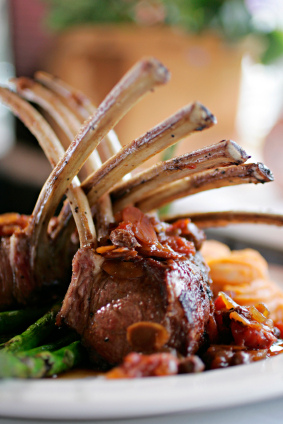
Rack of lamb

white wine (half a glass)

rosemary dry or fresh

coarse sea salt

black pepper

easy garlic or garlic chopped finely

unsalted butter

olive oil

Marinade your rack of lamb for a few hours in white wine, garlic, chopped rosemary and black pepper.

Heat your oven to 190 degrees.

Melt butter and olive oil in frying pan. Bring to a high heat. Sear the lamb.

Place in foil along with remaining oil mixture.

Bake in oven for 20 minutes for medium done rack of lamb.

Warm your plates before serving.

Plate out 3-4 chops per person. Spoon over some of the oil over the chops.

Serve with vegetable of your choice.

Book review and discussion: What experts say about solving the obesity epidemic

“The shape we are in: how junk food and diets are shortening our lives” by journalist Sarah Boseley is a £13 paperback in which many of the factors that have contributed to the obesity epidemic are discussed.

For much of her material Sarah has gone to obesity “experts” but not a single low carber.  So she has ended up with a  different opinion from what we may have on the causes of the massive surge in obesity over the last 30 years.  Although I don’t share the government “experts” view as to the benefits of a low fat diet,  I think that reading the opinion of “the other side” is a good way to broaden my view and possibly learn a few things that could actually improve the situation. With this in mind I was looking for what I recognise is familiar and  true and also had a chuckle at some of the material as well.

Very little was contentious. I have starred * my own contributions (which I would have given had she interviewed me!)

Behavioural changes at family/individual level: 

Eat meals at meal times at a table with your family. Make meals from proper food. Not processed junk.

Stop dieting and eat good food all the time.

Reduce the amount of processed food that we eat.

Do 45 minutes or more exercise a day to improve mood and use calories.

Don’t snack or eat only healthy snacks such as nuts, cheese and fruit.

Stair climb and walk at every opportunity.

Health service changes:

Offer cognitive behavioural therapy to the overweight.

Expand the provision of bariatric counselling and probably offer this at younger ages.

Advertise the futility and actual harm of crash diets and make such an idea an object of ridicule.

Advise on muscle building exercise for all*

Advise on the benefits on health and physique of the low carb diet*

Educational changes:

Teach cooking in primary school and beyond.

Expand the range of foods served in schools.

Stop serving puddings in schools.

Political changes: 

Tax sugary drinks.

Stop junk food sponsorship of sports events.

Have proper labelling of food.

Subsidise fresh, wholesome food.

Ban sugary food in schools hospitals and workplaces.

Put in cycle paths, street lighting, pavements and redesign towns to make walking attractive.

Have stairs, showers and secure bike parks in offices.

Limit fast food advertising especially to children.

Give proper meal breaks in the workplace.

Put calories/carbs on drinks as well as food.

Food production and service changes:

Reduce portion sizes.

Stop check out sweets and goodies marketed to children.

Stop buy one get one free promotions.

Cut salt, sugar and fat in manufactured foods.

Get food manufacturers to produce more genuinely healthy products.

Decrease plate sizes at buffets.

Actually, I don’t have any gripe with these.  I would simply say that my idea of good food is meat/fish/eggs/cheese/nuts/veg and some fruit with butter, cream, olive, coconut and avocado oil NOT starch, fruit juice, industrial fats. I would also prioritise weight /resistance training over cardio because it make you burn more calories, makes you stronger, doesn’t wear out your joints, and reduces osteoporosis better than cardio.

As you can see the obesity problem and therefore solution is multi-factorial. There are things we can do ourselves, but there  is a much wider framework regarding political will, town planning, working hours and facilities, food manufacturing and advertising, food costing, and education by health services, schools and the media.

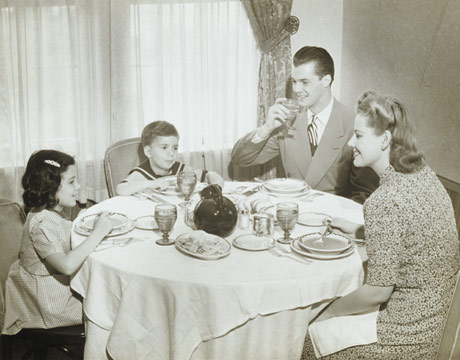
We can’t go back to the so called “Good Old Days” like this attractive, affluent, family circa 1949. Will the government get so fed up with the devastating health bill that that they will take some of the steps outlined in Sarah’s book? Or will corporate interests, the low fat/high starch dogma and the high working hours culture win out?
Would older men and women be better off with a bit more testosterone?

Book Review:  Testosterone is your friend by Roger Mason.

This slim volume, written by research chemist Roger Mason, reviews  evidence for testosterone replacement in both  men and women. Up until the age of 30, both genders do pretty well, but after that it is a slow trundle downhill as far as our sex hormones go. By our 50’s men produce more oestradiol than their same aged wives do, and a multitude of problems that we consider “just normal ageing” develop.

Men don’t get problems from high levels of testosterone,  but do get problems when the levels go too low.  Women do best with  mid range levels about 2.1 free testosterone. Levels of 1-3.2 are considered normal range in the UK.

Should you wish to supplement levels  sublingual or transdermal preparations work well,  but injected, implant and oral tablets do not.

Too low levels of testosterone cause obesity, diabetes, osteoporosis, heart and artery disease, cancers, memory loss and sexual dysfunction. When levels are normalised to those found in your average 30 year old for both genders, benefits include an improved all cause total mortality, increased lean muscle mass, lower cholesterol, stronger bones, lower body fat, and higher HDL.  Mood, blood sugars, energy and sense of well being all improve. Prostate enlargement and prostate cancer can be reduced by replacing testosterone in men in good time. Skin, hair and immunity all improve.  Blood pressure is improved in women if the mid range level  is achieved. Testosterone reduces seizure threshold in epileptics.

Studies are reviewed which indicate that all these assertions are valid. So why is testosterone replacement therapy lagging behind so much compared to oestrogen replacement? Indeed the only testosterone preparation licenced for women in the UK was taken off the market in the last couple of years due to being a marketing failure.

As a GP I can say that testosterone replacement for men is getting off the ground but not in the pro-active way that oestrogen is given to peri-menopausal and post meno-pausal women. Instead we wait till problematic symptoms occur eg breast enlargement in men, diabetes in men of normal weight, or sexual dysfunction occurs. Then we test. Then we refer to over subscribed clinics and the man eventually gets prescribed something suitable. It is a true case of shutting the barn door after the horse…..etc.

The main thing that put me off prescribing for men was that the fine print said that I had to do a digital rectal examination on such men every six months in order to detect possible prostatic cancer. From what Mr Mason says, it would look as if testing and treating men over the age of 40 could make a big difference not just to prostate health but for a very wide range of health problems. It should be remembered that these diseases all seem to have their own very expensive screening programmes, drug and surgical treatments in place. Perhaps a single bullet aimed at the core problem would be less expensive overall?

When it comes to women, after the menopause there is a dwindling amount of testosterone and secreted by the ovary and after a surgical removal of the ovaries or hysterectomy there is rapidly none. The adrenal glands are able to secrete some testosterone, but not enough. Collagen loss, bladder problems, wrinkles, weaker bones, loss of muscle and gaining of fat and all the rest follow on. There is increasing interest in adding testosterone into HRT prescriptions but at present women need to use preparations licenced only for men and not all GPs are therefore willing to prescribe.

In my own practice, several of us are using these preparations and checking our prescribing with blood tests done at monthly intervals till we hit the right dose. As a rough guide, men need 8 squirts of Testogel daily and women need 3. This will usually give deficient men and women adequate levels, but since this is not a developed area, follow up blood tests are needed to individualise the dose.

What about our three lovely ladies here? They are just having a natter about their new year resolution. They have been off to the  gym weight training for an entire month now and are a bit disappointed with their results. The middle one is telling the blonde that at least her bicep is coming along better than her glutes. No doubt they are hacked off that it is so much easier for their boyfriends with all that testosterone running around.   It’s so unfair!!!

Book Review: The world turned upside down, the second low carbohydrate revolution by Professor Richard Feinman

Well produced book for the scientifically minded reader

By Katharine Morrison

This book covers in detail subjects that are often ignored in other low carb books. These are the precise biochemistry covering the metabolism of carbs, fats and proteins in humans and the flaws regarding diet trials covering both design and statistics.

Richard Feinman is a professor in a New York university who is at ease with both subjects. His writing is erudite and not always that easy to follow for the non scientist, as he delves into areas of complexity that other authors gloss over.

There are many coloured tables and I think this book is best read on kindle for pc or on paper format as they show up better in full page and colour format. I think this book is aimed for students, doctors, scientists, diabetologists, cardiologists, and nutritionists who think they know what they are doing but who still support a high starch/ low fat diet for people in general and diabetics in particular. They will be able to see exactly where they have been led astray by old ideas that do not stand up to serious scrutiny.

This book is particularly well produced and I did not come across a single typo in the entire text.

There is much to satisfy those who have already converted to the low carbohydrate lifestyle who wish to learn more about the history, science and statistical shennanigans that go on with dietary studies into low carbohydrate diets.  For new comers it is not a “how to do it book”, like ours. There is a recipe section but it is a bit thin and disappointing. Perhaps Professor Feinman hasn’t spent as long in the kitchen as Emma and I have!

Pork chops in creamy sage sauce

This is a very quick and tasty meal that you can produce with very little effort, particularly if you cheat with the onion and garlic.

Pork chops 1 or 2 per person

Dried sage one heaped teaspoon per person (or use fresh if you can get it)

Olive oil and butter for frying

Frozen or fresh cut white onion, one heaped dessert spoon per chop.

One teaspoon very lazy garlic or one clove per chop

Double cream

Salt and pepper

White wine

Put on oven to warm at 150 degrees

Marinade the pork chops in a little white wine and sage, salt and pepper, for at least 30 min

Heat frying pan with olive oil and butter

Fry chops till some browning on both sides and fat

When done, about 3-4 mins per side depending on thickness, put in oven proof dish and leave to warm in the oven.

Turn down the heat under the frying pan

Add onion and garlic and fry till soft and lightly browned

To cooked juices in the pan add double cream and allow to thicken

To serve pour the sauce over the cooked pork chops

Goes well with any green vegetable dish

Polycystic Ovary Syndrome isn’t always managed optimally

GPs by the very nature of the job are rarely specialists in any one area. To “help” them, endless and often conflicting guidelines are produced by various groups who see themselves as knowing something about how a particular condition should be managed. This time is was NICE and the Royal College of Obstetricians and Gynaecologists who have produced guidelines on how polycystic ovarian syndrome should be managed in primary care.

Dr Yvonne Jeanes, Dr Sue Reeves and Susan Bury surveyed GPs in London about their management of Polycystic Ovarian Syndrome and compared the results with recent guidelines in an article that was published in GP Magazine 24 November 2014. The survey was sent to 221 practices but only 10% of them responded. Most responding GPs had an interest in women’s health and probably knew more about the condition than the non- responders.

As many of our readers will know, polycystic ovarian syndrome sufferers usually have marked insulin resistance and impaired glucose tolerance and are at risk of developing type two diabetes. Their health can often be greatly improved by a low carbohydrate diet and weight/resistance training as described in our book.

One in 10 to 20 women are thought to have the condition.  Symptoms include menstrual irregularity, particularly scanty or absent periods, infertility, acne, hirsutism, male pattern loss of hair and obesity.  The condition worsens quality of life and depression and anxiety are common.

Both NICE and the Royal College of Obstetricians and Gynaecologists state that “lifestyle management” is the primary therapy in overweight women with PCOS because many symptoms are improved if weight can be lowered by 5-10% due to the effect on hormonal function.

Guideline recommendations:

Blood pressure and fasting blood glucose should be taken as well as waist circumference, BMI and lipids.  Result: 23-36% did these checks regularly in the affected women.

Initial oral glucose tolerance tests should be done in affected women and thereafter annual tests should be done if the woman has impaired glucose tolerance. Result: No GPs offered such a test at diagnosis, 86% did not offer such annual check but 9% offered hba1c.

All overweight women with PCOS should be provided with dietary and lifestyle advice.  Result: 91% of GPs provided advice on weight loss to reduce type 2 diabetes and cardiovascular disease.

Women with no periods or very scanty periods should have induced withdrawal bleeds at regular intervals to reduce the risk of endometrial hyperplasia. This is a build-up of the lining of the womb that can put the woman at increased risk of endometrial cancer.  In addition they recommend that after an induced bleed the endometrial thickness should be assessed by ultrasound referral. Result: 9% of GPs knew about the need to induce bleeding. A further 9% would refer to a specialist.

It seems to me that PCOS is rather a Cinderella condition. When I think of how many women have diabetes or a thyroid disorder and the number of women that actually are diagnosed with polycystic ovaries, it seems to me that the condition is significantly underdiagnosed. It would also seem that primary care isn’t the place where management protocols should be established for individual women, not only because of the lack of knowledge about how to manage the condition, but because of the variability in the presentation of the condition and the differences in the individual woman’s requirements for symptom control and family planning.

Having realised that I am one of the majority of GP’s who despite an interest in women’s health are still not up to the mark in management of this condition, I took a module on BMJ learning to see if it had any tips for me.

BMJ course authors stated that PCOS presented most commonly in adolescence and that it was more common in women on South Asian or Mediterranean extraction.

They said that anyone fitting the typical symptom profile should get hormones tested initially. FSH, LH, Prolactin, Oestrogen and Testosterone were the ones to go for. These can be done from a single sample at any time of day.  If these were abnormal, the ovaries should be scanned by ultrasound.

When the diagnosis is made based on the combination of physical, endocrine and ovarian scan findings, management and referral will depend on the woman’s reproductive goals and how confident the GP is in managing the condition.

For South Asian women they recommend an oral glucose tolerance test if the BMI is over 25 or the waist circumference is over 80cm. That’s 32 inches, yikes!

Like most official guidelines, a “healthy, balanced eating, calorie restricted” diet is recommended. Unfortunately, this usually is interpreted as “low fat/high carb” by dieticians.

It is true that any weight loss by whatever means will help an overweight woman who has PCOS, but low carbing has the extra advantages of naturally reducing blood sugars and insulin resistance, addressing all the important cardiovascular risk factors, and being somewhat easier to stick to compared to low fat diets mainly due to its palatability, satiety and not needing to count calories.

BMJ reported that a cream could be used for the effective treatment of hirsutism called Eflornithine. The contraceptive pill Dianette contains an anti-androgen that also helps this, and also gives the necessary withdrawal bleeds to prevent endometrial hyperplasia. Metformin was advocated by BMJ and slated by RCOG and NICE. I told you that guidelines are often contradictory!

My guess would be that some people respond to it and some don’t but the effect may be too small to be evident in large studies. My own view is that Metformin is a cheap, well tested drug, that’s only common side effect is diarrhea. This can be overcome with the long acting formulation in most cases. There are some caveats about renal function, vitamin b12 absorption, and use of dye in radiological procedures but these don’t affect many people.  There seems little  to lose by trying it in an insulin resistant woman who is trying to lose weight. A low carb diet and appropriate weight training/ resistance exercise would be likely to help too.

One piece of good news from long term studies is that women with PCOS do NOT apparently die of cardiovascular disease despite their extra risk factors. The cause of this is not known.

There is a support group for women with PCOS called Verity.

My feet are killing me……what can I do about it?

Plantar fasciitis is a dread diagnosis for me. Not because it is “serious” but because it is a misery and there is so little I feel I can do to improve it. Physiotherapist Greg Turpin and GP Dr Mareeni Raymond have produced a step by step guide to this condition in GP Magazine 27 October 2014 where they describe what can be done.  I am delighted to be able to summarise what their experiences are of treating patients with this condition.

Diabetics and those who are overweight are particularly likely to get plantar fasciitis. The condition is due to inflammation and degeneration of the connective tissue that connects the bones of the feet to the Achilles tendon at the heel. Glycation of tendon collagen is probably the issue with diabetics so the better your blood sugar control the better for your tendon health. The bones, muscles of the feet, the subcutaneous tissue and the skin are all linked by this fibrous band. Athletes and women are also particularly affected. High mechanical loads being carried by the feet and fashionable rather than “sensible” footwear are also factors in causation.

People complain of a feeling of a stone in their shoe or a burning pain around the heel. Pain can worsen as the day goes on and if walking barefoot. The sole of the foot or heel is usually tender and the pain can come on when the person points their toes towards their shin.

If the condition is of new onset stretching the foot and non- steroidal anti- inflammatory drugs such as Naproxen, Ibuprofen, Diclofenac or Meloxicam can be tried. The stretching is of itself uncomfortable to painful and must be done at least three times a day for 10 repetitions each foot. First thing in the morning and after periods of prolonged standing are recommended.

Heel pads can help. So can supportive shoes and cutting out weight bearing activities. Taping can be done by a physiotherapist and then can be continued by a patient who has been taught how to do this.

The authors reckon that 9 out of 10 people will be much improved after six months of such an approach.  If a patient is keen to continue sports or has any musculo-skeletal abnormality earlier referral to a physiotherapist would be useful. If the condition is getting worse instead of better, the physiotherapist should also be consulted earlier to prevent the problem becoming chronic.

I often give patients non- steroidal gels to rub into the feet and I have also tried acupuncture. None have been that successful. Many diabetic patients also have high blood pressure and so cannot use non-steroidal anti-inflammatory drugs. Asthmatics and those with a history of stomach ulcers or poor renal function also cannot use these drugs.

It looks as though keeping slim, keeping blood sugars tightly controlled, wearing supportive footwear with low heels and probably regular stretching of the sole of the foot are the most useful things you can do to prevent this condition from occurring.

Have any readers helpful advice for those afflicted with this problem?

Gender differences in cardiovascular disease patterns

Whatever our gender, two out of three of us will get a cardiovascular event of some kind, and many of these will be fatal.

Do men and women respond differently? This was the question that Dutch researchers led by Maarten Leening from Rotterdam asked of almost 3 thousand, mainly white, men and women over the age of 55 who lived in the Netherlands. He followed them up for 20 years.

He found that men started accumulating and dying of cardiovascular disease from the age of 55 onwards, but that women’s risk did not rise appreciably till they were aged 70. Furthermore, the pattern of illness differed.

Men tended to have a heart attack, but women were more likely to get a stroke or heart failure as the first event.

The authors point out that hyperlipidaemia is not a risk factor for heart failure but high blood pressure and other lifestyle factors are.

As a GP I welcome knowing about the differences in gender patterns. Both men and women who hope to optimise their cardiac health need to pay attention to staying smoke free, keeping slim, taking exercise, sleeping well and reducing stress. Both will need blood pressure checks.  A low carb diet, such as described in our book, can greatly improve glycaemia, lipid patterns, weight and blood pressure. Currently I usually only order echocardiograms when people have murmurs or are breathless on exertion. Maybe this is too late? A lot of attention is paid to lipid checks and prescribing statins in primary care, but there is not the same emphasis on seeking cardiac failure. Diabetics are at higher risk of cardiac failure but even in this group screening is not done for this condition. Heart failure is often hard to spot till it is very severe. It seems “normal” for people to do hardly any physical activity or planned exercise.  In many older people arthritis limits mobility and the breathlessness that would be apparent at a fast pace never becomes obvious.

(BMJ 2014;349:g5992)

Key Lime Pie

While in Key West Florida I had the opportunity to try Key Lime Pie. The real McCoy is made with a wheat base, 2 cans of condensed milk, 6 egg yolks, Key Lime juice and cream to garnish. Not so brilliant for the old blood sugars eh?

I have made low carb versions before but I do think the genuine Key Lime Juice added a bit of zing to the dish. Here is my version.

For the base:


Switch on the oven to 200 degrees.

2 cups ground almonds (200g)

1 cup whey protein powder plain or vanilla

10 teaspoons granular sugar substitute

One teaspoon ground cinnamon

200g very soft unsalted butter

Stick all this in your food mixer. When it is a soft dough take it out and form it into a pie crust. This did bottom and sides of a 12 inch base with 2 inch sides.

Put this in an oven at 210 degrees for 5 minutes then take it out.

Now put the oven back to 170 degrees.

For the lime layer:

The creamy part of one can of coconut milk

1 cup of double cream

6 egg yolks

2 tablespoons granular sugar sweetener

120 mls of Key Lime Juice (if you don’t have this use regular lime juice and include the grated zest)

Whisk the sugar substitute and eggs together.

Add the coconut cream and the double cream.

Finally add the juice.

Put it in the pastry shell and cook for 15 minutes.

Now make the meringue.

Meringue is not traditional for Key Lime Pie, but I use it because I don’t want to see it go to waste. If you know you will use them for egg white omelettes or macaroons for instance you can omit this layer.

6 egg whites.

2 tablespoons granular sugar substitute.

½ teaspoon cream of tartar.

½ teaspoon vanilla extract.

Whisk the egg whites, cream of tartar and vanilla till in peaks. Fold in the sugar substitute with a metal spoon.

Take the pie out of the oven.

Put the meringue on top, a large spoonful at a time.

The lime will still be very wobbly.

Put back in the oven for another 30 minutes.

When it is ready, switch off the oven and allow it to cool at its own pace.

You may leave the oven door open very slightly but if you take the pie right out your meringue may collapse.

Once cold, chill in the fridge and serve with cream.

This pie keeps in good condition for a week in the fridge.

Best Creamed Spinach

Okay, Popeye never had spinach like this, but I’d bet he would if he could!

I’m just back from a holiday in Florida. At the Gaylord Palms Orlando, Hickory Steak House, I’m pleased to say I had the best creamed spinach ever. It was so good, that it quite put the roast rack of lamb in the shade. I didn’t get the recipe from the chef, but the waitress said she thought they put Gruyere in it, so I made it with this when I got home, and holey moley, it worked.

Melt unsalted butter in a pan. An ounce or so.

Fry finely chopped white onion in it. A tablespoon or so.

A very easy option, I have learned from my student son Steven, is to keep frozen diced onion in the freezer. You can get it in most frozen supermarket sections. Just take out as much as you need at the time. Saves on crying over your onions.  If you prefer to cut them from scratch, chewing some strongly smelling mint chewing gum works the best of anything else I’ve tried.

Add a clove or two of minced garlic.

To do this, get your clove of garlic. Chop off both ends. Crush the clove under a wide knife. Peel the skin off. Now finely chop.

Get a bag (per person!) of spinach from the supermarket. Microwave it for the very brief it says on the instructions. Let it cool a bit.

When all softened up nicely in the frying pan, add grated Swiss Gruyere cheese about an ounce, and a good swig of double cream, about two tablespoons.

Switch off the heat. Allow the cheese to melt.

Meanwhile squish out as much water from the cooked spinach as you can and chop it roughly with a pair of scissors into the pan.

Swirl it round and allow it to heat very gently.

Serve.

You will probably be having this with meat of some kind if you are following our diet.

You can easily make this while your steaks, leg of lamb, roast chicken or whatever is resting, prior to being scoffed.