As people age they tend to lose lean muscle mass. My comment: I, as well as many of us, regularly weight train, in the hope of preventing age related muscle loss, also known as sarcopenia.
A multi-national trial of two thousand adults gave disappointing results.
The group of physically active older adults was randomised to: daily supplemental vitamin D, omega 3 fatty acid supplements, and a home exercise programme undertaken three times a week, either alone or in combination.
After three years intervention, NONE of these interventions improved muscle mass or influenced the incidence of sarcopenia, as measured by dual energy X ray absorptiometry.
As exercise and vitamin D supplements have been shown to improve other important health parameters, I will continue to exercise daily.
Adapted from Outside online magazine for runners by Alex Hutchinson Dec 11 2024
By understanding what factors predict longevity, you can take control of your life before it is too late. Biostatisticians in the USA examined data from the National Health and Nutrition Survey (NHANES) to compare the predictive value of 15 potential longevity markers. The winner was the amount of physical activity you perform in a typical day as measured by a wrist tracker.
It can be difficult to get a true picture of how much physical activity people actually get from self reporting or old style pedometers. This study used wrist accelerometers worn day and night between 2011 and 2014. 3,600 subjects between the ages of 50 and 80 were tracked.
The factors that were examined were: Age, gender, body mass index, race or ethnicity, educational level, alcohol consumption, smoking, diabetes, heart disease, congestive cardiac failure, stroke, cancer, mobility problems and self reported overall health.
In order of importance, the best predictors of living longer were: Physical activity, age, mobility problems, self-assessed health, diabetes and smoking. In a nutshell, how much and how vigorously you move are more important predictors of longevity than how old you are.
In 2016, the American Heart Association, realised that VO2 Max was a very important measure of cardiorespiratory fitness. They noted that a low VO2 Max tended to be stronger predictor of mortality than smoking, cholesterol levels and high blood pressure. VO2 Max is determined to the tune of 50% by your genes, whereas how much you move is up to you. (There are indeed “sporty” families!)
So get up, get out, and get moving, as much as you can.
In a separate study published in Cognitive Science, Dementia, an article written by Eric Dolan on 27 March 20025 states that verbal fluency was the most important factor regarding freedom from dementia.
Forever Strong: A new science based strategy for aging well by Dr Gabrielle Lyon.
I read this book when it came out in October 2023. It costs £16.99 from Amazon in paperback.
Dr Lyon has worked in psychiatry, geriatrics and nutrition. She thinks that over fatness is less of a problem to being under muscled when it comes to general health, ageing and efforts to live longer in better shape.
She advocates a high protein diet of no less than 100g of protein a day for all adults. This can be more depending on a person’s ideal lean body weight. It is also a lot higher for those who aim to build more muscle.
She offers three different eating regimes. The first is for longevity. For this she recommends higher protein meals for breakfast and dinner and a lighter protein snack at lunch time. Carbohydrates are generally restricted to the same number of grams as the protein spread over the day. These can be increased for those engaged in more than one hour’s vigorous exercise a day. Fat is eaten according to the remaining calories available to maintain weight.
For those wanting to lose weight, she recommends that protein is spread evenly over three meals a day. Carbohydrate should be no more than 30g per meal. Fat intake should be low as the aim is to cut back by 10-20% of maintenance calories daily. She thinks that it is crucial to prioritise dietary protein as this reduces muscle loss and improves satiety. Carbohydrates should be low sugar fruit and low starch vegetables in order to minimise calories and insulin response.
For those who want to gain weight, protein intake is higher and usually needs to be spread over 4 meals. Carbohydrate and fat can be increased as the aim is to exceed maintenance caloric intake. A well planned exercise regime needs to be undertaken and this will usually require a personal trainer at a gym.
The exercise regime offered is based at the beginner in the book but she offers different programmes from her website. I wasn’t able to find these when I looked but perhaps they are still undergoing development.
The book covers the science behind her nutritional advice, a discussion of the mental roadblocks that stop people taking control of their diet and exercise regimes, baseline measurements that will help you figure out what exactly you should be eating and some recipes.
I exercise daily and have been weight training since the age of 27. I also have been low carbing for 20 years. Did I learn anything? YES.
I’ve been making several big mistakes regarding my diet and exercise regime.
Firstly, although I eat about double the protein that I see my friends eating, this is still not likely to be high enough for optimal muscle gain.
Secondly, I really should be eating a lot more protein first thing in the morning so that dietary leucine levels come up to the threshold that prevents muscle breakdown and ensures the best use of protein in the body and for muscle development.
Thirdly, like a lot of low carbers my fat intake is very high, and I pile it on oblivious of the caloric intake.
Fourthly, I do indulge in the odd sugar /starch item and during weight loss efforts these would be better cut out entirely. Same for alcohol.
Fifthly, my weight training regime needs altered. I used to do alternate days resistance training and something else but various injuries and back pain led me to experiment with more stretching and back exercises and this led to a definite improvement in my chronic back pain. I have altered my regime again to add in more resistance work. Dr Lyon thinks that three times a week is best. I’ll see how this goes but at my age I need to consider the injuries and degenerative problems that accumulate.
Overall this is a very helpful book for those who seek the best of physical health and contains information that I was not previously aware of.
Helena Horder, PhD et al. Neurology® 2018;90:e1298-e1305. doi:10.1212/WNL.0000000000005290
Objective To investigate whether greater cardiovascular fitness in midlife is associated with decreased dementia risk in women followed up for 44 years.
Methods A population-based sample of 1,462 women 38 to 60 years of age was examined in 1968. Of these, 191 women completed a maximal cycling test to evaluate cardiovascular fitness. Subsequent examinations of dementia incidence were done in 1974, 1980, 1992, 2000, 2005, and 2009.
Dementia was diagnosed according to DSM-III-R criteria on the basis of information from neuropsychiatric examinations, informant interviews, hospital records, and registry data up to 2012.
Cox regressions were performed with adjustment for socioeconomic, lifestyle, and medical confounders.
Results Compared with medium fitness, the adjusted hazard ratio for all-cause dementia during the 44-year follow-up was 0.12 among those with high fitness and 1.41 among those with low fitness. High fitness delayed age at dementia onset by 9.5 years compared to low fitness and time to dementia onset by 5 years compared to medium fitness.
Conclusions Among Swedish women, a high cardiovascular fitness in midlife was associated with a decreased risk of subsequent dementia. Promotion of a high cardiovascular fitness may be included in strategies to mitigate or prevent dementia. Findings are not causal, and future research needs to focus on whether improved fitness could have positive effects on dementia risk and when during the life course a high cardiovascular fitness is most important.
My comment: Mr Motivator is right! Regular exercise is the best insurance you can ever take out. And you don’t have to run marathons to get fit. Don’t give up on fitness because of your job or because you have had kids. Get active. Spend that pension! Don’t give it away to the nursing home!
Q: Can you speak to the ability or inability to “cure” T2D? Does it have to do with the loss of the pancreatic beta cells?
A: Yes, it has generally been shown that new-onset type 2 diabetes is easier to “reverse,” meaning that blood glucose levels can be so well managed that it appears diabetes has been cured. Over time, a loss of some insulin-making capacity occurs in people with long-standing T2D, particularly if it has not been well-managed, related both to the impairment of pancreatic β-cell function and the decrease in β-cell mass. (PMID: 27615139)
Q: Isn’t insulin resistance now found to be in T1DM as well?
A: Yes, anyone can develop insulin resistance, and it occurs in at least a third of people with type 1 diabetes as well, although it is not always associated with excess weight gain or overweight. Since people with T1D lack insulin due to the body’s own immune system killing off the pancreatic β-cells, greater resistance increases the total doses of insulin needed (whether injected, pumped, or inhaled). Thus, they have developed characteristics of both types and have “double diabetes.” (PMID: 34530819)
Q: Under lifestyle goals, would you include stress management?
A: Stress management was not assessed in the large multi-center clinical trials on type 2 diabetes prevention, but mental stress can certainly raise blood glucose levels due to the greater release of glucose-raising hormones like cortisol and adrenaline. It certainly would be beneficial to address better ways to manage mental stress as part of lifestyle goals for optimal blood glucose outcomes. (PMID: 29760788)
Q: As each person has their own limitations, how important is it to get a physician clearance and exercise guidelines before working with the client?
A: It really depends on the person’s circumstances. How intense will the planned activities be? Is the person currently sedentary? Has he/she been getting annual checkups to monitor blood glucose management and to check the status of any complications? Does he/she have diabetes-related or other health complications that could be worsened by physical activity? The lower the intensity, the more active an individual has been, and the lower the risk for cardiovascular complications, the less likely medical clearance is absolutely necessary.
The latest ACSM Consensus Statement on activity and T2D will be released in early 2022 in Medicine & Science in Sports & Exercise and states, “For most individuals planning to participate in a low- to moderate-intensity physical activity like brisk walking, no pre-exercise medical evaluation is needed unless symptoms of cardiovascular disease or microvascular complications are present. In adults who are currently sedentary, medical clearance is recommended prior to participation in moderate- to high-intensity physical activity.”
Q: Can flexibility training be used for warmups, or do you recommend it only after the workout?
A: While it is possible to do flexibility training at any point during a workout, joints tend to have a greater range of motion after blood flow to those areas has been increased with a light or short aerobic warmup. It may be prudent to do a quick aerobic warmup, some stretching, the full workout, and then more extensive stretching afterwards for optimal results.
Q: Was there any particular protocol for strength training? sets, reps, periodization? What is considered “intense” resistance work? Would fatigue based off of several sets of moderate intensity be recommended then?
A: That is a tough question, and it depends on who you ask. I have seen a lot of debate over the optimal strength training protocol during the many years I have been in the exercise/fitness world. If people are just starting out with resistance training, they will gain from doing even a minimal amount of training.
Starting out with 1-3 sets of 8 to 10 main exercises that work all of the large muscles groups at a light to moderate intensity is considered appropriate for most older or sedentary adults, many of whom have joint limitations or health issues. Moderate intensity is considered 50%-69% of 1-RM (1 repetition maximum) and vigorous is 70%-85% of 1-RM. Both intensity (fewer reps at a higher intensity) and the number of sets (3-5) or days of training (starting at 2, progressing to 3 nonconsecutive days) can increase over 2 to 3 months. Periodization is usually not undertaken by older adults, but may be appropriate for younger, fitter ones.
Q: Do you have any insight or are aware of any studies that involve high intensity (%1-RM) resistance training and T2DM? Or any studies that compare resistance training volume (Sets x Reps x Load)?
A: Some older studies have determined that glycemic management is improved by supervised high-intensity resistance training in people with type 2 diabetes (PMID 12351469). Others have also found that home-based (and, therefore, unsupervised) resistance training results in a lesser impact on blood glucose levels, likely due to reductions in adherence and exercise training volume and intensity (PMID 15616225).
Q: I’m still confused about glucose response to acute exercise. Which is better if you want to bring down your BG right now? Can you speak to the possibility of increased blood sugars with intense aerobic exercise?
A: Most light-to moderate-intensity aerobic exercise will lower blood glucose levels, assuming that some insulin is present in the body. (People who are very insulin deficient may have a rise in blood glucose from doing any activity.) Any activity that gets up into the intense/vigorous range, even if only during occasional intervals, has the potential to raise blood glucose due to a greater release of glucose-raising hormones during the activity. This is particularly true if the activity is short and intense. In individuals with any type of diabetes, declines in blood glucose during high-intensity interval exercise are smaller than those observed during aerobic exercise.
That said, if someone wants to lower blood glucose right now with exercise, it also depends on the timing of exercise. Doing something light to moderate for at least 10 to 30 minutes is the best bet, particularly after a meal when insulin levels are generally higher. Avoid doing intense aerobic or heavy resistance training as those may have the opposite effect. For early morning exercise, any intensity can potentially raise blood glucose due to higher levels of insulin resistance then and lower circulating levels of insulin in the body.
Q: I had an endocrinologist say that long runs or walks are better, and another one said to do a bit of weights.
A: Which activities someone chooses to do should depend on the goal of the training. Is it increased fitness, lowering blood glucose levels acutely, or gaining strength and improving overall blood glucose management? Long, slow aerobic training does have the benefit of increasing cardiorespiratory fitness and lowering blood glucose levels (in most cases). Resistance training, on the other hand, increases muscular strength and endurance and helps people gain and preserve muscle mass, which is where most carbohydrates are stored in the body. It may not, however, lower blood glucose levels, at least not acutely.
Both have their place in a weekly training regimen. Insulin resistance is lowered for 2 to 72 hours following a bout of aerobic training. Resistance training has more of a long-term impact on insulin action by enhancing carbohydrate storage capacity. The best advice is to do some aerobic training at least every other day and some resistance training at least 2, and preferably 3, nonconsecutive days per week. These activities can be done on the same days or different ones.
Adapted from Medicine and Science in Sports and Exercise Jan 12 2023
Short, regular breaks from sitting down at work and at home can improve your blood sugar and blood pressure.
Researchers from Columbia University in New York tested middle aged and older adults using various sitting/gentle walking protocols for eight hours a day. Even very short breaks of a minute improved blood pressure but to reduce blood sugars as well, you need a break of five minutes every 30 minutes.
These short activity breaks are helpful to improve your health and should be done in addition to a daily activity/exercise regime.
My comment: You will need to plan how to do this in most work and home situations. You could make a point of taking the stairs, walking around while taking phone calls, getting out for a short walk at lunch time, going to see people in person rather than phoning them, and doing exercises during commercial breaks in front of the television. Every little helps.
Around one in four UK adults is living with obesity. Previous research has established that the most effective way to lose weight is through behaviour change with diet and physical activity counselling. It has not been clear whether one to one sessions or group sessions produce the better outcome. Thus a review of 7 studies which included 2,576 participants from the UK, US, Australia, Germany and Spain was done.
The study looked at the outcome of reaching at least a 5% reduction in body weight after a year. This means that a person of 100kg would lose 5kg.
Compared to one to one sessions, people in group sessions:
Lost on average 1.9kg more weight
Were 58% more likely to lose at least 5% of their body weight
Group classes had 12-55 hours treatment time and those in one to one sessions had 2.5 to 11 hours.
The costs of treating people in groups is also lower than one to one sessions. The quality of life of people who are obese would be more likely to improve and their would be fewer cases of diabetes, heart disease, stroke, and cancer that all require medical treatment.
NICE are intending to publish revised guidelines on the treatment of obesity in 2023.
Healthcare professionals can now confidently say that group educational programmes are at least if not more effective than one to one sessions when referring or advising patients. Social support in groups and more intensive interventions may account for greater success but for some people eg who are anxious in groups or who need translators, or even just patient preference, will mean that one to one sessions will still need to be offered. Further research into what specific factors improve results would be helpful.
Adapted from Nutrients and exercise affect tumour development by Carla Martinez May 27 2022 and
Three pronged approach may reduce cancer risk in the elderly by Nadine Ekert June 7 2022 Medscape
In a Madrid Oncology conference researchers discussed an update on lifestyle factors and cancer.
Diet and lifestyle can have an influence on each of the successive stages that occur in the development of cancer: initiation, promotion and progression.
A deficit of certain nutrients is one of the factors involved in the initiation stage. Various deficiencies affect different parts of cell metabolism adversely. Such nutrients include folate, B12, B6 and B3, Vitamin C, Selenium, Zinc, Magnesium and Vitamin D.
Aflatoxins from foods of vegetable origin are detrimental. The foods include cassava, pepper, corn, millet, rice, sorghum, wheat, sunflower seeds and peanuts, but the effect very much depends on how these foodstuffs are stored.
Added nitrates to foods such as processed meats and sausages because they become nitrosamines which affect cancer development. Natural nitrates in food however do not cause cancer.
Smoking causes 72% of lung cancer and 15% of all cancers. Eating processed meat causes 13% of intestinal cancers and 1.5% of all cancers. The most problematic foods for nitrosamines are cured meat, and smoked meat and fish. Cooking meats also causes polycyclic aromatic hydrocarbons especially chicken.
Various cooking strategies will reduce the formation or dilute the effects of polycyclic aromatic hydrocarbons.
Marinate mean in an acid solution for more than one hour.
Season meats and fish before grilling them. Good spices to use are: pepper, paprika, garlic, onion, ginger, turmeric, cumin, cinnamon, clove, fennel, and star anise.
Cook at a low temperature eg boiling.
Eat meats with lots of brassicas such as broccoli, cabbage, kale, turnip, brussel sprouts and mustard.
Grilled foods contain benzopyrene which can cause a mutation in DNA and thus cause cancer. Brassicas are rich in sulforphane which works on genes that produce glutathione s-transferase which promotes the elimination of benzopyrene.
Other factors that promote cancer include psychological stress, circadian disruption such as shift work, physical inactivity, obesity, hyperglycaemia, hyperinsulinaemia, gut bacteria disruption, and vitamin D deficiency.
The common factor here is increased inflammation. Some nutrients act as anti-inflammatories including the omega 3 oils EPA and DHA. Ginger, green tea, turmeric and broccoli all help too.
Daily rituals determine our health, so think about how you can optimise your routines.
The influence of exercise on cancer has only been studied in the last ten years.
Hypoxia is one of the main triggers of tumour aggression. Exercise has been shown to improve oxygenation and reduce hypoxia. Physical exercise in combination with chemotherapy has been proven to reduce tumour volume and progression. The best exercises in this regard are those that build up lactate in the muscle such as resistance exercise and cycling.
In the DO-HEALTH study, more than 2,000 healthy elderly people over the age of 70, were observed over three years. A combination of high dose vitamin D, omega 3 fatty acids and a simple home training programme reduced the risk of cancer by 61% compared to placebo.
The risk of getting cancer increases as you get older. Apart from not smoking and sun protection, getting appropriate vaccines and screening, there is not that much left to do. As Vitamin D, omega 3 fatty acids and physical exercise are all promising factors in cancer reduction, various combinations of them were tried. Blood pressure, physical performance, cognition, fractures and infections were looked at. They were divided into 8 groups looking at placebo, training only, and then various combinations and single interventions.
Most groups showed no difference from placebo but the combination of vitamin D, omega 3s and training did. The number needed to treat to prevent one cancer over the three years was 53 which is considered pretty good. Researchers thought the outcome was good enough to recommend this to any one over 70 who was looking to improve their health.
Adapted from Medscape August 31 2022 Would you like to live to a ripe old age? George D Lundberg MD
Do
Choose ancestors who did not die of natural causes in young adulthood or middle age (oophs…too late!)
Maintain a body mass index within the healthy range using a variety of tools
Maintain blood pressure within a normal range with or without medications
Maintain a low resting heart rate
Do eat whole grains including bran
Consume above ground leafy vegetables, some root vegetables, tree nuts, peanuts and berries
Ingest supplemental fibre such as psyllium husks
Ingest supplemental magnesium and possibly vitamins K2, C and D
Enjoy eating animal and vegetable fats including milk, cheese, meat, poultry, seafood, and eggs in moderation.
Eat two full meals a day
Do drink alcohol after 5pm
Sleep 6-8 hours a night
Walk up and downstairs and use handrails if necessary
Continue to be active physically, mentally, socially and sexually
Study and enjoy birds, bees, trees, plants, flowers and wildlife
Value your family life and participate actively while encouraging individuals to live their own lives
Read great books, fiction or non fiction a little every day
Actively engage in person or electronically with younger people
Stay informed about current world affairs and care about what you can change
Be passionate about culture such as performing and visual arts and sport
Recognise the value of spirituality and religion and feel free to live otherwise if you choose
Do your best to earn and retain as much money as needed to control your environment into old age
Take charge of your own health
Listen to your body
Maintain a long term relationship with a reliable and conservative primary care physician and certain specialists that fit the needs of older people.
Promote good vision in any way you can
Use hearing aids if you need them to retain brain function
See your dentist every 6 to 12 months and practice good oral hygiene. There is a strong correlation between the number of original teeth and length of life
Keep up to date with vaccinations
Maintain a safe distance and use mask if you may be around infective people
Take as few medications as necessary
Have as few diagnostic tests and surgical procedures as possible especially on the back and the knees
Use acupuncture and massage appropriately
Apply moisturising skin lotion especially after sun exposure
Use saline mist often to prevent nosebleeds
Walk at least 2 miles every day
If you can, swim every day
Practice yoga particularly the standing side bend, prone baby cobra, forward plank and windshield-wiper
Eat a protein rich diet and deliberately weight train or lift heavy objects to reduce sarcopenia
stand on one foot to improve balance
Use wearable exercise monitors if you find them useful
If you retire from work do some part time or volunteer jobs
Have something productive and fulfilling to do each day
Don’t
Inhale tobacco smoke
Consume sugar or sugar in anything in home cooked or restaurant meals, in soft drinks, fruit juices, pastries, desserts or processed foods
Use street drugs
Use natural or synthetic opioids except for short term relief of severe pain or the relief of pain from advanced cancer: then use all you need
Use sleep medication
Drink more than moderately or binge drink
Drive a vehicle after drinking or taking certain psychoactive drugs
Keep firearms in your home or workplace
Fret about things in your personal life or world affairs that you cannot change
Completely retire and have nothing useful to do
My comments: Dr Lundberg has a pretty long list of sensible suggestions. To these I would add, get some daily sunshine if you can and enjoy your pets. Have things to look forward to. Keep in touch with your friends and make contact with old ones who you value but don’t see often. Learn new things. What other suggestions do you have?
Adapted from BMJ 30 Oct 21: A study from the Mayo Clinic indicates that cardiorespiratory fitness tests were a better predictor of of survival in older people than blood lipids, diabetes, smoking and hypertension.
6,500 people aged 70 or over were tested on treadmills. The fittest showed the lowest mortality rates ten years on, and the burden of other risk factors made no difference at all.
Adapted from Diabetes in Control 10 August 21: Sheri Colberg says: Aging successfully takes a lot of work, If you don’t use it, you lose it. Physical fitness peaks around the age of 25 and then declines. Balance gets worse after the age of 40, bones get thinner, muscle bulk diminishes, and even with training maximal aerobic capacity declines. Your reflexes get slower and recovery from workouts takes longer.
The good news is that you can’t stop the aging process but you can slow it down to some extent. This means paying attention to regular physical training, nutrition, sleep and stress management.
Her advice is:
In addition to regular activities like walking, cycling, and swimming, add in some faster intervals to any workout such as walking faster for ten to sixty seconds at a time during your normal walk or doing a hill profile on a cardio training machine. This will improve your cardio respiratory fitness and improve insulin sensitivity for longer. It is fine to to high intensity interval training once a week, but if you don’t already do this you need to work up to it slowly. You should vary the intensity of your workouts to allow recovery and reduce the risk of injury.
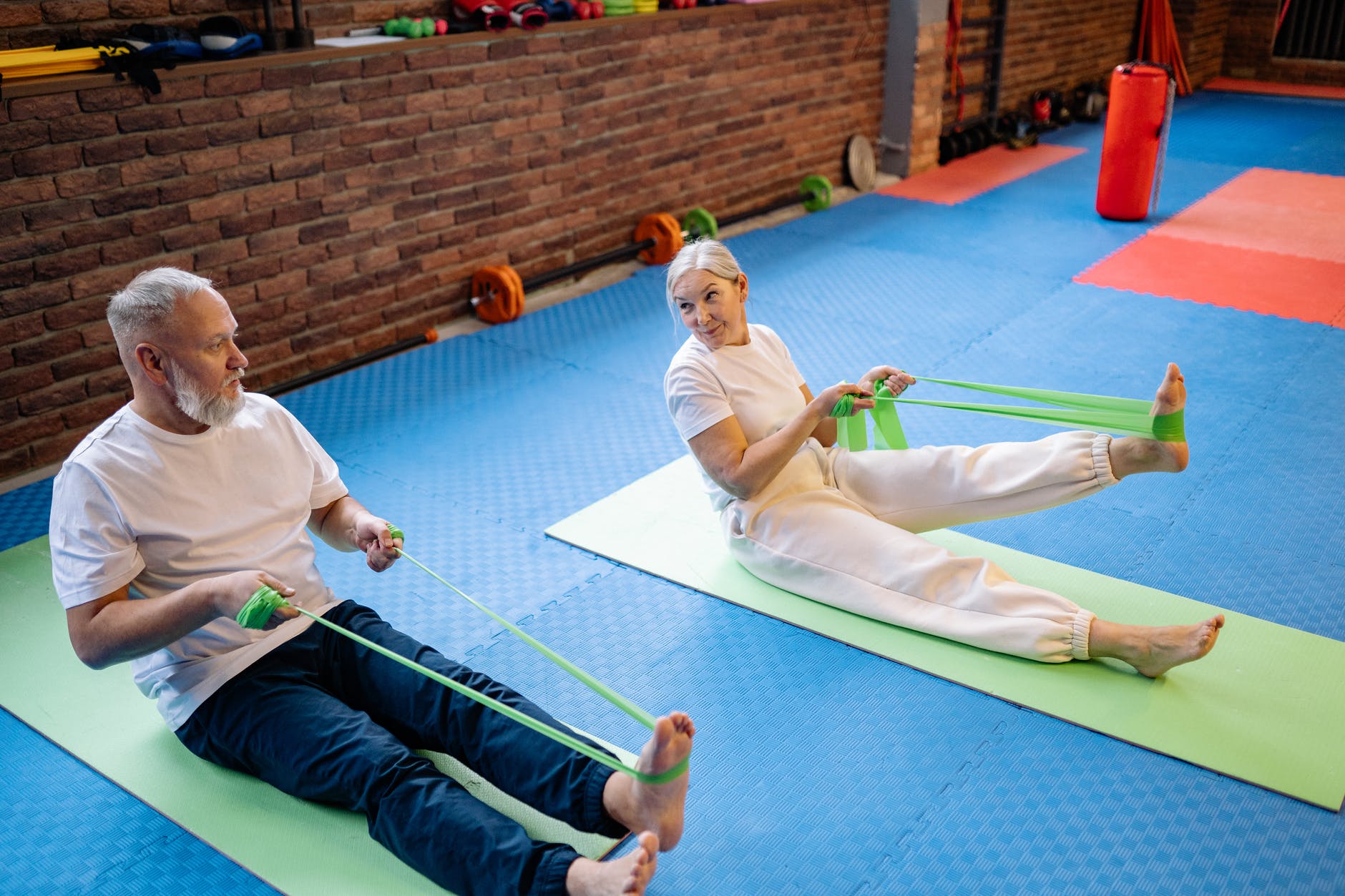
Pick at least eight to ten resistance exercises that cover the major muscle groups in the upper, core and lower body and do them two or three days a week. You can use your own body weight, weights, kettlebells, resistance bands or water bottles. Improving muscle mass and strength is critical to being able to live independently through your lifespan.
Improve your balance by standing on one leg for a minute at a time. Make sure you can grab something if you feel unsteady. Once you can do this, make it harder by moving the raised leg in different directions. My comment: Wii Fit has a lot of balance exercises included. Ballet and Yoga also include balance exercises and Tai Chi is a good starting point.
High blood sugars take a particular toll on the flexibility of joints and tendons. Stretch two or three times a week. The worse your flexibility and the older you are the longer you should hold the stretch. Up to a minute with each stretch may be necessary. My comment: There are lots of You Tube videos on stretching. You may like to use rubber bands and yoga blocks or use props such as chairs.
Weight bearing exercises to reduce bone loss can be achieved by weight training, carrying shopping in both hands, and hopping up and down on one leg at a time, and by doing body weight exercises such as press ups.
It is very important that you can get off of a chair as you get older. Practice standing up from the sitting position without using your hands. You can enhance your strength by sitting against a wall with your knees at 90 degrees. My comment: I used to do this for two minutes at a time. I would suggest 30 seconds to start with.
Last, but not least, pelvic floor exercises. You pull in all the muscles around your urethra and anus and practice a combination of long holds and pulses. This improves continence.





 Diabetes Diet