Tooth loss affects how well you perform everyday tasks in later life

Adapted from Does tooth loss affect ability to carry out everyday tasks in older people?

By Matsumyama Y et al. J Am Geriatr Soc 1 May 2021

Older adults with more natural teeth are better able to perform everyday tasks such as cooking, taking medications, managing money, making a telephone call or going shopping, according to research from University College London.

Data from 5,631 adults from the English Longitudinal Study of Aging between the ages of 50 and 70 was analysed. Activities of daily living were self reported.

Being exposed to fluoridated water from age 5 to 20 was found to be associated with having more natural teeth in later life.

Professor Georgios Tsakos said, ” We know from previous studies that tooth loss is associated with reduced functional capacity, but this study is the first to provide evidence about the causal effect of tooth loss on the activities of daily living among older adults in England. This effect is considerable.

Older adults with ten natural teeth are 30% more likely to have difficulties with shopping for groceries or working around the house or garden compared to those with 20 natural teeth.

Even after you allow for factors such as educational qualifications, self rated health and their parents’ educational level, we still found that the more natural teeth a person had, the better their functional ability.”

My comment: Interesting. Would dental implants make a difference?

Fibre is not the answer for diverticulosis prevention

Adapted from A high fiber diet does not protect against asymptomatic diverticulosis by Anne F Peery et al. Gastroenterology Volume 142, Issue 2, February 2012 Pages 266-272.

The complications of diverticulosis cause considerable morbidity in the developed world. Many physicians and patients believe that a high fibre diet and frequent bowel movements are the key to its prevention. We sought to determine whether low fibre or high fat diets that include large quantities of red meat, constiptation or physical inactivity increase the risk for asymptomatic diverticulosis.

We performed a cross sectional study of 2,104 adults aged 30 to 80 who were getting an outpatient colonoscopy from 1998 to 2010. Diet and physical activity were assessed in interviews using validated techniques.

As we expected the numbers of people with diverticulosis increased as they aged. High fibre intake did not reduce the prevalence of diverticulosis. Indeed, those in the highest quartile of fibre intake had more diverticulosis per person than the lowest. Risk increased with increasing amounts of total fibre, fibre from grains, soluble and insoluble fibre. Constipation was also not a risk factor. Those who had more than 15 bowel movements a week had a 70% higher risk compared to those with less than 7 bowel movements a week. Neither physical inactivity or intake of fat or red meat was associated with diverticulosis.

These results indicated that the generally accepted “risk factors” for diverticulosis need to be reconsidered.

For one poor man’s real life experience with this condition read:

http://yelling-stop.blogspot.com/2010/08/diverticulitis-my-story.html

He found that wheat products and seed oils were the main factor and he wishes he had found this out before having a miserable 15 years with gut pain and diarrhea.

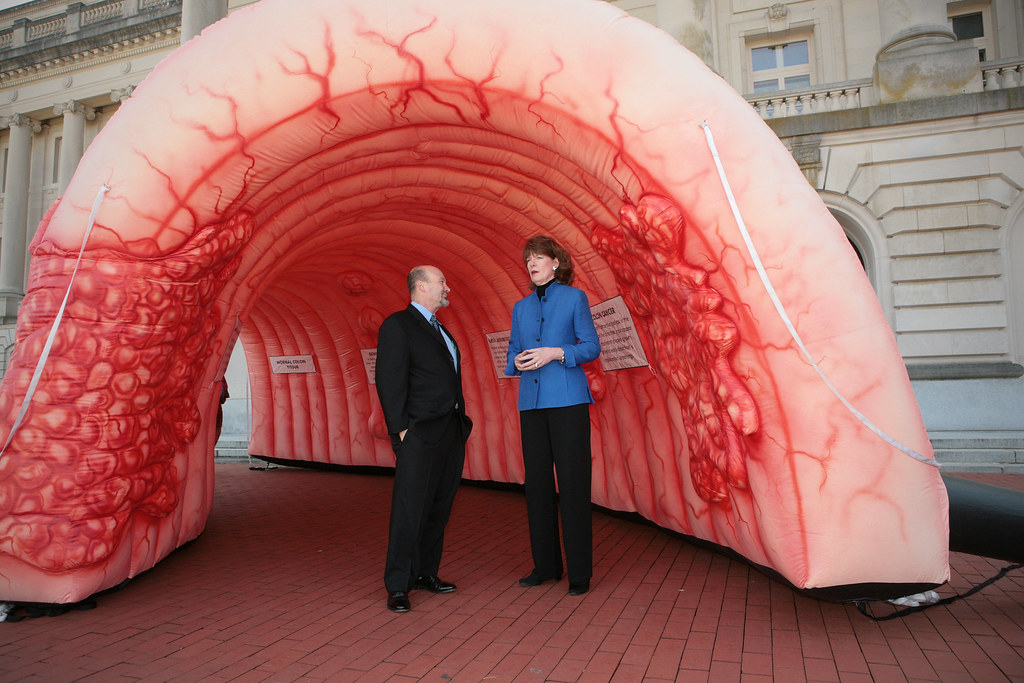
Colorectal cancer awareness: diet changes can help

There are several main factors that can reduce your chances of getting bowel and rectal cancer. Weight optimisation, a good diet, exercise, vitamin D supplementation and regular colonoscopies.

A study co-funded by the World Cancer Research Fund, Cancer Research UK and Diabetes UK found that although being over weight was a factor in causation, that body fat position made a difference between men and women.

A higher BMI was more risky for men but for women, carrying the weight on the abdomen compared to the hips was worse. Only a 5 point increase in BMI for men increased bowel cancer by 23% in men but only 9% in women.

Higher fish and fish oil intake was associated with a 7% lower risk of bowel cancer in a European study.

Consuming flavinoid rich foods such as apples, tea and pears reduces both cancer and cardiovascular disease mortality particularly in those who also smoke and drink a lot of alcohol in a Danish study. The effects levelled off at around 500mg a day for all cause and cardiovascular mortality and 1000mg a day for cancer related mortality.

If you are unfortunate and get colorectal cancer, an Edinburgh analysis of seven RCTs has found that Vitamin D supplementation produced a 30% reduction in adverse outcomes.

Vaughan-Shaw et al. The effect of vitamin D supplementation on survival in patients with colorectal cancer: systematic review and meta-analysis of randomised controlled trials. Br J Cancer 2020 Sep 15.

Liraglutide and Semiglutide aid weight loss not just for diabetics

Adapted from Pulse Feb 2021

NICE has approved Liraglutide for use in the NHS for weight loss. There are a list of requirements before it will be given though.

They also say that a calorie controlled diet and exercise will be necessary.

The person being considered for it must have a BMI of 35 or 32.5 for certain groups such as South Asians, Chinese, black African or African-Caribbean, who are at higher cardiovascular risk for any given BMI.

The person should have diagnosed pre-diabetes, equivalent to a HbA1c of 6.0 to 6.4% or a fasting blood sugar of 5.5 to 6.9.

They should also have a high risk of cardiovascular disease based on risk factors such has hypertension and lipid abnormalities.

Liraglutide will be provided by a specialist multi-disciplinary weight loss service.

The drug is a once weekly injectable. My comment: in my diabetic GP patients they found it easy to use and very effective for weight loss. It will be an alternative to other measures such as Orlistat and bariatric surgery.

A major problem is that the types of clinics that supply these services are over subscribed in the first place. From my own experience, many patients will meet the criteria, and many would welcome an opportunity to improve their health, appearance and sense of well being by this method. The clinics expect that patients will remain on the drug for two years. The problem is that to maintain the weight loss the drug may be needed lifelong. Currently the British Medical Association are against the introduction of the drug because they think that this will drive up the needs for blood test monitoring and referrals from GPs.

The original study was published in the New England Journal of Medicine by Wilding J et al in 2021. The mean bodyweight reduction was minus 14.9 % for the treatment group and just minus 2.4 % for the placebo group. Blood sugars and lipids improved considerably too. Nausea and diarrhea were the main side effects of the drug but these results tended to be mild and short lived.

In another study of the drug Semiglutide, by Davies M et al, published in the Lancet on March 2 2021, the importance of dose was assessed. They found that the higher dose had better effects on weight and blood sugar than the lower dose but also that the side effects were more frequent.

Oldies need to exercise more to improve their sleep


Adapted from BMJ 13 March 21

A randomised controlled trial in older adults with insomnia found that 12 weeks training in Tai Chi improved both subjective and objective measures of sleep quality. Although the effect size was modest it persisted for over two years.

Sleep quality also improved in groups that took part in brisk walking programmes and muscle strengthening exercises.

My comments: With consideration to my last post, about the importance of sociability in brain health, I do wonder if it is the exercise or the social factors that improve sleep.

See your pals once every week or two, or maybe get a dog?

Adapted from Human Givens Volume 27 No2 2020

Frequent social contact has been associated with better health and longer life but is there an optimal contact frequency?

The European Social Survey results suggested that monthly or weekly was enough to see benefits among 350 thousand people over 35 countries.

A second German study found that more contact than this was not associated with better health and in some cases was related to worse health and greater mortality risks. My comment: Of course, friends and relatives may have been visiting more frequently BECAUSE their friend was indisposed.

Psychological and Personality Science 2020

Researchers from Ontario, Quebec and Oxford found that having strong interpersonal relationships was critical for survival across the entire lifespan. Social isolation is a significant predictor of the risk of death. Insufficient social stimulation affects reasoning and memory, hormone balance, brain structure, connectivity and function, and resilience to physical and mental disease.

Feelings of loneliness can cause negatively skewed social perception and in older people it can precipitate dementia.

Professor Dunbar from Oxford said, ” Loneliness has accelerated in the past decade. Given the potentially severe consequences, exacerbated by national policy responses to Covid-19, we have launched the Campaign to End Loneliness. This is a network of over 600 national, regional and local organisations that want to create the right conditions to reduce loneliness in later life.

https://www.campaigntoendloneliness.org

Bzdok D and Dunbar RIM (2020) The neurobiology of social distance. Trends in Cognitive Sciences.

If you are at the other end of the age spectrum, particularly an only child, a pet can be a great advantage to you.

The Longitudinal Study of Australian Children found that children who had pets had lower emotional symptoms, fewer problems relating to other children and had more positive social behaviour compared to the non pet owning children. The positive social behaviour effect was magnified in only children.

Christian H et al. Pets are associated with fewer peer problems and emotional symptoms and better prosocial behaviour. Findings from the Longitudinal Study of Australian Children. J Pediatr 2020;200:200-206.

Tim Noakes: Nutrition Network Courses for Health Professionals

Homepage | Nutrition Network (nutrition-network.org)

Tim Noakes shot to fame in the low carb community by being accused of malpractice by two South African dieticians for giving dietary advice when he was not a registered dietician. After five long miserable years and the support of international colleagues he won the case. Anna Dahlquist, a Swedish GP had gone through the same thing a few years before this, and not only won her case, but managed to get the Swedish food guidelines for people with diabetes changed.

Professor Noakes has established online training for health professionals covering a variety of useful topics. Participants can be from all over the world and will receive accreditation. The full list of topics can be found by clicking on the homepage in BOLD above.

University College London: Diabetes has trebled in England in the last 25 years

Researchers from UCL analysed the results the latest results from the Health Survey for England.

Data from 8,200 adults and 2,000 children living in private households showed that diabetes has risen in men from 3% to 9% and from 2% to 6% in women since 1994.

Those from poorer households and those with obesity are much more likely to be affected than the slim and affluent. 16% from the poorest homes had diabetes compared to 7% in the highest income group. If you are of normal weight there is a 5% chance of diabetes, 9% if you are overweight and 15% if you are obese.

Obesity is a marker for poverty. 39% of women in deprived areas were obese compared to 22% from least deprived areas. The weight of children was closely correlated with their parents.

Professor Jennifer Mindell said,” Diabetes has become more common in both high and low income countries over the last few decades. It increases the risks of circulatory diseases and cancers. This year we have also seen a rise in serious infection and death such as with Covid-19. Obesity reduction would help all of these problems.”

The survey also asked about GP visits. 69% of men and 82% of women had consulted a GP in the previous six months. GP consultations are more common in older ages, especially among men and those who are overweight or obese. 84% said they went about their physical health problems, 11% for physical and mental problems and 5% for an emotional or mental health problem. Women tended to seek more help for mental health problems than men.

Echoing all the other parameters, consultations for mental health problems were more frequent in those with lower incomes. 25% consulted from the lowest income group compared to 15% from the most affluent group.

Elizabeth Fuller, Research Director at NatCen said, ” One in five women and one in eight men screened positive for a possible eating disorder. This can mean eating too much or too little, obsessing with weight or body shape, having strict routines around food or purging after eating. People who are obese, younger adults and women are more likely to be affected.”

Free You Tube sites to help you look and feel your best

The Times recently published a long list of exercise sites that you can get for free or pay for. Being a home exercise enthusiast I read this carefully and decided to try out the sites they listed as being FREE. These were my favourite ones. All had a variety of exercises eg low and high impact aerobics, walking, weights, rubber bands, stretching, relaxation and even dressing, hair and make up tips.

Top of the pops was Fabulous 50s. There are over a hundred workouts on this site. All are one to one, and set in beautiful Australia. This lady’s house is so clean, tidy, uncluttered that I was immediately pea green with envy. Of course, if I moved into her house, it wouldn’t stay that way for long. There is a fantastic range of exercises and from the ones I have tried, they were well produced and constructed, and even if you are a complete beginner, are pretty easily done. They range in time from 5 minutes to 30 minutes really giving you plenty of options no matter how hard pressed you are for time.

Mad fit, Lucy Wyndam-Read and Fitness Blender also are free and have multiple workouts in terms of types and durations. They seemed more tuned to the younger or fitter age group than Fabulous 50s and I have only done a few of them being 61 with some unfortunate back issues right now. They are not quite as beautifully produced as Fab 50s but they are free!

You will get adverts popping up during all these workouts. Now this is where you have to be careful because the marketing folks know who they are aiming at here and the top products seem to be wrinkle cream, make up and chocolate. It doesn’t matter how lucious it looks. Do not buy it. Because you will eat it.

Adriene is purely a yoga site. This is free too, and she sometimes has her dog with her. Again, there are a lot of different length and types of workout.

Now, if you have a smart phone, a tablet, a pc or a smart television, whatever your favourite form of home exercise is, and even if you only have five or ten minutes, you can workout for free at home.

Public health collaboration online conference 2021

Sam Feltham has done it again. This year’s conference is now available on you tube right now.

Last weekend there were many contributors from diverse fields including members of the public, doctors, academics, and the scientific journalist Gary Taubes who gave the opening talk about ketogenic diets.

The courses that particularly interested me were about the experiences of type one diabetics who had adopted the low carb approach, how to achieve change, and how to increase your happiness.

There are talks about eating addiction and eating disorders, statins, and vegetable oil consumption.

Much of the material will be familiar to readers of this blog. There are some new speakers and topics which do indicate that a grassroots movement in changing our dietary guidelines is gaining ground.