Vitamin D supplementation has been shown to reduce the development of autoimmune disease

Photo by Pavel Danilyuk on Pexels.com

Adapted from BMJ 29 Jan 2022

This USA study looked at what happened after 5 years of vitamin D 3, omega 3 fatty acids and placebo to a group of over 12 thousand men and 13 thousand women. The men were at least 50 and the women 55 at the time of the start of the trial.

The groups were randomised to test out different combinations on the incidence of autoimmune diseases including rheumatoid arthritis, polymyalgia rheumatica, autoimmune thyroid disease, and psoriasis.

The results show that the vitamin D supplement group had the only statistically significant finding. This was a 22% reduction in autoimmune disease whether or not they took the vitamin D with omega three fatty acids or a placebo.

Although the doses are probably stated in the main paper, the summary from the BMJ did not contain this information.
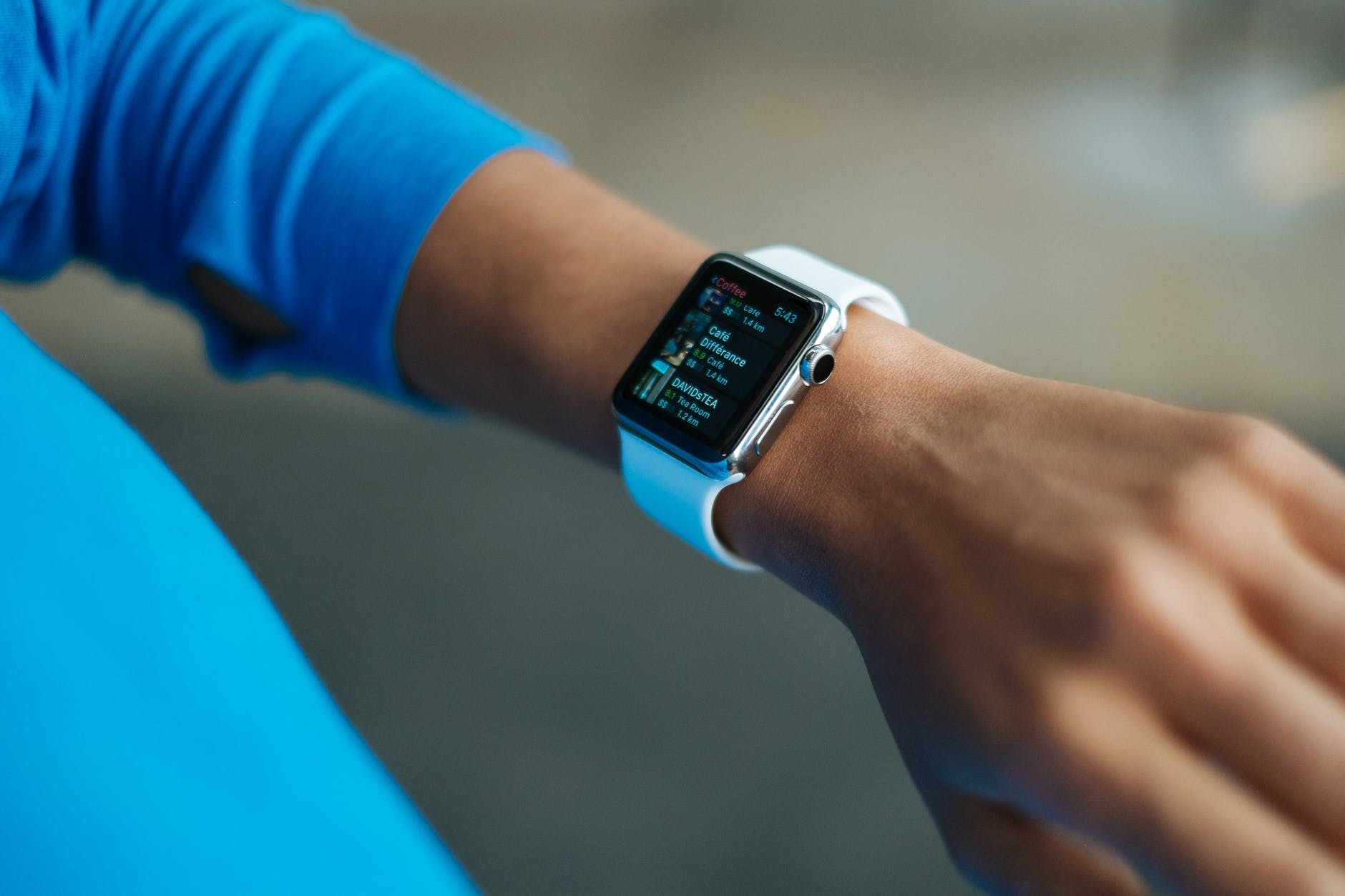

Physical activity monitors have some role in increasing activity by 10 minutes a day

Photo by Pixabay on Pexels.com

Adapted from BMJ 29 Jan 2022

Like many other people I eventually bought a smart watch. I was a late adopter of this but after visiting my son in London, and seeing what a benefit it would be to scan in and out of the tube with a device, I got one just over a year ago. Many people had already been tracking their steps, heart rate and sleep schedules with these. So, are they of any use?

This was a systematic review which looked at 121 RCTs (so many!) covering 16,743 participants.

They found that there was a small but definite improvement in physical activity when people wore the trackers.

Physical activity increased by ten minutes a day. This was equivalent to 1,235 daily steps and works out at an additional 48.5 minutes a week.

To put this into context, I work out in different modalities for about this time every day, so it is like the equivalent of working out 8 days a week instead of 7.

Although this level of increased activity is unlikely to make much difference to your weight, what may do is a broadening of referral sources to the UK NHS online weight management programme. Community Pharmacists are now allowed to refer patients to the programme, instead of just GPs.

The course is 12 weeks long. You can join if you are in the obese category (BMI 30 or over), or if you are overweight (BMI 25 and over) and have hypertension, or type 2 diabetes. If you are of ethnic minority you can join if your BMI is 27.5 or over because you are more likely to develop type 2 diabetes.

Entrants to the scheme are currently 5 pounds heavier on average compared to pre-covid pandemic weights.

If you need to communicate that you are in pain to a health care professional you need to show it in your facial expression

Photo by Andrea Piacquadio on Pexels.com

Adapted from Human Givens Vol1 2013 Journal of Health Psychology 2013.

Facial expression is the best way to communicate to health care professionals if you are in pain and how severe the pain is.

Patient vignettes were assessed by health care professionals. Sometimes they were told that the pain source was due to arthritis or cancer and sometimes that the pain source was unknown.

When asked to assess pain levels from facial expression, what the person said and how they said it, avoidance of movement and posture, and interpersonal contact, doctors, nurses and health care assistants all paid much more attention to the patient’s facial expression than to the other factors, particularly if the pain source was unknown.

My comment: I have come across this situation myself as a patient. Being very factual and stoical doesn’t seem to work!

If you can avoid competitive eating as a child you will be thinner

Photo by Andrea Piacquadio on Pexels.com

Adapted from Independent Diabetes Trust Newsletter Dec 2021 and BMJ 29 Jan 2022

In the journal of Clinical Obesity researchers have shown that people who eat faster tend to gain more weight and are at higher risk of obesity than slow eaters. This is because it takes at least 20 minutes for stomach hormones to tell your brain that your hunger is satisfied.

They also found that only children didn’t tend to eat as fast as children who had siblings. The fast eating habit tends to persist in to adulthood and thus weight gain compared to only children.

My comments: I was one of four children and we certainly ate fast. If you didn’t grab the food quick enough it disappeared! This stood me in good stead as a doctor when there was very little time for eating on the job. My husband was one of three and is great at competitive eating too! He said it helped when working off shore when meals were slotted in during less busy periods. I had forgotten most of the childhood meal behaviours till I went to one of my friends houses with her husband and noticed that he carefully guarded his plate with his arm. I recalled that this was common practice in our house but that I had stopped doing it since leaving home. He was one of four children again. He had simply never changed his eating posture since leaving home!

In the American College of Cardiology 2021 they report that teenagers who have high BMIs have a 9% greater risk of getting type 2 diabetes, and an 0.8% greater risk of having a heart attack in their 30s and 40s than normal weight teens. Regardless of their adult BMI, teens who were heavier went on to have a 2.6% greater risk of having poorer overall health in adulthood.

Want to pass that exam? Here’s how.

Photo by energepic.com on Pexels.com

Adapted from Human Givens No 1 2013 Dunlosky et al. Improving student’s learning with effective learning techniques. Psychological Science in the Public Interest.

Researchers have found that the best way to get good results in exams is to spread out your studying over time and to make sure that you quiz yourself on what you have learned.

They looked at ten common learning techniques and found that many of the most popular were of next to no benefit either in remembering information or passing exams. Some of these are the most common and are being recommended by teachers.

The most useless ways to revise are: highlighting and underlining, summarising, keyword mnemonics, use of imagery for memorising text and re-reading.

You may think you are doing something by adopting these, but you are kidding yourself!

NICE: all adults and children with type one diabetes to have real time continuous glucose monitors

Abbott’s Freestyle Libre

The fantastic news this spring is that ALL type one adults and children are to be offered real time blood sugar monitors in the NHS.

These machines encourage testing without the finger pricks, tell you the trend of your blood sugars, and make it much more accurate, easier and less painful to adjust your insulin to your blood sugar.

The monitors will also be offered to type two patients who use insulin.

NICE estimates that a quarter of a million type one patients alone will be put on the device. Research suggests that HbA1c levels tend to drop when using the technology without increasing the risk of hypoglycaemia.

My comment: My son Steven, was an early adopter or this method of blood sugar monitoring. I paid for the device and sensors for the first 18 months because it gave me more peace of mind, especially as he was living on his own away from home. It seemed crazy to me that he was excluded from NHS funding by virtue of having very tight blood sugar control mainly from his own efforts. Although it is a charge on the NHS for the sensors, the benefit is that there should be less hospitalisation from hypos and fewer complications later on.

Currently the NHS spends ten billion pounds a year on diabetes, which is ten percent of the total budget.

For those type ones or type twos on insulin who do not yet have this device they are asked by NICE to approach their diabetes teams.

Writing down your thoughts can boost your mood

Photo by Suzy Hazelwood on Pexels.com

Adapted from Human Givens No 1 2013 Brinol P et al. Treating thoughts as material objects can increase or decrease their impact on evaluation. Psychological Science 24.1, 41-7. 2013.

Writing down negative thoughts, crumpling them up, and throwing them away, as often advocated by therapists, really does reduce negative thinking. Conversely, writing positive thoughts down, and keeping them safe in a purse or pocket helps you feel better.

Teenage School students in Spain were asked to write down either positive or negative thoughts about their bodies and then Mediterranean diet and they were then evaluated on how much they became influenced by their lists later on.

What they found was that people who threw the list in the trash right away were not influenced, those who kept the list in their desk were somewhat influenced, but that those who kept the list more personally in a pocket or purse were most influenced.

To see if the effect worked with word lists via a computer, the experiment was repeated. The thoughts were put into storage or the trash list. Repeating the experiment but simply asking the students to imagine putting the list in a particular location without physically doing anything was also done.

Professor Richard Petty, a co-author of the paper from Ohio University said, ” The more convinced the person is that negative thoughts are really gone, the better. Just imagining that you throw them away doesn’t seem to work”.

So, to get over a difficult event, write it down, and then bin it and be physical.

If you want to boost your mood, write positive facts or feelings and keep it close and personal.

Changing daily habits can have a calculated effect on your life expectancy

Photo by Moe Magners on Pexels.com

Adapted from BMJ 22 Dec 2012

Cambridge University professor of biostatistics, David Spieghalter, has produced an easy to understand tool that can help you quantify your daily habits in terms of added or reduced life expectancy.

If you have got to 35 years of age, you could reasonably expect to live till age 80 if you are a man and age 83 if you are a woman.

For men this is how to live a shorter life:

Smoke 15-24 cigarettes a day cut 7.7 years For women cut 7.3

have one drink of alcohol a day ADD 1.1 years For women ADD 0.9 years

have another one up till six more CUT 0.7 years per drink For women CUT 0.6 years

For every 5 units above a BMI of 25 cut 2.5 years For women cut 2.4 years

for every 5kg above your optimal weight cut 0.8 years For women cut 0.9 years

Spend two hours watching the television cut 0.7 years For women cut 0.8 years

For every red or processed meat portion you eat, equivalent to a burger 3 oz cut 1.2 years Same for women

Now for the good news:

If you eat 5 or more fruit or vegetable portions a day men add 4.3 years For women add 3.8 years

If you drink 2-3 cups of coffee a day add 1.1 years. For women add 0.9 years.

For the first 20 minutes of exercise add 2.2 years. For women add 0.81 years.

For the next 40 minutes add 0.7 years. For women add 0.5 years.

Take a statin add 1 year for men. For women add 0.8 years.

If you live in a relatively unpolluted area, less than London for example, add 0.6 years for both genders.

How does this work out for you?

6.5 to 7 hours sleep a night is about average for adults

Photo by Pixabay on Pexels.com

Adapted from BMJ 13 Nov 2021 from American Journal of Epidemiology.

Measurements using an Actigraph were taken from 13,000 adults and children in the USA to determine what a “normal” sleep duration was. The amount of sleep taken by individuals can be highly variable, and this can also change due to their age and stage of life and occupation.

For females, the 50th centile, the middle of the sleep range, was 8.3 hours a night, starting from age 6. As a young adult, this reduced to just over 7 hours and stayed constant till there was a small increase at age 65.

For males, the middle of the sleep range was 8.1 hours at age 6 and reduced to 6.5 hours in early adulthood and increased slightly at age 60.

My comment: I’ve always needed a lot more sleep than this. 10 or 11 is better for me and in autumn, just after the clocks change, I can sleep for 14 hours a night if I am not disturbed. I perk up a little bit in the spring and can cope with 9 hours a night. For much of my life, particularly working as a doctor on call and having young children I had a lot less sleep than I really needed. I have seen that sleeping a lot is associated with a higher rate of dementia, but too bad!

In California, a longitudinal study of more than 50,000 women, looked at how environmental influences affected how long it took to get to sleep and how long the sleep lasted.

Shorter sleep duration was associated with exposure to artificial light at night and air pollution. (Associated with cities). Where there was a lot of environmental noise, it took longer to fall asleep.

Contrasting with this, living in areas with more green space led to women falling asleep faster and staying asleep longer.

Your glass of wine may have more sugar in it than you think

Photo by Max Vakhtbovych on Pexels.com

Adapted from BMJ 19 Feb 2022

The Alcohol Health Alliance UK has called for better labelling on alcoholic drinks after an analysis found that wine from the ten leading brands contained as much as 59g of free sugars per bottle.

None of the bottles had the sugar content on the label.

Government guidelines recommend no more than 30g of free sugars a day for an adult (My comment: they conveniently forget about starch though!) This is equivalent to 6 teaspoons of sugar and it can be contained in just two medium glasses of wine.

In February at the Low Carb USA conference in La Boca, Florida, Gemma Kochis, who is a qualified Sommelier, who works at Keto-Mojo, presented information for those on a ketogenic diet who would still like to drink wine.

She says that for the most part, wines with the highest alcohol content will tend to have the highest sugar content. If you want to drink wine and stay in ketosis, you will need to test your blood ketones about 2 hours after trying a new wine.

In general she recommends wines that grown in cooler climates, mainly old world compared to new world. She thinks that you have to stick below 12.5% alcohol wines and that even then you may have to go lower.

Red wines that can be fruity and have a low alcohol content include Beaujolais and Gamay.

Reisling, Vinho Verde and Muscadet are good white wine choices and Champagne Brut is a good sparkling wine choice.