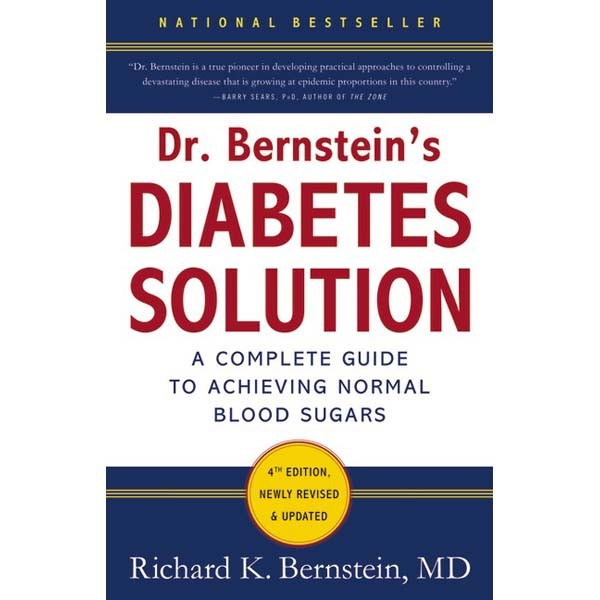
Dr Richard Bernstein has died

Richard Bernstein

June 17, 1934 – April 15, 2025

Obituary of Richard Bernstein

IN THE CARE OF

Sinai Chapels

Dr Richard Bernstein, 90, of Mamaroneck, NY passed away peacefully on Tuesday, April 15, 2025. Born in 1934 in Brooklyn, New York, he was stricken with Juvenile Onset Diabetes at the age of 12. He earned an engineering degree from Columbia University and had a career in the laboratory and medical devices industry. In the early 1970s he adapted a blood glucose meter for personal use and pioneered Diabetes Home Glucose Monitoring. Using self- experimentation to develop a regimen of glucose monitoring, diet and multiple daily insulin shots, he radically improved his own health. He enrolled in the Albert Einstein College of Medicine and graduated at the age of 48. He subsequently practiced medicine as a Diabetologist in Mamaroneck, NY until his death. He published multiple books on Diabetes including the #1 selling Diabetes book on Amazon.Com “Dr. Bernstein’s Diabetes Solution: A Complete Guide to Achieving Normal Blood Sugars” and “Diabetes Type II: Living a Long, Healthy Life Through Blood Sugar Normalization”. His “Diabetes University” videos on YouTube brought his Diabetes treatment strategies to a global audience. He made many discoveries and published articles in prestigious medical journals about Diabetes, complications of Diabetes and autoimmune disorders suffered by diabetics. He credited his longevity and good health to tight control of his blood sugars, exercise and his low carb diet and insisted that all diabetics have the right to normal blood sugars. In his spare time, he was an avid boater, sailor and astrophotographer with a particular passion for photographing eclipses. He is survived by his partner Joyce Kaplan, daughter Julie Borhani and husband David, daughter Lili Goralnick and husband Howard, son Jeffrey and wife Michele and grandchildren Jody, Bella, Nathan and Adin.

A funeral service for Dr. Bernstein will be held Thursday, April 17, 2025 from 12:00 PM to 1:00 PM at Sinai Chapels, 114-03 Queens Blvd, Forest Hills, NY 11375, followed by a committal service from 1:15 PM to 1:45 PM at the Mount Lebanon Cemetery, 7800 Myrtle Ave. Glendale, NY.See Less

Amitriptyline improves irritable bowel syndrome in RCT

Photo by Sora Shimazaki on Pexels.com

Adapted from BMJ 2-9 Nov 2024

I have prescribed Amitriptyline for years for irritable bowel syndrome so I was pleased to see this article that showed a recent RCT gave good results, with the hope that General Practitioners will use it more often.

First line treatments for irritable bowel syndrome include removal of the offending foodstuffs from the diet and the prescription of medication for such symptoms as constipation, diarrhea, and abdominal spasms. Should these not work, low dose anti-depressants including SSRIs and Amitriptyline may be used. This study named ATLANTIS compared Amitriptyline with placebo in patients who had not responded to dietary and simple prescriptions for symptoms.

The study took place in England over 55 practices. Patients described their symptoms as moderate to severe. The average age was 49 and 68% were female. 232 patients were randomised to take the active drug and the other 231 took and identical placebo for six months. The dose was 10mg in the evening increasing to two or three a day depending on symptom control and side effects. Dietary advice from the GPs continued. 338 patients completed the whole six months trial, 75% of the active drug group and 71% of the placebo group. A questionnaire was given to assess symptoms towards the completion of the study.

The Amitriptyline group score for symptoms improved by 99 points compared to 69 points in the placebo group. 61% of the active group reported relief from their symptoms compared to 45% in the placebo group. 58% of the active group thought the treatment was acceptable, compared to 47% in the placebo group. The anxiety, depression, work and social adjustment scores were similar in each group. 20% of the active drug group dropped out of the study compared to 26% in the placebo group.

The active drug users had more of a dry mouth and drowsiness but less insomnia than the active group. There were two “serious” adverse effects in the active group, compared to three in the placebo group. At six months 74% of the active group were still on the medication compared to 68% of the placebo group.

The researchers have said that this is the largest ever trial of Amitriptyline in irritable bowel syndrome. The drug is cheap, reduces symptom severity, is safe and is well tolerated. They hope that this drug will be considered more often for this debilitating condition.

My comment: a low carb diet with removal of wheat from the diet can also improve irritable bowel syndrome and acid reflux.