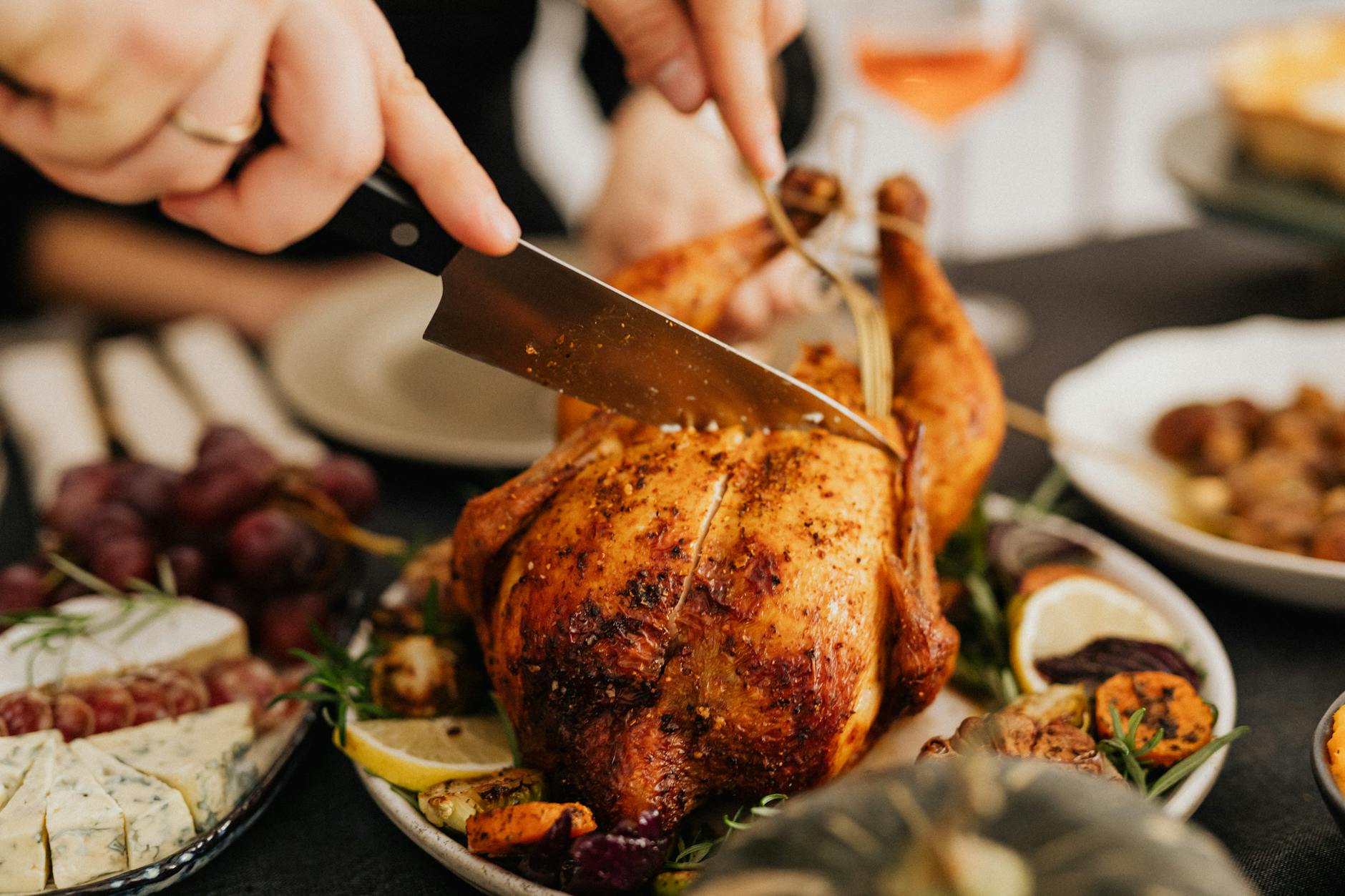
Roast chicken

Photo by Photo By: Kaboompics.com on Pexels.com

Although turkey is perhaps the most traditional Christmas dinner in the UK and USA, I don’t really like it that much, and prefer chicken.

Today I’m going to discuss different ways that I’ve seen chicken roasted. I’ve tried all of them, and my recent favourite is the New York Times, “Salt and pepper roast chicken” recipe, which has five stars.

For years I simply did what it said on the package. This is to place the chicken in a pre-heated oven at 180 degrees and roast for about one and a half hours. Then, let it rest for 10-15 minutes and serve. This has the advantage that you can season the chicken as you like. The results are good, but sometimes the breast is overdone compared to the legs. Some chefs even take the legs off and roast these separately for this very reason.

A variation on this is the “roast in a bag” chicken. These chickens are usually quite large and come pre-seasoned. They are readily available from big supermarkets. The advantage is that you don’t need to touch the raw chicken at all and the seasoning is done already. They also save on cleaning pans. These are suitable mainly for families due to the size of the bird. I have often found the flavour disappointing.

For at least 15 years I used the Australian chef, Tony Blakemore’s method. I use a big cast iron wok. Pre-heat the oven to 180 degrees. Rub plenty of butter into the skin of the chicken and season generously. Place breast down in the middle of the pan. Add whatever vegetables you have in the fridge round about. Pour some olive oil onto the vegetables and season. Add such items as chopped garlic and chili peppers if you like. Vegetables I commonly use are chopped onions, carrots, potatoes, celery and peppers. Cook for 45 minutes with the lid on. Then take out of the oven and turn the bird breast up. Then cook without the lid for the remaining 45 minutes. This browns the skin on top. The advantage of this method is that you have a well cooked chicken with a delicious buttery vegetable accompaniment. If you are on a ketogenic diet, you would omit the potatoes. The breast and leg meat are equally cooked.

For all of these chickens, you need to plan ahead. I like to take the chicken out of the fridge for about 15-30 minutes prior to roasting, 1.5 hours in the oven and sometimes a bit more, and 15 minutes resting. I put dinner on the table at 7.30 pm. This means the bird must be taken out of the fridge by 5.30pm at the latest. Many people eat dinner earlier than this. This can be a problem for working mums.

Recently I saw that the NY Times had a 5 star roast chicken recipe and I decided to try it. Having done this several times, I’m so impressed that I’ll probably abandon Tony’s method, although my younger son, can’t bear the thought of me doing this, as he loves the buttery, tasty chicken so much.

Prior to cooking, you are urged to season the inside and outside of the chicken with salt, pepper and herbs to your taste, perhaps rosemary, thyme and sage. Put the chicken back in the fridge for an hour or overnight if you can. (Cover it and keep away from other food items).

Heat the oven to 220 or 230 degrees. Red hot! Now place in a roasting tin breast up. Roast for just 50 minutes. Then, take it out and baste the skin with the fat and juices. Test the internal temperature of your bird. It needs to be 165 F or 74 C. If you don’t have a meat thermometer you can pierce the part of the chicken between the thigh and the breast and the juices should run clear. Any hint of blood and it needs to go in the oven again. Re-test every 10 minutes.

So far I have used small and medium chickens at 220 degrees. I have not had to keep them in longer, but if you have a big bird, and depending on your oven, you may need to.

The skin is delicious and crisp and the taste excellent. I’ll let you know if my son is converted or not in the comments after the Christmas holidays.
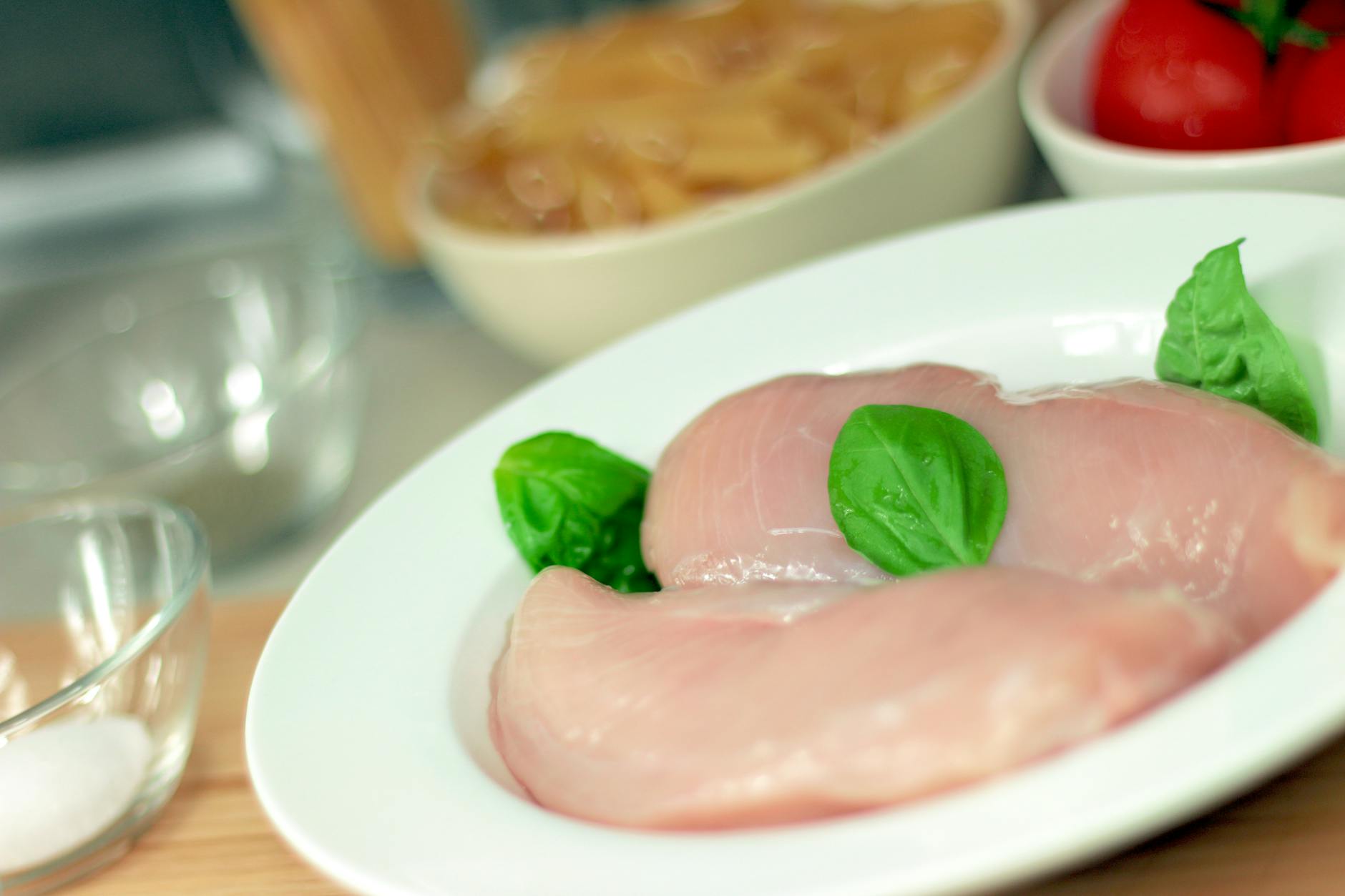
Chicken Fricassee

Photo by Ju00c9SHOOTS on Pexels.com

Adapted from recipe in New York Times by Craig Claiborne and Pierre Franey July 2 2024

This dish is traditionally served with rice. Feel free to use any low starch vegetable combination. I have de-carbed the original recipe so that the flour has been omitted.

Total time about and hour and 30 minutes.

For 4-6 people.

Ingredients

I medium chicken cut into serving pieces or chicken breasts or thighs as you have available.

Salt to taste.

Ground black or white pepper

one ounce of butter

one banana shallot chopped finely

one clove of garlic chopped finely (Morrison’s have whole peeled cloves in jars)

one glass dry white vermouth

one chicken stock cube dissolved in a quarter cup of hot water (Starr, an Italian make are excellent)

I bay leaf

2 sprigs fresh Thyme or half a teaspoon of dried

about a cup of finely cut carrots in julienne strips

1 and a half cups of loosely packed leeks in julienne strips about 3 inches long

1/2 cup of double/heavy cream.

Method

Season the chicken with salt and pepper

Heat the butter in a frying pan and add the chicken skin side down. Fry only for about a minute without browning.

Add the onion and cook for another minute or two. Add the garlic. Cook for another four or five minutes turning the chicken to ensure even colour.

Add the vermouth, chicken stock, bay leaf and thyme. Cover and cook for 20 minutes.

Once the chicken is simmering, you can boil the carrots and leeks in two separate pans. These are finely chopped so only need one minute for the carrots and four for the leeks. (Or you can use a microwave vegetable steamer).

Now cook your rice or green vegetable accompaniment.

I cook rice in a plastic microwave steamer for 16 minutes or green vegetables in the same microwave container for 7 minutes. (Broccoli, Bok choi, cauliflower).

After the 20 minute simmer, add the carrots, leeks and cream.

Simmer for another two minutes and serve with either boiled rice (no carb restrictions) or green /low starch vegetables.

Gretchen Joanna’s Lamb stew/ pie

Photo by Paul Seling on Pexels.com

Moroccan Lamb and Sweet Potato Pie

2 tsp. ground cinnamon
4 tsp. ground cumin
3 tsp. ground coriander
2 T. freshly grated ginger
1 T. all-purpose flour (or arrowroot)
1 ½ tsp. salt, plus more to taste
¼ tsp. freshly ground pepper, plus more to taste
2 lb. lean leg of lamb, cut into 1-inch cubes
3 T. olive oil
4 T. unsalted butter
2 large onions, thinly sliced
1 T. sugar
3 large cloves garlic, peeled and minced (about 1 ½ T.)
3 c. beef stock
1 28-oz. can whole Italian plum tomatoes
2 pieces star anise
2 cinnamon sticks, about 3 inches long
2 medium carrots, peeled and cut into ½-inch rounds
2 lb. sweet potatoes, peeled and cubed
12 oz. fresh spinach (optional) washed
½ c. dried tart cherries
½ c. dried pitted prunes, cut in half freshly grated nutmeg, for sprinkling

1. In a medium mixing bowl, combine the ground cinnamon, 2 tsp. cumin, 1 tsp. coriander, flour, ½ tsp. salt, and ¼ tsp. pepper. Toss the lamb pieces with the spice mixture to coat.

2. In a Dutch oven or a large saucepan, heat 2 T. olive oil over medium-high heat. Add the lamb in two to three batches, in a single layer, and sear until dark brown on all sides, about six minutes per batch. Add the remaining T. olive oil during searing if pan becomes dry. Remove the lamb pieces and set aside.

3. Reduce heat to medium; add I T. butter. Add onions and sugar; cook 10 minutes, stirring frequently, scraping up brown bits on bottom of pan while stirring the onion.

4. Reduce heat to medium low, add the minced garlic, and cook until brown and well caramelized, about 15 minutes.

5. Stir in the stock, tomatoes, star anise, cinnamon sticks, carrots, remaining 2 tsp. cumin, 2 tsp. coriander, the fresh ginger, remaining 1 tsp. salt, and reserved lamb. Bring to a boil, reduce heat to medium, and simmer, stirring occasionally, uncovered, for about 1 hour, until lamb is tender and sauce is thick.


6. Meanwhile, place sweet potatoes in a large saucepan; cover with cold water. Bring to a boil, reduce heat to medium, and simmer, uncovered, for 15 minutes, until very tender when pierced with a fork. Drain potatoes, and return to saucepan. Dry potatoes, over medium heat, for 1 minutes. Pass potatoes through a food mill into a medium bowl. Stir in remaining 3 T. butter; add salt to taste. Set aside, loosely covered.

7. Preheat oven to 325 degrees. If using spinach, place in a large skillet over medium-high heat. Season to taste with salt and pepper, cover, and cook until wilted, about 1 ½ minutes. Drain, and rinse under cold water to stop the cooking. Set aside.

8. Remove the star anise and cinnamon sticks from the stew. Stir in the cherries and prunes. Transfer mixture to a deep 2-qt. Casserole, and place a layer of spinach, if using, over the stew. Spoon the sweet potato mixture onto the stew. Place on a baking sheet, and bake for 30 minutes. Sprinkle with freshly grated nutmeg.

Commememuchos: Beef and Guiness Stew

Photo by Engin Akyurt on Pexels.com

Adapted from a pie recipe kindly offered by Commememuchos.

Up to 25 grammes of wheat or wheat free flour

900g of veal or beef cut into inch squares

25 grammes of butter (about an ounce for the oldies like me)

1 tablespoon olive oil or coconut oil

2 large onions thinly sliced

2 large carrots cut in 1 to 1.5 cm slices

2 teaspoons of Worcester sauce or sherry vinegar or red wine

2 teaspoons tomato puree

500mls Guinness or other strong dark beer

300mls meat stock ( or use stock cubes. The Italian make Star do particularly good ones available from Amazon for about double the price from getting them in Italy. Thanks Alexandra for the tip!)

2 teaspoons sugar

2 tablespoons water

salt and pepper to taste

Method

You will need a large stove top casserole dish eg Le Creuset or similar. A sturdy large saucepan will do.

In a large bowl put in the flour and salt and pepper. Mix.

Coat the meat cubes in this.

In your casserole dish or large saucepan heat the butter and oil over a low heat till the butter has melted and then turn up the heat and sear the meat in batches. Once done set aside. This stage always takes rather a long time. It is good to listen to podcasts or music doing this.

Now fry the onion and carrots gently for about two minutes.

Add back the meat to the casserole dish and season with Worcester sauce, tomato puree, Guinness, hot meat broth and sugar. Add black pepper and salt. Bring to a boil.

Now cover the casserole and turn down the heat to a simmer for about 2 hours.

Casseroles are always tastier the next day but can be eaten immediately.

NYT: Succulent Salmon

Photo by Eva Bronzini on Pexels.com

My comment: I usually pan fry salmon or put it in tin foil with some butter and white wine and cook it in the oven for 15 minutes. This recipe from the New York Times by Ali Slagle invites us to slather the fish in copious amounts of olive oil, lemon rind and juice and add whatever flavourings we fancy and to cook it in the oven. Having eaten a large amount of salmon cooked in various ways over the years. I can say that I was very impressed and will probably keep to Ali’s method from now on. It does produce a silky succulent salmon that is difficult to beat. I added rosemary to the fish.

For four servings:

1/4 cup extra virgin olive oil

4 x 6 oz salmon fillets or one 1/2 pound salmon fillet

these can have the skin on or be skinless and patted dry

salt and pepper

2 lemons

Suggested flavourings:

rosemary, thyme or oregano

garlic

fresh or dried chili

olives

anchovies

bay leaves

crushed fennel or coriander seeds

Method

Heat the oven to 350 degrees (180 degrees C)

Drizzle olive oil in the base of an oven proof dish that will fit the salmon

put the salmon skin side down

season with salt and pepper

Then peel thick strips of zest from one lemon and add to the baking dish

Juice the lemon and squeeze it over the salmon

Add any additional flavourings

Bake for 13 to 20 minutes depending on the thickness of the salmon and baste half way through

Transfer to a warm serving plate to rest for 5 minutes. Take off the skin if it is still on.

Remove the lemon peels.

Squeeze the juice of the other lemon into the olive oil sauce mixture

Spoon over the salmon and serve.

Jovina cooks: Chinese steak and peppers

Photo by Pixabay on Pexels.com
Chinese Steak and Peppers by Jovina Coughlin

Ingredients

1 tablespoon plus 1/4 cup water
¼ teaspoon baking soda
1 pound tender steak{beef tenderloin tails, ribeye, or flank steak} trimmed, cut into 1-inch squares
3 tablespoons soy sauce, divided
3 tablespoons dry sherry or Chinese rice wine, divided
up to 3 teaspoons cornstarch, divided
up to 2 ½ teaspoons packed light brown sugar, divided
1 tablespoon oyster sauce
2 teaspoons rice vinegar
2 teaspoons toasted sesame oil
1/2 teaspoon coarsely ground pepper
3 tablespoons plus 1 teaspoon peanut oil, divided
1 red bell pepper, stemmed, seeded, and cut into 1-inch squares
1 green bell pepper, stemmed, seeded, and cut into 1-inch squares
6 scallions, white parts sliced thin on a bias, green parts cut into 2-inch pieces
3 garlic cloves, minced
1 tablespoon grated fresh ginger

Directions

Combine 1 tablespoon water and baking soda in a medium bowl. Add beef and toss to coat. Let sit at room temperature for 5 minutes.

Whisk 1 tablespoon soy sauce, 1 tablespoon sherry, 1½ teaspoons cornstarch, and ½ teaspoon sugar together in a small bowl. Add soy sauce mixture to beef, stir to coat, and let sit at room temperature for 15 to 30 minutes.

Stir-fry Sauce
Whisk remaining ¼ cup water, remaining 2 tablespoons soy sauce, remaining 2 tablespoons sherry, remaining 1½ teaspoons cornstarch, remaining 2 teaspoons sugar, 1 tablespoon oyster sauce, 2 teaspoons vinegar, 2 teaspoons sesame oil, and ½ teaspoon pepper together in the second bowl.

Heat 2 teaspoons peanut oil in a 12-inch nonstick skillet over high heat until just smoking. Add half of the beef in a single layer. Cook without stirring for 1 minute. Continue to cook, stirring occasionally, until spotty brown on both sides, about 1 minute longer. Transfer to a bowl. Repeat with remaining beef and 2 teaspoon oil.

Return skillet to high heat, add 2 teaspoons peanut oil, and heat until beginning to smoke. Add bell peppers and scallion greens and cook, stirring occasionally, until vegetables are spotty brown and crisp-tender, about 4 minutes. Transfer vegetables to bowl with beef.

Return now-empty skillet to medium-high heat and add the remaining 4 teaspoons vegetable oil, scallion whites, garlic, and ginger. Cook, stirring frequently until lightly browned, about 2 minutes. Return beef and vegetables to skillet and stir to combine. Whisk sauce to recombine. Add to skillet and cook, stirring constantly, until sauce has thickened, about 30 seconds.

Peppercorn Sauce for steak #low-carb

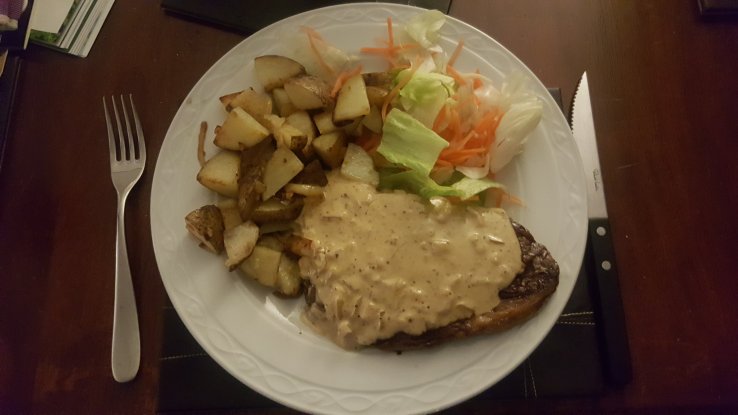
plate with steak and peppercornsauceThis week, I tried a cooking method I’ve never used before—low cooking. For those unfamiliar with the term, low cooking can be used for tender cuts of meat. You sear it in a pan and then place in an oven at a very low temperature and cook for a long time.

It differs from slow cooking in that slow cooking is usually used for tougher cuts of meat and involves liquid. I used the low cooking technique to cook a ribeye steak we got from Donald Russell. If you live in the UK and buy certain magazines or Sunday newspapers, a Donald Russell flier will have fallen out of them at some point.

True cost of meat

‘Donald Russell’ is a farm in Inverurie (Aberdeenshire) which supplies many top end restaurants and Balmoral with meat and fish. I can vouch that the quality of the produce is superb. It is also stonkingly expensive, but that will reflect the true cost of meat especially if you want to buy meat that comes from animals that have lived a life as close to the one they are supposed to. If (and that’s a big if) my writing career ever makes me decent money, this will be the only meat I buy.

Anyway, I cooked the steak for three minutes all-in on a high heat and then popped it in the oven at 80 degrees C for 35 minutes, and served it with peppercorn sauce and salad (and fried potatoes for my carb-loving husband). Here’s the peppercorn sauce recipe. It isn’t the classic one as I find fiddling around with sauce recipes too much to resist. The sauce has about 5g of carbs per serving.

Peppercorn Sauce for Steak

  • Servings: 2-3
  • Difficulty: easy
  • Print

  • 1 small onion, finely chopped
  • 1 clove garlic, crushed
  • 50g butter
  • 1tbsp peppercorns, crushed
  • 50ml brandy or white wine
  • 1tsp wholegrain mustard
  • 100ml beef or chicken stock
  • 50ml cream (I used crème fraiche as I had some left over, double cream or sour cream will work too)
  1. Melt the butter in a pan and add the onions. Fry gently until softened—about three to five minutes.
  2. Add the pepper, mustard, garlic and mix well. Add the brandy or white wine and bring to a simmer. Cook for three minutes and add the beef or chicken stock. Cook for another three minutes.
  3. Reduce the heat and add the cream and stir through until thickened. Serve with steaks or chicken. Or use it to make a sublime vegetable side dish.

Have you used the low cooking technique before and what’s your favourite sauce to serve with steak?