All cause mortality pretty similar across all UK dietary groups

Photo by Mister Mister on Pexels.com

Mortality in vegetarians and comparable nonvegetarians in the
United Kingdom
2016


Paul N Appleby, Francesca L Crowe, Kathryn E Bradbury, Ruth C Travis, and Timothy J Key*
Cancer Epidemiology Unit, Nuffield Department of Population Health, University of Oxford, Oxford, United Kingdom


ABSTRACT
Background: Vegetarians and others who do not eat meat have been
observed to have lower incidence rates than meat eaters of some chronic
diseases, but it is unclear whether this translates into lower mortality.


Objective: The purpose of this study was to describe mortality in
vegetarians and comparable nonvegetarians in a large United Kingdom cohort.


Design: The study involved a pooled analysis of data from 2 prospective studies that included 60,310 persons living in the United Kingdom, comprising 18,431 regular meat eaters (who ate meat
$5 times/wk on average), 13,039 low (less-frequent) meat eaters,
8516 fish eaters (who ate fish but not meat), and 20,324 vegetarians
(including 2228 vegans who did not eat any animal foods).

Mortality by diet group for each of 18 common causes of death was estimated
with the use of Cox proportional hazards models.


Results: There were 5294 deaths before age 90 in .1 million y of
follow-up. There was no significant difference in overall (all-cause)
mortality between the diet groups
: HRs in low meat eaters, fish
eaters, and vegetarians compared with regular meat eaters were
0.93 (95% CI: 0.86, 1.00), 0.96 (95% CI: 0.86, 1.06), and 1.02
(95% CI: 0.94, 1.10), respectively; P-heterogeneity of risks =
0.082.

There were significant differences in risk compared with
regular meat eaters for deaths from circulatory disease [higher in
fish eaters (HR: 1.22; 95% CI: 1.02, 1.46)]; malignant cancer [lower
in fish eaters (HR: 0.82; 95% CI: 0.70, 0.97)], including pancreatic
cancer [lower in low meat eaters and vegetarians (HR: 0.55; 95%
CI: 0.36, 0.86 and HR: 0.48; 95% CI: 0.28, 0.82, respectively)] and
cancers of the lymphatic/hematopoietic tissue [lower in vegetarians
(HR: 0.50; 95% CI: 0.32, 0.79)]; respiratory disease [lower in low
meat eaters (HR: 0.70; 95% CI: 0.53, 0.92)]; and all other causes
[lower in low meat eaters (HR: 0.74; 95% CI: 0.56, 0.99)]. Further
adjustment for body mass index left these associations largely
unchanged.


Conclusions: United Kingdom–based vegetarians and comparable
nonvegetarians have similar all-cause mortality. Differences found
for specific causes of death merit further investigation
. Am J
Clin Nutr 2016;103:218–30

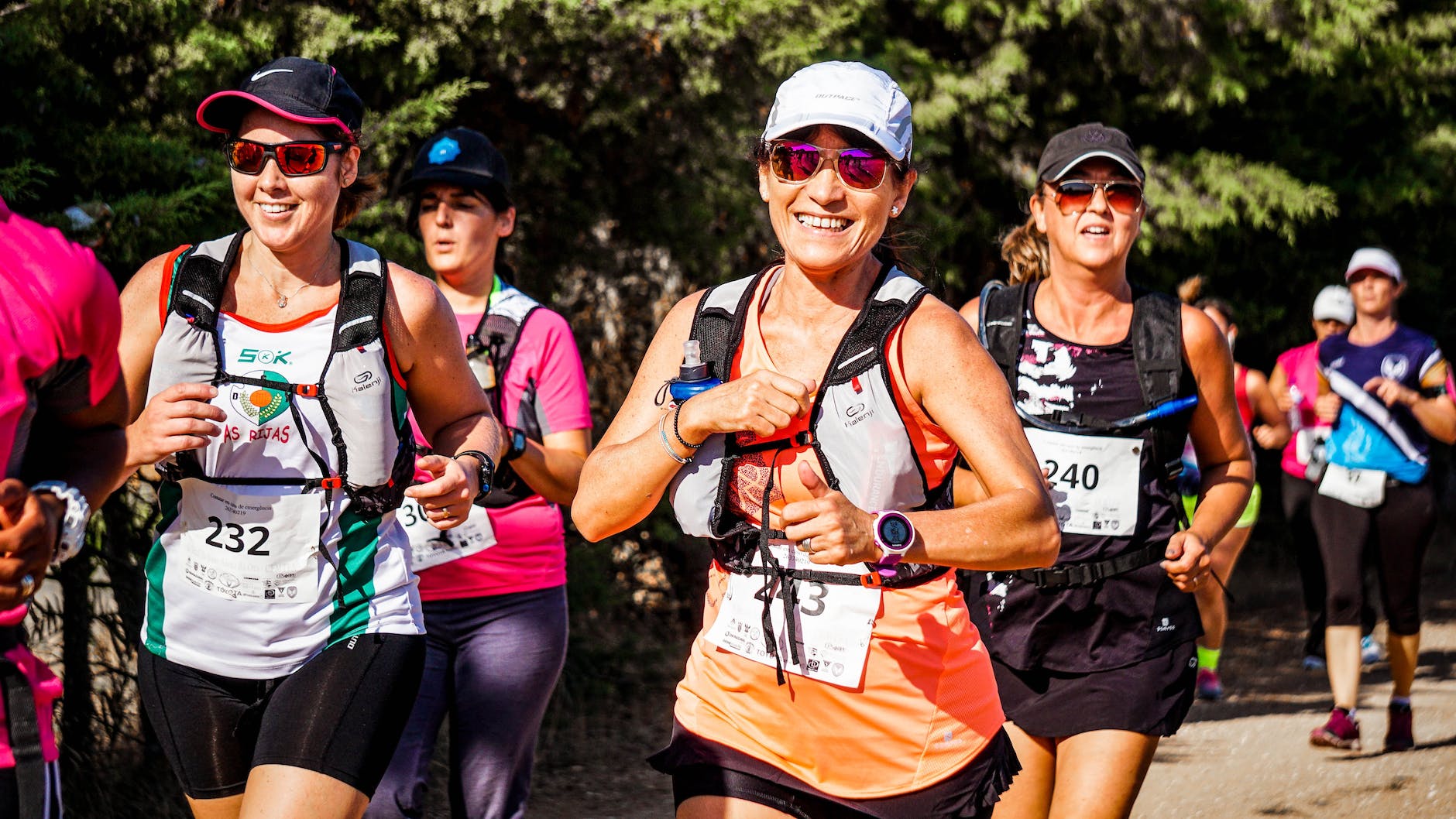
Fit middle aged women can delay dementia by almost ten years

Photo by RUN 4 FFWPU on Pexels.com

Midlife cardiovascular fitness and dementia

A 44-year longitudinal population study in women


Helena Horder, PhD et al.
Neurology® 2018;90:e1298-e1305. doi:10.1212/WNL.0000000000005290


Objective
To investigate whether greater cardiovascular fitness in midlife is associated with decreased
dementia risk in women followed up for 44 years.

Methods
A population-based sample of 1,462 women 38 to 60 years of age was examined in 1968. Of
these, 191 women completed a maximal cycling test to evaluate cardiovascular fitness. Subsequent examinations of dementia incidence were done in 1974, 1980, 1992, 2000, 2005, and 2009.

Dementia was diagnosed according to DSM-III-R criteria on the basis of information from neuropsychiatric examinations, informant interviews, hospital records, and registry data up to 2012.

Cox regressions were performed with adjustment for socioeconomic, lifestyle, and medical confounders.


Results
Compared with medium fitness, the adjusted hazard ratio for all-cause dementia during the
44-year follow-up was 0.12 among those with high fitness and 1.41 among those with low fitness. High fitness delayed age at dementia onset by 9.5 years compared to low fitness and time to dementia onset by 5 years compared to medium fitness.


Conclusions
Among Swedish women, a high cardiovascular fitness in midlife was associated with a decreased
risk of subsequent dementia. Promotion of a high cardiovascular fitness may be included in
strategies to mitigate or prevent dementia. Findings are not causal, and future research needs to
focus on whether improved fitness could have positive effects on dementia risk and when during
the life course a high cardiovascular fitness is most important.

My comment: Mr Motivator is right! Regular exercise is the best insurance you can ever take out. And you don’t have to run marathons to get fit. Don’t give up on fitness because of your job or because you have had kids. Get active. Spend that pension! Don’t give it away to the nursing home!

BMJ: Tackle lifestyle before drugs and surgery

Photo by Agung Pandit Wiguna on Pexels.com

BMJ 20 May 2023 Adapted from Letter of the Week by Ellen Fallows, British Society of Lifestyle Medicine

Changing the mindset in medicine

Clinicians are often overwhelmed when they see patients with many complex conditions who have brought both physical and social problems to a long awaited but short consultation.

When medical guidelines are viewed in totality, it is clear that we can’t see the wood for the trees, have forgotten the person behind the disease, and are failing to tackle the root cause of their symptoms.

Basic science now describes a common underlying pathology to long term conditions: immune dysregulation resulting in chronic systemic inflammation. Key drivers include environmental and lifestyle factors influencing gene expression and our microbiome.

Our current medical model is however based on a reductionist and deterministic view of health that stems from the era of gene discoveries. This has led to a belief that diseases exist in isolation and we are powerless without medicine and drugs. This is not the case. If we step back from the relentless assessment, quantification, and labelling of disease and spend more time tackling its root causes, we can support people to reverse- or at least improve or delay-these conditions.

Fewer guidelines and assessments are needed, as well as more public health measures and more lifestyle medicine. Lifestyle medicine is a discipline that considers the socioeconomic drivers of behaviour, acknowledges the difficulties people face, and uses person centred techniques to support lifestyle changes to tackle nutrition, physical activity, social isolation, sleep, mental wellbeing, and consumption of harmful substances such as tobacco and alcohol.

This approach isn’t new or controversial- it is the first step in all major long term condition guidelines. But it is neglected, with funds for creating good quality education and an evidence base sorely lacking and requiring a policy shift.

The hardest behaviour to change however, is not that of patients but that within medicine itself.

My comment: I am so much in agreement with this letter. It was impressive that the BMJ published it so prominently.

Jovina cooks: Roasted Aubergine and Tomato Soup

Photo by Sacha Moreau on Pexels.com

Ingredients

5 cups (1/2-inch-diced) peeled eggplant/aubergine (1 pound)
2 large chopped leeks, white and light green portions
2 tablespoons minced garlic (6 cloves)
4 cups vegetable stock, preferably homemade
2 (28-ounce) cans of crushed tomatoes, preferably San Marzano
2 tablespoons sundried tomato paste
2 teaspoons whole dried fennel seeds
1 teaspoon dried oregano
1/4 teaspoon crushed red pepper flakes
1 tablespoon honey
Kosher salt and freshly ground black pepper to taste
1 teaspoon fresh basil leaves
Freshly grated Italian Parmesan cheese, for serving

Directions

Preheat the oven to 425ºF. Spread eggplant on a rimmed baking sheet, and toss with 2 tablespoons of oil and 1/2 tsp. salt. Bake for 25 to 30 minutes, tossing once halfway through, until soft.

Add 2 tablespoons olive oil to a Dutch Oven(eg a Le Creuset pan), add the leeks, and cook for 6 to 8 minutes, occasionally stirring, until the onion is tender but not browned.

Add the garlic and cook for one minute, stirring often. Add the stock, roasted eggplant, crushed tomatoes, tomato paste, fennel seeds, oregano, red pepper flakes, honey, salt, and black pepper.

Bring to a boil, lower the heat, and simmer uncovered for 1-hour stirring occasionally. Puree the soup with a hand blender.

Stir in basil and taste for seasonings.

Serve hot in large bowls sprinkled with Parmesan cheese and a drizzle of olive oil.

American Diabetes Association patient booklet for ketogenic and low carb diet for diabetes published

Photo by Sawyer Sutton on Pexels.com

Here it is: the first ADA patient booklet about how to do a low carb or ketogenic diet if you have diabetes.

https://www.dropbox.com/s/582qeejjlmj1egu/ADA%20Low%20Carb%20patient%20guide.pdf?dl=0

My comment: My aim for the last 20 years has been that low carbing for diabetes becomes mainstream. It still isn’t being promoted as much as it should be, given the huge advantages that it confers over the usual dietary patterns in the western world, but well done the ADA in finally committing to publishing this document.