Walking a well behaved dog in the countryside, green space or park can be a real joy. Dog owners are less lonely, make more friends, are fitter and slimmer than those who don’t walk their dog regularly. They can, however, sustain injuries in the process.
Researchers from John Hopkins University say that most accidents occur due to leads. If a walker is pulled forcefully, particularly when not expecting it, they can fall, and also their legs can get tangled up in leads. Therefore using short, non-retractable leads are suggested for all age groups of walkers. Those over the age of 65 are recommended to consider resistance and balance exercises to minimise falls.Older adults and women are particularly likely to be injured.
The researchers looked at 20 years of data from one hundred emergency departments in the USA. They found that 422,659 people had been injured in dog/lead related accidents. More than half the injuries were musculo-skeletal including fractures, muscle tears and abrasions. The commonest sites were the fingers, traumatic brain injury and shoulders.
Nutrition and Health News This Week by Nina Teicholz and Gary Taubes 20.4.24
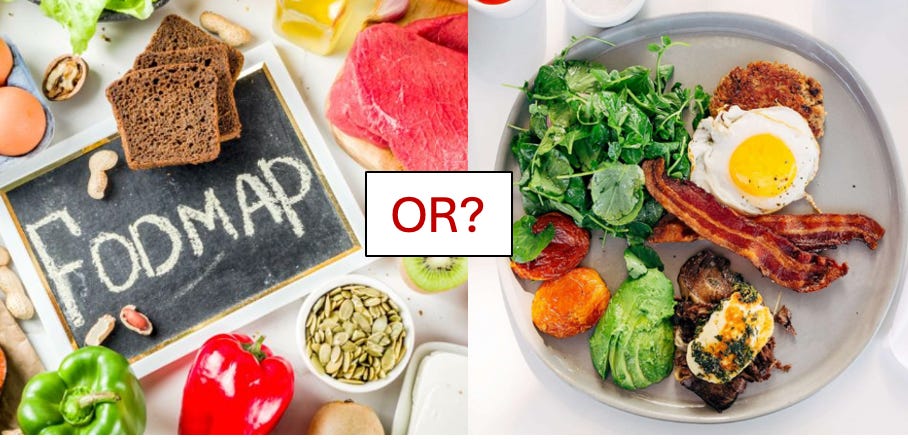
What’s the Best Diet for IBS?
A clinical trial in Sweden published this week in The Lancet Gastroenterology and Hepatology, found that a low-carbohydrate diet was just as effective as the “low-FODMAP” approach for reducing symptoms of irritable bowel syndrome (IBS), and both were more effective than drug treatment.
Widely considered the standard of care for IBS, low-FODMAP diets restrict nuts, most dairy products, and several types of “fermentable” carbohydrates such as wheat, legumes and many fruits. The approach is usually combined, as it was in this trial, with general IBS dietary advice: to chew food thoroughly, eat regularly, and avoid excessive fat.
For the Swedish subjects, food was delivered to their homes for a month. The results were impressive for both diet groups: 71–76% of participants reported significant improvements in their gastrointestinal symptoms. Only 58% did in the drug treatment group. Six months later, the diet-group participants still had fewer symptoms than they did at the start of the trial, even though they followed the diet less closely.
The fact that both dietary approaches had similar benefits raises new research questions. FODMAP stands for “fermentable oligosaccharides, disaccharides, monosaccharides and polyols,” all short-chain carbohydrates that are absorbed poorly by the small intestine. These are thought to be the cause of IBS, yet people in the low-carb group continued to consume some fermentable carbs while still experiencing significant improvement in gastrointestinal symptoms. Additionally, they increased their fat intake, which is believed to exacerbate IBS.
The trial was funded by the Dietary Science Foundation, a Swedish non-profit whose mission is to fund clinical trials on diet and health. Since our own government has largely abandoned funding meaningful clinical trials on this important topic, grassroots science is now our best bet.
A large UK study using general practice records has found that cardiovascular diseases were around 50% higher in people who had autoimmune conditions.
The risk increased as the number of conditions increased. Systemic Sclerosis, Addison’s disease, Systemic Lupus Erythematosus and Type One Diabetes carried the highest risk.
The study compared half a million people who had been diagnosed with an autoimmune condition and matched them to a control group to age, sex, socioeconomic status and area of residence.
It has long been recognised that non- steroidal anti-inflammatory drugs raise blood pressure. If you have high blood pressure you are advised to avoid them if possible, and if you are taking them for an acute condition, let your doctor know, as it will affect their evaluation. If you don’t mention it, you could end up on more anti-hypertensive medication than you really need.
It has long been thought that paracetamol had no effect on blood pressure. I was taught this at medical school and physicians have been advising paracetamol as the drug of choice for acute conditions in hypertension for decades.
Now a new study of 110 people shows that paracetamol actually increases the blood pressure by 5 mm Hg. This was published in Circulation.
This is not a huge amount, but could potentially affect a doctor’s decision on blood pressure medication, as they tend to have certain thresholds for the initiation or increase in medication.
Let your doctor know so they can consider this information if you are getting a blood pressure check and have been taking paracetamol.
The current “Food As Medicine” movement harkens back to the adage “Let Food be Thy Medicine,” attributed to Hippocrates, yet maybe even the ancient Greeks sometimes wondered, ‘sure, but which foods?’ Fruits and vegetables, whole grains and lean proteins, aka, the cornerstone of the U.S. Dietary Guidelines, is now the usual answer, yet many experts believe that Americans, especially those of low socio-economic means, don’t have the knowledge or resources to follow this advice. For Food-As-Medicine advocates, one solution is to improve access, mainly to fruits and vegetables, by delivering free food— directly to people, in their homes.
The concept is championed by a powerhouse alliance of top-rank government, public health and industry actors. Rooted in a long history, the current movement started in about 2018, with a “Food As Medicine” working group on Capitol Hill. This led to a 2022 White House conference on Hunger, Nutrition & Health, resulting in a report recommending “food as medicine interventions for people with diet-related diseases.” In that same year, the Aspen Institute published its first “Food is Medicine” action plan, with a heady list of advisors. There’s also been “Food as Medicine” summits occurring nationwide since 2021. I (NT) havewritten with some skepticism about these efforts since the food industry has been central to virtually all of them.
From a scientific perspective, though, there’s the not-so-small problem that the Food-As-Medicine concept has barely been tested, and the few randomized, controlled clinical trials (RCTs) to date have yielded mixed results. This dearth of evidence was acknowledged in the 2022 Aspen report; An effort to get Congress in 2023 to spend $2 million on a “Food As Medicine” pilot program failed.
Then, on December 26 2023 – the day after Christmas always being a good day to bury bad news – results from the latest RCT on the concept were published in JAMA Internal Medicine. They were, to put it politely, not as expected. Five hundred “food insecure” adults with type 2 diabetes (HbA1c of 8.0% or higher) had been randomly assigned either to a control group that got “usual care” or an intervention group that received a year-long comprehensive program of dietitian consultations, nurse evaluations, health coaching, diabetes education and the delivery of “healthy” groceries for 10 meals per week for the entire household.
The groceries included “whole grains, fruits, and vegetables (with an emphasis on fresh as opposed to canned and frozen), lean proteins and low-fat dairy products, as well as staple items including salad dressing, cereal, brown rice and bread that are tailored to patients’ needs in consultation with the dietitian.” The dieticians used the American Diabetes Association “plate method,” which advises that one quarter of the plate be starches (carbohydrates).
If the food-is-medicine concept worked, the group getting free groceries along with the consultations and coaching should have seen their health improve noticeably. Yet they did not… at all. Their average blood sugar (the study’s primary outcome) remained no better than the controls; their LDL-cholesterol and HDL-cholesterol appeared, if anything, to worsen.
The study authors – public policy researchers, not nutritionists – relied on the dietary approach recommended to them by the large healthcare system with which they partnered for the study. “We are interested in health delivery systems,” Joseph Doyle, a professor at the Sloan School of Management at MIT, stressed in an interview. “I was hoping we would show improved outcomes, but the way to make progress is to do well-randomized trials to find out what works.” We agree with Doyle, of course, and his experiment should put to rest some of the chatter that proper clinical trials in nutrition can’t be done.
Yet Doyle’s trial can’t inform public health strategies if its results are ignored. Despite a news item on the study in JAMA this week, the “null results” have had little noticeable effect so far on the Food-As-Medicine juggernaut. In February, the Department of Health and Human Services hosted its first “Food As Medicine” summit, with three public-private partnerships already in place, while a dozen projects are underway at the new, partially industry-funded Food Is Medicine Institute at Tufts University.
Lamentably, until these programs better understand which foods are truly medicine, they will follow in the footsteps of other non-evidence-based programs, like listing calorie counts on menus, i.e., they’re very likely to fail…
Continue reading this post for free, courtesy of Nina Teicholz.










 Diabetes Diet